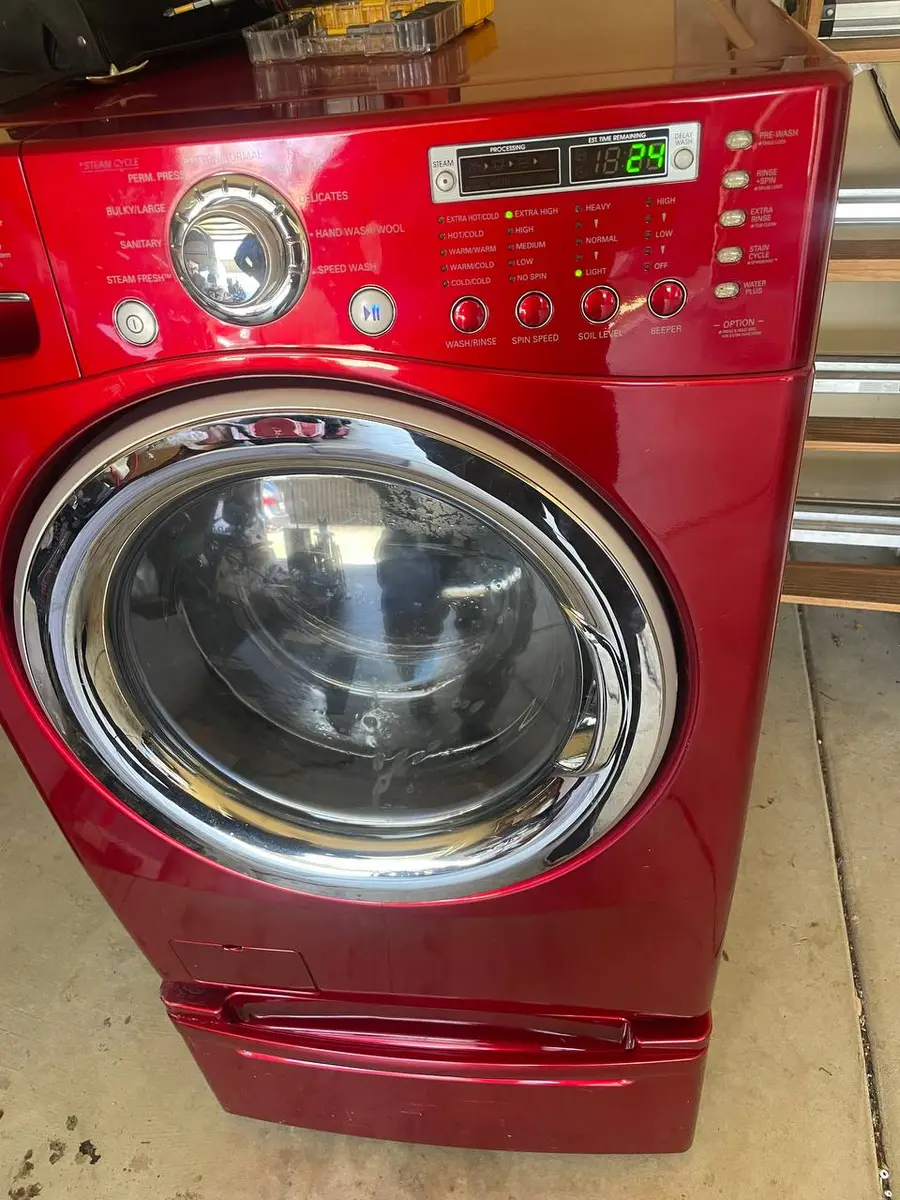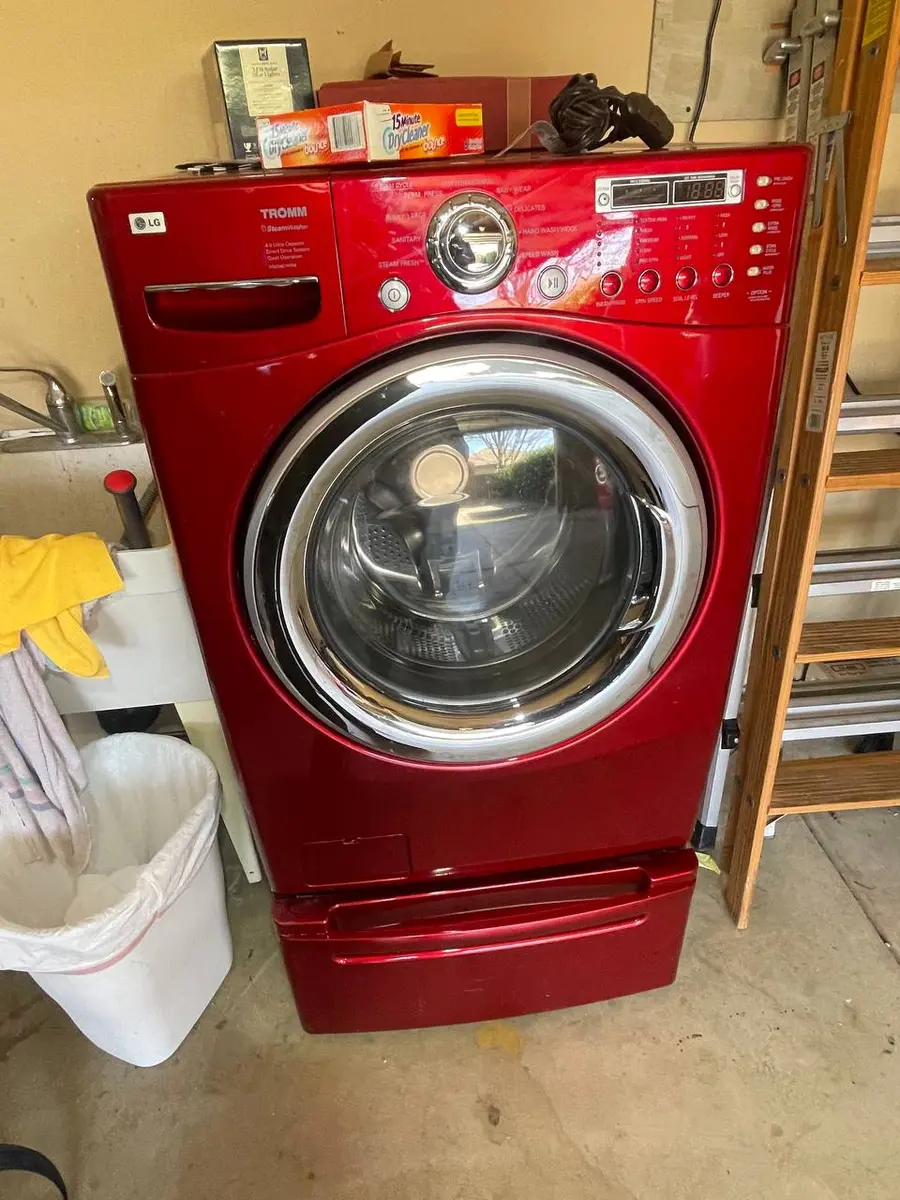
LG Washer Tripping the Circuit Breaker? Causes
Most likely a stator winding has shorted to ground after moisture reached LG's rear-mounted Direct Drive motor — but a shorted heater or drain pump, a chafed harness, a failing line filter, the control board, or an overloaded shared circuit can all trip the breaker, so diagnose the fault before you reset again.
What a tripping breaker is telling you#
A breaker trips because too much current is flowing, and there are three ways that happens: a ground fault, where current leaks from a live part to the grounded cabinet; a short circuit, where hot and neutral connect directly; or an overload, where the total draw on the circuit is simply too high. LG's Direct Drive layout puts the motor at the rear, low on the cabinet, which makes moisture-driven ground faults one of the most common paths on these machines.
Read this before you reset it#
- Do not keep resetting the breaker and trying again — each trip can worsen the underlying fault.
- Do not swap in a higher-amp breaker to "stop the nuisance." The breaker is protecting your home from fire.
- Diagnose first: the fault will not clear on its own, and a ground fault can carry a genuine shock and fire risk.
Do You Have the Right Tools?
Bearing puller set ($120), drum spider wrench ($85), multimeter ($85), and diagnostic software. Our technician arrives with $3,000+ in professional tools — your diagnostic is free.
Licensed & Insured · 90-Day Warranty · Same-Day Service
Know your breaker#
A standard 15- or 20-amp breaker trips only on overcurrent, and an LG washer draws about 10 to 15 amps at its spin peak, so a healthy machine stays well under it. A GFCI breaker is far more sensitive — it trips on a current imbalance as small as 5 milliamps — and an AFCI breaker trips on arcing. Newer Sacramento-area laundry rooms increasingly require GFCI or AFCI protection by code, and both will catch faults a plain breaker would let pass, which is why a washer can suddenly start nuisance-tripping after an electrical upgrade.
Causes at a glance#
| Likely cause | When it trips | Share of cases | First move |
|---|---|---|---|
| Stator shorted to ground | During spin | 25% | Test stator-to-chassis resistance |
| Heating element shorted | During a heated cycle | 20% | Isolate and ohm the heater |
| Drain pump motor shorted | During drain | 18% | Disconnect the pump and retest |
| Chafed wiring harness | Randomly | 15% | Inspect harness for rub-through |
| Line / EMI filter failed | Right on plug-in | 10% | Test the line filter |
| Control board fault | Inconsistent timing | 8% | Diagnose the board |
| Overloaded shared circuit | Under heavy draw | 4% | Move to a dedicated circuit |
Safety First — Know the Risks
High-voltage components and pressurized water lines create flood and shock risk. A single loose fitting can cause thousands in water damage. Our techs are licensed and insured — let them handle the risk.
Licensed & Insured · 90-Day Warranty · Same-Day Service
Working through the causes#
Stator shorted to ground (25%). The Direct Drive stator (LG part 4417EA1002Y) has enamel-insulated copper windings. When moisture reaches it — from a leaking tub seal, or condensation in a garage install that swings from a hot day to a cool night — the enamel breaks down and current leaks from a winding to the grounded mounting frame. That trips both standard and GFCI breakers, and it classically happens during spin when the motor works hardest.
Heating element shorted (20%). On heated cycles a cracked or shorted element can leak to ground, so the machine trips only when it calls for heat. Isolate the element and read its resistance to chassis; a low reading to ground condemns it.
Drain pump motor shorted (18%). A pump winding that has shorted trips the breaker during the drain step. Disconnect the pump and run a cycle: if the trip disappears, the pump is the source.
Chafed wiring harness (15%). A harness rubbed through against the cabinet or a bracket grounds intermittently, which is why this one trips at no predictable moment. Inspect the loom along its runs, especially where it crosses metal edges, and repair or replace any rub-through.
Line or EMI filter failed (10%). If the breaker trips the instant you plug in — before any cycle starts — suspect the line filter at the inlet, which can short internally. Test it in isolation.
Control board fault (8%). A board with a shorted trace or component can trip on no consistent schedule. Diagnose it once the motor, heater, pump, and harness are cleared; the main board and its sensor sit on part 4681EA2001T-class assemblies on WM4000 and WM4500 machines.
Overloaded shared circuit (4%). If the washer shares a circuit with other heavy loads, the combined draw can trip a healthy breaker with no fault in the machine at all. Move it to a dedicated circuit and the tripping stops.
When does it trip?#
Timing narrows the cause fast: immediately on plug-in points to the line filter; during fill to the heater on a heated cycle; during drain to the pump; during spin to the stator or an overloaded circuit; and random tripping to harness damage. Isolate components one at a time, and measure each one's resistance to chassis ground to confirm the leak.
The Real Cost of DIY
Average DIY attempt: $150-400 in tools you may use once, plus the risk of further damage. Our diagnostic visit costs $0 — we find the problem and give you an honest quote.
Licensed & Insured · 90-Day Warranty · Same-Day Service
Repair or replace?#
A stator, heater, or pump is a routine part next to a new washer, so on an LG in good shape repair is the economical route once the exact fault is identified.
Breaker keeps tripping? Have it diagnosed before you use the machine again — our technicians repair LG washers same-day across Sacramento and the Bay Area. Book your repair.
Senior Appliance Repair Technician · 15 years experience
EPA-certified technician with 15 years of experience specializing in refrigerator and cooling system repairs.