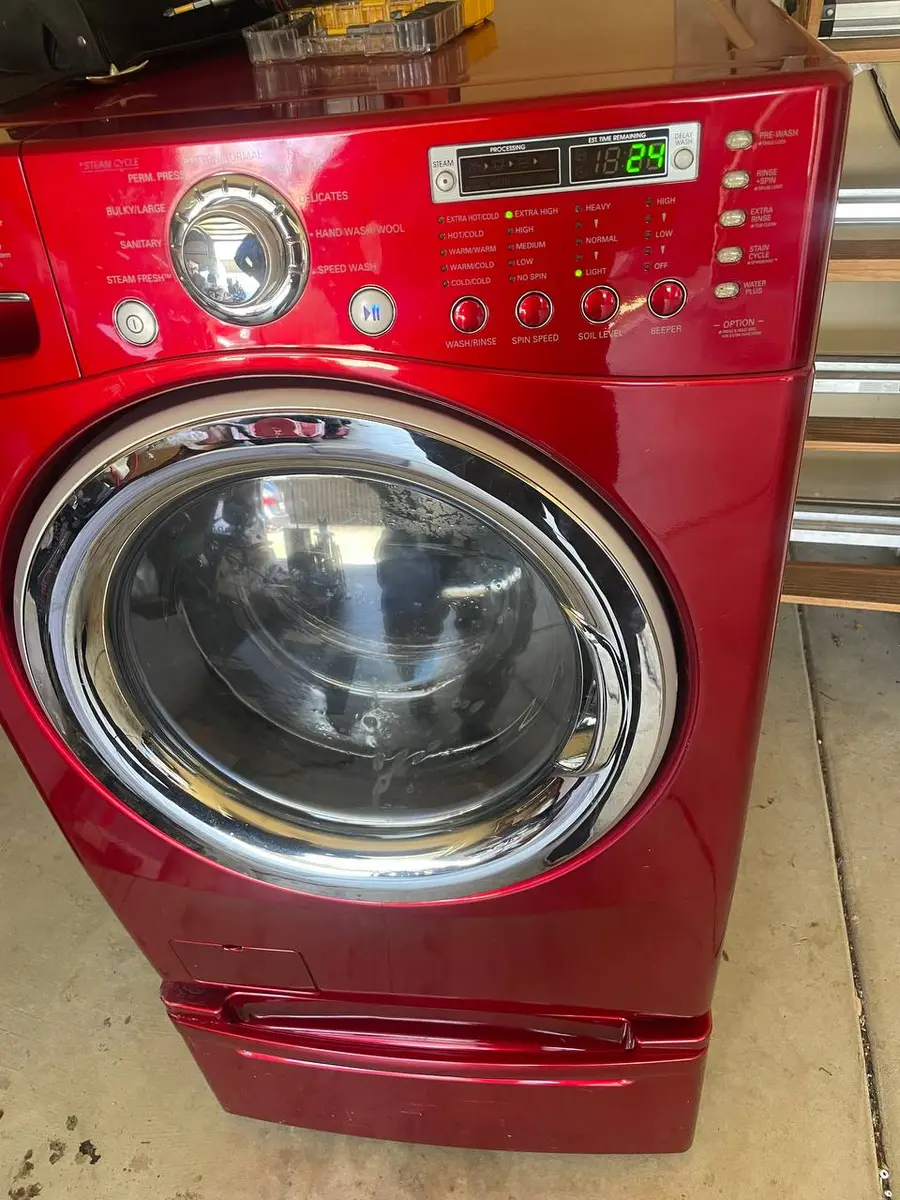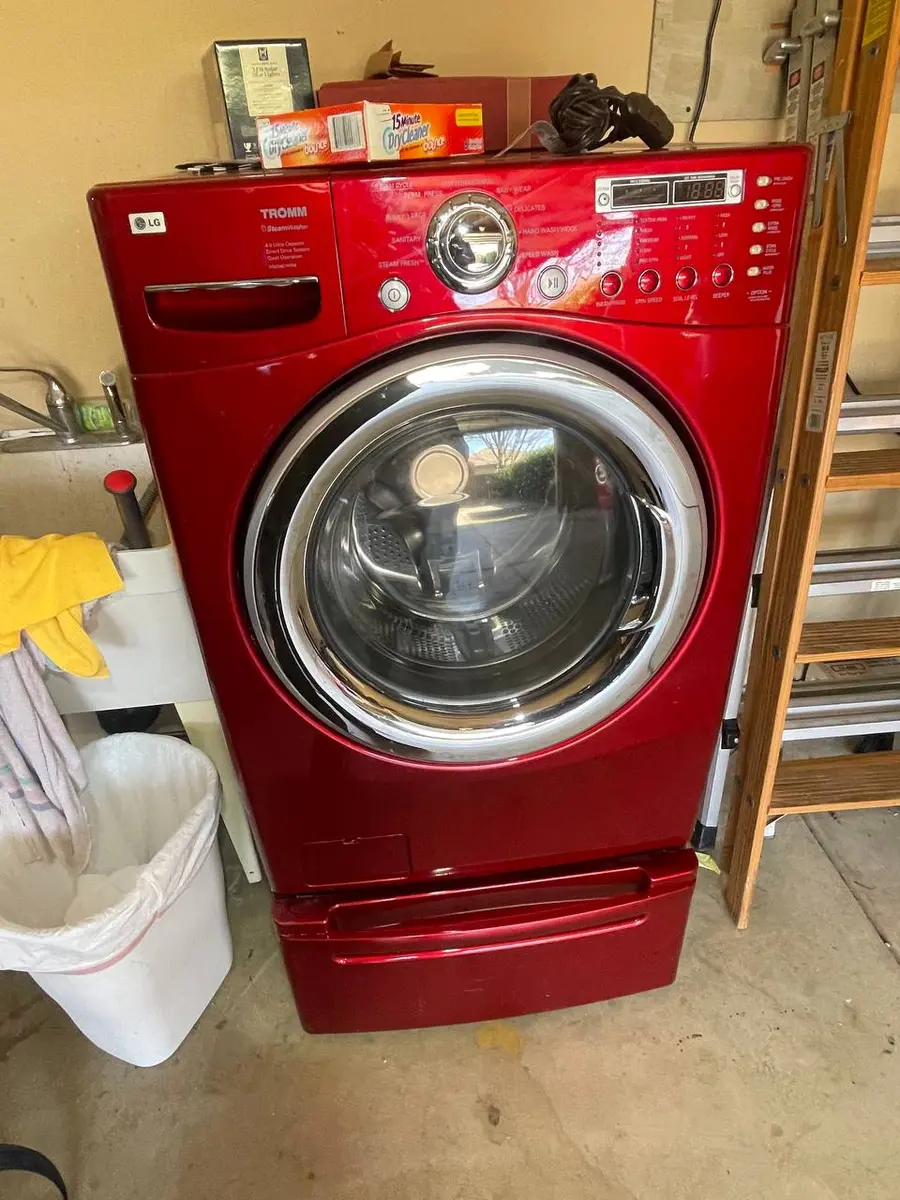
Rust on an LG washer is either structural or cosmetic, and telling them apart is the whole point. The serious one is spider-arm corrosion — an LG-specific weakness where the aluminum spider connecting the drum to the drive shaft corrodes and eventually cracks. Cabinet paint rust, stainless-drum staining, and black boot-seal mildew are cosmetic and easy to treat.
Structural or Cosmetic?#
The distinction decides urgency. Cosmetic rust — paint blistering on the cabinet, iron stains on the stainless drum, mildew in the door boot — is a maintenance matter you can handle at home. Structural corrosion means the spider arm, the three-pronged aluminum bracket that ties the stainless drum to the center shaft, and that one is a repair-or-replace decision because a failed spider can drop the drum mid-spin. LG uses a cast aluminum-alloy spider to keep the arm light and ease motor strain, but aluminum is far more prone to chemical attack than the cast iron some competitors use, so this is the LG issue to watch for.
Do You Have the Right Tools?
Bearing puller set ($120), drum spider wrench ($85), multimeter ($85), and diagnostic software. Our technician arrives with $3,000+ in professional tools — your diagnostic is free.
Licensed & Insured · 90-Day Warranty · Same-Day Service
Spider-Arm Corrosion — the LG-Specific Threat#
Over six to ten years, alkaline detergent residue — worst with liquid HE detergent — plus trapped moisture sets up galvanic corrosion right at the stainless-to-aluminum junction on WM-series front-loaders. It progresses through clear stages: first a harmless white or gray powder on the spider, then visible pitting that starts leaving occasional stains on clothes, then stress fractures that click or tick during spin, and finally a cracked or detached arm that bangs violently and drops the drum. The symptoms to check for are orange-brown stains on laundry, a rhythmic metallic click during spin, and drum wobble — grab the drum through the door and rock it front-to-back; any play in that direction, distinct from the normal slight up-down bearing movement, signals a weakening spider. Replacement is a hard job requiring full tub extraction to reach the spider bolted to the rear of the drum, so a spider caught at the powder or pitting stage — and slowed with maintenance — is far better than one caught at the banging stage.
Why It Hits Some Homes Harder#
The same washer corrodes at different rates depending on water and air. Soft water, common around the Bay Area, actually makes it worse in a counterintuitive way: with less mineral content, the same scoop of detergent produces more suds, which means more alkaline residue sitting against the spider. Harder [Sacramento](/sacramento/sacramento) water can slow the reaction a little because mineral deposits coat and partly shield the spider surface, though heavy liquid-detergent users still develop the problem. Humidity is the accelerant either way — a poorly ventilated garage in a hot summer keeps moisture on the metal and speeds the galvanic reaction. So a front-loader in a damp garage run on liquid detergent and soft water is the worst-case combination, and the one where switching to powder and running Tub Clean religiously pays off most.
Safety First — Know the Risks
High-voltage components and pressurized water lines create flood and shock risk. A single loose fitting can cause thousands in water damage. Our techs are licensed and insured — let them handle the risk.
Licensed & Insured · 90-Day Warranty · Same-Day Service
Cabinet and Panel Rust#
LG cabinets are painted steel, and rust starts wherever the paint barrier is broken by a scratch, a moving-day chip, or standing moisture. The usual spots are the bottom edge of the front panel where minor leaks pool, the rear panel edges exposed to condensation, the boot-seal groove where water hides behind the gasket, and the leveling-foot threads. Garage installs swing between hot days and cold nights, and that condensation cycle accelerates the paint breakdown. Treatment is straightforward: sand the spot to clean metal, apply a phosphoric-acid rust converter to stabilize any microscopic rust left behind, prime with a metal primer, and topcoat with color-matched appliance enamel. It's an easy fix and rarely worth paying for, since it's purely cosmetic.
Drum Staining and Mildew Aren't Rust#
Two things get mistaken for corrosion. The stainless inner drum doesn't rust, but a nail, screw, or other iron-bearing object left in a pocket deposits its own iron oxide onto the surface — those rust-colored marks come from the foreign metal, not the drum. Run an empty hot Tub Clean cycle with a citric-acid washer cleaner, and for stubborn marks let a baking-soda-and-water paste sit before running Tub Clean again. The other impostor is the black residue in the door-boot folds and dispenser: that's mold and mildew, not corrosion, common on front-loaders kept shut between uses, in humid rooms, or run with too much detergent. Wipe the boot with a half-and-half water-and-bleach solution, run Tub Clean, and leave the door ajar to dry.
The Real Cost of DIY
Average DIY attempt: $150-400 in tools you may use once, plus the risk of further damage. Our diagnostic visit costs $0 — we find the problem and give you an honest quote.
Licensed & Insured · 90-Day Warranty · Same-Day Service
Prevention — Mostly One Habit#
The single most important measure is running Tub Clean regularly — LG's reminder exists specifically to clear the residue that feeds spider-arm corrosion. Beyond that: switch to HE powder detergent, which leaves far less alkaline residue than liquid; use the correct dose, roughly two tablespoons of HE detergent for a normal load, since more just means more corrosive residue, not cleaner clothes; wipe the boot seal after each load so moisture doesn't sit against the cabinet paint; leave the door ajar between loads to let the drum and seal dry; and touch up cabinet paint chips before they can rust. Those habits can stretch a spider arm's life from six or seven years toward ten and beyond, and keep the cosmetic rust from ever starting. Think of it less as fighting rust and more as keeping residue and moisture from lingering: dry surfaces and clean detergent residue are what the aluminum spider, the painted cabinet, and the boot seal all need, so the same short routine protects every part at once and is far cheaper than the tub teardown a neglected spider eventually demands.
Related reading: an LG washer that's leaking and a noisy LG washer.
LG [washer repair](/bay-area/services/washer-repair) across Sacramento and the Bay Area — spider arm, bearing, and drum diagnostics in one visit. Book a technician.
Senior Appliance Repair Technician · 15 years experience
EPA-certified technician with 15 years of experience specializing in refrigerator and cooling system repairs.