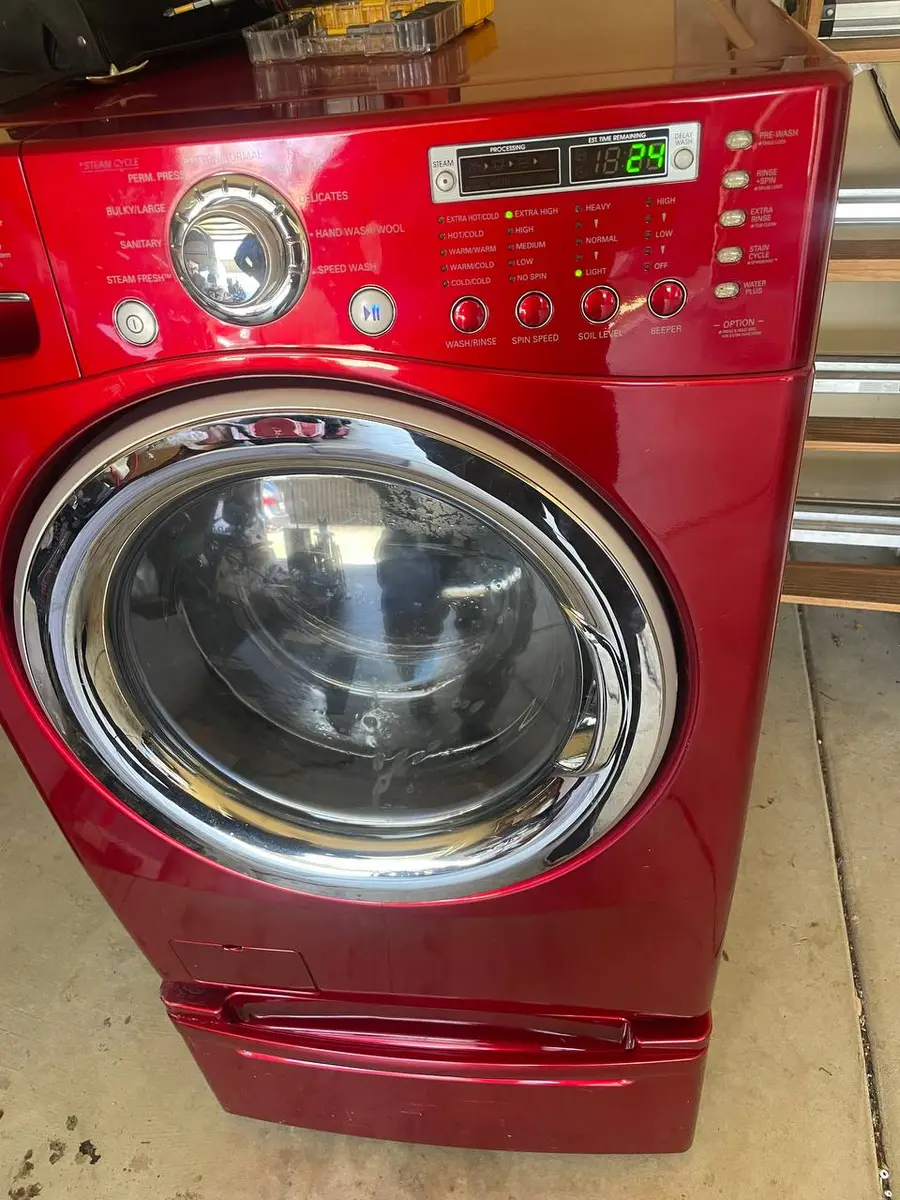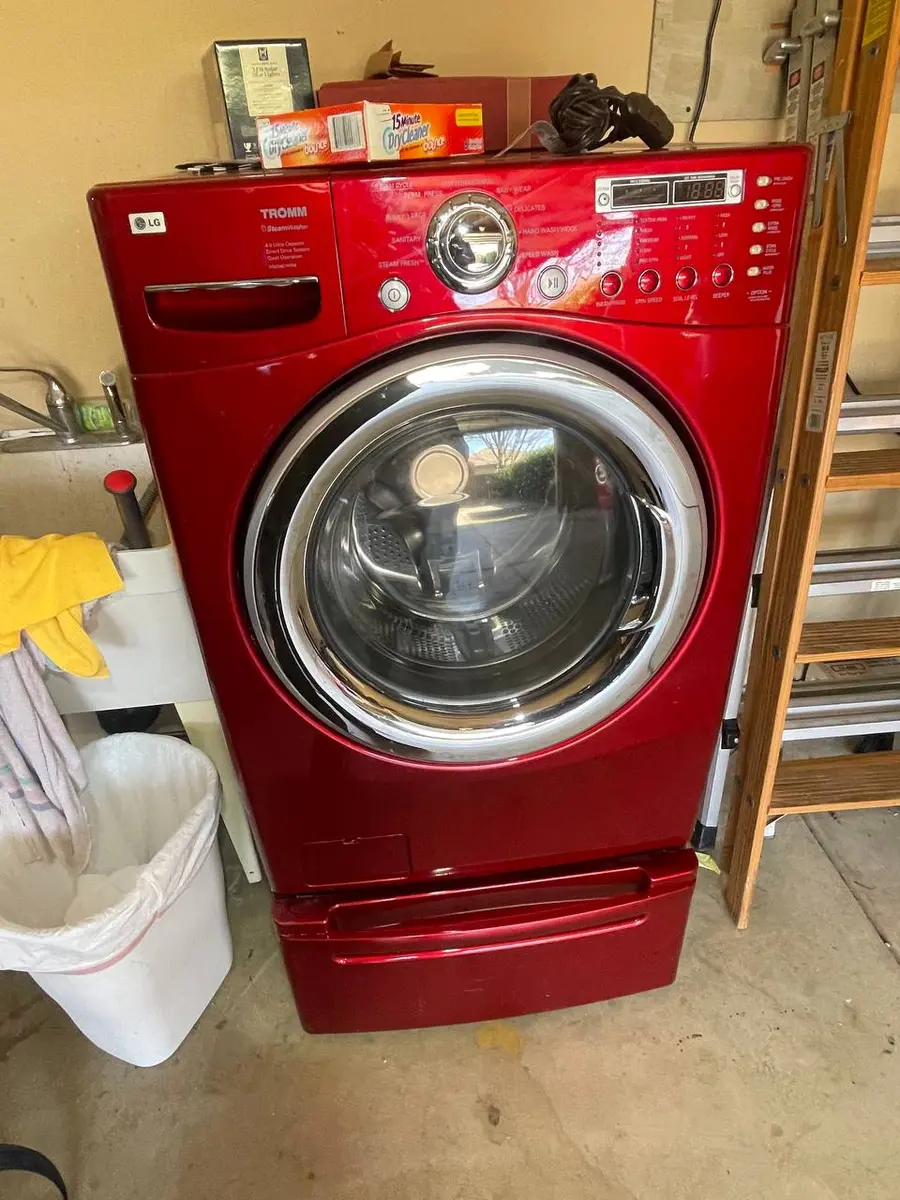
LG Washer Drain Pump: OE After a Clean Trap
If your LG washer will not drain and shows the OE error, clean the coin trap before buying a pump. A clogged debris filter restricts drain flow and jams the impeller, imitating a failed pump. Only if a clean filter does not fix the drain is the pump itself the problem.
After the trap is clean: reading what the washer does next#
The coin trap is the first move and the right one, but it is not the end of the free options. What the machine does after a proper clean tells you whether the pump is the next thing to buy — or whether the restriction was never inside the machine at all.
| What happened after you cleaned the trap | What that means | What to do next |
|---|---|---|
| OE cleared and the washer drains normally | The filter was the restriction all along, which is the most common outcome | Nothing to buy. Clean it on a schedule and check pockets before loading. |
| OE cleared, then came back within days | Debris is still reaching the trap, or something is left in the impeller cavity behind it | Open it again and check the cavity itself, not just the filter. Anything hard in there jams the impeller. |
| OE persists, and the pump runs but moves no water | A worn or broken impeller — the motor is fine and the blade is not | Now the pump is the answer. |
| OE persists, and the pump is silent when it should be draining | A dead motor or a wiring fault | The pump, after the connector has been checked. |
| Far less than the expected 2 to 5 gallons came out of the trap | Water is not reaching the trap, so the restriction sits upstream of it | Look at the tub outlet and the hose between it and the pump before buying anything. |
| The drain hose is kinked, or pushed far down into the standpipe | A restriction, or a siphon pulling the tub back down as it fills | Free to fix. Straighten it and leave an air gap at the standpipe. |
| The standpipe or sink connection sits high above the machine | The pump is being asked to lift water further than it is rated to | Not a fault. Check the maximum drain height for your model before condemning a healthy pump. |
| A top-load LG rather than a front-loader | Most top-load machines have no coin trap to clean | Skip the trap entirely and go to the drain hose and the pump housing. |
Denominator: the details above are the ones this guide documents for LG washers — the OE code as a drain fault, the coin trap behind the lower front panel on front-load machines, and the 2 to 5 gallons to expect when it is opened. One brand, one code and one filter design, not a cross-brand table: LG top-loaders are built differently, other manufacturers number their drain faults differently, and the volume figure is what a front-load tub holds rather than a specification.
Check the coin trap first#
LG front-load washers have a debris filter, often called the coin trap, behind a small access door on the lower front panel. Coins, hairpins, buttons, and fabric fragments collect there and restrict the drain, and a badly clogged trap can jam the pump impeller outright. Clearing it is free and fixes a large share of no-drain complaints.
To access it: open the small door on the lower front panel and set a towel and a shallow pan underneath, because water will come out. Slowly unscrew the drain plug and let the water drain, then unscrew the filter cap completely and pull it out. Remove all debris, rinse the filter, check the impeller cavity behind it for lodged objects, and reinstall. Expect to catch 2 to 5 gallons of water, so drain in stages if your pan is small.
Do You Have the Right Tools?
Bearing puller set ($120), drum spider wrench ($85), multimeter ($85), and diagnostic software. Our technician arrives with $3,000+ in professional tools — your diagnostic is free.
Licensed & Insured · 90-Day Warranty · Same-Day Service
When it really is the pump#
- The OE error persists after a thorough filter cleaning.
- Standing water remains in the drum at the end of every cycle.
- The pump runs but moves no water, pointing to a worn or broken impeller.
- The pump is silent when it should be draining, indicating a dead motor or wiring fault.
Job overview#
| Item | Detail |
|---|---|
| First step | Clean the coin trap and impeller cavity |
| Error | OE indicates a drain fault |
| Water to expect | About 2 to 5 gallons |
| Time | Roughly a 10-minute job once drained |
Safety First — Know the Risks
High-voltage components and pressurized water lines create flood and shock risk. A single loose fitting can cause thousands in water damage. Our techs are licensed and insured — let them handle the risk.
Licensed & Insured · 90-Day Warranty · Same-Day Service
Front-load pump replacement#
- Unplug the washer, shut the water, and drain through the filter as above.
- Tip the machine back or remove the lower panel to reach the pump.
- Disconnect the wiring and release the hose clamps at the pump.
- Unmount the old pump and transfer any brackets to the new one.
- Reconnect hoses and wiring, reassemble, and run a rinse-and-spin to confirm drainage.
Top-load and impeller notes#
On top-load LG washers the pump sits under the tub, reached from the rear or by laying the machine down, but the electrical and hose connections work the same way. Whichever layout you have, inspect the impeller whenever the pump is out: a cracked or foreign-object-bound impeller is a common reason a pump moves no water even though the motor spins. Because LG uses a similar pump across some washers and dishwashers, confirm the exact part against your model rather than assuming, and you will avoid a mismatched replacement.
The Real Cost of DIY
Average DIY attempt: $150-400 in tools you may use once, plus the risk of further damage. Our diagnostic visit costs $0 — we find the problem and give you an honest quote.
Licensed & Insured · 90-Day Warranty · Same-Day Service
Preventing repeat drain failures#
Most LG drain-pump failures are really debris failures, so the best prevention is routine: clean the coin trap every few months, check pockets before washing, and avoid overloading, which forces more lint and fabric fragments past the drum. A pump that has ingested a hard object often survives with a cleaned impeller, but one that has run dry against a jam long enough to overheat the winding will need replacing regardless. When you do replace the pump, inspect the drain hose and the sump inlet at the same time, because a partial clog further along the drain path produces the same slow-drain symptom and makes a brand-new pump look like it failed. Reseat the filter cap firmly and confirm the small door latches, since a loose cap is a common source of a slow leak that appears only during the drain phase. Run a rinse-and-spin after the job and watch the drain to confirm a strong, steady discharge before returning the machine to service.
LG washer will not drain? EasyBear technicians serve Sacramento and the Bay Area — book online.
Appliance Repair Technician & Diagnostics Specialist · 10 years experience
Electronics and diagnostics specialist with 10 years of experience in modern smart appliance repair, specializing in LG and Samsung.