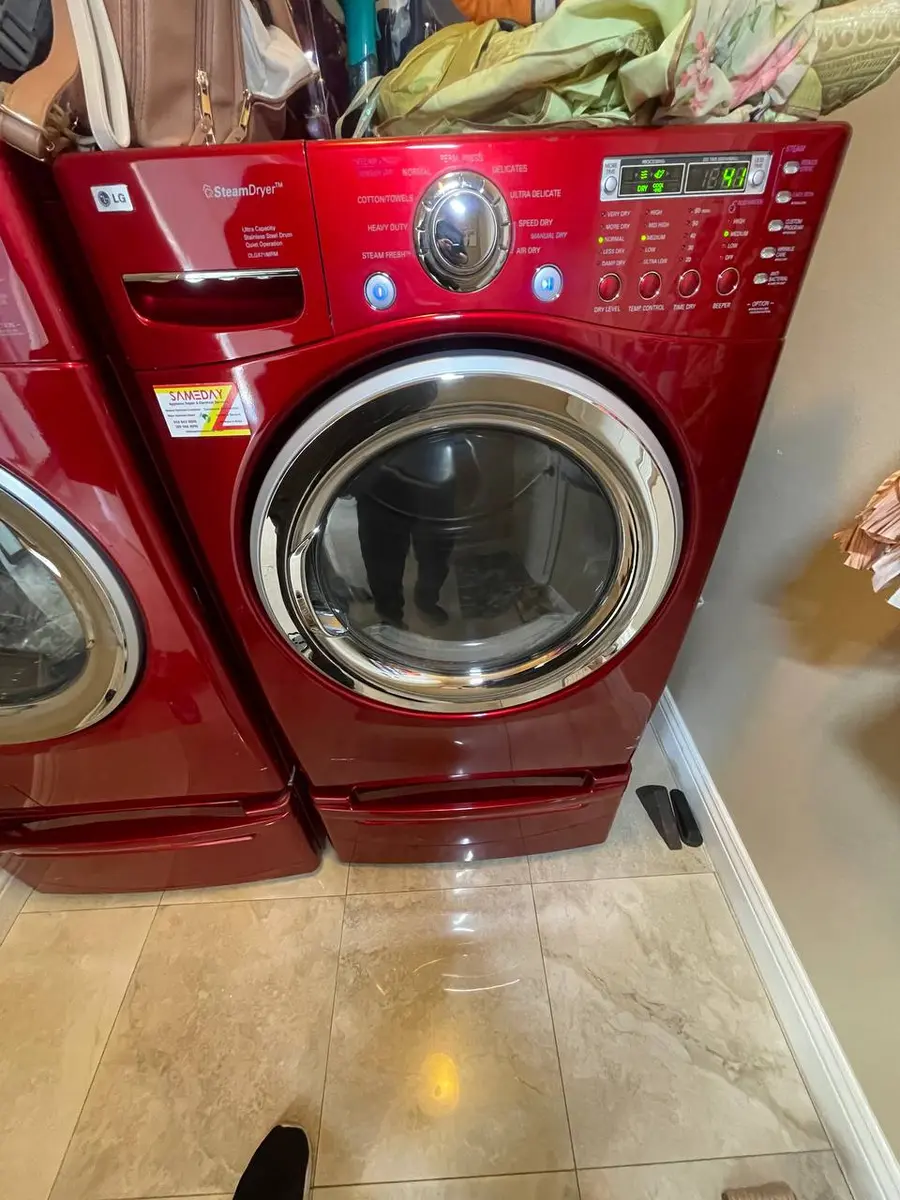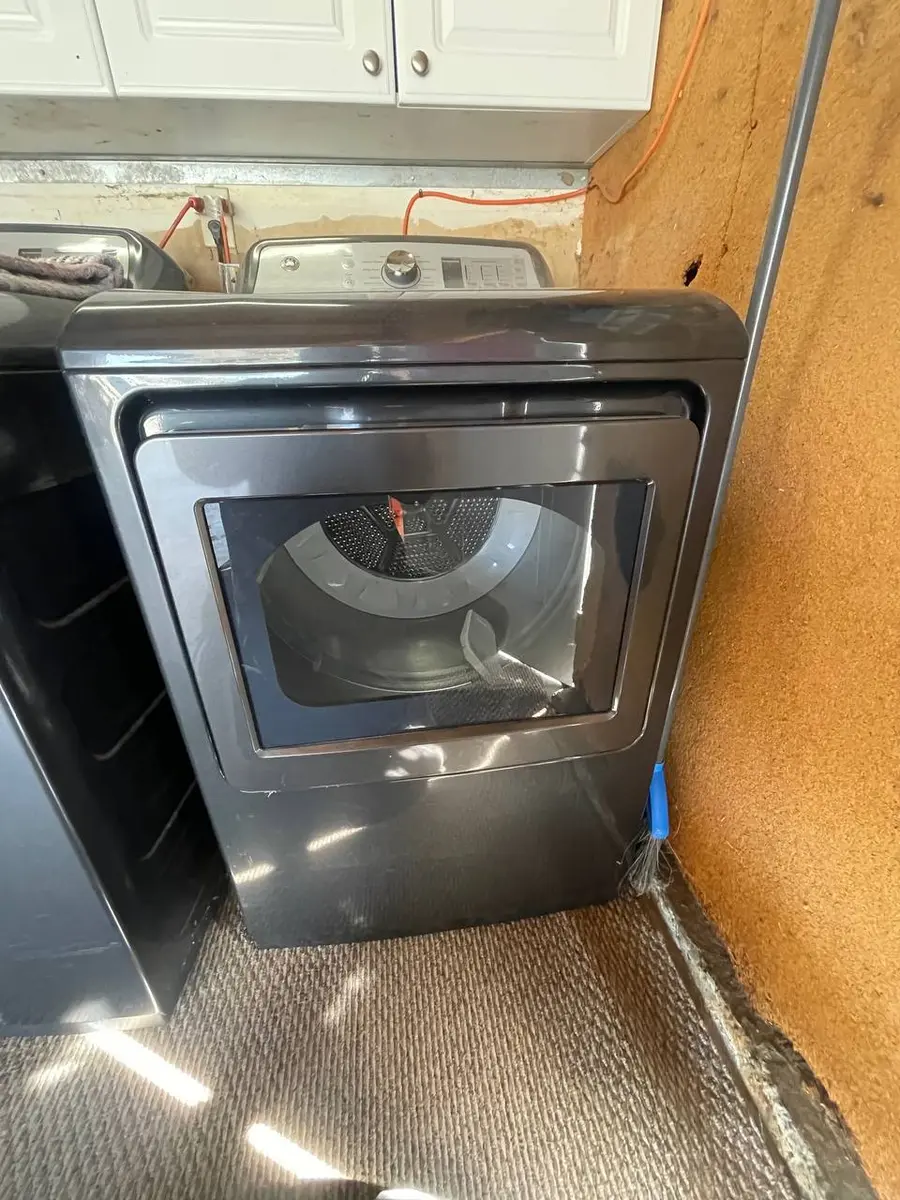
An LG dryer running too hot is most often a restricted exhaust vent trapping heat in the drum — and because an overheating dryer plus lint is the leading cause of dryer fires, the vent is both the first thing to check and a safety priority. If the drum still runs too hot on a fully clear vent, the fault has moved to a component: a cycling thermostat stuck closed, a thermistor reading high, or a welded control-board relay.
What "Too Hot" Actually Means#
Too hot means the drum temperature exceeds the normal range for the heat setting you selected — not that the cabinet exterior feels warm, which is normal. LG DLE and DLEX dryers hold fairly tight temperature bands when healthy, so knowing the normal range tells you when something is genuinely wrong.
| Heat Setting | Normal Drum Temp | "Too Hot" Threshold |
|---|---|---|
| High | 175-185°F | Above 200°F |
| Medium | 155-165°F | Above 180°F |
| Low | 125-135°F | Above 150°F |
| Air Dry | Room temp | Any heat produced |
Do You Have the Right Tools?
Gas leak detector ($130), thermal fuse tester ($95), belt tension gauge, and vent inspection camera ($180). Our technician arrives with $3,000+ in professional tools — your diagnostic is free.
Licensed & Insured · 90-Day Warranty · Same-Day Service
The Causes, By Frequency#
1. Restricted Exhaust Vent (40% of cases)#
A blocked vent traps hot air in the drum, pushing temperature above the cycling thermostat's control range — the thermostat tries to cut the element, but the retained heat keeps the drum hot. Watch for LG's FlowSense d80, d90, or d95 warnings, clothes that come out excessively hot, a cabinet that is hot to the touch, and lengthening dry times. Clean the entire vent system, replace any crushed flexible duct with rigid metal duct, and use the recommended rigid four-inch duct for proper airflow.
2. Cycling Thermostat Stuck Closed (30% of cases)#
The cycling thermostat normally opens at a set temperature to cut the element, and if its contacts weld closed from years of arcing, the element runs continuously and the drum climbs unchecked until the high-limit thermostat steps in. The signs are extreme heat regardless of the setting, an element that never cycles off, and clothes showing scorch marks or melted synthetics. Test the thermostat and replace it if stuck closed, and also check the high-limit thermostat, which may have been damaged by the over-temperature event.
3. Thermistor Reading High (15% of cases)#
If the NTC thermistor reports a lower temperature than the drum actually reaches — reading high resistance for a given temperature — the board fires the element longer than needed and the real temperature overshoots the target. Test the thermistor at room temperature, where it should read around 10,000 ohms; a significantly high reading means it should be replaced.
4. Control Board Relay Welded (10% of cases)#
The element relay on the board can weld shut from years of high-current switching, feeding the element power continuously no matter what the thermostat commands. The unmistakable tell is heat produced even on Air Dry or a No-Heat setting, or an element that stays on after the cycle ends. Unplug the dryer and replace the control board before using it again — this one is not a wait-and-see fault.
5. Wrong Supply Voltage (5% of cases)#
Rarely, an LG 240V electric dryer wired to a higher voltage produces more heat than designed. Check the outlet voltage, which should sit near 240V; a higher reading is a wiring or utility issue for an electrician, not a dryer part.
Fire Safety Warning#
An overheating dryer combined with accumulated lint is the leading cause of residential dryer fires, so if your LG dryer runs excessively hot, stop using it immediately, clean the lint filter, the internal lint pathways, and the exhaust vent completely, and have the thermostats and element circuit tested before you resume. This is not a step to defer.
Safety First — Know the Risks
Gas dryers carry carbon monoxide and explosion risk. Even electric dryers involve 240V circuits that can deliver a fatal shock. Our techs are licensed and insured — let them handle the risk.
Licensed & Insured · 90-Day Warranty · Same-Day Service
The Layered Thermal Safety System#
LG dryers stack three protections so that no single failure lets the drum reach a dangerous temperature. The cycling thermostat, near the blower housing, opens at the target temperature to cut the element and recloses once it drops back below, creating the normal heating cycle. The high-limit thermostat on the heater housing opens at a fixed maximum as a backup for the cycling thermostat. And the thermal fuse, on the blower housing or exhaust duct, is a one-time device that permanently breaks the circuit at a maximum threshold. The failure cascade runs in that order: if the cycling thermostat sticks closed, the high-limit takes over cycling at a higher-than-normal temperature; if the high-limit also fails, the thermal fuse blows and cuts heat or power. Each layer covers the previous one, and only if all three fail — very rare — does a fire become possible. Because a restricted vent is the root cause of most of these failures, always clean the vent thoroughly after replacing any thermal part, or a new thermal fuse on a restricted vent will blow within days.
How to Prevent It#
- Clean the lint filter every load.
- Clean the exhaust vent annually.
- Investigate immediately if clothes feel unusually hot at the end of a cycle.
- Watch the FlowSense indicator and act at the d80 stage, before thermal parts are stressed — addressing vent restriction early prevents thermostat and thermal-fuse failures entirely, whereas by the d95 stage the whole thermal safety system is already under active strain.
- Avoid High Heat for synthetics, which melt at lower temperatures and can leave residue on the drum that makes the next load run hotter.
Your LG dryer issue is likely a straightforward repair. Our [Sacramento](/sacramento/sacramento) and Bay Area technicians can diagnose it today. Schedule your repair
Senior Appliance Repair Technician · 15 years experience
EPA-certified technician with 15 years of experience specializing in refrigerator and cooling system repairs.