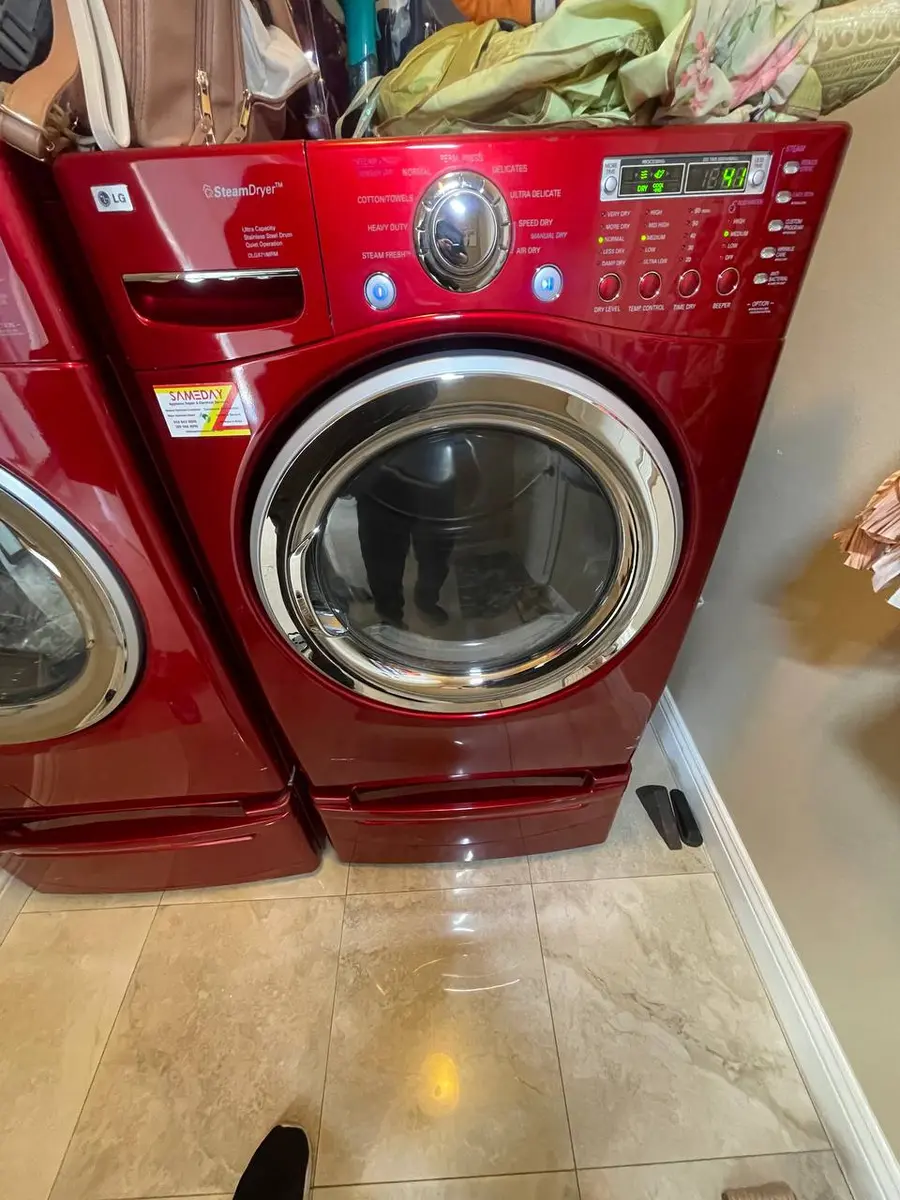
LG Dryer Moisture Sensor & Thermistor Replacement
An LG dryer that over- or under-dries on auto cycles almost always has one of two parts at fault: the moisture-sensor bars inside the drum or the exhaust thermistor (OEM 6931EL3003D). Cleaning dryer-sheet film off the bars fixes roughly 70% of auto-dry complaints for free, so start there before buying anything.
Which Part, Which Symptom#
| Symptom | Part at fault | Fix |
|---|---|---|
| Auto-dry stops early, clothes still damp | Sensor bars coated with residue | Wipe bars with rubbing alcohol |
| Auto-dry runs forever, clothes over-dried | Bars shorted or thermistor failed | Test both, replace the bad one |
| Timed dry works, auto-dry does not | Sensor bars or thermistor | Test each |
| Temperature-sensing error code | Exhaust thermistor | Check resistance |
Both parts are inexpensive, so the diagnostic time is usually worth more than the components. Exact pricing varies by model.
Two Sensors, Two Jobs#
The moisture-sensor bars are two parallel metal strips mounted inside the drum near the lint-filter opening, about 4-6 inches long. As damp laundry tumbles across them, it bridges a low-voltage circuit; the wetter the load, the lower the resistance, and the board watches that value climb to decide when the load is dry.
The exhaust thermistor is a separate NTC temperature sensor in the outgoing air path. It reads how hot and dry the exhaust is, giving the board a second, independent drying signal that backs up the bars. One measures the clothes directly; the other measures the air they leave behind.
Do You Have the Right Tools?
Gas leak detector ($130), thermal fuse tester ($95), belt tension gauge, and vent inspection camera ($180). Our technician arrives with $3,000+ in professional tools — your diagnostic is free.
Licensed & Insured · 90-Day Warranty · Same-Day Service
The Dryer-Sheet Film Problem#
The single most common cause of early auto-dry shutoff is not a broken sensor at all — it is a waxy dryer-sheet film on the bars. That invisible coating insulates the metal from wet fabric, so the board reads the load as drier than it is and ends the cycle early. Wipe the bars with rubbing alcohol and a soft cloth once a month; this free step resolves about 70% of auto-dry complaints.
Testing the Exhaust Thermistor#
Unplug the dryer and reach the thermistor from the rear panel or the lint-duct area — it is a small part with a 2-wire connector. Disconnect it and measure resistance: at room temperature expect roughly 10K-50K ohms, and once the air reaches about 150F that should fall to 1K-5K ohms. An infinite reading means it is open, and zero means it is shorted; either way, replace it with 6931EL3003D.
Safety First — Know the Risks
Gas dryers carry carbon monoxide and explosion risk. Even electric dryers involve 240V circuits that can deliver a fatal shock. Our techs are licensed and insured — let them handle the risk.
Licensed & Insured · 90-Day Warranty · Same-Day Service
Testing the Sensor Bars#
With the dryer off, meter across the two bar terminals at the control-board connector. Clean, dry bars read open (infinite). Lay a damp cloth across both bars and the resistance should collapse to a few thousand ohms. If nothing changes when the bars get wet, the bars or their wiring have failed.
Replacement Effort#
The thermistor is the quick job — reach it at the rear, unplug the connector, release the clip or screw, and drop in the new one in about ten minutes. The sensor bars are more involved because they mount through the front bulkhead inside the drum; that usually means pulling the front panel and sometimes the drum, closer to an hour of work.
The Real Cost of DIY
Average DIY attempt: $150-400 in tools you may use once, plus the risk of further damage. Our diagnostic visit costs $0 — we find the problem and give you an honest quote.
Licensed & Insured · 90-Day Warranty · Same-Day Service
Rule Out a Blocked Vent First#
Before you condemn either sensor, confirm the exhaust vent is clear. A lint-packed vent traps hot, humid air in the drum, which fools even a healthy thermistor into ending the cycle late and leaves clothes damp on auto-dry — the same symptom as a coated sensor bar. Disconnect the vent at the wall, run a short cycle, and see whether drying suddenly improves. If it does, the vent, not the sensor, was the problem, and no part swap is needed.
Keep the two failures straight: a coated bar ends the cycle early, while a blocked vent or a failing thermistor tends to run it long. Testing the resistance settles which one you actually have.
Warranty and Tools#
You only need a multimeter, a Phillips #2 screwdriver, and rubbing alcohol for the whole job. LG covers the sensors under the standard 1-year parts warranty; note they are not part of the 10-year Direct Drive motor warranty, which covers the motor only.
Appliance Repair Technician · 11 years experience
Experienced technician with 11 years specializing in Frigidaire and Electrolux refrigerator and dryer repair with a focus on safety.