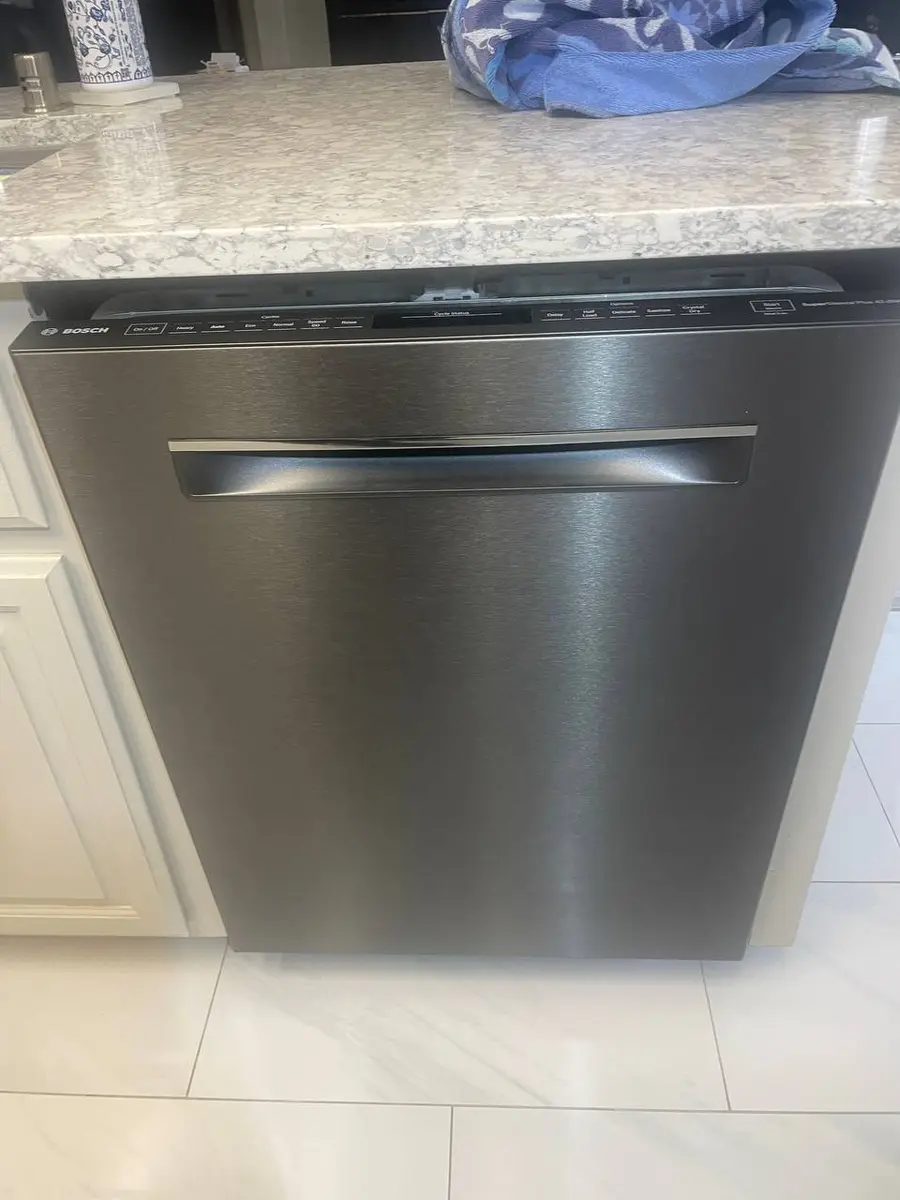
When an LG dishwasher runs too hot, too cold, or bounces between the two, the cause is almost always the temperature-sensing side — a drifting thermistor — or a heating element that's lost output. LG's control board reads the thermistor continuously and drives the element to hit a target, so a bad reading or a weak element throws the whole cycle off. This guide ranks the causes and walks the checks.
The likely culprit#
Most likely: a drifting or failed thermistor. The thermistor tells the board the water temperature, and when it drifts the board heats to the wrong target — reading high makes the water too cold, reading low makes it too hot. It's the most common and least expensive fix. If the thermistor checks out, a partially failed heating element is next.
Do You Have the Right Tools?
Water pressure gauge ($60), spray arm tester, float switch multimeter ($85), and drain inspection camera. Our technician arrives with $3,000+ in professional tools — your diagnostic is free.
Licensed & Insured · 90-Day Warranty · Same-Day Service
Match your symptom first#
- Too cold — greasy residue, undissolved detergent pods, or an HE code: the element losing output, a thermistor reading high, or low supply-water temperature.
- Too hot — heavy steam, warped plastic, or stress-cracked glassware: a thermistor reading low or a control-board relay stuck closed so the element stays on.
- Fluctuating — cleaning that's great one cycle and poor the next: an intermittent thermistor connection or variable household supply temperature.
Safety first#
Disconnect power at the circuit breaker before checking the thermistor, heating element, or control board.
Safety First — Know the Risks
Live 120V wiring in a wet environment is one of the most dangerous DIY scenarios. Water + electricity = serious shock risk. Our techs are licensed and insured — let them handle the risk.
Licensed & Insured · 90-Day Warranty · Same-Day Service
Ranked causes at a glance#
| Likely cause | How common | What you'll notice / what to check |
|---|---|---|
| Thermistor drift or fault | Most common | The wrong target temperature; resistance that doesn't track temperature on a meter. |
| Heating element partial failure | Common | Weak heat; element resistance drifted above spec, greasy results. |
| Control-board temperature logic | Occasional | The board commands wrong heating; a stuck element relay or bad logic. |
| Household supply water too cold | Occasional | The element works harder and longer; incoming hot water below spec. |
Working through each cause#
1. Thermistor drift or fault (most common)#
The thermistor in the sump reports water temperature to the board, and a drifted or failed one sends the board to the wrong target. Disconnect power, unplug its harness, and measure resistance: it should read about 50K-55K ohms at 70F and drop predictably as it warms — roughly 12K-15K ohms at 120F, 5K-8K at 150F, and 3K-4K at 170F. A resistance that's fixed or erratic means a failed sensor. It's inexpensive and accessible in the sump.
2. Heating element partial failure (common)#
The board expects the water to reach target within a set time, and a heating element that's degraded — resistance drifted above spec — heats slowly or not enough, leaving greasy results or an HE code. Disconnect the element leads and measure resistance; a healthy LG element reads around 12-15 ohms, while 20-plus ohms means it's degrading and infinite means it's burned out. Also check each terminal to the chassis reads open, to rule out a ground fault.
3. Control-board temperature logic (occasional)#
If the thermistor and element both test good, the board's temperature logic may be at fault — a relay stuck closed keeps the element on and overheats, while faulty logic can command the wrong heat. LG's Smart Diagnosis through the ThinQ app shows the thermistor readings and whether the board commanded heating and for how long, which reveals whether the board is responding correctly to the sensor. A board confirmed to mis-command is replaced (it sits behind the outer door panel, held by T15 Torx screws).
4. Household supply water too cold (occasional)#
The dishwasher heats incoming water rather than making all its heat from scratch, so cold supply water makes the element work much harder and longer. LG specifies at least 120F incoming hot water for best performance; below about 100F the element may not catch up and can trigger timeout faults. Run the kitchen hot tap for a couple of minutes and measure it — if it arrives cold, the issue is the home's hot water, not the dishwasher.
The Real Cost of DIY
Average DIY attempt: $150-400 in tools you may use once, plus the risk of further damage. Our diagnostic visit costs $0 — we find the problem and give you an honest quote.
Licensed & Insured · 90-Day Warranty · Same-Day Service
The short version#
- Thermistor — most common; resistance that doesn't track temperature (about 50K-55K ohms at 70F).
- Heating element — common; drifted above roughly 12-15 ohms, weak heat.
- Control board — occasional; a stuck relay or bad logic, check Smart Diagnosis.
- Supply water — occasional; incoming hot water below 120F.
What the repair usually involves#
A temperature repair verifies the actual water temperature first, then measures the thermistor and element resistances, checks board behavior with Smart Diagnosis, and confirms the household supply. The thermistor is the most common replacement and the simplest — two wires and a clip in the sump — with the element or board reserved for when those test bad. The fix is confirmed by measuring water temperature on a test cycle.
Don't Void Your Warranty
Opening your appliance yourself may void the manufacturer warranty. Our repair comes with a 90-day guarantee, and we document everything for warranty compliance.
Licensed & Insured · 90-Day Warranty · Same-Day Service
When to call a professional#
Call a technician if the thermistor or element tests out of spec, if Smart Diagnosis shows the board mis-commanding heat, or if plastics are warping from overheating. The cost depends on whether it's the thermistor, the element, or the board plus labor, and a tech can confirm before starting.
Temperature off? Book an EasyBear technician — we service LG dishwashers and carry the thermistor, heating-element, and control parts these LDT and LDP models use.
Senior Appliance Repair Technician · 15 years experience
EPA-certified technician with 15 years of experience specializing in refrigerator and cooling system repairs.