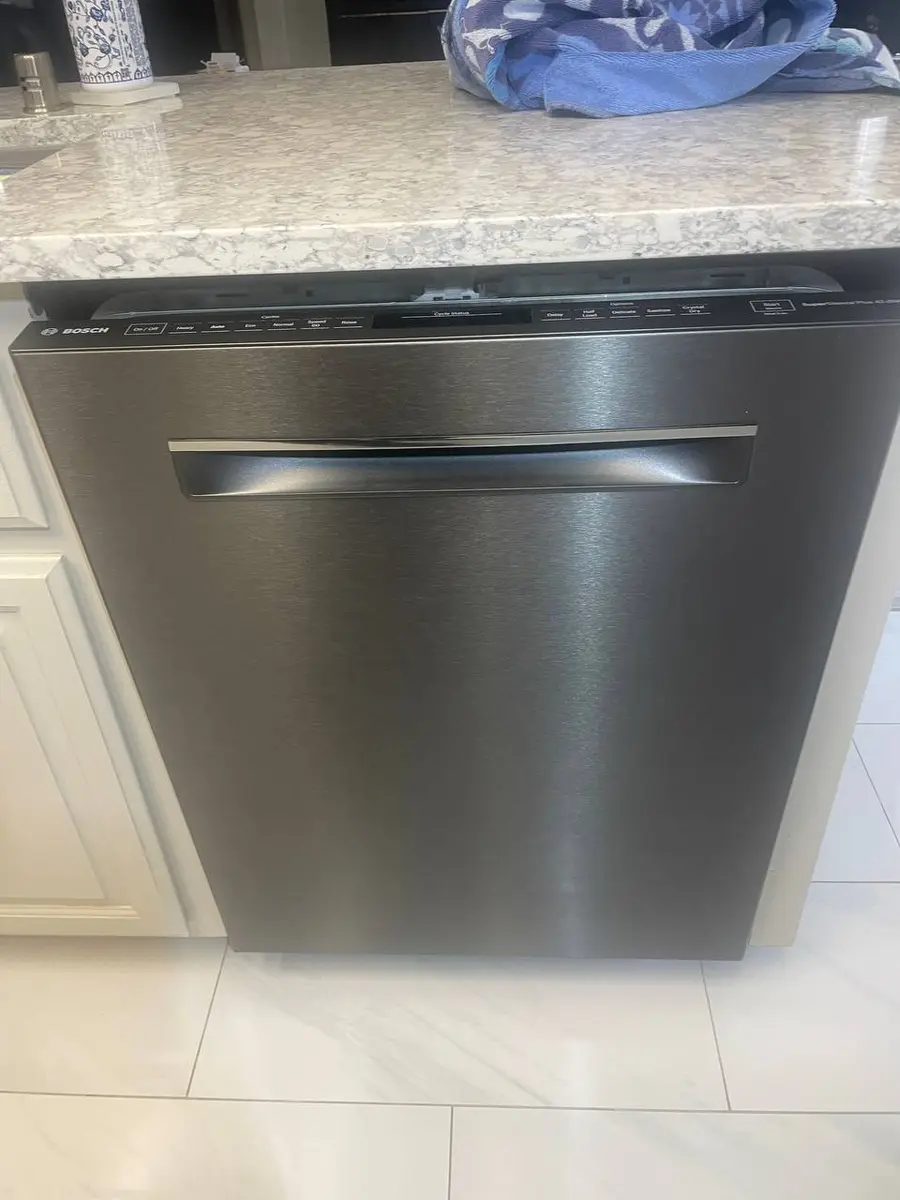
An overflowing LG dishwasher is both a water-damage risk and a specific fault the control flags as error code FE (fill error / overflow) — when the tub level passes the maximum, LG cuts the fill, runs the drain pump, and shows FE. This guide ranks the causes behind it.
Do this first#
Turn off the water supply valve, cut power at the breaker, and clear the standing water before you diagnose — don't just restart it. Restarting an overflowing unit only repeats the flood.
Do You Have the Right Tools?
Water pressure gauge ($60), spray arm tester, float switch multimeter ($85), and drain inspection camera. Our technician arrives with $3,000+ in professional tools — your diagnostic is free.
Licensed & Insured · 90-Day Warranty · Same-Day Service
The likely culprit#
Most likely: a water inlet valve stuck open. The solenoid valve should seal shut when de-energized, but hard-water scale on the seat or diaphragm can hold it partly open so water keeps entering even after the board cuts power — the classic FE overflow. If the valve seals cleanly, the pressure sensor that reads tub level is the next suspect.
Safety first#
Turn off the water supply valve immediately and power off the dishwasher at the circuit breaker.
Do not simply restart the dishwasher — diagnose the overflow cause first.
Safety First — Know the Risks
Live 120V wiring in a wet environment is one of the most dangerous DIY scenarios. Water + electricity = serious shock risk. Our techs are licensed and insured — let them handle the risk.
Licensed & Insured · 90-Day Warranty · Same-Day Service
Ranked causes at a glance#
| Likely cause | How common | What you'll notice / what to check |
|---|---|---|
| Inlet valve stuck open | 40% of FE errors | Tub keeps filling even with power off; scale holding the valve diaphragm open. |
| Pressure sensor failure | 25% of cases | Wrong level readings from a flooded or failed air-trap sensor. |
| Control board fill circuit | 15% of cases | Board keeps the valve energized after a "full" signal; a stuck fill relay. |
| Drain siphon / backflow | 10% of cases | Sink water siphoning back into the tub without an air gap or high loop. |
| Float switch failure | 10% of cases | The base-pan overflow float stuck, so the backup protection doesn't trip. |
Working through each cause#
1. Inlet valve stuck open (40% of FE errors)#
The valve relies on a spring and rubber diaphragm to seal when power is removed, but mineral scale on the seat or diaphragm can prevent full closure so water keeps entering after the board de-energizes it. The definitive test: shut the supply, then turn it back on with the dishwasher powered off — if water enters the tub with the unit off, the valve is mechanically stuck open and needs replacement (LG 5220FR2006H). Hard water accelerates this.
2. Pressure sensor failure (25% of cases)#
LG meters tub level with a pressure sensor that reads through an air-trap chamber, and if that chamber floods, loses its air pocket, or the transducer fails, the board gets wrong level readings and over-fills. The chamber must hold trapped air to work, so soapy water or debris entering it via the connecting tube throws off the reading. Clear and dry the air trap and check the tube from the sump.
3. Control board fill circuit (15% of cases)#
The relay that drives the inlet-valve solenoid can fail closed, so the board keeps powering the valve even after the sensor reports full. This failure bypasses the software control, which leaves the base-pan float switch as the only remaining overflow protection. If the valve and sensor both test good, inspect the board for a stuck fill relay.
4. Drain siphon / backflow (10% of cases)#
This isn't a fill fault but reads like one: without a proper air gap or high loop, dirty water from the sink or disposal can siphon backward into the tub, raising the level. LG requires the drain hose to have an air gap or a high loop above the sink's flood rim. Confirm the drain routing meets that requirement before chasing valve parts.
5. Float switch failure (10% of cases)#
The base-pan float switch is the secondary overflow protection, and if it sticks in the "no water" position it won't cut the fill — combined with a primary sensor fault, that allows an actual floor-level overflow. Remove the kick panel and lift the polystyrene float by hand; you should hear or feel the micro-switch click. No click means the switch needs replacing.
The Real Cost of DIY
Average DIY attempt: $150-400 in tools you may use once, plus the risk of further damage. Our diagnostic visit costs $0 — we find the problem and give you an honest quote.
Licensed & Insured · 90-Day Warranty · Same-Day Service
The short version#
- Inlet valve stuck open — 40% of FE; water enters with power off, replace 5220FR2006H.
- Pressure sensor — 25%; flooded air trap giving a wrong level.
- Control board fill circuit — 15%; a stuck fill relay bypassing software.
- Drain siphon — 10%; add an air gap or high loop.
- Float switch — 10%; stuck base-pan float, no click on lift.
What the repair usually involves#
An FE-overflow repair confirms the inlet valve seals with the power-off test first, then checks the pressure sensor's air trap, the control-board fill relay, the drain routing, and finally the float switch. The base pan is dried to reset the float, and the fix is verified by running a fill and watching it stop at the correct level. Working around a live 120V control area means power stays off until testing calls for it.
Don't Void Your Warranty
Opening your appliance yourself may void the manufacturer warranty. Our repair comes with a 90-day guarantee, and we document everything for warranty compliance.
Licensed & Insured · 90-Day Warranty · Same-Day Service
When to call a professional#
Call a technician if the tub keeps filling after you've confirmed the supply is off, if the pressure sensor or control board is involved, or if FE keeps returning after a valve swap. The cost depends on whether it's the valve, the sensor, or the board plus labor, and a tech can confirm before starting.
Dishwasher overflowing? Book an EasyBear technician — we service LG dishwashers and carry the inlet-valve, pressure-sensor, and float parts these LDT and LDP models use.
Senior Appliance Repair Technician · 15 years experience
EPA-certified technician with 15 years of experience specializing in refrigerator and cooling system repairs.