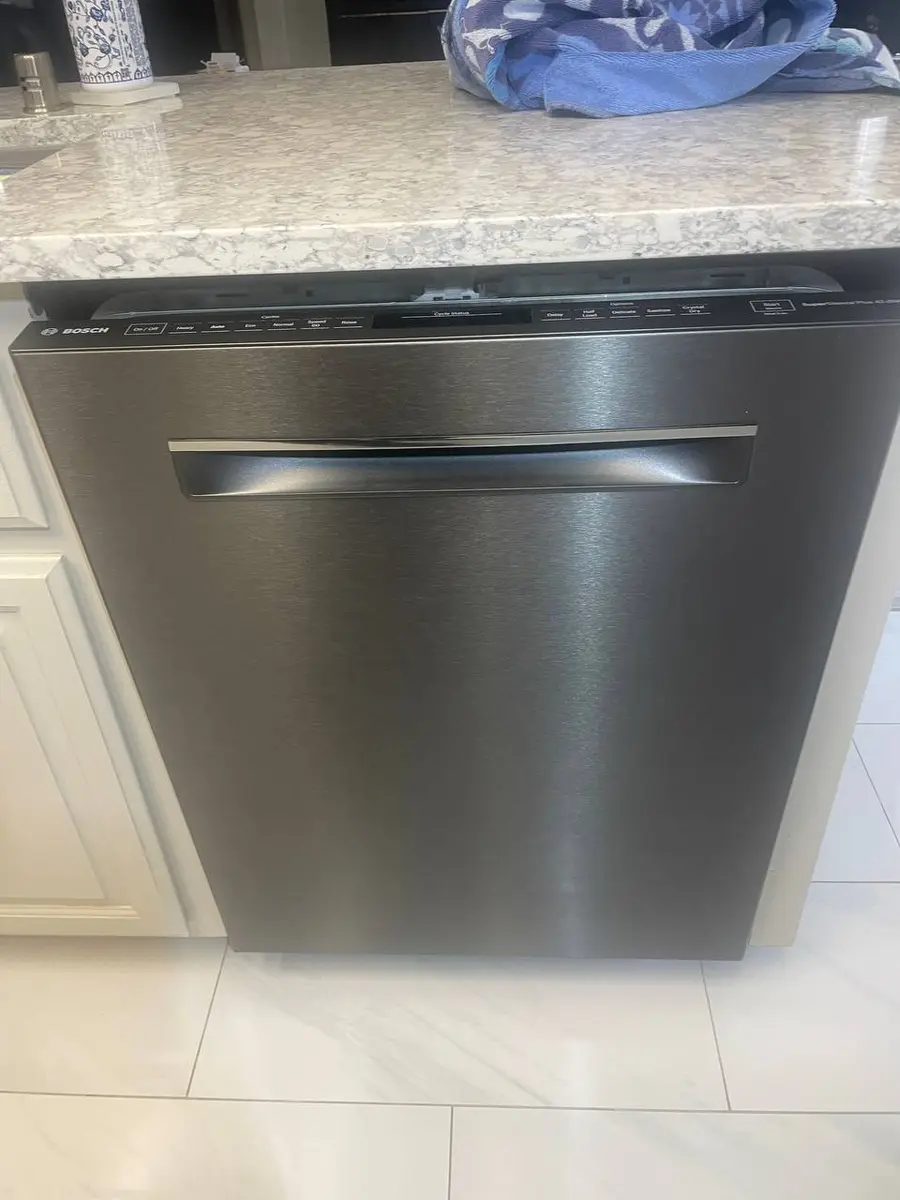
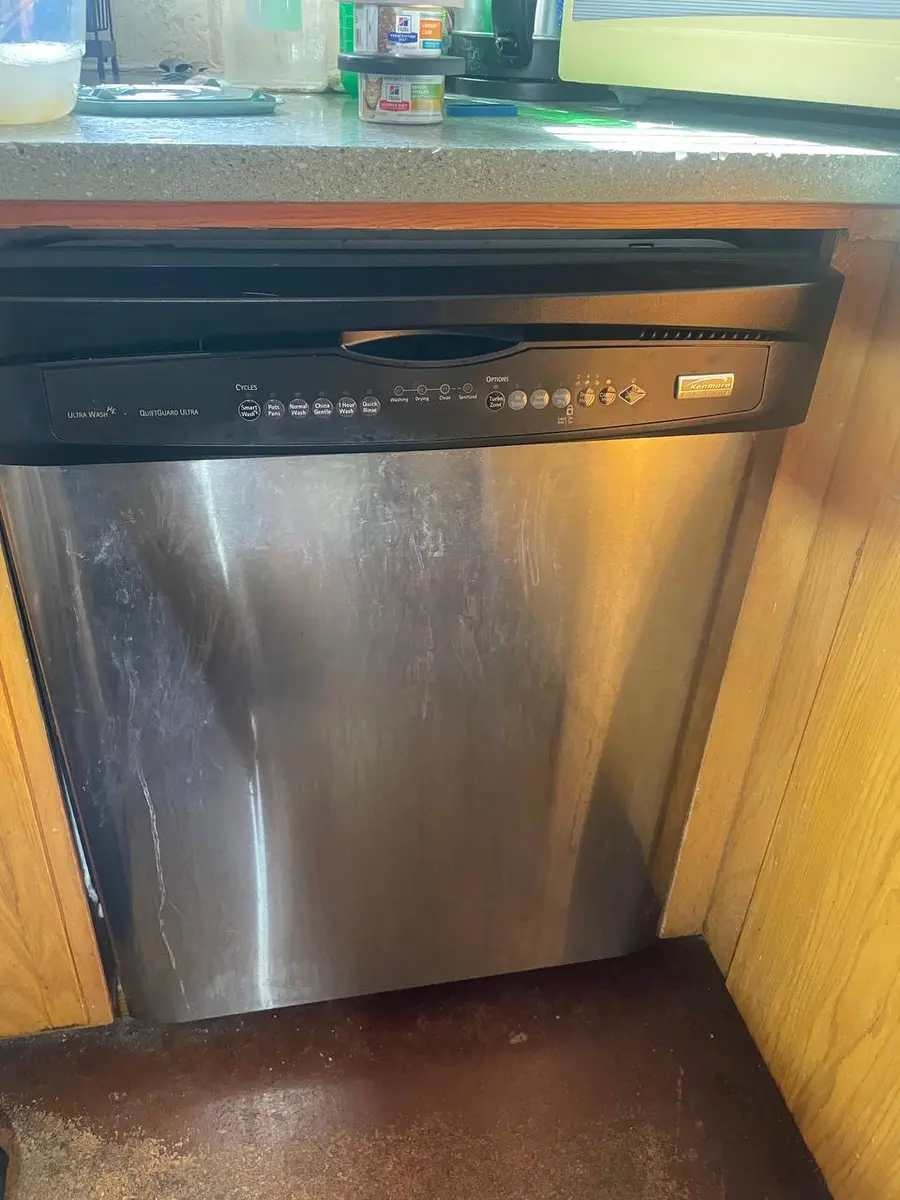
LG Dishwasher Leaking — Source Identification and Repair
Water leaking from an LG dishwasher requires methodical source identification because LG's unique internal architecture creates leak paths that differ from conventional dishwasher designs. The QuadWash system routes water to four spray arms through additional connection points versus the standard two, doubling the potential leak locations in the spray distribution system. The TrueSteam generator (on equipped LDT models) introduces a separate water circuit with its own hose connections inside the door panel. And the Inverter Direct Drive motor's direct coupling to the wash pump eliminates the belt-drive shaft seal but creates a different seal geometry at the pump-to-motor junction.
When your LG dishwasher leaks, the first priority is identifying whether water escapes from the front (door seal area), the bottom (pump or hose connections), or accumulates in the base pan triggering error code AE. Each location points to a different component set.
Locating the Leak Source
Method 1: Paper Towel Grid
Place paper towels on the floor beneath and in front of the dishwasher. Run a short cycle. The wetness pattern on the towels indicates:
- Front center: Door gasket or tub-to-door seal
- Front corners: Door hinge area or spray arm overshoot
- Directly underneath center: Pump seal, sump connection, or drain hose
- Left side underneath: Water inlet valve connection (LG positions inlet on the left)
- Right side underneath: Drain hose routing to garbage disposal/sink
Method 2: LG Diagnostic Fill Test
Enter diagnostic mode (press Rinse + Spray simultaneously for 3 seconds). Advance to the fill-only test. This fills the tub without running the motor, isolating fill-system leaks from wash-pressure leaks. If no leak occurs during fill but appears during wash, the leak is pressure-driven (spray arm connections or pump seal under pressure).
Do You Have the Right Tools?
Water pressure gauge ($60), spray arm tester, float switch multimeter ($85), and drain inspection camera. Our technician arrives with $15K+ in professional tools — your diagnostic is free.
Licensed & Insured · 90-Day Warranty · Same-Day Service
LG-Specific Leak Sources
1. Door Gasket Deterioration (30% of LG Leaks)
The tub-to-door gasket (LG 4036ER2004A) creates the primary water seal around the tub opening perimeter. This rubber gasket sits in a channel on the tub flange and presses against the inner door panel when closed.
Why LG gaskets fail differently: LG's TrueSteam system generates 100C steam during certain wash cycles. This steam contacts the door gasket repeatedly, accelerating rubber aging compared to non-steam dishwashers. Steam-equipped LDT models experience gasket failures 2-3 years earlier than non-steam LDP models on average.
Inspection:
- Open the door fully and examine the gasket around the entire tub perimeter
- Feel for hardened sections (rubber should be pliable)
- Look for tears, especially at the corners where the gasket bends
- Check for gaps between the gasket and the tub channel (gasket should sit firmly in its groove)
- Run your finger along the gasket surface — it should feel slightly tacky; dry/slick indicates degradation
Replacement: The gasket presses into a channel without adhesive on most LG models. Pull the old gasket out of the channel starting at a corner, clean the channel of residue, and press the new gasket in starting from the top center and working around both sides simultaneously.
2. QuadWash Spray Arm Connection Leaks (25% of Cases)
LG's QuadWash technology uses four spray arms (two lower, one middle, one upper) compared to the industry-standard two arms. Each arm connects to the water distribution system through a rotating joint with an O-ring seal. Four arms mean four potential leak points at these seals.
Lower spray arm (most common leak location):
- The lower arm connects to the sump via a reverse-threaded nut (clockwise to remove on LG)
- The O-ring at this connection wears from constant rotation during the multi-motion wash pattern
- Water sprays outward from this connection during high-pressure phases
Middle spray arm:
- Mounts to a feed tube that rises from the sump through the lower rack area
- The connection point is a press-fit with a rubber grommet
- Rack loading and unloading can jostle this connection, loosening it over time
Upper arm:
- Connects to a feed tube running through the upper rack support
- Clips into place — plastic clips can crack with age or if bumped during loading
Inspection approach:
- Remove both racks
- Pull the lower spray arm (clockwise rotation to detach)
- Examine the O-ring on the arm shaft and the mating surface in the sump
- Check the middle arm grommet — push it gently to test seating
- Inspect upper arm clips for cracks
3. Pump-to-Motor Seal (20% of Cases)
Where the Inverter Direct Drive motor mates to the circulation pump body, a mechanical seal prevents water from migrating along the motor shaft into the motor housing. This seal operates under water pressure during wash cycles and relies on a precise mating surface between a rotating ring (on the shaft) and a stationary seat (in the pump housing).
Signs of pump seal failure:
- Leak occurs only during active washing (motor running, water pressurized)
- Water appears directly beneath the center of the unit
- Error code AE may trigger (water reaches the base pan leak sensor)
- Motor may eventually display LE error as water intrusion damages windings
Access: Remove the bottom kick panel (4 Phillips screws). The pump-motor assembly is visible from below. Look for water tracks or mineral deposits on the motor housing — this indicates chronic seepage.
4. TrueSteam Generator Hose Connections (15% on Steam Models)
LG dishwashers equipped with TrueSteam have a small steam generator inside the door panel. This generator connects to the water supply through flexible hoses that route through the door hinge area. The constant door opening/closing flexes these hoses, and the high-temperature steam cycling stresses the connections.
Access for inspection:
- Remove the door (open 45 degrees, lift off hinges)
- Remove inner door panel (8 Torx T15 screws)
- The steam generator and its hoses are visible inside the door cavity
- Check each hose connection for moisture or mineral buildup (indicating slow leak)
- Flex each hose near the connections — brittle rubber or cracking indicates imminent failure
5. Drain Hose Connection at Pump (10% of Cases)
The drain hose connects to the drain pump (4681EA2001T) via a spring clamp. Over time, the rubber hose hardens where it contacts the pump outlet barb, losing its seal. LG uses ribbed pump outlet barbs that rely on hose flexibility for seal integrity.
Quick check: With the kick panel removed, inspect the drain pump outlet during a drain cycle. Even a small amount of seepage here will produce a visible drip during drain phases.
Repair Cost Summary
| Leak Source | LG Part Cost | Professional Repair Total |
|---|---|---|
| Door Gasket (4036ER2004A) | $30–$55 | $120–$200 |
| Spray Arm O-Ring/Seal | $5–$15 | $80–$140 |
| Pump Motor Seal | $20–$40 | $160–$280 |
| TrueSteam Hose | $15–$30 | $130–$220 |
| Drain Hose + Clamp | $10–$25 | $90–$160 |
| Inlet Valve Connection | $30–$55 | $110–$190 |
Same-Day Appliance Repair
Fixed or It's Free
$89 → $0 Service Call & Diagnosis — offer ends May 25
Safety First — Know the Risks
Live 120V wiring in a wet environment is one of the most dangerous DIY scenarios. Water + electricity = serious shock risk. Our techs are licensed and insured — let them handle the risk.
Licensed & Insured · 90-Day Warranty · Same-Day Service
When Leaks Trigger Error Code AE
LG's base-pan flood sensor triggers error code AE and immediately stops all water operations. If you see AE:
- The leak has already deposited enough water to reach the float sensor
- Power off immediately and disconnect from the breaker
- Pull the dishwasher forward (after disconnecting water and drain lines) to access the base pan
- Dry the base pan completely and reset the float sensor manually
- Identify and repair the leak source before operating again
- Running the dishwasher repeatedly with AE triggering can damage electrical components in the base area
Prevention
- Inspect the door gasket quarterly — the TrueSteam heat cycle accelerates rubber aging
- Tighten spray arm connections during monthly filter maintenance (pull the lower arm and reseat it)
- Check the drain hose clamp annually at the pump connection
- Verify the dishwasher is level — an unlevel unit creates uneven water pooling that can overflow the gasket at one corner
- On TrueSteam models, run the steam-clean cycle monthly to prevent mineral buildup in steam hose connections
Active leak from your LG dishwasher? Our technicians perform source identification and carry common LG seals and gaskets for same-visit repair. Schedule your repair →