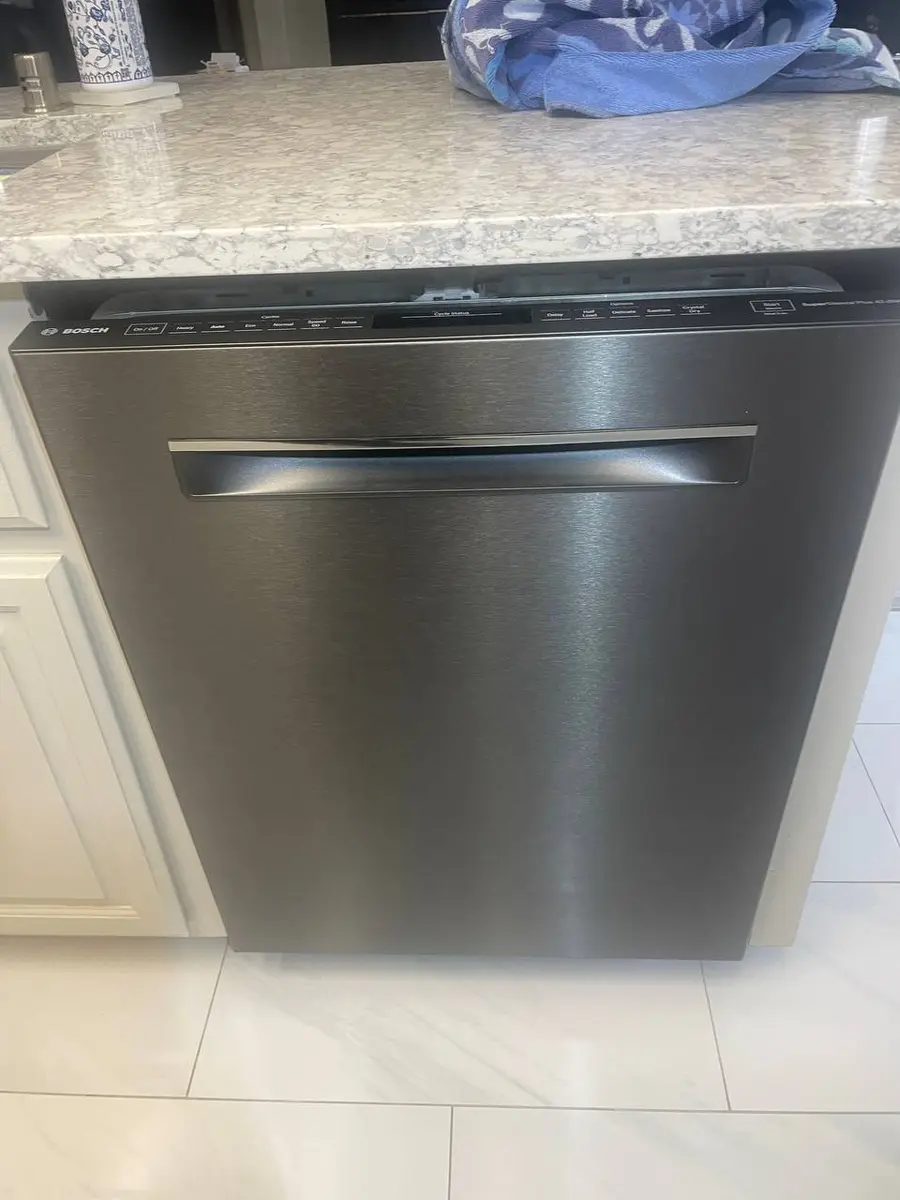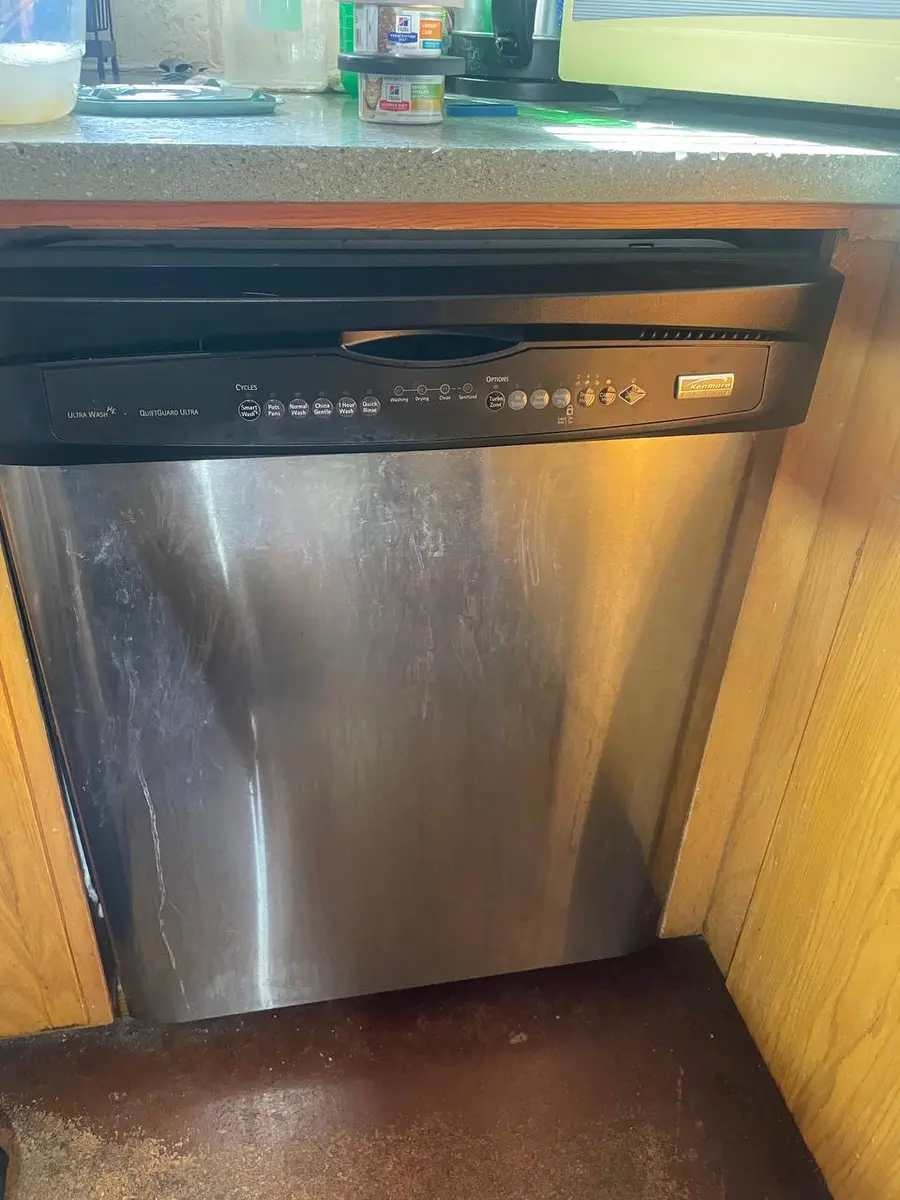
What is the LG Dishwasher HE error?#
HE on an LG dishwasher is a heater error — the heating element that warms the wash water and drives the dry cycle is not performing as the board expects. The result is dishes that come out dirty, wet after the dry cycle, or washed in water that never got hot. It is not a hazard, but cleaning and drying suffer. The first thing I check is whether dishes wash clean but stay wet, which separates a wash-heat problem from a dry-cycle relay fault.
HE on a LG Dishwasher: likely causes and repair cost#
On a LG Dishwasher, the HE code signals: heater error.
| Likely cause | Typical likelihood |
|---|---|
| Heating element failure | Most common |
| Thermostat issue | Common |
Typical professional repair: $170–$310 · Difficulty: hard · usually a technician job
Symptoms that often accompany HE: Dishes not clean after cycle; Dishes wet after dry cycle; Water not hot during wash; Cycle running much longer than normal
Technician diagnostic sequence for HE:
- Check if the dishwasher is connected to the hot water supply — LG dishwashers require incoming water temperature of at least 120F (49C) for optimal performance
- Run the hot water at the kitchen faucet until it is hot before starting the dishwasher — this ensures hot water reaches the unit immediately
- Access the heating element at the bottom of the tub — test for continuity with a multimeter; a functioning element reads 15-30 ohms
- Inspect the element for visible cracks, warping, or mineral scale buildup that can create hot spots and eventual burnout
- Check the thermistor sensor near the heating element — if it reads incorrectly, the board may not activate the heater relay
Parts a technician may check or replace: Heating Element; Thermistor; Main Board — if relay failed
Field note: LG dishwashers use the heater for both wash temperature boost and dry cycle. If dishes wash clean but come out wet, the heater works during wash but the dry-cycle relay on the board may be failing independently. Test the heater relay separately.
Do You Have the Right Tools?
Water pressure gauge ($60), spray arm tester, float switch multimeter ($85), and drain inspection camera. Our technician arrives with $3,000+ in professional tools — your diagnostic is free.
Licensed & Insured · 90-Day Warranty · Same-Day Service
How to troubleshoot the HE error yourself#
HE is largely an internal fault, but the pattern tells you a lot before a technician arrives. Run a normal cycle and watch the outcome: if dishes come out clean but soaking wet, the heater is working during wash and the dry-cycle relay on the board may be failing on its own; if the water never gets hot and dishes are dirty, the heating element itself is suspect. Confirm your rinse aid is filled and the incoming water is hot, since a cool supply exaggerates a marginal heater. Beyond that, an owner cannot safely reach the element. Stop and call a technician if HE returns: the heating element or thermistor has to be metered and replaced, and on this model that is rated a hard repair.
Is the LG Dishwasher HE error worth fixing?#
HE is generally worth fixing on a sound dishwasher. A professional repair runs $170–$310 to replace the heating element or thermistor, or the board if the dry relay has failed — modest against a new dishwasher and under half its price. A heater job stays below my repair-or-replace line. I only lean toward replacement on an older machine where the heater failure joins pump, motor, or rack-corrosion problems that together outweigh the value of the unit.
Safety First — Know the Risks
Live 120V wiring in a wet environment is one of the most dangerous DIY scenarios. Water + electricity = serious shock risk. Our techs are licensed and insured — let them handle the risk.
Licensed & Insured · 90-Day Warranty · Same-Day Service
LG Dishwasher HE: frequently asked questions#
What does the HE error mean on a LG Dishwasher?#
HE is a heater error. The element that heats the wash water and powers the dry cycle is not performing as expected, so dishes come out dirty or wet and the board posts HE.
Is it safe to keep using a LG Dishwasher that shows the HE error?#
Yes, it is not hazardous, but dishes will not wash or dry properly. You can run it for cold-water-tolerant loads while you arrange a repair.
Can I clear the HE error myself, or do I need a technician?#
There is little to clear yourself beyond confirming hot incoming water and rinse aid. A returning HE means the heating element or thermistor needs a technician.
How much does it cost to repair the HE error on a LG Dishwasher?#
A professional HE repair typically runs $170–$310, covering the heating element or thermistor, or the main board if the dry relay has failed.
Which parts usually fail when a dishwasher throws the HE code?#
The heating element is the usual failure, followed by the thermistor and, when dishes wash clean but stay wet, the dry-cycle relay on the main board.
Is a LG Dishwasher with the HE error worth repairing?#
Yes. At $170–$310 the repair is well under the cost of a new dishwasher, so unless the machine is failing elsewhere, fixing HE is worthwhile.
Why does heating element failure trigger the HE error?#
During the cycle the board expects the water temperature to rise as the element heats. When the element opens or weakens, that rise never happens, so the board posts HE.
Senior Gas Appliance Specialist · 18 years experience
AGA-certified gas appliance specialist with 18 years of experience in residential and commercial oven, range, and cooktop repairs.