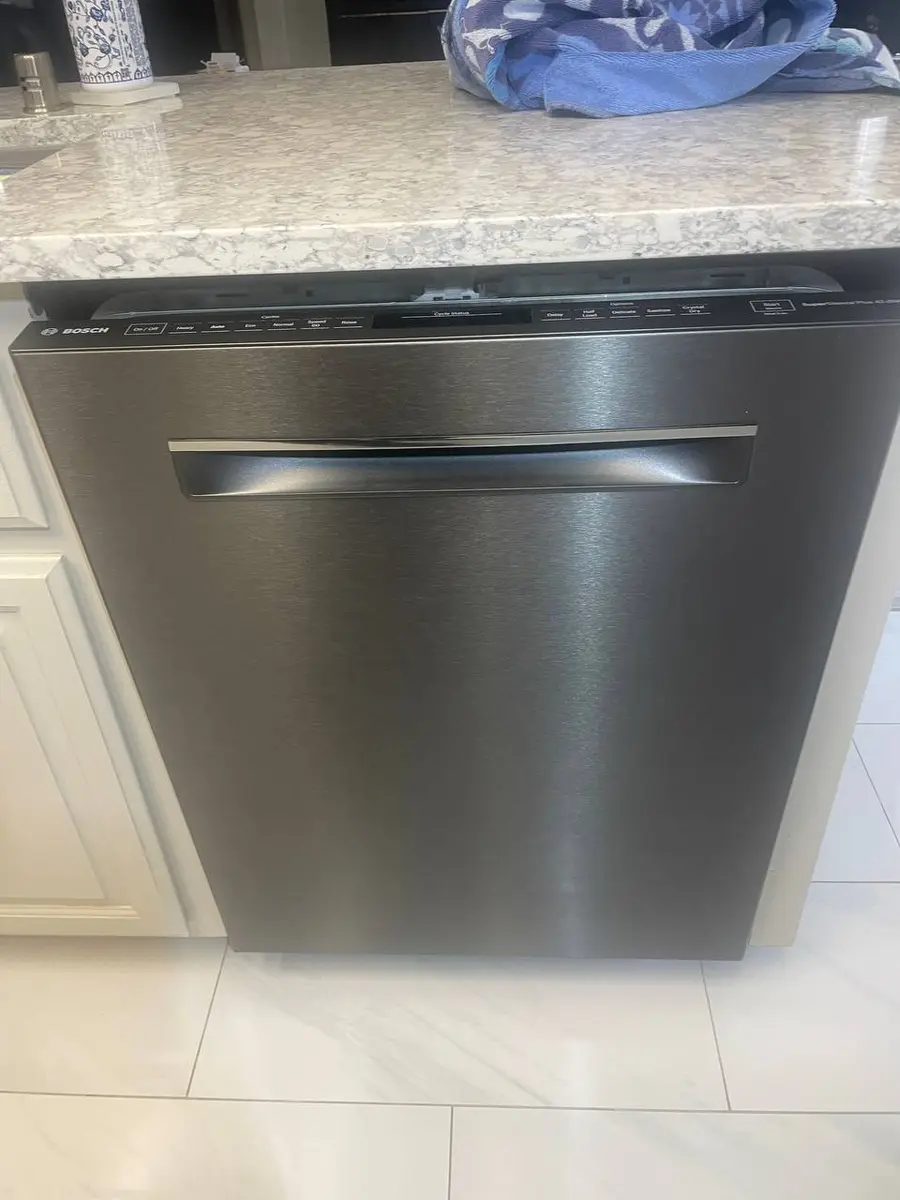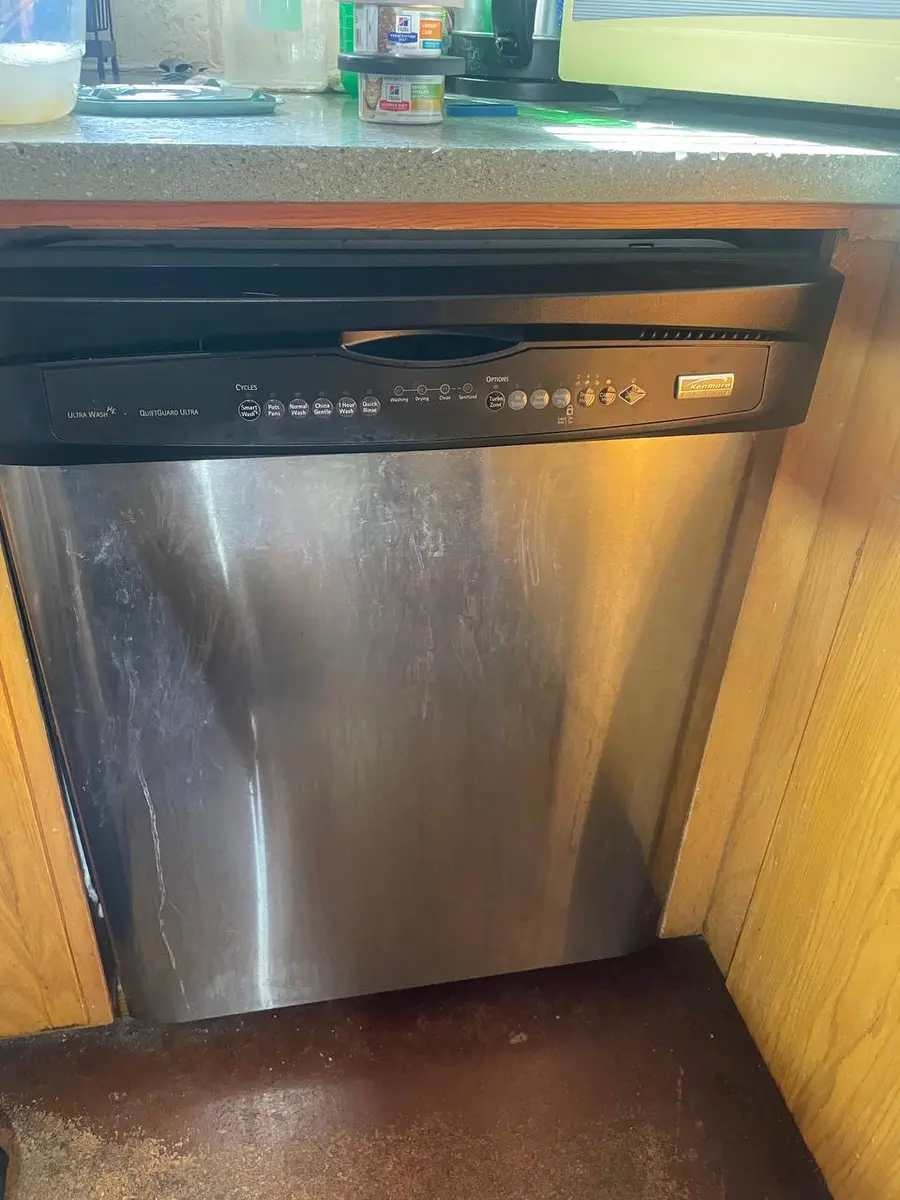
What is the LG Dishwasher AE error?#
AE on an LG dishwasher — sometimes shown as E1 — means the leak-detection float in the base pan has tripped, signaling water where it should not be. Because a genuine leak can damage your cabinets and flooring, treat AE as a stop-and-check code. The catch is that the float can also stick up on detergent residue and cry leak when there is none, so the first thing I check is whether there is actually water pooling under the unit or just a stuck float.
AE on a LG Dishwasher: likely causes and repair cost#
On a LG Dishwasher, the AE code signals: leak detected / float switch.
| Likely cause | Typical likelihood |
|---|---|
| Internal leak | Most common |
| Door seal failure | Common |
Typical professional repair: $150–$320 · Difficulty: hard · usually a technician job
Symptoms that often accompany AE: Water pooling under dishwasher; Dishwasher stopping mid-cycle; Musty smell from under the unit; Water damage visible on adjacent cabinets
Technician diagnostic sequence for AE:
- Turn off the dishwasher and check under the unit for standing water — the AE code triggers from a float switch in the base pan
- Remove the lower kickplate panel and use towels to soak up any water in the base pan, then identify the leak source
- Inspect the door gasket (rubber seal around the door opening) for tears, gaps, or hardening from age and detergent exposure
- Check the spray arm seals, pump connections, and the water inlet valve for drips — run a short cycle with the kickplate removed to observe
- If water appears at the tub-to-sump junction, the main wash pump gasket has failed and needs replacement
Parts a technician may check or replace: Door Gasket; Water Inlet Valve; Pump Gasket Kit
Field note: LG dishwashers use a styrofoam float in the base pan rather than an electronic sensor. If the float gets stuck in the raised position from detergent residue buildup, AE will trigger even without an actual leak. Rinse the float and the guide channel with warm water before ordering parts.
Safety note: Water leaks from dishwashers can damage hardwood floors and subflooring before becoming visible. If AE codes are recurring, inspect the subfloor under the unit for soft spots or mold.
Do You Have the Right Tools?
Water pressure gauge ($60), spray arm tester, float switch multimeter ($85), and drain inspection camera. Our technician arrives with $3,000+ in professional tools — your diagnostic is free.
Licensed & Insured · 90-Day Warranty · Same-Day Service
How to troubleshoot the AE error yourself#
AE rewards a calm inspection because it is not always a real leak. First, turn the dishwasher off at the breaker or unplug it, then look underneath and around the base for standing water. If it is dry, the styrofoam float in the base pan has likely stuck in the raised position on detergent buildup — rinse the float area and let it settle, and AE often clears. If there is real water, check the door gasket for damage and the water inlet valve and hose connections for drips. Wipe the base dry and run a short cycle while watching for the source. Stop and call a technician if you find a genuine internal leak with no obvious hose fault: the door gasket, pump gasket, or valve is leaking inside the cabinet, and LG rates that a hard repair that means pulling the unit.
Is the LG Dishwasher AE error worth fixing?#
AE is worth fixing, and when it is just a stuck float it costs nothing. When a real leak is behind it, a professional repair runs $150–$320 to replace the door gasket, water inlet valve, or pump gasket — modest against a new dishwasher and below half its price. A leak repair at that cost is an easy yes on a sound machine. I only weigh replacement when the dishwasher is old and the leak joins pump, motor, or rack corrosion issues that together outweigh its value.
Safety First — Know the Risks
Live 120V wiring in a wet environment is one of the most dangerous DIY scenarios. Water + electricity = serious shock risk. Our techs are licensed and insured — let them handle the risk.
Licensed & Insured · 90-Day Warranty · Same-Day Service
LG Dishwasher AE: frequently asked questions#
What does the AE error mean on a LG Dishwasher?#
AE, sometimes shown as E1, means the base-pan leak float has tripped. The dishwasher senses water in the base and posts AE to flag a possible leak — real or from a stuck float.
Is it safe to keep using a LG Dishwasher that shows the AE error?#
Not until you rule out a real leak, since water can reach electrical parts and damage cabinets. If the base is dry and only the float stuck, it is safe once you free the float.
Can I clear the AE error myself, or do I need a technician?#
Often yourself — rinsing a float stuck on detergent residue clears a false AE. A genuine internal leak from the gasket, valve, or pump needs a technician.
How much does it cost to repair the AE error on a LG Dishwasher?#
A professional AE repair typically runs $150–$320, covering the door gasket, water inlet valve, or pump gasket. A stuck-float clean can cost nothing.
Which parts usually fail when a dishwasher throws the AE code?#
A genuine internal leak from the door gasket, water inlet valve, or pump gasket is the usual cause. A float stuck on detergent residue triggers a false AE without any failed part.
Is a LG Dishwasher with the AE error worth repairing?#
Yes. Between a free float cleaning and a $150–$320 leak repair, AE is inexpensive to resolve, so fixing it is the sensible choice on any sound machine.
Why does internal leak trigger the AE error?#
Water escaping from a worn gasket or valve collects in the base pan and lifts the leak float. Once the float rises, the switch trips and the dishwasher posts AE to prevent further leakage.
Senior Appliance Repair Technician · 15 years experience
EPA-certified technician with 15 years of experience specializing in refrigerator and cooling system repairs.