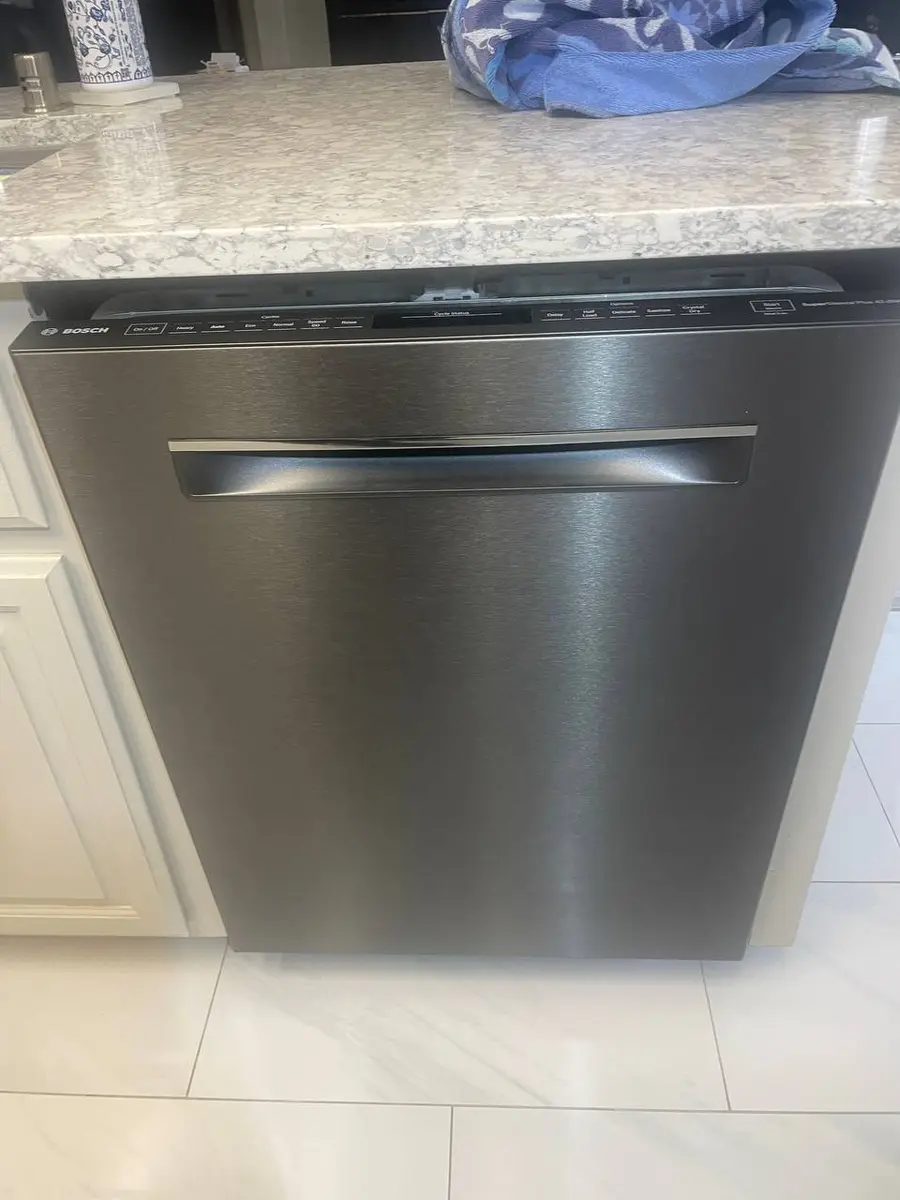
An LG [dishwasher](/blog/repair-or-replace-dishwasher) door latch does two jobs at once — it holds the door shut against wash pressure and it tells the control board the door is secured through built-in micro-switches. The symptom tells you which half failed: no response to Start is the primary switch, a start-then-stop is the safety switch, and LG sells the hook and switches as one assembly, so a single bad switch means the whole latch.
What the Latch Actually Does#
On LG's LDT and LDP dishwashers the latch is more than a hook. It provides the mechanical retention that keeps the door sealed while water fills and sprays, and it provides electrical confirmation through two integrated micro-switches that report the door's state to the board. LG builds all of it — the spring-loaded hook, both switches, and the strike-plate receiver — into a single serviceable unit, part 4027ED3002A across most LDP and LDT models. That integration matters for repair: because the individual switches aren't sold separately, a failure of either one means replacing the entire latch assembly.
Do You Have the Right Tools?
Water pressure gauge ($60), spray arm tester, float switch multimeter ($85), and drain inspection camera. Our technician arrives with $3,000+ in professional tools — your diagnostic is free.
Licensed & Insured · 90-Day Warranty · Same-Day Service
Two Switches, Two Different Jobs#
Understanding the pair is the key to diagnosis. The primary micro-switch is normally-open: when the door closes and the hook engages, it closes and signals the board that the door is secured, and without that signal the board won't energize the fill valve or the motor. The safety micro-switch is normally-closed and wired into the interlock circuit: it opens when the door is properly latched, and if it fails to open, it cuts power to the motor directly, independent of the board's logic. There's a wiring wrinkle unique to LG, too — the latch harness runs through the door-hinge channel that also carries the display's ribbon cable, so trouble in that hinge area can knock out both latch sensing and the display at once.
Let the Symptom Name the Failure#
Each failure mode has its own fingerprint. A dishwasher that gives no response to Start — the display may look ready, but pressing Start does nothing — is the primary switch stuck open, so the board never gets its door-closed confirmation. A unit that starts and then stops within seconds is the safety switch making intermittent contact: the Inverter Direct Drive motor's startup vibration momentarily disrupts it and the safety circuit cuts power. A door-latch error such as CL, or a flashing lock icon on some LDT models, is the board specifically flagging the latch circuit. And a dishwasher that stops at random points mid-cycle is usually a worn or corroded switch contact whose interruptions line up with the drain pump or QuadWash spray-arm vibration, showing up most during the motor's high-speed phases.
Safety First — Know the Risks
Live 120V wiring in a wet environment is one of the most dangerous DIY scenarios. Water + electricity = serious shock risk. Our techs are licensed and insured — let them handle the risk.
Licensed & Insured · 90-Day Warranty · Same-Day Service
Diagnose It in Four Steps#
Start with your eyes. Open the door and inspect the hook on the upper door edge for bending, corrosion, or a spring that no longer snaps it back to the extended position, and look for bits of cracked plastic that signal a failing strike plate. Next examine the strike plate on the tub frame: check for cracks in its housing, confirm the slot receives the hook without binding, make sure it's mounted tight, and clear any mineral scale that blocks full engagement — a real issue in hard-water areas that run 10 to 17 grains per gallon.
Then test the switches with a meter. Cut power at the breaker, open the door to about 45 degrees and lift it off its removable hinges, remove the eight Torx T15 screws from the inner door panel, separate the panels, and disconnect the latch harness. The primary switch should read open at rest and closed when you push the latch trigger; the safety switch should read closed at rest and open when you push the trigger. If either fails those readings, replace the whole assembly. Finally, confirm with LG's diagnostic mode: reassemble, power up, and press Rinse and Spray together for about three seconds to enter it — the sequence includes a door-switch test, and opening and closing the door should toggle the display's reading. Readings that flicker instead of switching cleanly confirm a degrading switch.
Replace the Whole Assembly#
Because the hook and both micro-switches come as one part, replacement is straightforward once the door is open: with a Torx T15 driver, a Phillips screwdriver, and needle-nose pliers you disconnect the harness, unbolt the old latch, fit the new 4027ED3002A assembly, and reconnect. Don't try to salvage a single switch — it isn't offered on its own, and a latch that failed once electrically is on its way out mechanically too. A latch replacement that also cures a flaky display often means you were fighting that shared hinge-channel harness all along, so route the new wiring cleanly to keep both working.
The Real Cost of DIY
Average DIY attempt: $150-400 in tools you may use once, plus the risk of further damage. Our diagnostic visit costs $0 — we find the problem and give you an honest quote.
Licensed & Insured · 90-Day Warranty · Same-Day Service
Mistakes That Waste a Latch Replacement#
A few missteps turn a clean job into a callback. The first is forcing the door off its hinges instead of opening to roughly 45 degrees and lifting straight up — LG's removable-hinge design releases cleanly at that angle, and prying at the wrong angle bends the hinge and throws the strike plate out of alignment. The second is over-tightening the eight Torx T15 inner-panel screws on reassembly, which can crack the plastic panel and, worse, distort the new latch's mounting so the hook no longer seats squarely. The third is pinching the harness when the panels go back together; because that same channel carries the display ribbon, a pinched wire can leave you with a dead display and a fresh latch that still won't sense the door. And the fourth is skipping the diagnostic-mode confirmation after the swap — powering up and toggling the door-switch test proves the new switches are reading before you call it done, rather than discovering the strike plate is misaligned on the next real cycle.
When a Failed Latch Points to Something Bigger#
Sometimes the latch is the symptom, not the disease. If a new assembly fails quickly, look at what's shaking it: a dishwasher that vibrates hard because it isn't level, or because the drain pump or QuadWash arm is unbalanced, will hammer the safety switch into intermittent contact and wear a fresh latch prematurely. A door that has dropped on worn hinges puts the hook and strike plate slightly out of register, so the latch never seats fully and the switches ride on the edge of their travel. And repeated cracking of a plastic strike plate suggests the door is being slammed rather than closed. So when you replace a latch, take a minute to confirm the machine sits level, the door closes with gentle pressure, and the hinges hold the door square — otherwise you'll be back inside that door panel before long.
Related reading: an LG dishwasher that won't start and an LG dishwasher with a dark display.
LG [dishwasher repair](/blog/complete-guide-dishwasher-repair) across [Sacramento](/sacramento/sacramento) and the Bay Area — latch, switch, and control diagnostics in one visit. Book a technician.
Senior Appliance Repair Technician · 15 years experience
EPA-certified technician with 15 years of experience specializing in refrigerator and cooling system repairs.