A refrigerator does not warm food, so a KitchenAid "not heating" complaint really means the defrost heater is not running. Without periodic defrost, frost builds on the evaporator over one to three weeks until airflow is choked and the whole refrigerator stops cooling. KitchenAid uses the Whirlpool Adaptive Defrost Control, so the fault tree follows that system.
Most Likely Cause#
Most likely: a failed defrost heater — it no longer melts the frost the Adaptive Defrost Control calls for, so ice accumulates until it blocks the evaporator. A failed defrost thermostat, an ADC/board fault, or a bad defrost sensor account for the rest.
Do You Have the Right Tools?
Refrigerant gauges ($200+), vacuum pump ($250), leak detector ($150), and EPA-certified recovery equipment. Our technician arrives with $3,000+ in professional tools — your diagnostic is free.
Licensed & Insured · 90-Day Warranty · Same-Day Service
Ranked Causes#
| Cause | Share | What you notice | Check |
|---|---|---|---|
| Defrost heater open | 45% | Frost sheet on the evaporator; weak cooling | Heater continuity |
| Defrost thermostat | 25% | Heater never energizes | Thermostat continuity when cold |
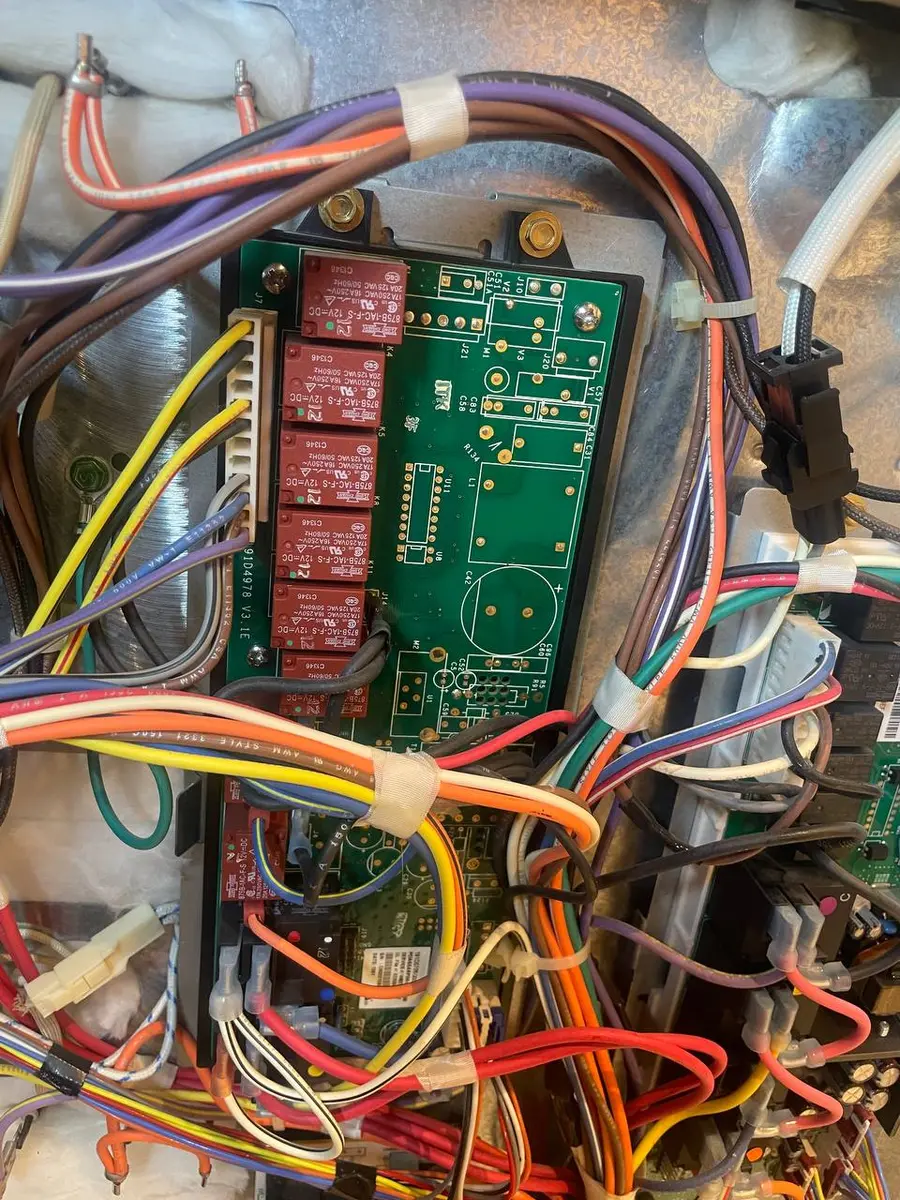
| Adaptive Defrost Control / board | 20% | No defrost cycle initiated | ADC output (board W10366605) |
| Defrost sensor | 10% | Cycle timing wrong | Sensor resistance |
How KitchenAid Adaptive Defrost Works#
Rather than a fixed timer, the Adaptive Defrost Control decides when to defrost based on how the refrigerator is used, then energizes the defrost heater long enough to clear the evaporator while a thermostat caps the temperature. If the heater is open, the thermostat never closes, or the ADC never calls the cycle, frost keeps building. Symptoms come on gradually over one to three weeks as ice slowly blocks the airflow.
Safety First — Know the Risks
Refrigerant (R-134a/R-600a) requires EPA certification to handle. Improper discharge is a federal violation and health hazard. Our techs are licensed and insured — let them handle the risk.
Licensed & Insured · 90-Day Warranty · Same-Day Service
Emergency Manual Defrost#
- Thaw the evaporator. Empty the unit and power it off for several hours (or overnight) with doors open to melt the frost sheet and restore cooling temporarily.
- Test the heater. With power off, meter the defrost heater for continuity; an open reading means it has failed.
- Check the thermostat. The defrost thermostat should close when cold to feed the heater; test its continuity at temperature.
- Assess the ADC/board. If the heater and thermostat are good but no defrost cycle runs, the Adaptive Defrost Control on board W10366605 is the cause.
Prevention#
- Do not block the rear vents inside the fresh-food compartment.
- Keep the door seals clean so humid air does not add to frost load.
- Address slow cooling early — it is often the first sign of a defrost fault.
The Real Cost of DIY
Average DIY attempt: $150-400 in tools you may use once, plus the risk of further damage. Our diagnostic visit costs $0 — we find the problem and give you an honest quote.
Licensed & Insured · 90-Day Warranty · Same-Day Service
When Should You Call a Professional?#
Defrost diagnosis means metering the heater and thermostat behind the rear evaporator panel and, in some cases, confirming the Adaptive Defrost Control on the board — work that involves partial disassembly and careful part matching. If a manual defrost restores cooling but frost returns within a week or two, have a technician identify which defrost component failed rather than swapping parts by guess.
Repair or Replace?#
A defrost heater, thermostat, or sensor is an inexpensive repair, and only the control board is a larger part — none justifies replacing the refrigerator. A diagnosis confirms which and gives an upfront quote. Schedule service if frost returns after a manual defrost.
Don't Void Your Warranty
Opening your appliance yourself may void the manufacturer warranty. Our repair comes with a 90-day guarantee, and we document everything for warranty compliance.
Licensed & Insured · 90-Day Warranty · Same-Day Service
Frequently Asked Questions#
What should I do if my KitchenAid refrigerator is not heating and not cooling well?#
The "not heating" is the defrost heater failing, which lets frost block cooling. Manually defrost by powering off for several hours, then have the heater, thermostat, and defrost control tested to find why the cycle stopped.
Why did cooling get worse over a couple of weeks?#
That gradual decline is the defrost signature — frost builds on the evaporator over one to three weeks until it chokes airflow. A working defrost cycle would have cleared it, so the heater or its control has failed.
Is a defrost repair worth it?#
Yes. The heater, thermostat, and sensor are low-cost parts, and the fix restores full cooling far more cheaply than replacing the refrigerator.
Appliance Repair Technician · 11 years experience
Experienced technician with 11 years specializing in Frigidaire and Electrolux refrigerator and dryer repair with a focus on safety.