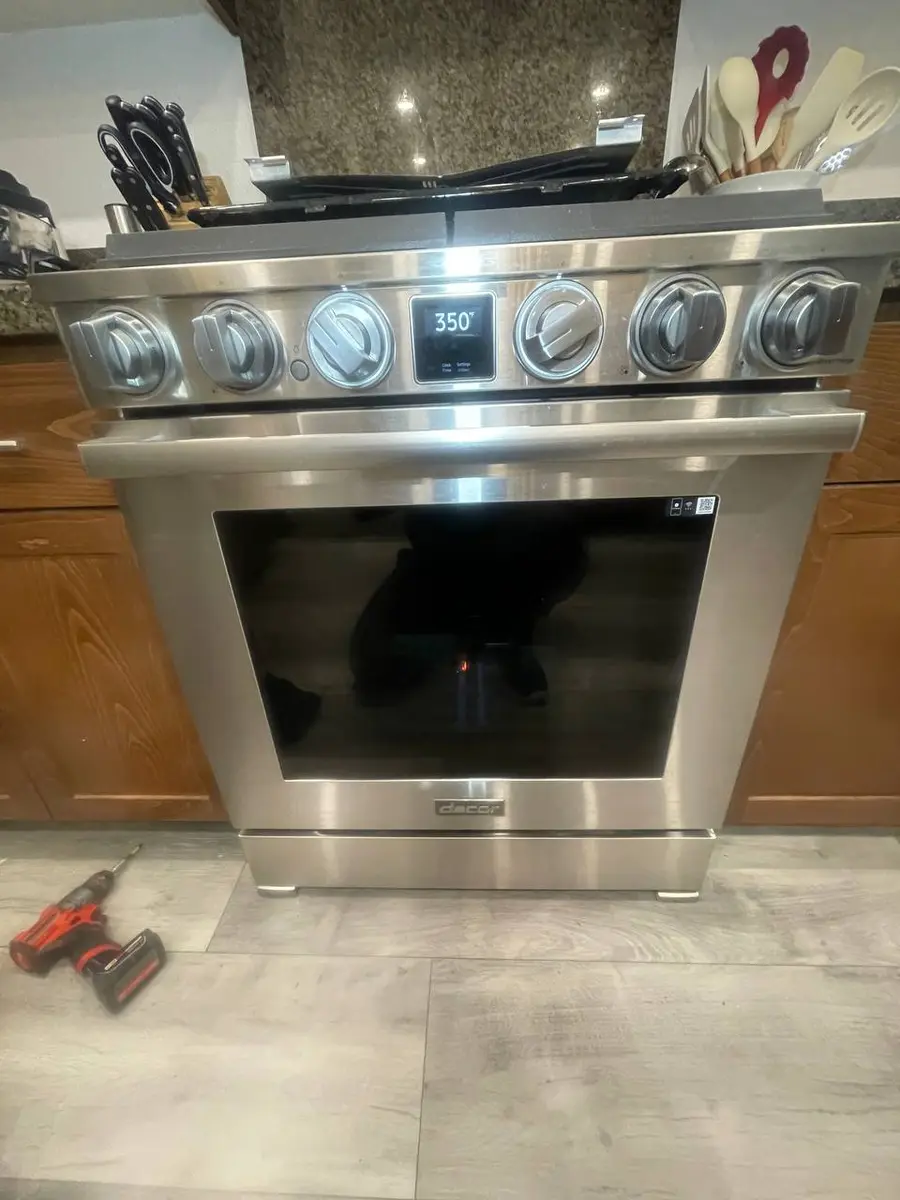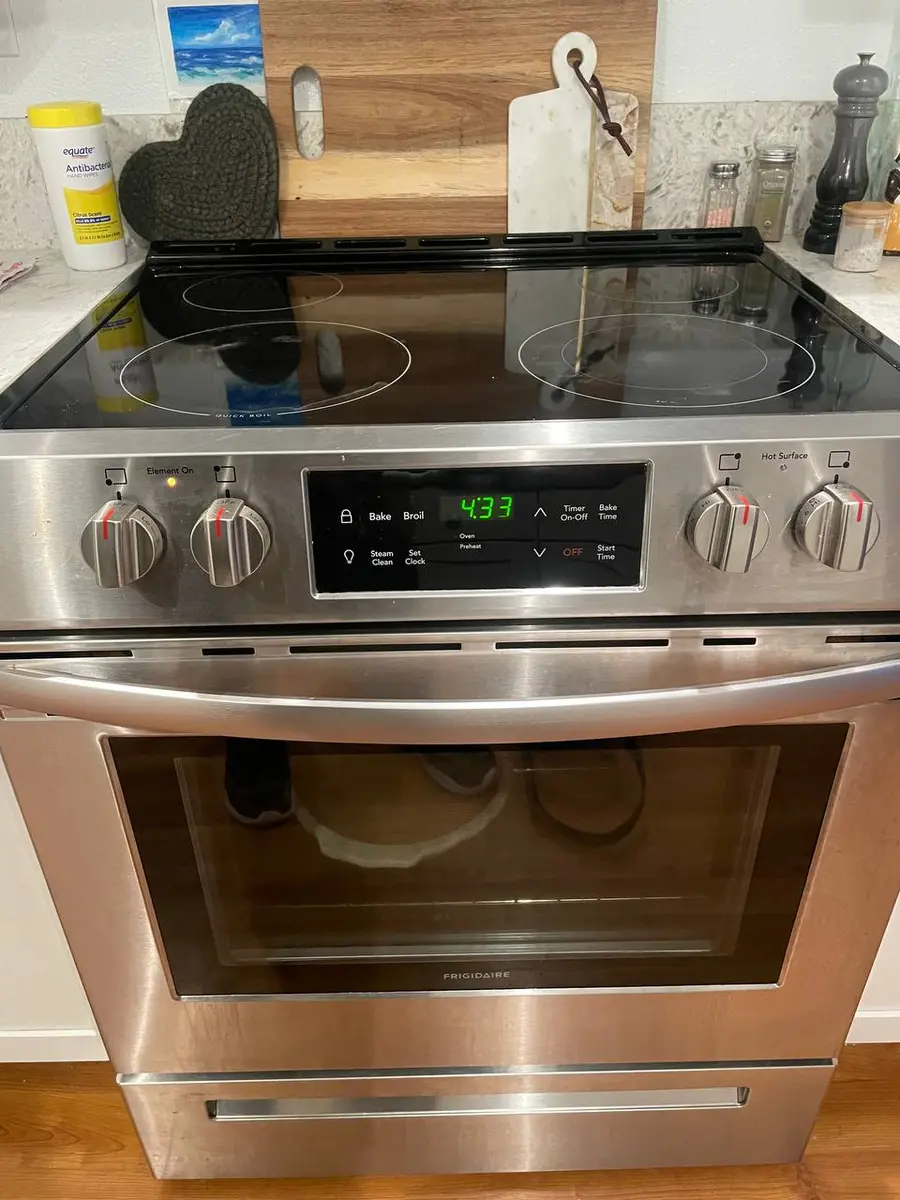
Quick Answer: Why Your KitchenAid Oven Trips the Breaker#
Most likely: a bake or broil element has shorted to ground, dumping a current spike that overwhelms the 40A or 50A circuit and trips the breaker the moment the oven calls for heat. When the trip lines up with a self-clean cycle, the 900°F heat has usually pushed a marginal element or its wiring insulation past failure. A gas KitchenAid range trips its lighter 120V/15A control circuit far less often, and when it does the convection fan motor is the usual short. The goal is to isolate which circuit faults, not to keep resetting the breaker.
Likely Causes at a Glance#
| Cause | Likelihood | What to check |
|---|---|---|
| Bake or broil element shorted to ground | Most likely | trips the instant Bake or Broil is selected; meter each element terminal to its metal housing — any continuity means a dead short |
| Terminal block arcing | Common | loose or corroded cord connections behind the rear panel; look for burn marks or a hot electrical smell |
| Self-clean heat damage | Common trigger | a trip during or right after a 900°F self-clean means the heat cracked an element or its insulation |
| Control board relay welded shut | Occasional | a heating relay stuck closed passes uncontrolled current; usually behind random, intermittent trips |
| Convection fan motor short (gas range) | Rare | on gas models the 120V/15A circuit trips when the fan motor windings short |
Do You Have the Right Tools?
Combustion analyzer ($300), igniter tester ($120), temperature calibrator ($150), and gas pressure manometer. Our technician arrives with $3,000+ in professional tools — your diagnostic is free.
Licensed & Insured · 90-Day Warranty · Same-Day Service
Walking Through the Diagnosis#
Safety comes first, and one rule is absolute: never swap a 40A breaker for a 50A one to stop the trips. The breaker protects the house wiring, and upsizing it invites a fire. Do not sit there resetting a breaker that trips instantly either — each reset arcs at the short and can damage the wiring further. If the breaker lets go while the oven is switched off, there is a dead short in the power cord or terminal block, so unplug the unit before you touch anything.
Isolate the fault by walking the circuits one at a time. Reset the breaker with the oven off; if it drops immediately, the cord or terminal block is shorted. If it holds, turn on only the oven light — a trip here means internal wiring. Then select Bake, then Broil, then Convection in turn: whichever selection trips the breaker names the faulted element. Confirm with a meter by reading resistance from each element terminal to the element housing (ground); it should be open, and any continuity condemns that element.
Self-clean is the single event that precipitates most of these trips, because 900°F stresses every part to its limit. If your oven is more than seven years old, cleaning by hand instead of running self-clean sidesteps the highest-risk operation. Professional-style KFGC and KFDC ranges also draw more peak current than standard models and need a dedicated 50A circuit — a home wired for a 40A range can trip simply because the circuit is undersized.
Repair or Replace? The Short Version#
A shorted element or a scorched terminal block is an inexpensive, targeted repair that stays far under the cost of a new range. The reason to move quickly is safety rather than money — a ground fault is live current, and repeated arc-flash resets do real damage. If chasing a short in a 240-volt appliance is not something you want to do, our technicians run the isolation sequence and replace the faulted part in one visit — book a repair.
Safety First — Know the Risks
Gas ovens involve live gas lines — a loose connection creates explosion and carbon monoxide risk. Electric ovens run on 240V circuits. Our techs are licensed and insured — let them handle the risk.
Licensed & Insured · 90-Day Warranty · Same-Day Service
Frequently Asked Questions#
Why does my KitchenAid oven only trip when I select Bake?#
That points straight at the bake element shorting to ground. When its internal resistance wire breaks and touches the grounded housing, energizing Bake creates a dead short and the breaker drops within seconds. Meter the element terminals to the housing — continuity confirms it.
Is it safe to keep resetting the breaker?#
No. A breaker that trips instantly is doing its job, and every reset produces an arc flash at the short that can worsen the wiring damage. Isolate the faulted circuit instead, and if the breaker trips with the oven off, unplug the unit — that is a dead short in the cord or terminal block.
The breaker trips right after a self-clean — is that a coincidence?#
It rarely is. A self-clean cycle runs at 900°F and pushes marginal elements and insulation past failure, so a trip during or just after cleaning usually means the heat opened a ground fault. On ovens over seven years old, manual cleaning avoids the stress that triggers it.
Do gas KitchenAid ranges trip breakers too?#
Less often, because a gas range only draws a 120V/15A control circuit. When one does trip, the convection fan motor shorting is the common cause, followed by an igniter-circuit fault or the control board.
Appliance Repair Technician · 11 years experience
Experienced technician with 11 years specializing in Frigidaire and Electrolux refrigerator and dryer repair with a focus on safety.