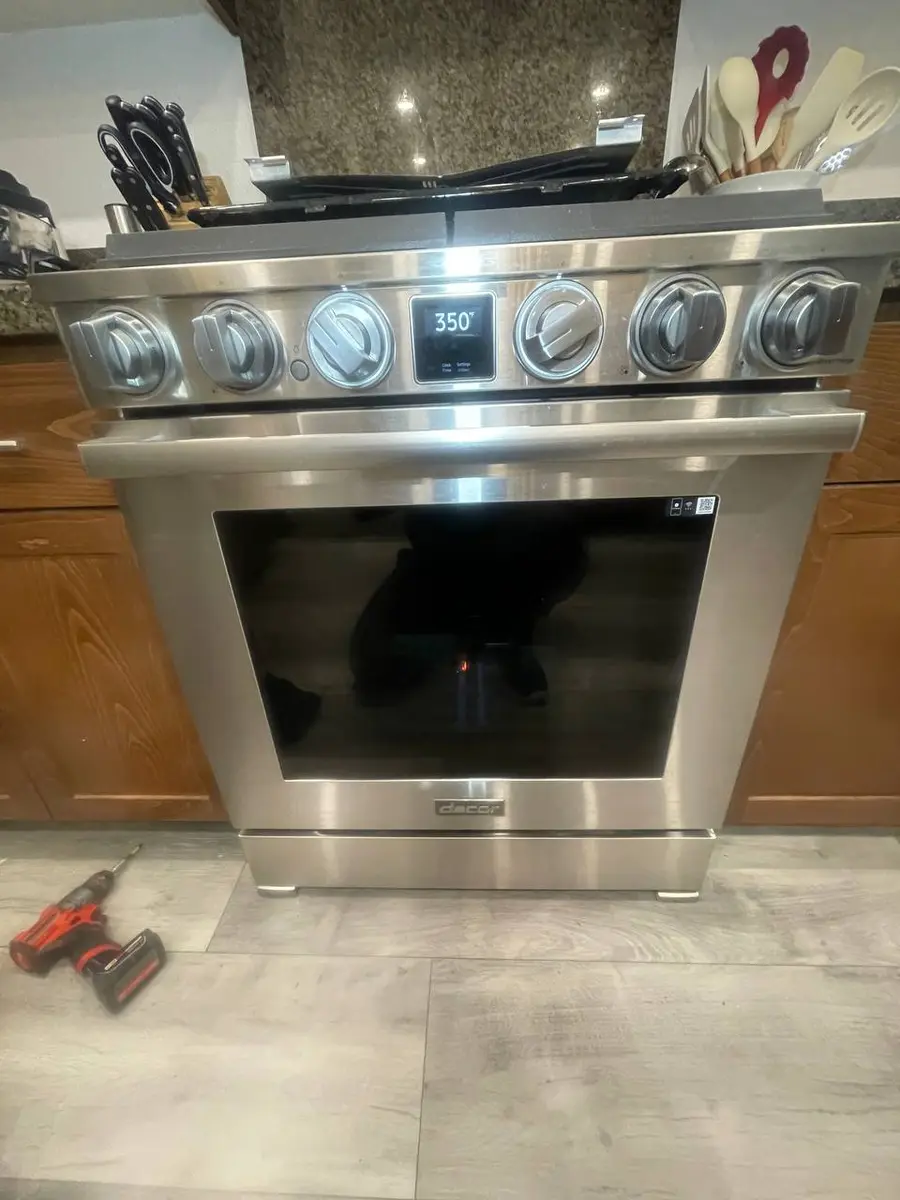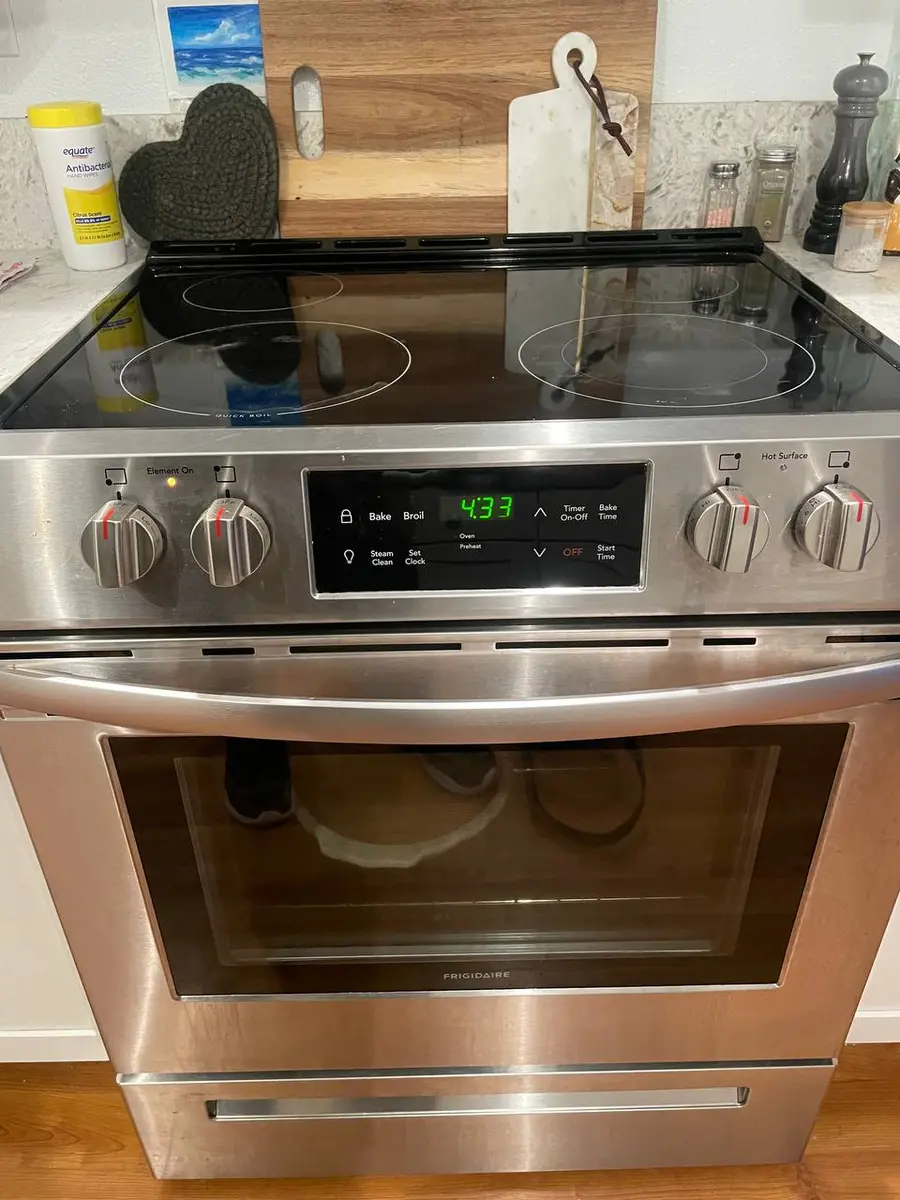
KitchenAid Oven Error Code Displayed — Solved
KitchenAid ovens share the Whirlpool control platform, so they use the same F#E# error codes — the letter-plus-number on the display points to a specific fault. The most common are the F3 sensor codes, the F5 door-latch codes, and the F1 control-board codes. Note the exact code, then power-cycle (unplug for 2…
Entering diagnostic mode#
On most KitchenAid models from 2010 on, press any 3 buttons in sequence within 8 seconds, three times — all display segments light up if you're in. Older models may use Cancel-Cancel-Cancel (three presses within 2 seconds) or a combination printed on the tech sheet inside the console top or behind the lower panel.
The sensor codes (F3)#
The oven temperature sensor is an RTD that reads about 1,080 ohms at room temperature. F3 E0 is an open circuit — a broken wire, corroded connector, or failed sensor, so check the connector at the rear cavity wall first since vibration loosens it. F3 E1 is a short (near-zero resistance — replace the sensor). F3 E2 means the oven exceeded its temperature limit, which points to a shorted element with a welded relay or a sensor reading falsely low; cancel the cycle and disconnect power.
Do You Have the Right Tools?
Combustion analyzer ($300), igniter tester ($120), temperature calibrator ($150), and gas pressure manometer. Our technician arrives with $3,000+ in professional tools — your diagnostic is free.
Licensed & Insured · 90-Day Warranty · Same-Day Service
Door-latch and control codes#
- F5 E1 / F5 E2 (door latch). F5 E1 means the self-clean latch motor ran but the switch never confirmed lock; F5 E2 means it won't unlock after self-clean — don't force the door, just power-cycle and let the oven cool below 550 degrees F, when the lock should release.
- F1 E0 / F1 E1 (control board). F1 E0 is corrupted board memory — power-cycle, and if it returns the main board needs replacing; F1 E1 is a communication failure between the main and user-interface boards, so reseat the ribbon cable first.
- F2 E0 / F2 E1 (heat and keypad). F2 E0 is an overtemperature reading, usually a shorted sensor or a relay stuck closed; F2 E1 is a stuck key — clean around the buttons, and if it persists the touchpad or UI board has failed.
- F8 E0 / F8 E1 (power). These flag low voltage. These ranges need full 240 volts on a dedicated 40-amp or 50-amp circuit; a tripped breaker pole or a loose terminal creates a half-voltage condition.
KitchenAid-specific notes#
On Even-Heat True Convection models the convection element and fan are separate, so a dead convection element gives poor convection with no error code — you diagnose it by observation. The EasyConvect system can also produce burnt or undercooked food without a code if the sensor is reading wrong, and WiFi-connected Smart Oven+ models may show connectivity messages that aren't appliance faults and clear on a power cycle.
Safety First — Know the Risks
Gas ovens involve live gas lines — a loose connection creates explosion and carbon monoxide risk. Electric ovens run on 240V circuits. Our techs are licensed and insured — let them handle the risk.
Licensed & Insured · 90-Day Warranty · Same-Day Service
When to call, and a holiday note#
Treat any F2 overtemperature code, any F5 door-latch code during self-clean, or an F1 code that persists after a power cycle as a job for a technician — and don't work on 240-volt oven circuits if you're not comfortable. With holiday baking ahead, sort a real code now rather than mid-meal. A single sensor, latch, or board fault on a KitchenAid under 8 to 10 years old is well worth repairing — book an EasyBear technician.
Appliance Repair Technician · 11 years experience
Experienced technician with 11 years specializing in Frigidaire and Electrolux refrigerator and dryer repair with a focus on safety.