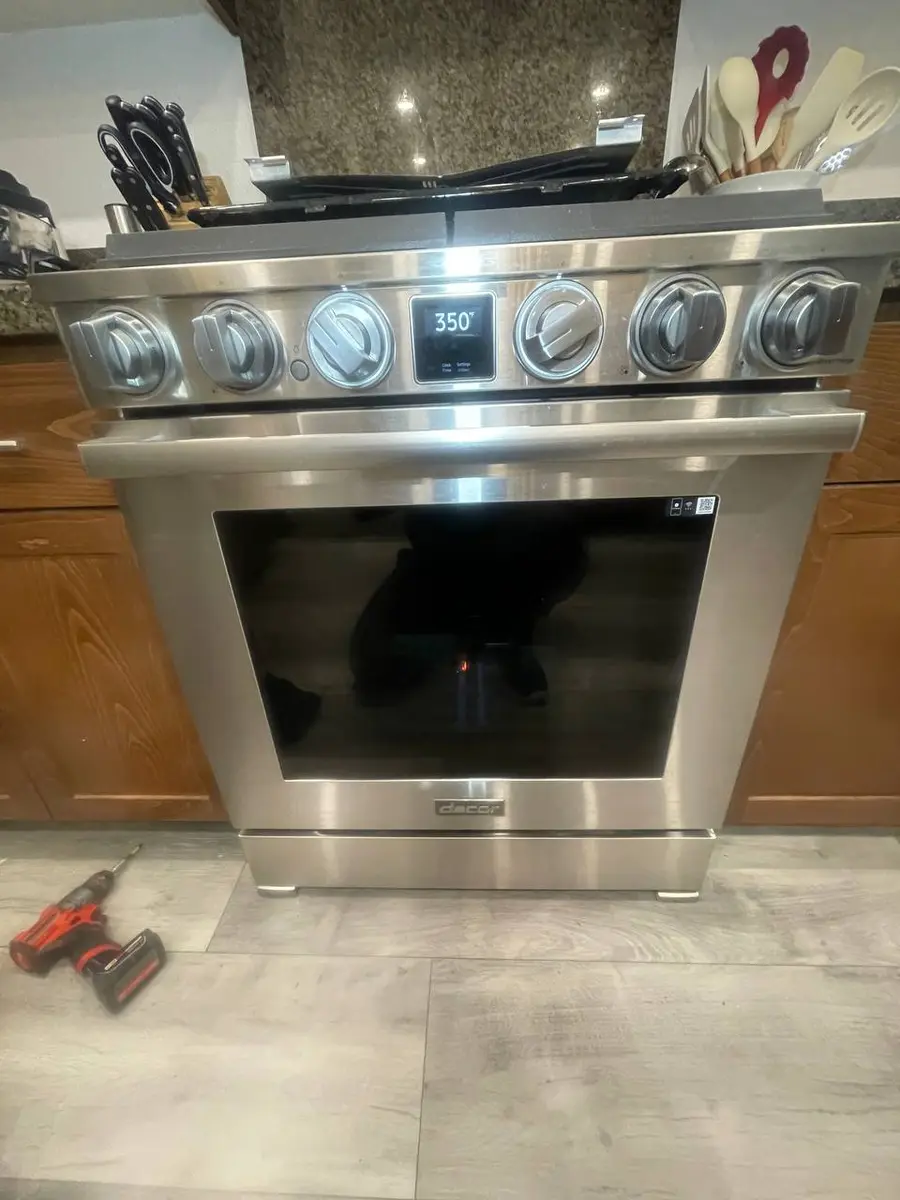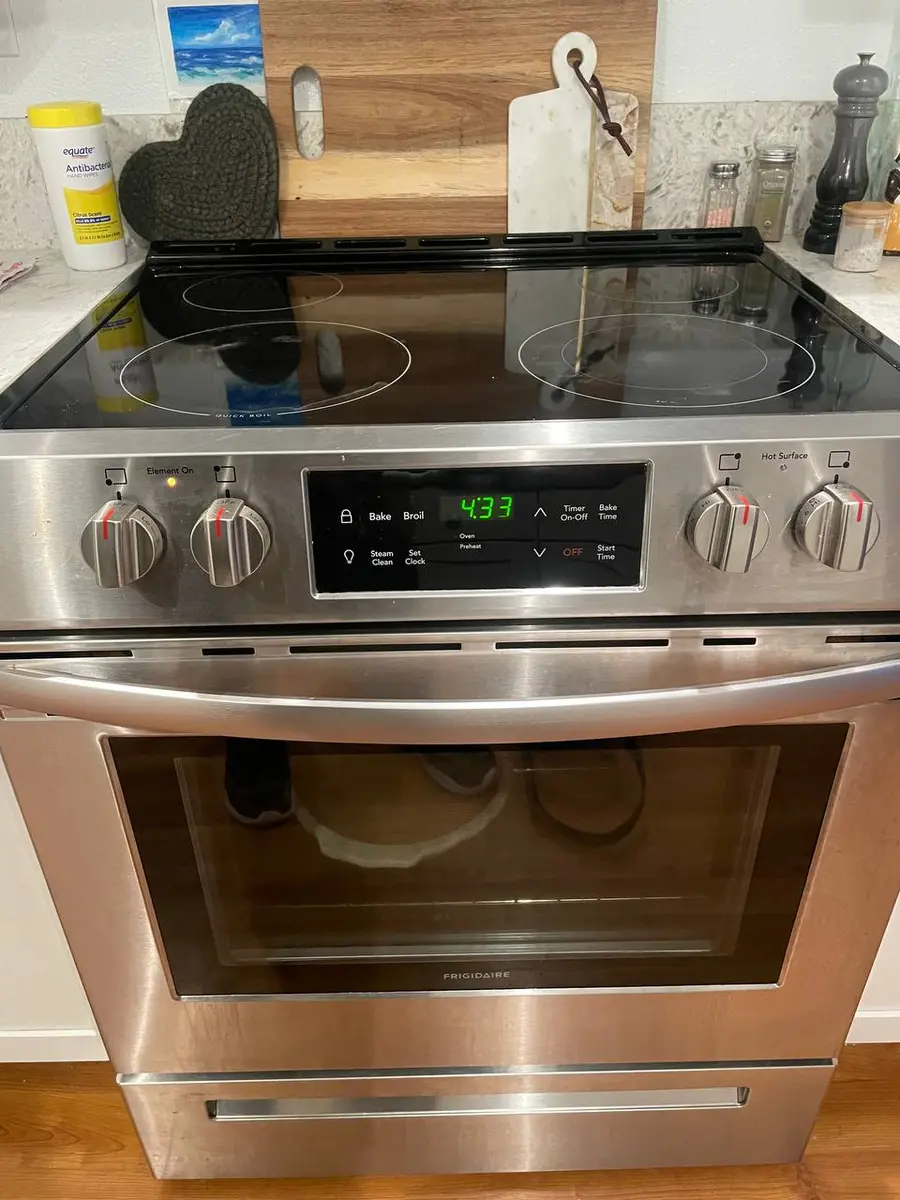
Quick Answer: Identify Which Element Is Dead#
Most likely: a burned-out element — but which one, and whether it is really the element, decides the fix. A bake element that will not heat is a failed element about half the time, and a cooktop coil that will not heat is a burned-out element about 40% of the time, yet the same dead coil is a scorched terminal block (about 30%) or a failed infinite switch (about 20%) often enough that you must test before you buy. Start by naming the element: surface coil, radiant smooth-top, bake at the cavity bottom, broil at the top, or the hidden convection element behind the rear fan. KitchenAid ranges are built on the Whirlpool platform and share roughly 70% of their internals — the same F-then-E codes, the same boards — so parts cross-reference to Whirlpool numbers for 30–50% savings.
Likely Causes at a Glance#
| Element / cause | Likelihood | What to check |
|---|---|---|
| Surface coil burned out | 40% of surface cases | Swap with a same-size working coil; if it works elsewhere, the original is dead |
| Surface terminal block burned/corroded | 30% of surface cases | Burn marks or pitting on the receptacle or terminals — replace both block and coil |
| Surface infinite switch failed | 20% of surface cases | With coil and block confirmed good, test the switch for continuity on High |
| Bake element burned out | 50% of bake cases | No red glow on Bake at 350°F in 2–3 minutes; open circuit on a meter |
| Bake wiring / connector | 15% of bake cases | Discolored or loose push-on connectors at the rear cavity wall |
Do You Have the Right Tools?
Combustion analyzer ($300), igniter tester ($120), temperature calibrator ($150), and gas pressure manometer. Our technician arrives with $3,000+ in professional tools — your diagnostic is free.
Licensed & Insured · 90-Day Warranty · Same-Day Service
Walking Through the Diagnosis#
First figure out which element is not heating, because the diagnosis differs. A plug-in surface coil is the easiest: swap the dead coil with a same-size working one from another burner position — if it heats there, the original coil is burned out (a visible break or blister, or simply no continuity); if it still will not heat, the fault is downstream. That downstream fault is usually the terminal block the coil plugs into, where loose or corroded contacts arc and char — inspect both the coil terminals and the receptacle for burn marks and melted plastic, and replace both together, since a new coil in a damaged receptacle fails again fast. If coil and receptacle are good, the infinite switch that cycles power to the burner has failed: with the switch on High you should read continuity across the output terminals, and none means replace it.
The bake and broil elements share one approach. Put the oven on Bake at 350°F and watch — the element should glow red within two to three minutes, and no glow means a failed element, which you confirm with the oven unplugged by testing for continuity across the terminals (open circuit = burned out). KitchenAid bake elements use Whirlpool W-series numbers keyed to your model. If the element reads good, check the high-current push-on connectors where the element passes through the rear cavity wall (two screws), because a loose or corroded connector creates high resistance that can arc, trip a breaker, or simply starve the element. The broil element at the cavity top tests the same way. One more case is convection-specific: if the oven heats on standard Bake but not on Convection, the hidden rear convection element has failed — the fan may still spin on its own motor, but there is no heat from the rear. The heating-related codes follow the shared Whirlpool family: F2 E0 is an over-temperature or shorted sensor, F3 E0 is an open oven sensor, F3 E2 is over-temperature during preheat (check the sensor and element relay), and F5 E1 is a door latch that will not lock. Always disconnect power before removing any element.
Repair or Replace? The Short Version#
Every fix here is an inexpensive part — a surface coil, a receptacle, an infinite switch, a bake, broil, or convection element — and all are far cheaper than a new range, especially since KitchenAid elements are Whirlpool parts at a premium, so the Whirlpool cross-reference saves 30–50%. The only real skill is diagnosis: the swap test isolates a surface coil from its receptacle or switch, and a continuity test confirms a bake or broil element. When the fault is in the wiring, a relay, or a sensor throwing an F-then-E code, have it checked — book an EasyBear technician.
Safety First — Know the Risks
Gas ovens involve live gas lines — a loose connection creates explosion and carbon monoxide risk. Electric ovens run on 240V circuits. Our techs are licensed and insured — let them handle the risk.
Licensed & Insured · 90-Day Warranty · Same-Day Service
Frequently Asked Questions#
How do I know if my KitchenAid bake element is bad?#
Set the oven to Bake at 350°F and watch the element at the cavity bottom — it should glow red within two to three minutes, and no glow points to a failed element. Confirm it with the oven unplugged by testing continuity across the element terminals: an open circuit means it burned out. If it reads good, check the push-on connectors at the rear wall for a loose or corroded connection.
My KitchenAid cooktop coil won't heat — is the element bad?#
Not necessarily. Swap the dead coil with a same-size working coil from another position: if it heats there, the original coil is bad; if it still will not heat, the problem is the terminal block it plugs into or the infinite switch. A charred or pitted receptacle is common and should be replaced along with the coil, and a switch that will not pass continuity on High is the third suspect.
Are KitchenAid oven elements the same as Whirlpool?#
Largely yes — KitchenAid ranges are built on the Whirlpool platform and share roughly 70% of their internals, including element designs and the F-then-E code system. The elements are the same parts at a KitchenAid premium, so looking up the Whirlpool cross-reference number typically saves 30–50% for an identical part.
Appliance Repair Technician · 11 years experience
Experienced technician with 11 years specializing in Frigidaire and Electrolux refrigerator and dryer repair with a focus on safety.