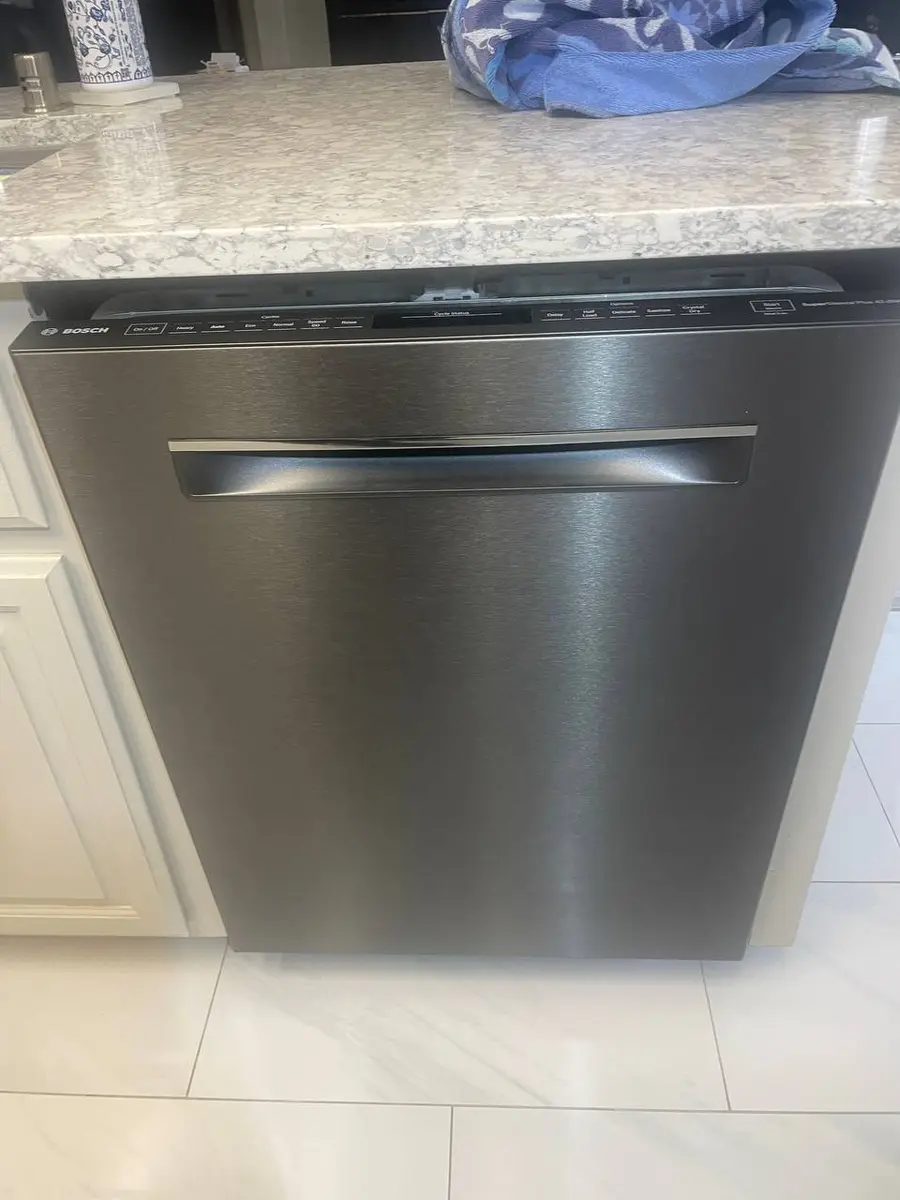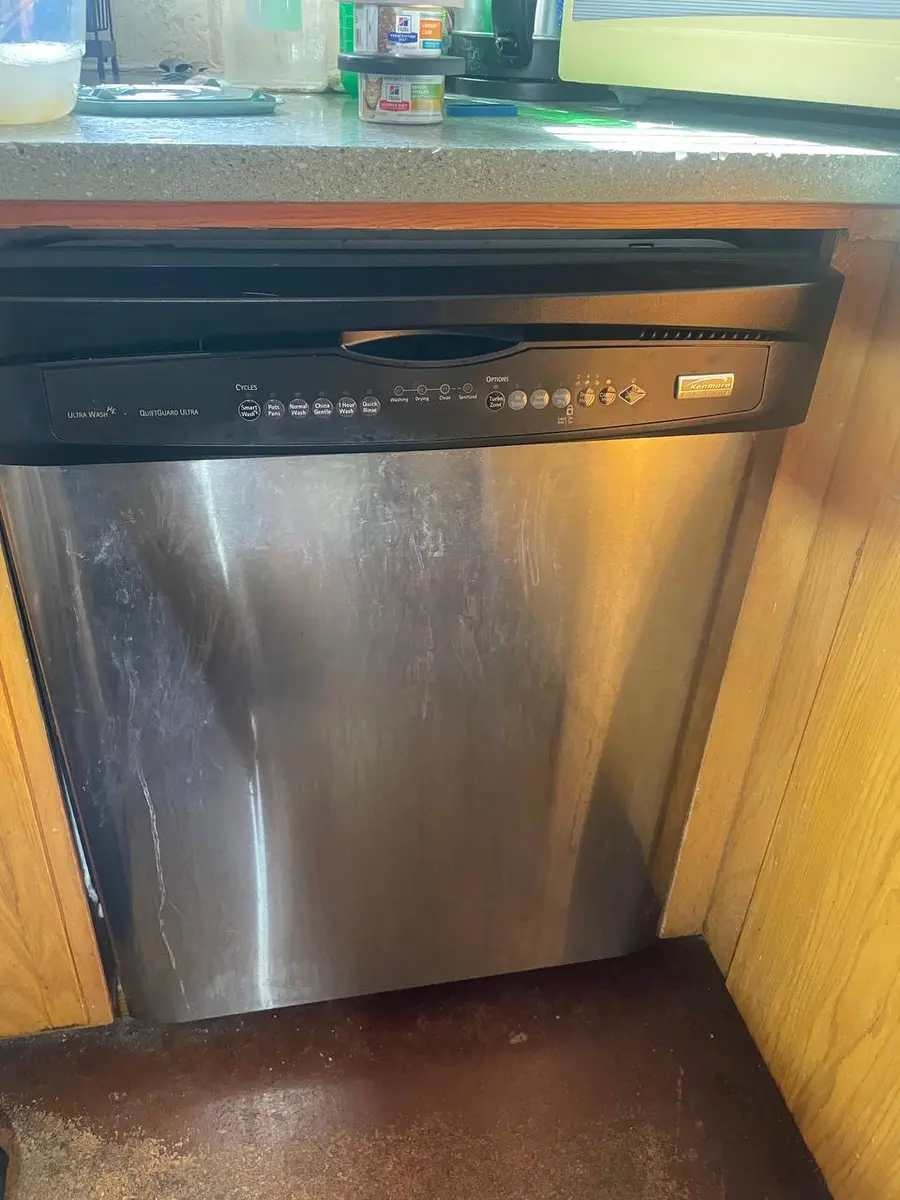
Help! KitchenAid Dishwasher Not Heating Water
Most likely the calrod heating element at the tub bottom has burned out, leaving water cold, dishes greasy, and the dry phase cool. The thermistor and the control-board relay that switch the element are the next suspects, and both can store an F8E1 or F8E6 code.
How the KitchenAid heating chain works#
On KDTM and KDTE models the heating system is three parts in series: a calrod element at the tub bottom, a thermistor built into the turbidity sensor assembly, and the control-board relay that powers the element. The board watches water temperature through the thermistor and closes the relay to boost heat when needed. If the element opens, the thermistor misreads, or the relay fails to switch, the water simply stays cold — and without heat, detergent never fully activates, grease stays on the dishes, and the sanitize and dry phases do nothing.
One quirk trips people up: the thermistor shares the turbidity sensor that also measures soil for the ProWash cycle. If it tells the board the water is already hot when it is cold, the board never energizes the element at all, so a perfectly good element sits idle. That is why testing the sensor is as important as testing the element itself — condemning the calrod without checking the thermistor is a common wasted repair. The order that saves money is element, then sensor, then the board relay that switches them both.
Causes ranked by likelihood#
| Likely cause | What you see | Fix |
|---|---|---|
| Burned-out heating element — most likely | Cold water, wet cold dishes; element open or shorted to its sheath | Test the calrod for continuity and for a short to ground; replace it if it fails either test. Elements last roughly 6-12 years. |
| Thermistor misreading | Board thinks water is hot when it is cold; F8-family code stored | Test the sensor against its resistance spec and replace the turbidity/thermistor assembly if off. |
| Control-board relay failure | Element and thermistor test good but never energize; F8E1 or F8E6 | Replace the control board (W11413276) when the relay will not switch the element. |
| Low incoming water temperature | Marginal heat, worse in winter | Confirm the water heater delivers hot water to the sink before the cycle starts. |
Do You Have the Right Tools?
Water pressure gauge ($60), spray arm tester, float switch multimeter ($85), and drain inspection camera. Our technician arrives with $3,000+ in professional tools — your diagnostic is free.
Licensed & Insured · 90-Day Warranty · Same-Day Service
Check it yourself, in order#
- Disconnect power at the breaker before testing anything — the heating element runs on 120V and contact with live terminals can cause serious injury or death.
- Let the element cool for at least 15 minutes after a cycle before you touch it.
- With power off, test the calrod element for continuity; an open reading means it has burned out.
- Test the element terminals to the metal sheath — any continuity there is a ground fault, also a replace.
- If the element is good, test the thermistor resistance and compare it to the service spec for a misread.
- Run diagnostics and read any F8E1 or F8E6 code, which points at the water-heat circuit and the board relay.
Prevent the repeat#
Running the kitchen tap until it turns hot before starting a cycle spares the element from doing all the heating from cold, which extends its life. Keeping the turbidity and thermistor sensor free of hard-water film also keeps the temperature reading honest so the board heats when it should.
Safety First — Know the Risks
Live 120V wiring in a wet environment is one of the most dangerous DIY scenarios. Water + electricity = serious shock risk. Our techs are licensed and insured — let them handle the risk.
Licensed & Insured · 90-Day Warranty · Same-Day Service
Repair or replace?#
A heating element or thermistor is a modest, common part, so a no-heat fault is usually worth fixing. A failed control board on an older [dishwasher](/blog/repair-or-replace-dishwasher) is the point where a repair-or-replace decision belongs. A technician can isolate the element, sensor, or relay in one visit. Book a diagnosis for an upfront quote.
Appliance Repair Technician · 11 years experience
Experienced technician with 11 years specializing in Frigidaire and Electrolux refrigerator and dryer repair with a focus on safety.