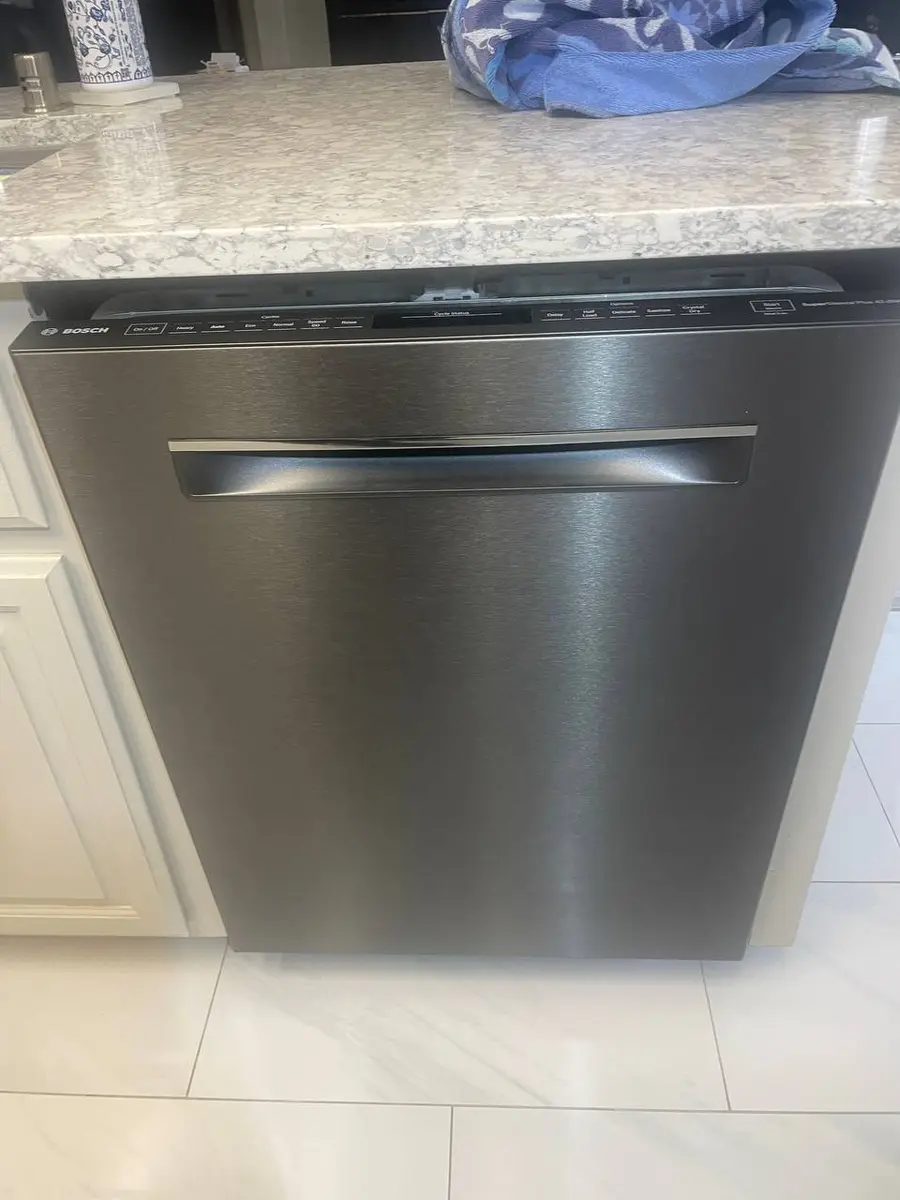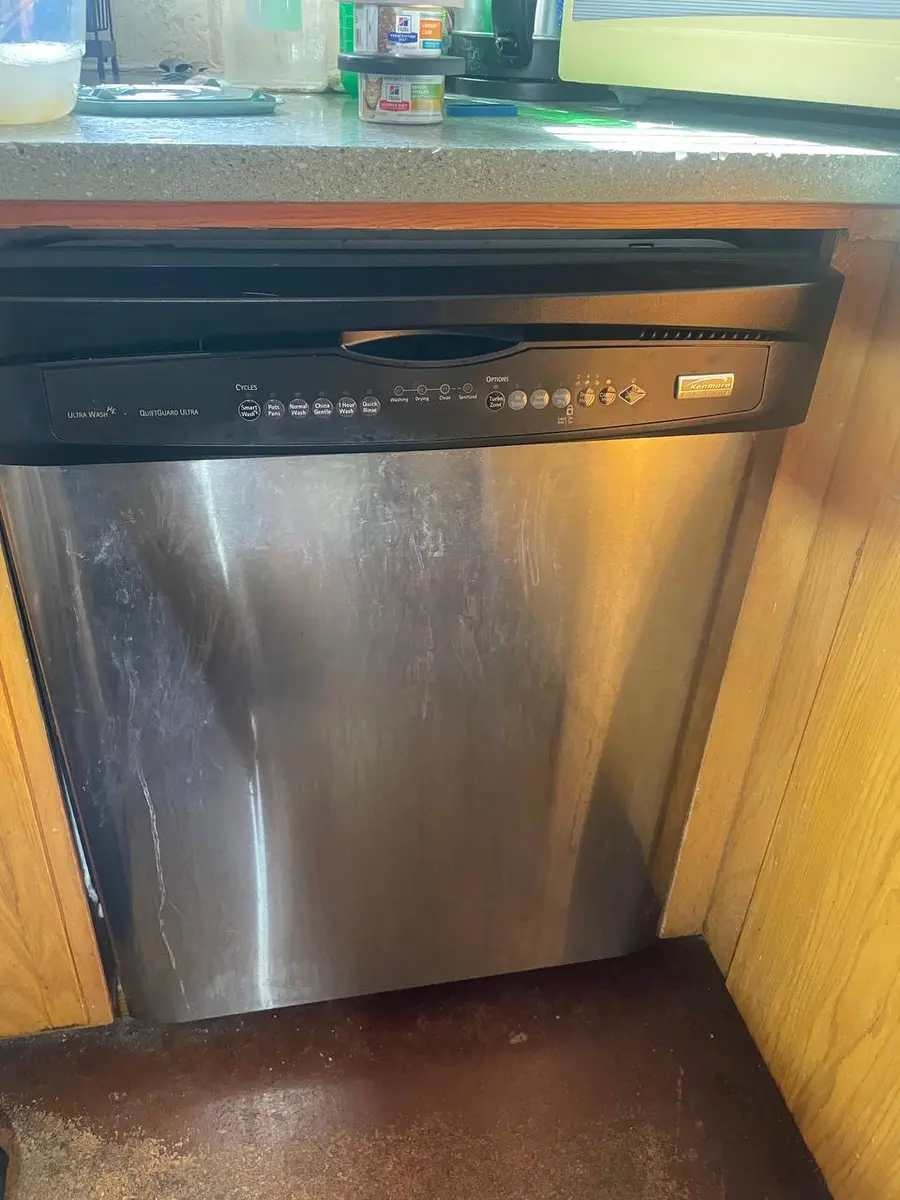
Even a small KitchenAid dishwasher leak can damage flooring, so the first job is to find exactly where the water appears — at the door, from underneath, or behind the unit. Each origin points to a different part, which makes locating the source the single most useful diagnostic step before you replace anything.
Locating the Leak Source#
- From the door: suspect the door gasket or a tub-to-door seal.
- From the base: suspect a pump seal, a hose, or a clamp under the tub.
- From behind: suspect the water inlet valve (W10872255) or its supply connection.
Do You Have the Right Tools?
Water pressure gauge ($60), spray arm tester, float switch multimeter ($85), and drain inspection camera. Our technician arrives with $3,000+ in professional tools — your diagnostic is free.
Licensed & Insured · 90-Day Warranty · Same-Day Service
Most Likely Cause#
Most likely: a worn or hardened door gasket that no longer seals against the tub, letting water escape at the front during wash. A failing pump seal, a cracked spray arm bearing, or a loose hose account for most of the rest.
Ranked Causes#
| Cause | Share | What you notice | Check |
|---|---|---|---|
| Door gasket worn | 30% | Water at the front lower door | Gasket condition and seat |
| Pump / motor seal | 25% | Water under the center of the unit | Seal weep during wash |
| Spray-arm bearing / seal | 18% | Misdirected spray, base dampness | Arm play and seal |
| Hose or clamp loose | 15% | Water at a fitting under the tub | Clamp tightness |
| Tub or sump crack | 12% | Persistent base leak, good seals | Inspect the sump and tub floor |
Safety First — Know the Risks
Live 120V wiring in a wet environment is one of the most dangerous DIY scenarios. Water + electricity = serious shock risk. Our techs are licensed and insured — let them handle the risk.
Licensed & Insured · 90-Day Warranty · Same-Day Service
Safety Precautions#
- Disconnect power at the breaker immediately if water is pooling near electrical connections.
- Shut off the supply valve under the sink.
- Pull the dishwasher out carefully — water underneath makes the floor slippery.
- Place towels around the base before running a test cycle to pinpoint the leak.
Step-by-Step Checks#
- Run a marked test. Dry the area, lay towels, and run a short cycle to see exactly where water first appears.
- Inspect the gasket. Feel the door seal for hardening, gaps, or debris; reseat or replace it if it no longer compresses.
- Watch the pump. Water from the center underneath during wash usually means a weeping pump or motor seal.
- Check the spray arm. A cracked arm bearing sprays water where the tub cannot contain it; look for play and misdirected jets.
- Tighten fittings. A drip at a hose clamp or the inlet connection is often just a loose clamp — snug it and retest.
The Real Cost of DIY
Average DIY attempt: $150-400 in tools you may use once, plus the risk of further damage. Our diagnostic visit costs $0 — we find the problem and give you an honest quote.
Licensed & Insured · 90-Day Warranty · Same-Day Service
Prevention#
- Wipe the door gasket periodically and keep it free of food debris.
- Do not overload the door racks, which strains the seal.
- Address small drips early before they reach the flooring.
When Should You Call a Professional?#
If the leak survives a reseated gasket, tightened hoses, and a clean sump, the source is usually a weeping pump seal or a cracked tub — internal work best left to a technician who can pull the pump and pressure-test the sump. Persistent water near the electrical base is another reason to stop and call rather than keep running test cycles.
Don't Void Your Warranty
Opening your appliance yourself may void the manufacturer warranty. Our repair comes with a 90-day guarantee, and we document everything for warranty compliance.
Licensed & Insured · 90-Day Warranty · Same-Day Service
Repair or Replace?#
A gasket, hose, or clamp is a low-cost fix, and even a pump seal is far cheaper than a new dishwasher. A diagnosis confirms the source and gives an upfront quote. Book a technician if the leak persists after you reseat the gasket and check the hoses.
Frequently Asked Questions#
What should I do first when my KitchenAid dishwasher leaks?#
Shut off power if water is near electrical parts, close the supply valve, and lay towels to trace the source. Where the water appears — door, base, or behind — tells you which part to check first.
What causes a KitchenAid dishwasher to leak from the door?#
A worn or hardened door gasket is the usual cause, sometimes with debris holding the seal open. Reseat or replace the gasket, and confirm the door latch is pulling the door tight.
Is a leaking dishwasher an emergency?#
It can become one for your flooring. Stop the cycle, shut the water, and dry the area; a small drip is not dangerous, but standing water near electrical connections means cut the power first.
Appliance Repair Technician · 11 years experience
Experienced technician with 11 years specializing in Frigidaire and Electrolux refrigerator and dryer repair with a focus on safety.