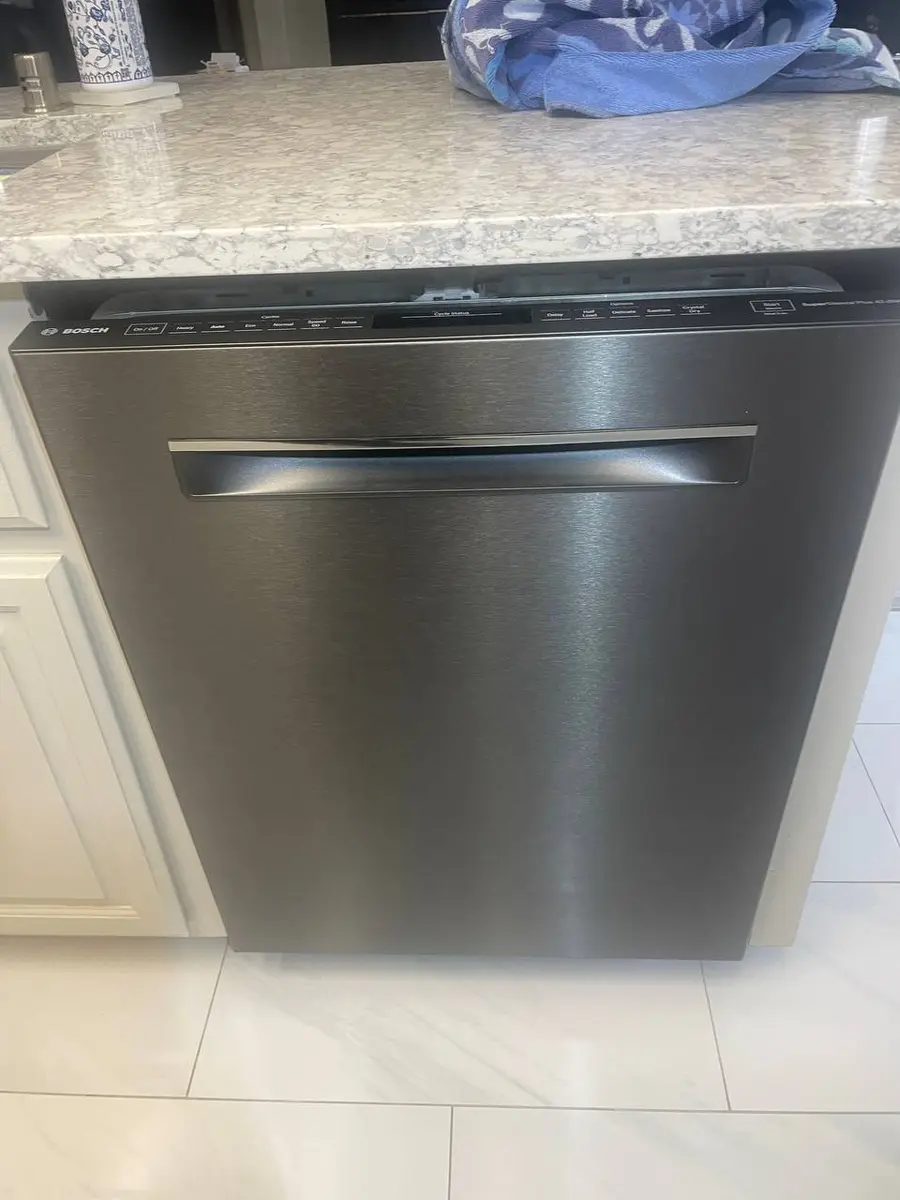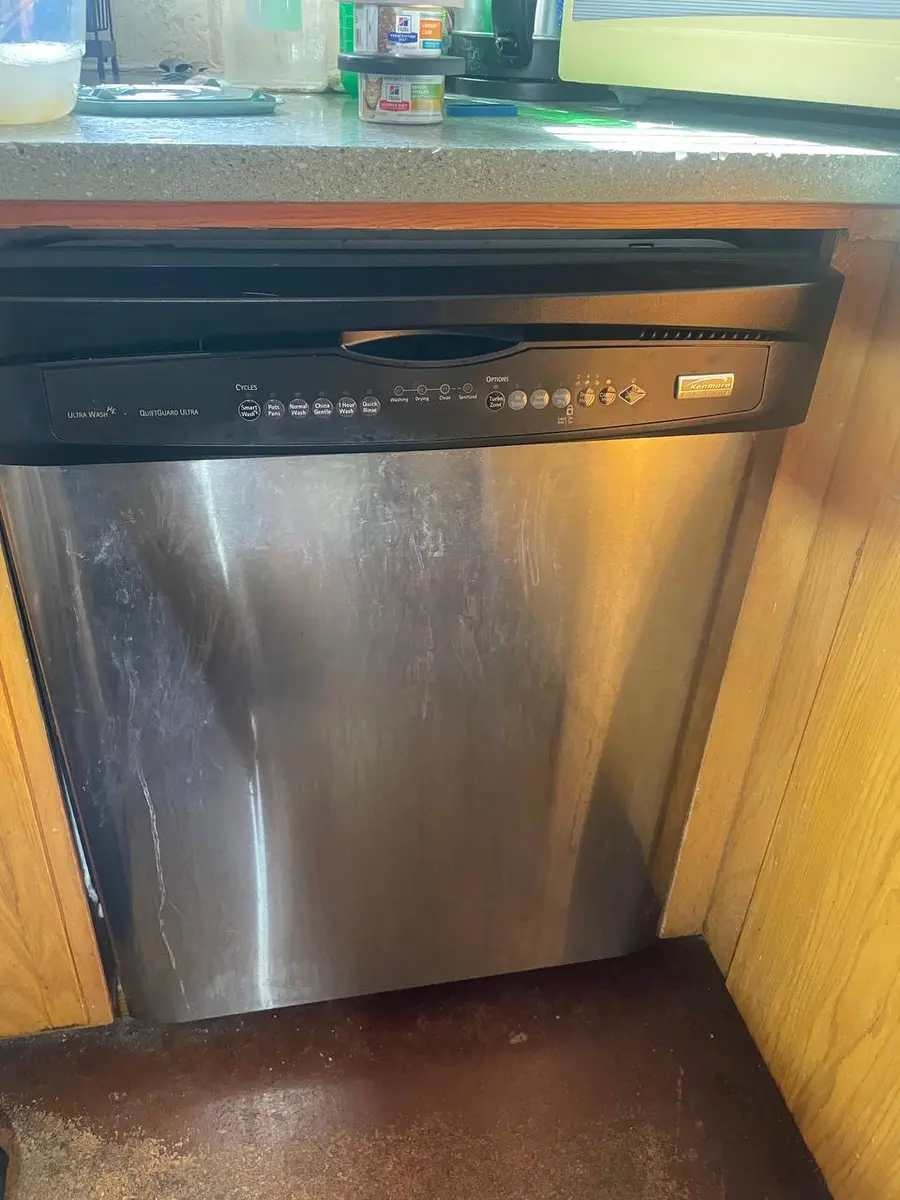
What is the KitchenAid Dishwasher F2E2 error?#
F2E2 on a KitchenAid dishwasher is a user-interface fault: the control panel is reporting a stuck or shorted button, so the board thinks a key is being held down. You will often see the machine start cycles on its own or beep at random. It is worth clearing fast, because a panel that fires phantom presses can launch a wash while you are away. The first move I make is a breaker reset, then I check whether one specific key feels sticky or sits lower than the rest.
F2E2 on a KitchenAid Dishwasher: likely causes and repair cost#
On a KitchenAid Dishwasher, the F2E2 code signals: user interface board fault.
| Likely cause | Typical likelihood |
|---|---|
| UI board failure | Most common |
| Stuck button | Common |
| Moisture damage | Less common |
| Membrane switch wear | Occasional |
Typical professional repair: $125–$275 · Difficulty: moderate · usually a technician job
Symptoms that often accompany F2E2: Dishwasher starts cycles on its own; Multiple buttons respond as one; Control panel beeps randomly
Technician diagnostic sequence for F2E2:
- Turn off the dishwasher at the breaker for 2 minutes to reset
- Press each button firmly several times — food splatter and grease can cause keys to stick
- On top-control KitchenAid models, check for condensation dripping onto the button membrane
- If buttons respond intermittently or trigger phantom presses, replace the UI assembly
Parts a technician may check or replace: User Interface Assembly
Field note: On KitchenAid top-control dishwashers, the buttons on the door top edge are exposed to condensation from drying cycles. This is the leading cause of F2E2. Apply a thin bead of clear silicone along the top edge of the new membrane after replacement to prevent recurrence.
Do You Have the Right Tools?
Water pressure gauge ($60), spray arm tester, float switch multimeter ($85), and drain inspection camera. Our technician arrives with $3,000+ in professional tools — your diagnostic is free.
Licensed & Insured · 90-Day Warranty · Same-Day Service
How to troubleshoot the F2E2 error yourself#
Cut power at the breaker for a couple of minutes to clear the board, then press every button firmly several times — food splatter and grease work under the keys and make them stick, which is the second cause in the table above. On the top-control KitchenAid models, look along the top edge of the door where the buttons live: condensation from the drying cycle drips straight onto that membrane and is the leading cause of F2E2. Wipe the panel dry and run a cycle. If buttons still respond as a group, trigger phantom presses, or the panel keeps beeping, the interface assembly is failing internally and needs replacement — that is where the DIY stops and a technician takes over, because the membrane and control are a sealed assembly.
Is the KitchenAid Dishwasher F2E2 error worth fixing?#
The interface assembly is a mid-cost part, and the professional repair range in the table above sits well under the price of a new KitchenAid. For a machine that is otherwise washing well, I replace the panel and move on — a phantom-press panel is annoying but the rest of the dishwasher is fine. Replacement only makes sense if the unit is already old and you are also chasing pump or motor faults. One tip from the field: after a new membrane goes in, a thin bead of clear silicone along the top door edge keeps drying-cycle condensation off the keys and stops F2E2 from coming back.
Safety First — Know the Risks
Live 120V wiring in a wet environment is one of the most dangerous DIY scenarios. Water + electricity = serious shock risk. Our techs are licensed and insured — let them handle the risk.
Licensed & Insured · 90-Day Warranty · Same-Day Service
KitchenAid Dishwasher F2E2: frequently asked questions#
What does the F2E2 error mean on a KitchenAid Dishwasher?#
It signals a user-interface board fault — the board is reading a button as stuck or shorted. That often shows up as random beeping or cycles starting on their own.
Is it safe to keep using a KitchenAid Dishwasher that shows the F2E2 error?#
It is not an electrical hazard, but a panel that starts cycles by itself can run a wash unattended. I would keep the door latched and address it promptly rather than ignore it.
Can I clear the F2E2 error myself, or do I need a technician?#
Try a breaker reset, press each key to free a stuck button, and dry any condensation on the panel. If keys still misbehave, the interface assembly needs replacing by a technician.
How much does it cost to repair the F2E2 error on a KitchenAid Dishwasher?#
A panel replacement lands in the professional repair range shown in the table above. It is a moderate job because the interface is a single sealed assembly.
Which parts usually fail when a dishwasher throws the F2E2 code?#
The user-interface assembly itself is the usual culprit, from moisture damage or membrane-switch wear. A single stuck key from grease is the easier, cheaper version of the fault.
Is a KitchenAid Dishwasher with the F2E2 error worth repairing?#
Yes for most machines — the panel costs far less than a new dishwasher. Consider replacement only if the unit is old and showing other failures.
Why does ui board failure trigger the F2E2 error?#
The interface board scans the keypad continuously. When a key shorts or the membrane degrades, the board reads a permanent press it cannot resolve and posts F2E2.
Senior Gas Appliance Specialist · 18 years experience
AGA-certified gas appliance specialist with 18 years of experience in residential and commercial oven, range, and cooktop repairs.