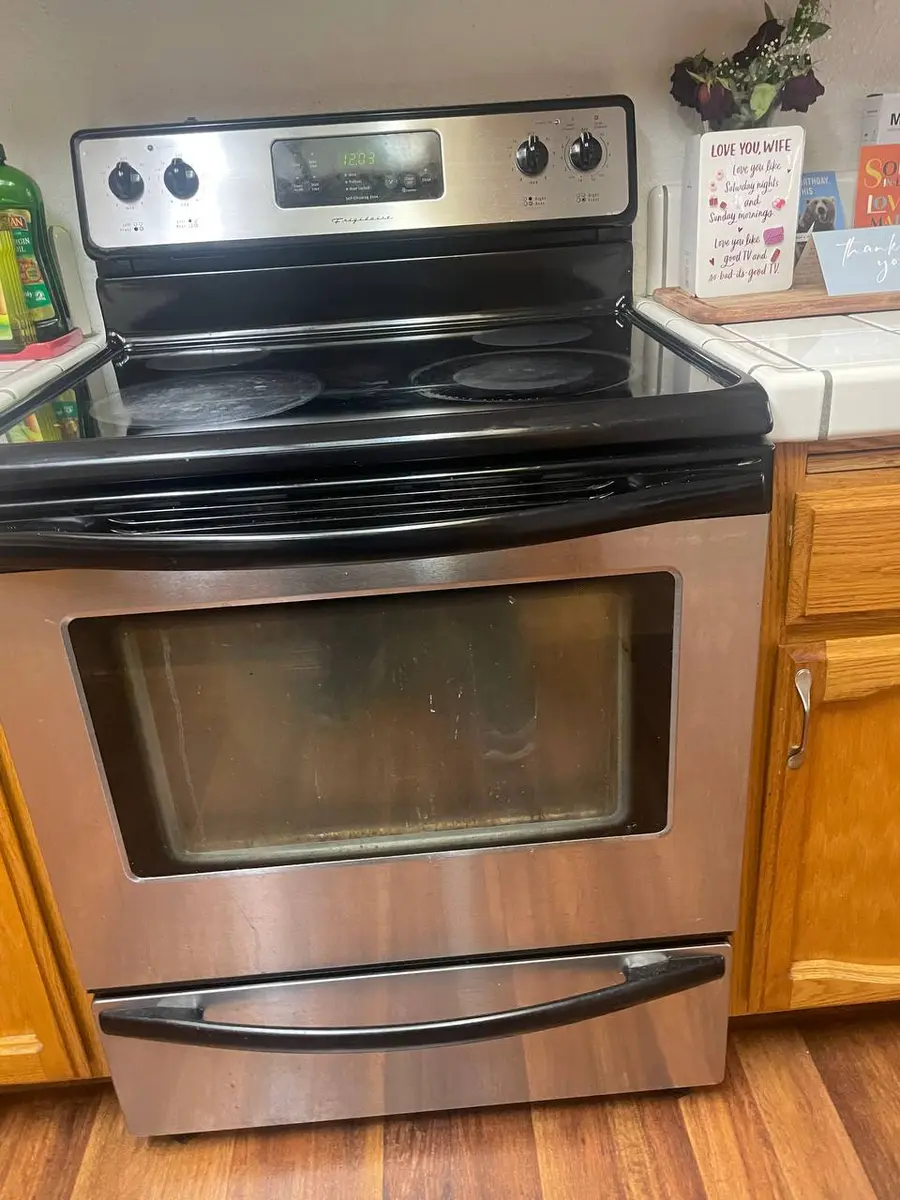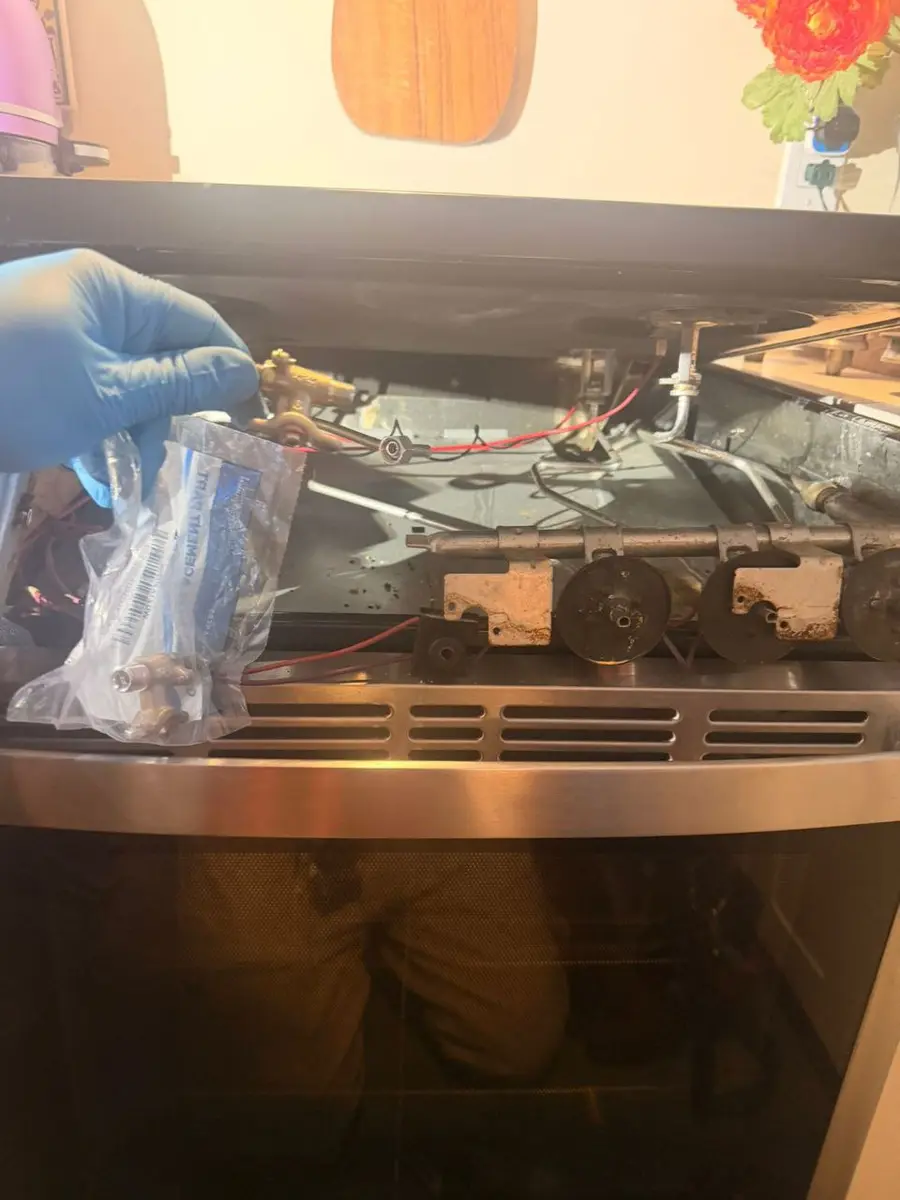
KitchenAid cooktops span three distinct technologies — Induction (KICU, KCIG series), Electric Radiant (KCES, KECC series), and Gas (KCGS, KGCU series) — each with its own set of error codes and failure patterns. Induction cooktops are the most error-code-intensive due to their sophisticated electronics controlling electromagnetic field generation. Electric cooktops have simpler controls with fewer codes. Gas cooktops primarily display ignition and sensor errors. As a Whirlpool Corporation premium brand, KitchenAid cooktops use alphanumeric error codes on the digital display or LED indicators. This guide covers all models with real diagnostic information, part numbers, and repair costs.
How KitchenAid Cooktop Error Codes Work#
KitchenAid cooktops use an electronic control board to monitor power delivery, temperature, and safety conditions. On induction and electric models, the control board manages individual power modules for each cooking zone. On gas models, the board monitors igniters, flame sensors, and the control interface.
General reset procedure for all cooktop types:
- Turn off the cooktop at the circuit breaker for 3 minutes.
- Restore power and attempt normal operation.
- If the error returns, proceed with specific troubleshooting below.
Important: Induction and electric cooktops operate on 240V circuits. Gas cooktops use 120V for igniters and controls, but also involve natural gas or propane. Always disconnect power before any service work. For gas models, know where your gas shut-off valve is located.
Do You Have the Right Tools?
Multimeter ($85), vacuum pump ($250), diagnostic software, and specialized hand tools. Our technician arrives with $3,000+ in professional tools — your diagnostic is free.
Licensed & Insured · 90-Day Warranty · Same-Day Service
Induction Cooktop Error Codes (KICU, KCIG Series)#
KitchenAid induction cooktops use electromagnetic coils beneath a glass-ceramic surface to heat only ferromagnetic cookware. The sophisticated electronics generate more error codes than other cooktop types.
F1 — Internal Control Board Failure#
The main control board or the induction power module has detected an internal hardware fault.
Common causes:
- Power surge damaging the control electronics (part W10857230)
- Failed IGBT (Insulated-Gate Bipolar Transistor) power module — these handle the high-frequency switching that creates the electromagnetic field
- Overheating of the control board from inadequate ventilation beneath the cooktop
- Solder joint fatigue on the power module from thermal cycling
How to fix:
- Turn off the breaker for 5 minutes and restore power. Transient power issues can trigger F1 once.
- If F1 returns, check the ventilation space beneath the cooktop. KitchenAid induction cooktops require a minimum 2-inch clearance below the unit for the cooling fans to function. Insufficient clearance causes the power modules to overheat and fail prematurely.
- Listen for the cooling fans when the cooktop is powered on — they should run when any zone is active and for several minutes after cooking. Fan failure leads to board overheating.
- The F1 code on induction models almost always requires professional diagnosis. The power modules handle high voltage and current — the IGBT modules switch hundreds of amps at high frequency. Do not attempt board-level repair.
Part cost: Main control board (W10857230) varies by model and repair complexity. Individual power module varies by model and repair complexity per zone. Professional repair varies by model and repair complexity.
F2 — Cookware Detection Error#
The cooktop cannot detect compatible cookware on the active cooking zone, or the detected cookware is too small for the zone.
Common causes:
- Non-ferromagnetic cookware (aluminum, copper, glass, ceramic without magnetic base)
- Cookware diameter too small for the zone — must cover at least 60% of the induction coil area
- Warped cookware bottom not making full contact with the glass surface
- Failed induction coil or sensor beneath the zone
- Dirty or damaged glass surface interfering with the electromagnetic coupling
How to fix:
- Test with a known-compatible pan — a simple magnet test works: if a refrigerator magnet sticks firmly to the bottom of the pan, it is compatible. Cast iron, magnetic stainless steel, and enameled cast iron all work.
- Ensure the cookware is centered on the zone marking and is appropriately sized. A small saucepan on a large zone may not be detected.
- Check the cookware bottom for flatness — place it on a flat countertop and look for rocking or light gaps. Warped bottoms reduce electromagnetic coupling.
- Clean the glass surface — burned-on food or residue between the cookware and the glass can interfere with detection.
- If compatible cookware still triggers F2 on one specific zone but works on other zones, the induction coil or its sensor for that zone may have failed.
Part cost: If cookware-related, no cost. Induction coil replacement varies by model and repair complexity per zone. Professional diagnosis varies by model and repair complexity.
F15 — Power Module Over-Temperature#
The internal temperature of the induction power module has exceeded the safe operating threshold. The cooktop shuts down the affected zone or the entire unit to prevent component damage.
Common causes:
- Blocked ventilation beneath the cooktop — cabinets, insulation, or stored items restricting airflow
- Cooling fan failure (part WPW10206586)
- Extended high-power cooking sessions (long boiling, large-batch frying)
- Ambient kitchen temperature extremely high (poorly ventilated kitchen during summer)
- Dust accumulation on the power module heatsink
How to fix:
- Turn off all cooking zones and wait 15-30 minutes for the electronics to cool down. The error should clear once the temperature drops below the threshold.
- Check ventilation clearance beneath the cooktop — remove any items stored under the cooktop that could block airflow. KitchenAid requires a minimum 2 inches of free air space below the unit.
- With the cooktop operating, verify that the cooling fans are running. Put your hand near the front vent opening — you should feel air being exhausted. If no airflow, the fan motor has failed.
- If the fans are running but the cooktop still overheats, the power module heatsink may be covered in dust. A professional can access the underside and clean the heatsink fins with compressed air.
- If F15 occurs during normal cooking with adequate ventilation and working fans, the power module itself may be degrading — the thermal threshold drops as components age.
Part cost: Cooling fan motor (WPW10206586) varies by model and repair complexity. Power module varies by model and repair complexity. Professional repair varies by model and repair complexity.
F23 — Communication Error Between Zones#
The individual zone power modules cannot communicate with the main control interface board. This is typically a bus communication failure.
Common causes:
- Loose ribbon cable or wire harness connector between the power modules and the control board
- Failed communication circuit on the control board or a power module
- Electromagnetic interference from nearby equipment
- Water or moisture in the connector area from a cooktop spill that seeped through the glass mounting gasket
How to fix:
- Turn off the breaker and remove the cooktop from the countertop cutout (requires disconnecting the power cable underneath).
- Inspect all wire harness connections between the power modules and the main control board. Reseat every connector firmly.
- Check for moisture evidence around connectors — if liquid has seeped through the glass gasket, dry all components thoroughly and check for corrosion on connector pins.
- If a spill caused the issue, inspect the glass mounting gasket (the silicone seal between the glass surface and the frame). Replace if damaged to prevent future moisture intrusion.
Part cost: Wire harness/ribbon cable varies by model and repair complexity. If a board has failed, costs range varies by part depending on the specific board. Professional repair varies by model and repair complexity.
F47 — Voltage Supply Error#
The incoming power supply voltage is outside the acceptable range for induction operation. KitchenAid induction cooktops require 240V within a ±10% tolerance.
Common causes:
- Low household voltage (below 210V) from utility supply issues or undersized wiring
- Voltage sag during heavy electrical load (HVAC system, electric dryer running simultaneously)
- Loose connection at the circuit breaker or the cooktop junction box
- Incorrect wiring (208V commercial supply instead of 240V residential — common in apartments and condos)
How to fix:
- Measure the voltage at the cooktop junction box or the dedicated outlet using a multimeter. Should read 240V ±10% (216-264V).
- Measure while the cooktop is operating at high power on multiple zones — voltage may sag under load if the circuit is undersized or the wire run is too long.
- Check the circuit breaker connections for tightness. A loose connection at the breaker causes voltage drop under load.
- In apartments or condos, verify whether the building supplies 240V (residential) or 208V (commercial three-phase). Some induction cooktops do not operate well at 208V — check the installation manual for the minimum voltage specification.
- If the home consistently has low voltage, contact the utility company to check the transformer and service drop.
Part cost: No cooktop parts needed — this is an electrical supply issue. Electrician visit to diagnose and repair varies by model and repair complexity.
U — Pan Removed / No Pan Detected#
Not a true error — this indicates the cooktop zone is on but no compatible cookware is detected. The zone will time out and shut off after a few minutes.
How to fix:
- Place compatible cookware on the zone.
- If cookware is present and the U persists, try a different pan to rule out a cookware issue.
- Clean the glass surface and the bottom of the cookware.
Electric Radiant Cooktop Error Codes (KCES, KECC Series)#
Electric cooktops with radiant (halogen/ribbon) heating elements have simpler electronics and fewer error codes.
F1 — Control Board Error#
The electronic control board has detected an internal fault.
Common causes:
- Power surge damage to the control board (part W10858097)
- Failed touch-control sensor circuitry
- Relay failure on the board
How to fix:
- Turn off the breaker for 5 minutes and restore power.
- If F1 persists, the control board must be replaced. Electric cooktop control boards are simpler than induction boards and are usually a single integrated unit.
Part cost: Control board (W10858097) varies by model and repair complexity. Professional repair varies by model and repair complexity.
F3 — Temperature Sensor / Limiter Error#
The cooktop's thermal limiter or temperature sensor has tripped or failed. Electric cooktops have thermal limiters beneath each cooking zone to prevent overheating of the glass surface.
Common causes:
- Thermal limiter tripped from an empty pan being heated (dry-boil condition)
- Failed thermal limiter (part WPW10857232)
- Cracked glass cooktop surface allowing heat to escape abnormally
- Control board not reading the limiter signal correctly
How to fix:
- Turn off the cooktop and allow it to cool completely (30-60 minutes).
- Restore power. If the thermal limiter simply tripped from a momentary overtemp (like a forgotten empty pan), it will reset once cooled.
- If F3 persists after cooling, the thermal limiter may be permanently open. A technician can test continuity across the limiter — it should be closed (near 0 ohms) at room temperature.
- Inspect the glass surface for cracks or chips. A cracked cooktop surface must be replaced immediately — it compromises electrical safety (the heating element operates at 240V directly beneath the glass).
Part cost: Thermal limiter (WPW10857232) varies by model and repair complexity. Glass cooktop surface varies by model and repair complexity (model-dependent). Professional limiter replacement varies by model and repair complexity.
F5 — Door Switch / Safety Interlock Error#
On electric cooktops integrated with a downdraft ventilation system, F5 indicates the downdraft motor or its safety interlock has failed.
Common causes:
- Downdraft vent motor failure
- Safety interlock switch not engaging when the vent rises
- Control board not receiving the interlock signal
How to fix:
- If your cooktop has a built-in downdraft vent (KitchenAid KCED series), check that the vent rises and retracts smoothly.
- Listen for the vent motor — it should activate when the vent control is pressed. Silence indicates a motor failure.
- Check the interlock switch that verifies the vent position.
Part cost: Downdraft vent motor varies by model and repair complexity. Professional repair varies by model and repair complexity.
Hot Surface Indicator (H) — Not an Error#
The H indicator is a safety feature, not an error. It illuminates when a cooking zone's surface temperature exceeds 150°F and remains on until the surface cools below that threshold. This is normal operation.
Safety First — Know the Risks
Appliances involve high voltage (120-240V), pressurized water, gas lines, and chemical refrigerants. Over 400 DIY repair injuries are reported yearly. Our techs are licensed and insured — let them handle the risk.
Licensed & Insured · 90-Day Warranty · Same-Day Service
Gas Cooktop Error Codes (KCGS, KGCU Series)#
Gas cooktops have the fewest error codes since the burners themselves are purely mechanical (gas valve + igniter). Error codes relate to the electronic controls and ignition system.
F1 — Control Module Error#
The electronic control module has an internal fault. On KitchenAid gas cooktops with electronic controls, this indicates a board-level failure.
Common causes:
- Power surge damage to the control module (part W10857231)
- Moisture intrusion from spills seeping into the control area
- Failed relay or component on the module
How to fix:
- Turn off the breaker for 5 minutes and restore power.
- Clean any moisture around the control panel and module area.
- If the error persists, the control module must be replaced.
Part cost: Control module (W10857231) varies by model and repair complexity. Professional repair varies by model and repair complexity.
F2 — Igniter Failure / Flame Sensing Error#
The electronic ignition system has failed to ignite a burner or the flame sensor does not detect a flame after ignition.
Common causes:
- Clogged igniter electrode from food spills (most common cause by far)
- Cracked igniter ceramic insulator
- Moisture on the igniter from cleaning or boil-over
- Failed igniter module / spark generator (part WPW10857233)
- Burner cap misaligned after cleaning, preventing proper flame establishment
How to fix:
- Remove the burner grates and caps. Inspect each igniter electrode — it is a small white ceramic post near each burner. Clean food debris off the electrode tip with a dry toothbrush. Do not use water directly on the igniter.
- Check that all burner caps are properly seated and aligned. A misaligned cap can prevent the gas from reaching the igniter or create a flame pattern that the sensor cannot detect.
- If the igniters click rapidly but no burner lights, verify the gas supply is on and the manual shut-off valve is open.
- If a single igniter does not spark while others do, the igniter ceramic may be cracked or the wire to that igniter is damaged. Test by swapping the wire connections from a working igniter (both should be connected to the same spark module).
- If no igniters spark at all, the spark module (ignition board) has likely failed.
Part cost: Igniter electrode varies by model and repair complexity per burner. Spark module (WPW10857233) varies by model and repair complexity. Professional repair varies by model and repair complexity.
F7 — Gas Valve Error#
The electronic control detects that a gas valve is not responding to open or close commands. This is a safety-critical code.
Common causes:
- Failed gas valve solenoid on the affected burner
- Wiring harness issue between the control module and the gas valve
- Control module relay failure
- Physical obstruction preventing the valve from operating
How to fix:
- Turn off the cooktop and close the manual gas shut-off valve as a safety precaution.
- Gas valve diagnosis and repair should only be performed by a licensed professional. Gas leaks are dangerous — if you smell gas at any point, leave the area and call your gas company.
- A professional will test the valve solenoid electrically and verify that the valve opens and closes on command while monitoring for gas leaks with a combustible gas detector.
Part cost: Gas valve assembly varies by model and repair complexity per burner. Professional repair varies by model and repair complexity.
KitchenAid Cooktop Diagnostic Modes#
Induction cooktops (KICU, KCIG):#
Power on the cooktop with no cookware. Press and hold the power level "+" and "-" buttons simultaneously for 5 seconds. The display enters diagnostic mode showing zone status, power module temperatures, and stored error codes.
Electric cooktops (KCES, KECC):#
Turn off the breaker for 30 seconds, then restore power. Within 5 seconds of power restoration, press and hold any two zone selector buttons simultaneously for 3 seconds. The cooktop enters test mode.
Gas cooktops (KCGS, KGCU):#
Gas cooktops with electronic controls enter diagnostic mode by pressing the "Simmer" and "Power Boil" (or the lowest and highest power buttons) simultaneously for 5 seconds. The control tests each igniter and flame sensor in sequence.
The Real Cost of DIY
Average DIY attempt: $150-400 in tools you may use once, plus the risk of further damage. Our diagnostic visit costs $0 — we find the problem and give you an honest quote.
Licensed & Insured · 90-Day Warranty · Same-Day Service
Frequently Asked Questions#
Q: Why does my KitchenAid induction cooktop click and not heat? A: A clicking sound with no heating on an induction cooktop almost always means the cookware is not compatible. Induction requires ferromagnetic material (cast iron, magnetic stainless steel). Test with a refrigerator magnet — if it sticks strongly to the pan bottom, the pan is compatible. If the magnet barely sticks or does not stick, the pan will not work. Also check that the pan covers at least 60% of the zone area and that its bottom is flat against the glass.
Q: Can I fix a cracked KitchenAid cooktop glass myself? A: No. A cracked glass-ceramic cooktop surface is a safety hazard and must not be used. On electric and induction models, live 240V heating elements and coils are directly beneath the glass. A crack can allow moisture, food liquids, or even contact with the element. The glass panel must be replaced as a complete unit — it cannot be repaired. Replacement glass cost varies by model and region depending on the model, and installation requires removing the cooktop from the counter.
Q: How long do KitchenAid induction cooktop power modules last? A: KitchenAid induction power modules typically last 8-12 years under normal use. Factors that shorten lifespan: inadequate ventilation beneath the cooktop (the number one killer), frequent maximum-power cooking sessions, power surges, and dust accumulation on the heatsink. Ensuring proper ventilation clearance (minimum 2 inches below) and using a dedicated surge protector on the circuit significantly extends module life.
Q: My KitchenAid gas cooktop igniters keep clicking after the flame is lit. Is that an error? A: Continuous clicking after the flame establishes is not an error code, but it indicates moisture on the igniter electrode or a misaligned burner cap. First, make sure all burner caps are correctly seated — each cap has a specific orientation and position. Then dry the igniter area thoroughly (a hair dryer on low helps). If clicking persists only on humid days or after cleaning, the igniter ceramic may have a hairline crack that absorbs moisture. Replace the affected igniter (varies by model and region part).
Q: Does KitchenAid cover induction cooktop power module failures under warranty? A: KitchenAid provides a 1-year full warranty covering all parts and labor. The induction module is not covered by an extended warranty beyond that unless you purchased a separate extended protection plan. However, if a power surge caused the failure and you have homeowner's insurance, some policies cover power surge damage to appliances — check with your insurer.
When to Call a Professional#
Cooktop repairs carry specific safety risks by technology type:
- All induction cooktop repairs beyond cookware issues — IGBT power modules handle high voltage and current. The electromagnetic coils and their drivers are not safe for DIY repair.
- Electric cooktop glass replacement — Requires careful removal from the counter and reconnection of multiple heating element connectors beneath the glass. Incorrect reassembly creates a shock hazard.
- Any gas cooktop error involving valves (F7) — Gas leak risk. Only a licensed professional with combustible gas detection equipment should work on gas valve components.
- Cracked glass on any cooktop type — Do not use the cooktop. Schedule professional glass replacement immediately.
- Repeated F15 (overtemp) on induction — If ventilation is adequate and fans work, the power module is degrading internally and requires professional diagnosis and replacement.
A certified KitchenAid technician has the specific training, tools, and diagnostic access needed for safe cooktop repair across all three technologies.
Tired of dealing with KitchenAid cooktop error codes? EasyBear's certified technicians specialize in KitchenAid cooktop repair — induction, electric, and gas — across the Bay Area and Sacramento. We carry common KitchenAid cooktop parts including igniters, thermal limiters, and control boards for same-visit repairs. We offer a free diagnostic visit where our technician identifies the exact issue, explains your options, and completes the repair on the spot. Every repair is backed by our 90-day parts and labor warranty. Schedule your free diagnosis today.
Lead Appliance Repair Technician · 12 years experience
Experienced technician with 12 years specializing in washing machine and dryer repairs across all major brands.