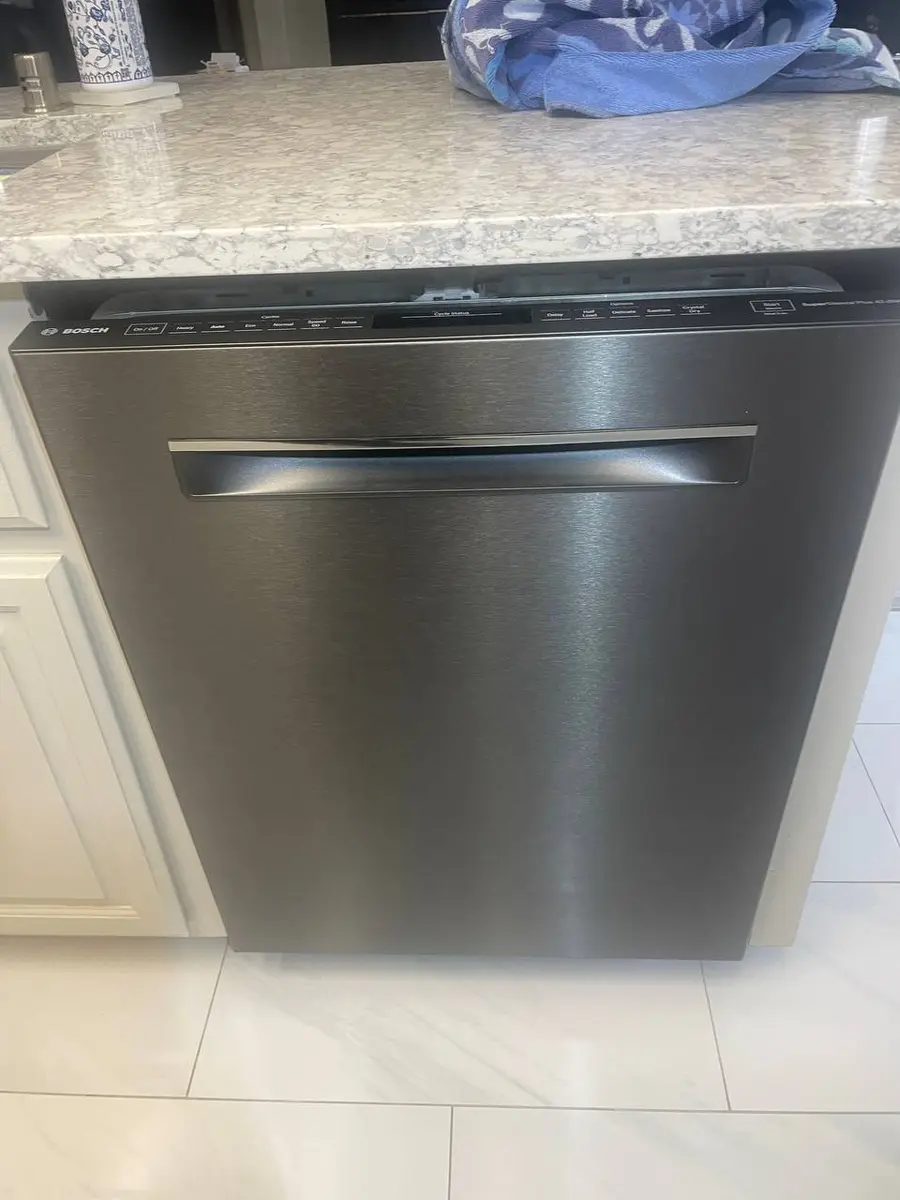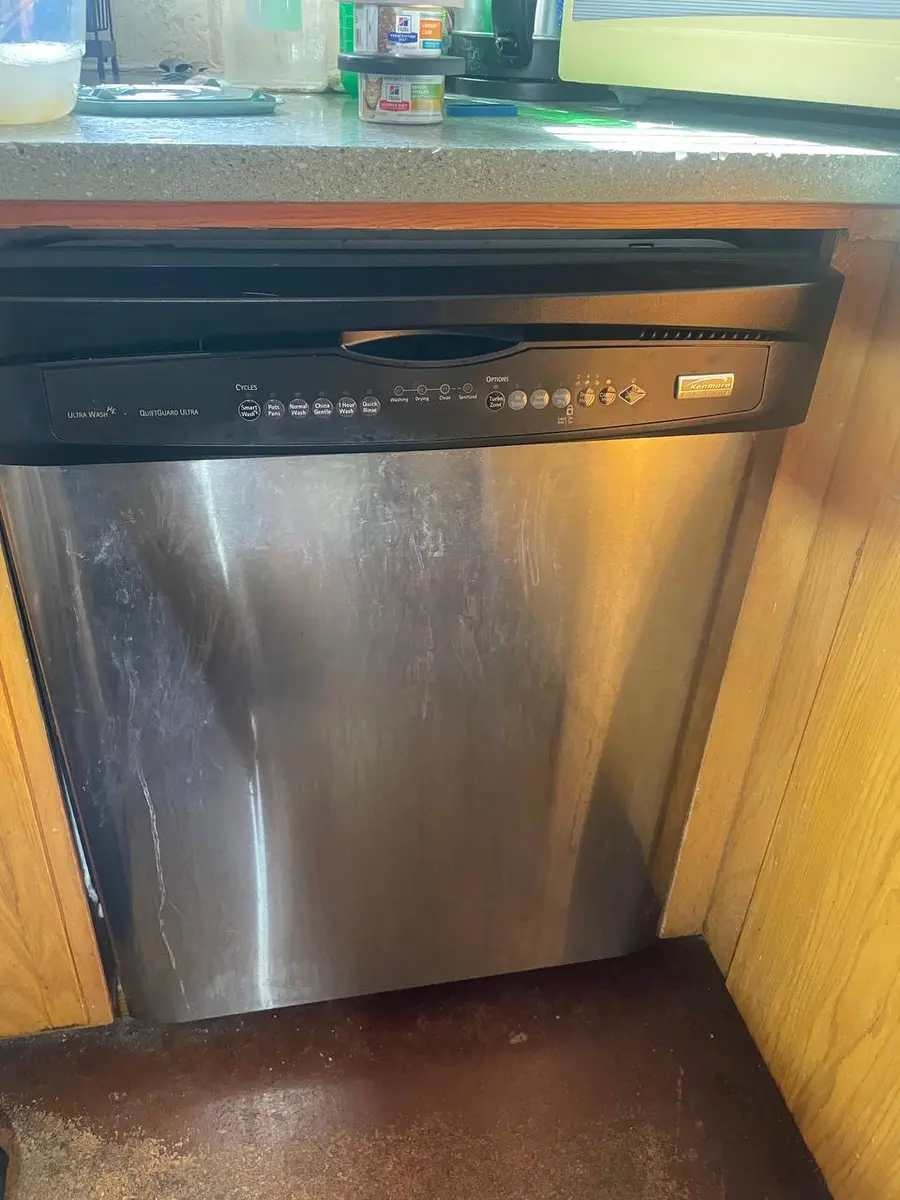
Why is my Kenmore dishwasher overflowing?#
A Kenmore dishwasher overflows when the water-level control fails — a buoyant float is supposed to rise with the water and signal the board to shut the inlet valve, and an overflow means the float can't rise, its switch didn't trip, or the valve won't close. The most common cause by far is simple: debris stuck under the float keeping it down. Because overflows cause fast water damage, catch it quickly.
Kenmore dishwasher overflowing: ranked causes#
The float sits front-left on Whirlpool (665) and LG (630) platforms and front-right on Frigidaire (587) machines, but the failure modes are the same.
| Likely cause | Share | What's happening |
|---|---|---|
| Float stuck in the down position | 45% | Debris under the float cap blocks it from rising, so the valve stays open |
| Float switch failure | 25% | The float rises but the switch beneath it never trips |
| Inlet valve stuck open | 20% | The valve won't seat, so water flows even with power cut |
| Control-board relay welded shut | 10% | The relay keeps the valve powered no matter what the float says |
Safety first — act fast: if the dishwasher keeps filling even when it's turned off, the inlet valve is mechanically stuck. Shut off the water supply valve under the sink immediately, then cut power at the breaker.
Do You Have the Right Tools?
Water pressure gauge ($60), spray arm tester, float switch multimeter ($85), and drain inspection camera. Our technician arrives with $3,000+ in professional tools — your diagnostic is free.
Licensed & Insured · 90-Day Warranty · Same-Day Service
How to stop a Kenmore dishwasher overflowing#
- Free the float. Pull the lower rack and lift the float cap — it should rise about an inch and drop back with a light thud. Any sticking means debris underneath; lift the cap off, clean the shaft and base, and confirm it moves freely. This alone fixes most overflows.
- Test the float switch. With the dishwasher unplugged, reach the switch from below the tub (behind the kick panel) and meter it while pushing the float up — it should change state as the float rises. No change means a failed switch.
- Check the inlet valve. If it overflows while switched off but still connected to water, the valve is stuck open — this is the dangerous one. With the water and power off, the valve behind the kick panel gets replaced; sediment or corrosion keeps its plunger from seating.
- Suspect the board last. If the float, switch, and valve all check out but water still won't stop, the control-board relay that powers the valve has welded closed and keeps it energized.
Cleaning the float is easy DIY; switch and valve work is moderate, and a board is a technician job.
Is a Kenmore dishwasher overflow worth repairing?#
Yes — and it's urgent because of the flood risk. Cleaning the float costs nothing, and a float switch or inlet valve is an inexpensive part. Only a control board is pricey, so weigh that on an older machine. Keeping the float area free of food debris and running with a clean filter prevents most repeats. For a same-day diagnosis, book a repair.
Safety First — Know the Risks
Live 120V wiring in a wet environment is one of the most dangerous DIY scenarios. Water + electricity = serious shock risk. Our techs are licensed and insured — let them handle the risk.
Licensed & Insured · 90-Day Warranty · Same-Day Service
Kenmore dishwasher overflowing: frequently asked questions#
What's the most common reason a Kenmore dishwasher overflows?#
A float stuck down by debris. Food bits or hardened detergent under the float cap keep it from rising, so it never signals the board to close the inlet valve. Lift the cap, clean underneath, and confirm the float moves freely.
My Kenmore dishwasher fills even when it's off — what do I do?#
Shut off the water supply valve under the sink right away — that's a mechanically stuck inlet valve, and no control setting can stop it. Then cut power and plan on replacing the valve.
How do I find the float on my Kenmore dishwasher?#
Pull the lower rack and look at the tub floor: it's a small dome or mushroom-shaped cap, front-left on Whirlpool and LG platforms and front-right on Frigidaire ones.
Appliance Repair Technician · 11 years experience
Experienced technician with 11 years specializing in Frigidaire and Electrolux refrigerator and dryer repair with a focus on safety.