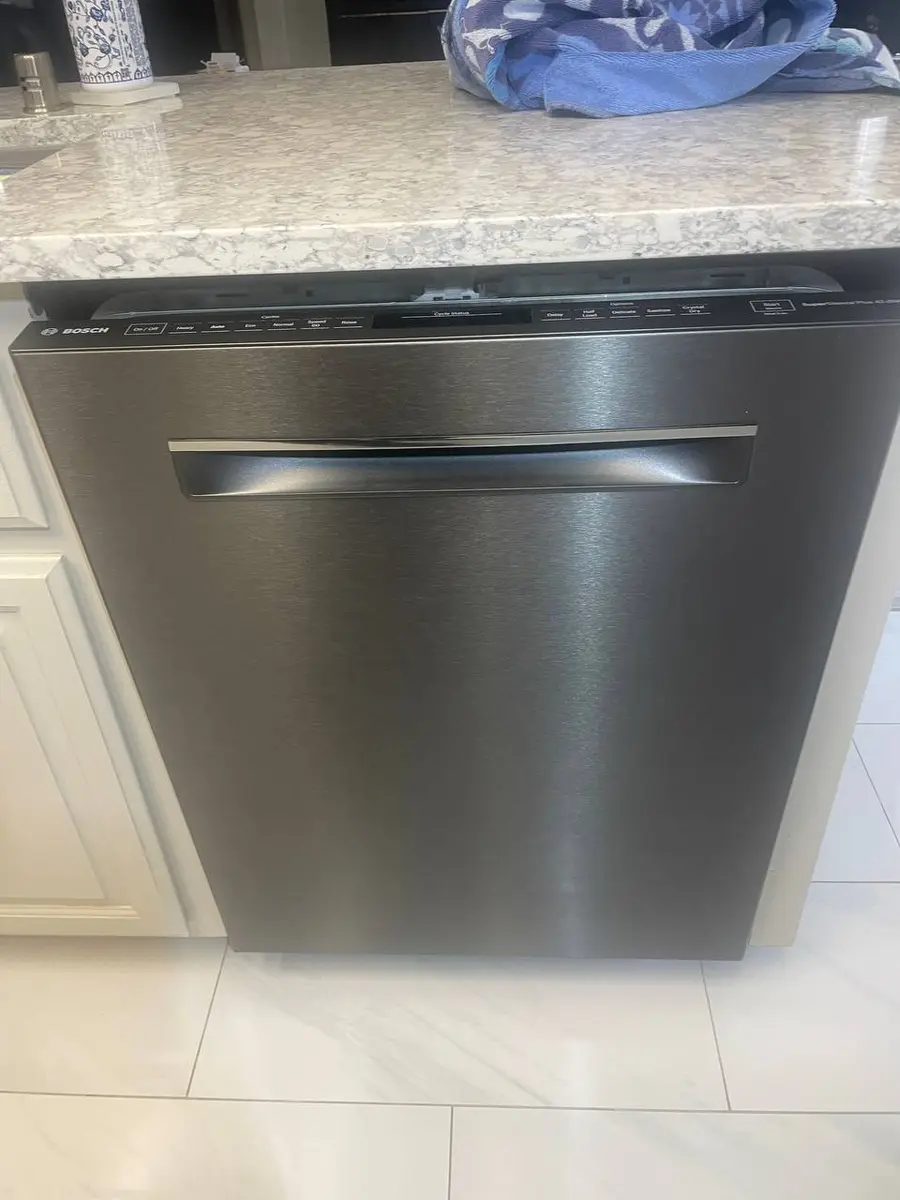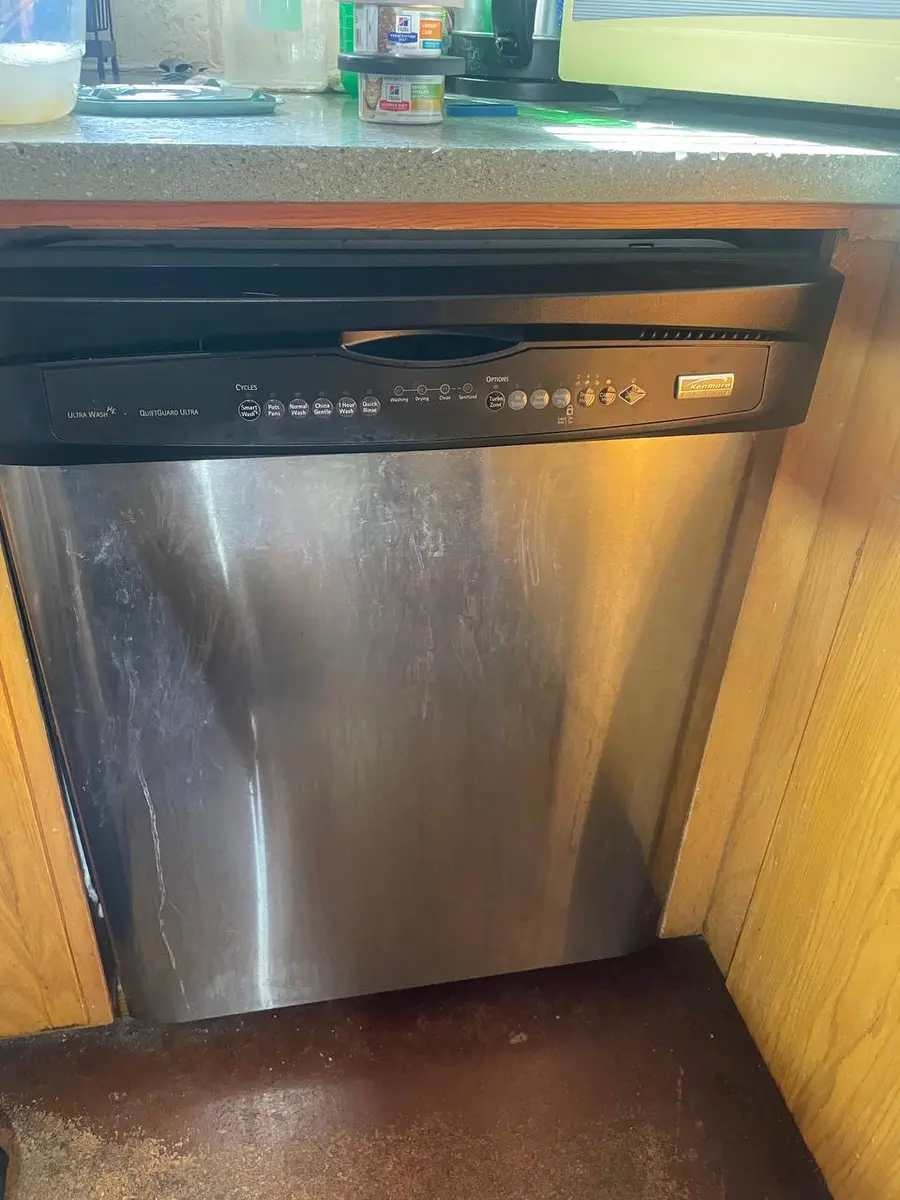
Quick Answer: Which Maker Built It Matters#
Most likely, a leaking Kenmore dishwasher has a failed door gasket, and where and how it fails depends on the platform underneath — because Kenmore is a rebadge, a 665 model is Whirlpool, a 630 is LG, and a 587 is Frigidaire, and each seals the door differently. On Whirlpool 665 units the gasket is a press-fit channel that leaks at the bottom corners; on LG 630 units the gasket is held by plastic retainer clips that go brittle and snap. First, though, locate the leak: water at the front under the door points to the gasket or an overfill, while water at the base points to the sump or a hose.
Cause-by-Location Table#
| Where it leaks | Most likely cause | Platform |
|---|---|---|
| Front, under the door | Door-gasket channel failure | Whirlpool 665 |
| Under the machine, never at the door | Sump-to-motor gasket deteriorated | Whirlpool 665 |
| Dripping from the tub ceiling mid-wash | Spray-arm bearing O-ring worn | Whirlpool 665 |
| Intermittent floods, some clean cycles | Door-seal retainer clips brittle | LG 630 |
| Slow weep at the base | Drain-pump bayonet loosened | LG 630 |
| At the front only during wash | Overfill from a stuck float | all platforms |
Do You Have the Right Tools?
Water pressure gauge ($60), spray arm tester, float switch multimeter ($85), and drain inspection camera. Our technician arrives with $3,000+ in professional tools — your diagnostic is free.
Licensed & Insured · 90-Day Warranty · Same-Day Service
The Whirlpool 665 Leaks#
On Whirlpool-platform Kenmore units, start at the bottom corners of the door, where gravity pulls any escaping water — the gasket is a single continuous piece around the tub, and it pulls straight out of its channel from the top center. Clean the channel thoroughly before fitting the new gasket, working down both sides evenly and making sure the bottom corners seat without bunching, since those corners are the most critical. Water that shows up under the machine but never at the door is different: that is the sump-to-motor gasket, a clamshell of rubber seals held by a large retaining ring that seeps onto the base pan when it degrades. And water dripping from the tub ceiling during the wash is the upper spray-arm bearing — its small O-ring wears and sprays from the bearing point, and if the bearing is scored you replace the whole hub.
The LG 630 Leaks#
LG-platform Kenmore units fail elsewhere. Instead of a press-fit channel, the LG gasket sits in a series of small plastic retainer clips that become brittle from heat cycling and snap off, letting the gasket pull away in sections — the symptom is telling, with several leak-free cycles followed by a flood depending on spray-arm position, so inspect the clips along the lower tub lip for missing or cracked ones. The LG drain pump connects to the sump with a quarter-turn bayonet fitting rather than a screw clamp, and pump vibration can back it off a few degrees so its O-ring no longer seals — twist the pump body clockwise to snug it, and if it turns more than a little it had loosened. The supply line uses a compression fitting behind the kick panel that needs the right torque: too loose drips, too tight cracks the ferrule.
Safety First — Know the Risks
Live 120V wiring in a wet environment is one of the most dangerous DIY scenarios. Water + electricity = serious shock risk. Our techs are licensed and insured — let them handle the risk.
Licensed & Insured · 90-Day Warranty · Same-Day Service
The Leaks That Aren't the Machine#
Two "leaks" are not gasket failures at all. If water appears at the front door only during the wash, the tub may be overfilling because the float switch is stuck down under debris, so the tub fills past capacity and spills over the sill — clean under the float. And foaming that escapes the door vents is simply too much detergent, common after switching from gel to powder; cut the dose in half and run a rinse to clear the suds. Finally, a leak from the dead center under the tub on any platform usually means a cracked sump housing, which is a significant repair most common on units past about twelve years as the plastic goes brittle.
Repair or Replace?#
Most Kenmore leaks are repairs — a gasket, clip set, O-ring, or float cleaning is inexpensive next to a new dishwasher. The one that tips toward replacement is a cracked sump housing on an older machine. The money-saver is identifying the platform first, then matching the leak's location to the right seal. When the sump or a deeper seal is the source, book a Kenmore dishwasher repair.
The Real Cost of DIY
Average DIY attempt: $150-400 in tools you may use once, plus the risk of further damage. Our diagnostic visit costs $0 — we find the problem and give you an honest quote.
Licensed & Insured · 90-Day Warranty · Same-Day Service
Start by Reading the Model Number#
Everything about a Kenmore leak diagnosis begins with the model number inside the door, because Kenmore is a rebadge and the number tells you which maker's dishwasher you actually own. A 665 prefix is a Whirlpool build, a 630 is LG, and a 587 is Frigidaire — and each seals its door and connects its pump differently, so the same "leaking" complaint has different likely sources and different parts on each. A technician unfamiliar with the brand can waste time chasing a Whirlpool-style gasket channel on what is really an LG clip-mounted seal. Read the prefix first, match it to the platform's leak points, and order the correct platform-specific part. That one step is the difference between a first-visit fix and a return trip for the right seal.
Appliance Repair Technician · 11 years experience
Experienced technician with 11 years specializing in Frigidaire and Electrolux refrigerator and dryer repair with a focus on safety.