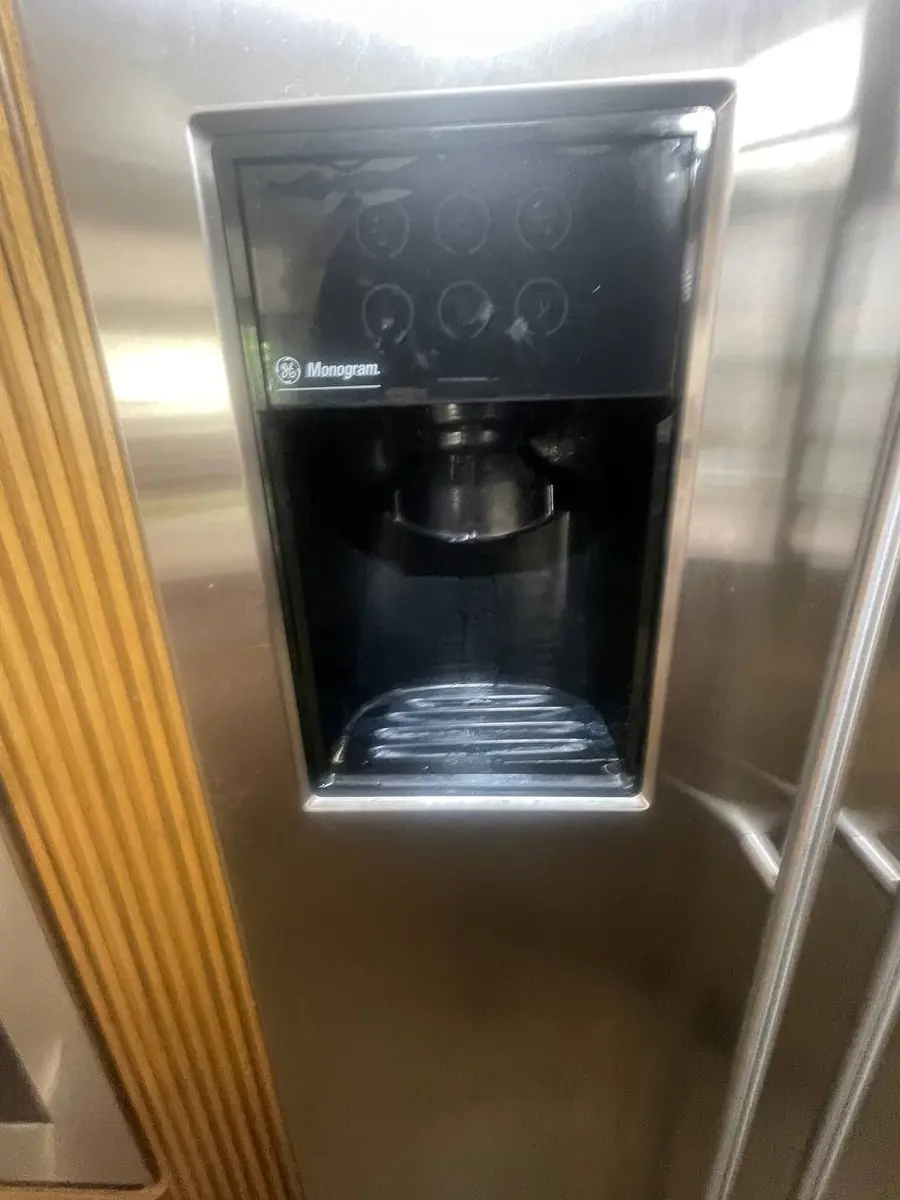
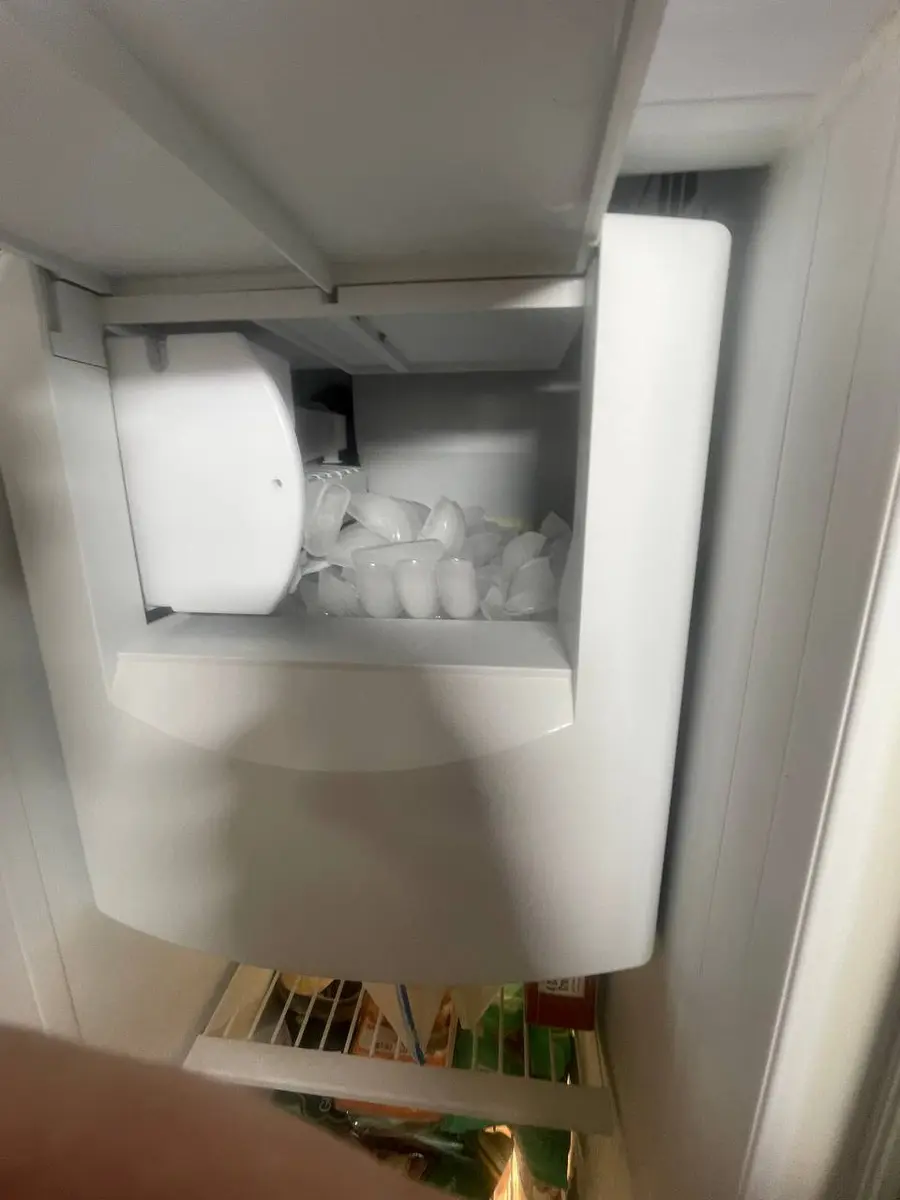
Why a grinding ice maker happens#
Grinding is a wear symptom. Where a tick tells you something is switching, a grind tells you two surfaces are in contact that should be gliding — and unlike an electrical noise it tends to get worse rather than staying constant. When a ice maker starts making a grinding noise, I look first at ice stuck in ejector: a cube jams the ejector arm, so the maker motor strains and grinds against it under full load. Once that is ruled out, the next suspect is a fan motor bearing that has run dry.
What a grinding really means, ranked by odds#
A ice maker grinding is a low, gritty note that rises with speed as metal wears on metal. That relationship with speed is the useful part — a noise that changes pitch as something spins up belongs to a rotating part, not a switching one. You will usually catch the grinding each time it fills and then drops a fresh batch of cubes, when the harvest motor is working hardest.
| Likely cause | What's happening | How likely | First thing to check | Fix it yourself? |
|---|---|---|---|---|
| Ice stuck in ejector | a cube jams the ejector arm, so the maker motor strains and grinds | Most likely | thaw the mould and clear any cube jamming the ejector | Yes — often DIY |
| Fan motor bearing | a dry fan-motor bearing whines and rumbles as the blade spins | Possible | spin the fan blade and feel for a dry, notchy bearing | No — pro repair |
Typical repair cost: $80–250, depending on which part has failed.
Do You Have the Right Tools?
Multimeter ($85), vacuum pump ($250), diagnostic software, and specialized hand tools. Our technician arrives with $3,000+ in professional tools — your diagnostic is free.
Licensed & Insured · 90-Day Warranty · Same-Day Service
Safe checks, then the cost call#
Kill the breaker and let everything come to rest before you reach inside — a fan blade you are about to turn by hand is reason enough on its own. Start with the mould: thaw it and clear any cube jamming the ejector, because a motor labouring against a stuck cube produces a convincing grind that disappears entirely once the obstruction does. If the noise outlives a clear mould, spin the fan blade and feel for a dry, notchy bearing. A healthy bearing coasts smoothly and quietly; a failing one drags, catches, or feels gritty through your fingertips, and that tactile check is far more reliable than trying to judge it by ear.
What separates the two is load versus speed. An ejector jam grinds hardest at the moment of harvest and stops in between; a dry bearing gets louder the faster the blade turns and keeps going for as long as the fan runs. If the trail leads to the motor bearing, hand it over — a bearing left to wear takes the motor with it eventually. With the diagnosis settled you are looking at $80–250, which is worth doing on any ice maker still in good order.
Common questions when the grinding starts#
Why is my ice maker making a grinding noise?#
Usually a cube jammed in the ejector, with a worn fan motor bearing next in line. The table above ranks them, and whether the noise tracks the harvest or the fan speed tells you which you have.
Could ice stuck in ejector be the cause of the grinding?#
Very likely — it is the top cause for this noise. The motor straining against a cube it cannot clear grinds under load, so it is loudest during harvest and silent between batches. Thaw the mould, clear the jam, and see whether the grind leaves with it.
Does fan motor bearing also make a ice maker grinding?#
Yes. Once a bearing runs dry it whines and rumbles as the blade spins, and the note climbs with speed. Spin the blade by hand with the power off — a bearing that feels notchy or rough rather than smooth has found your fault for you.
Is the grinding dangerous?#
Not in itself, though a worn bearing is a part actively destroying itself and its motor with it, so it is not one to live with. Turn the ice maker off once you have identified the source and have it seen to before the next batch.
Fix it or replace it?#
A $80–250 bearing or ejector repair sits far below the cost of a new ice maker, so fixing a sound machine is the better call. I only point people towards replacement when the estimate approaches half the price of a new unit — the written quote decides it.
Senior Gas Appliance Specialist · 18 years experience
AGA-certified gas appliance specialist with 18 years of experience in residential and commercial oven, range, and cooktop repairs.