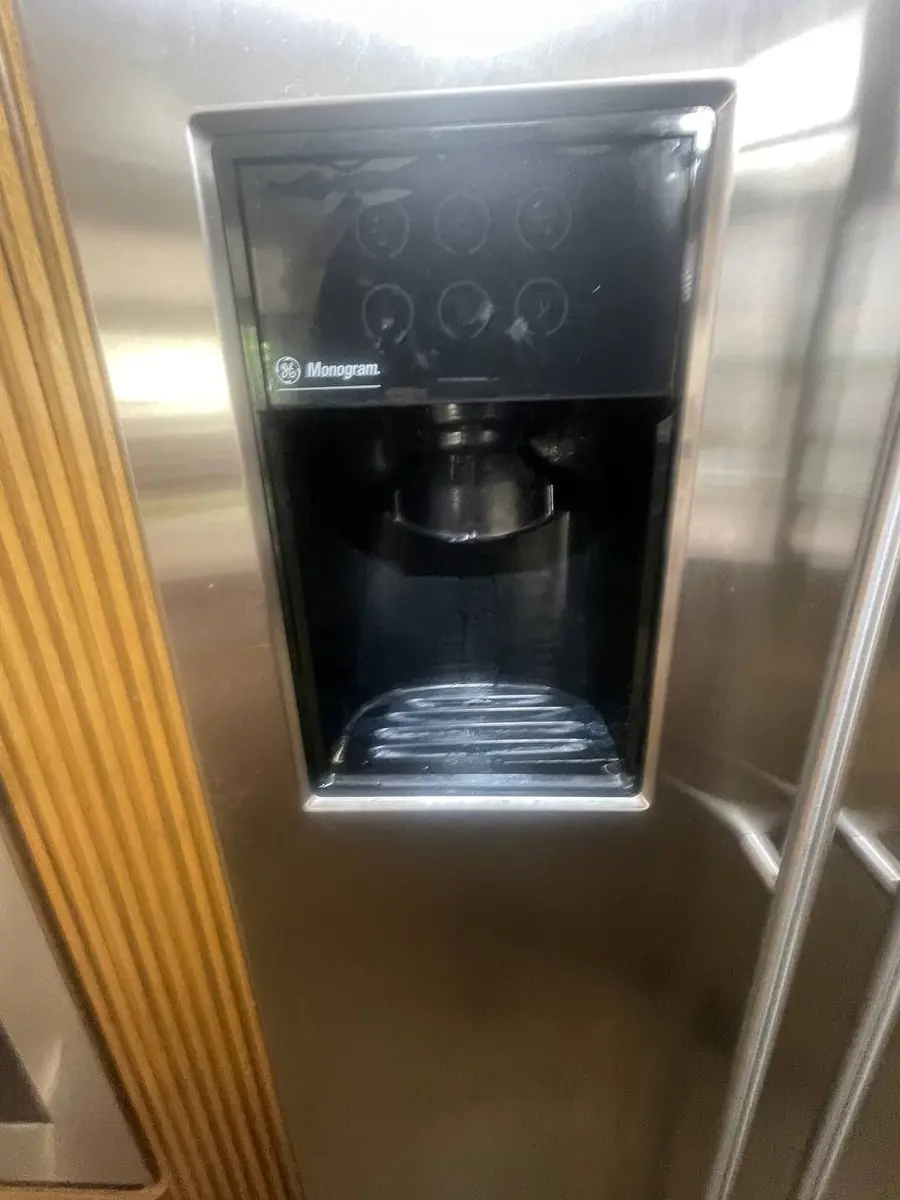
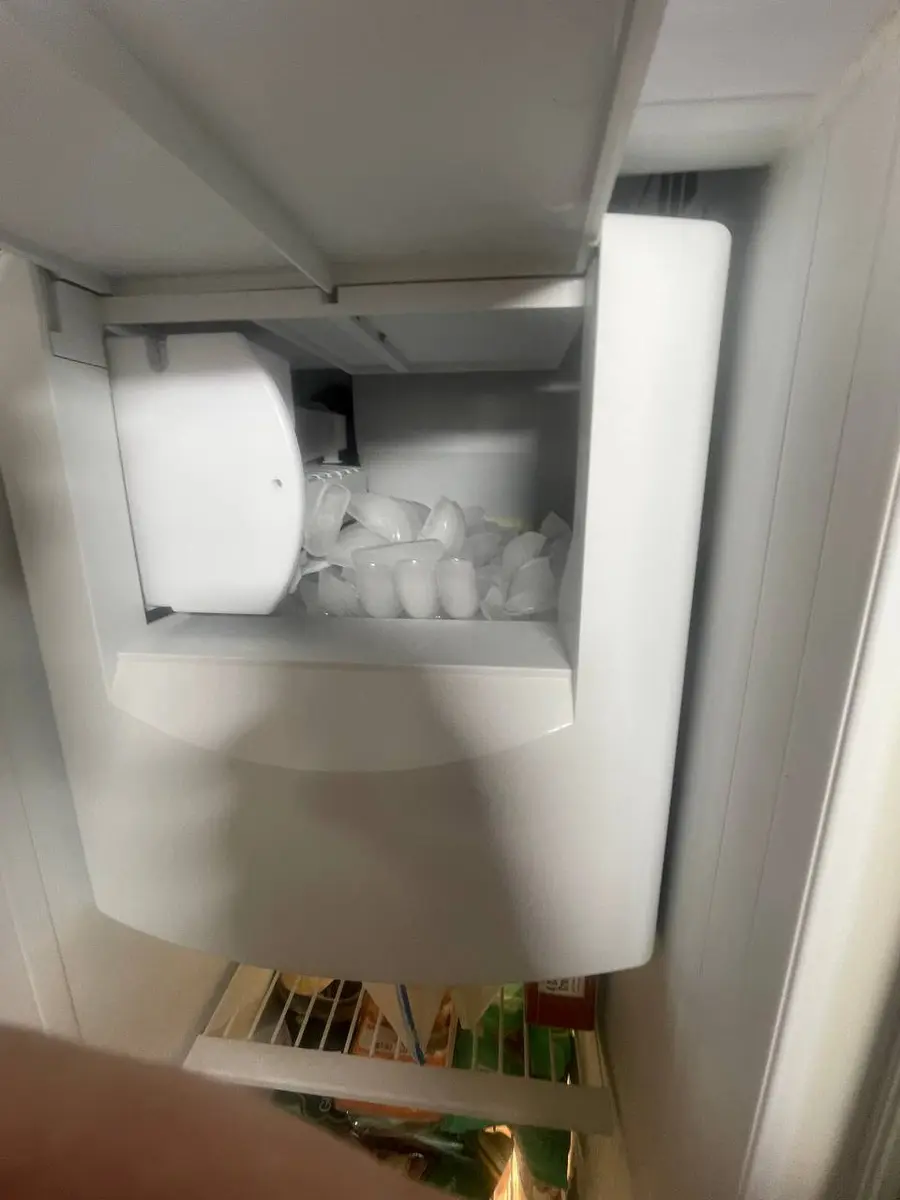
Why a clicking ice maker happens#
A click is a timing symptom. Something in the ice maker is being commanded on and off — or is trying to move and failing back to its rest position — on a rhythm you can count. That makes a clicking ice maker one of the easier noises to place, because you can work out what is clicking simply by noticing when it clicks. Nine times out of ten it traces back to ice stuck in ejector: a cube jams the ejector arm, and the motor keeps retrying against the obstruction instead of completing its sweep. The other suspect worth ruling out is a failing water inlet valve.
What a clicking really means, ranked by odds#
A ice maker clicking is a sharp, repeating tick that fires on a fixed, insistent rhythm — steady rather than random, which is what separates it from the rattle of cubes dropping. Time it against the machine's own cycle. You will usually catch the clicking each time it fills and then drops a fresh batch of cubes, and a tick that lines up with the fill points somewhere very different from one that carries on between batches.
| Likely cause | What's happening | How likely | First thing to check | Fix it yourself? |
|---|---|---|---|---|
| Ice stuck in ejector | a cube jams the ejector arm, so the maker motor strains and grinds | Most likely | thaw the mould and clear any cube jamming the ejector | Yes — often DIY |
| Failing water inlet valve | the fill valve buzzes and chatters each time it cycles water through | Possible | listen at the fill valve during a water cycle | No — pro repair |
Typical repair cost: $80–250, depending on which part has failed.
Do You Have the Right Tools?
Multimeter ($85), vacuum pump ($250), diagnostic software, and specialized hand tools. Our technician arrives with $3,000+ in professional tools — your diagnostic is free.
Licensed & Insured · 90-Day Warranty · Same-Day Service
Safe checks, then the cost call#
Cut the power at the breaker and let the unit settle before you put a hand anywhere near it. Then take the two suspects in order. Thaw the mould and clear any cube jamming the ejector — a jam that has been retrying for days will have built a fair amount of ice around itself, so give it time to release rather than levering at it. If the tick survives a cleared mould, listen at the fill valve during a water cycle: the valve is a solenoid, and one that is failing buzzes and chatters as water passes through it instead of opening cleanly and going quiet.
The distinction that matters is whether the tick belongs to the fill or to the ejector sweep. A tick that arrives only while water is running is the valve's; one that continues after the fill has finished is the harvest mechanism's. If the trail leads to the inlet valve, that is a pro job — book it rather than forcing another cycle through a valve that is already struggling. Expect $80–250 for the fix, which is money well spent on an ice maker with years left in it.
Common questions when the clicking starts#
Why is my ice maker making a clicking noise?#
Most often a cube jammed in the ejector, with the water inlet valve the next most common. The ranked table above narrows it quickly, and timing the tick against the fill usually settles it in one cycle.
Could ice stuck in ejector be the cause of the clicking?#
Yes, and it is the first thing to eliminate. A jammed cube leaves the ejector motor retrying against something it cannot shift, which is exactly the kind of repeating, evenly spaced tick people describe. Thaw the mould out and see whether the noise goes with it.
Does failing water inlet valve also make a ice maker clicking?#
It does. A solenoid valve on its way out chatters instead of snapping open, and that chatter reads as a tick. The giveaway is that it only happens while the machine is taking water on — if the noise stops the moment the fill stops, the valve is your part.
Is the clicking dangerous?#
The sound itself is harmless, but a valve failing under pressure is not something to leave running — a water part that fails badly makes a mess as well as a repair bill. Switch the ice maker off once you know what you are dealing with and get it looked at before the next batch.
Fix it or replace it?#
At $80–250, a repair is comfortably cheaper than a new ice maker, so on a machine that is otherwise sound the fix wins easily. Replacement only makes sense once an estimate climbs towards half the price of buying new — a written quote makes that call obvious.
Senior Gas Appliance Specialist · 18 years experience
AGA-certified gas appliance specialist with 18 years of experience in residential and commercial oven, range, and cooktop repairs.