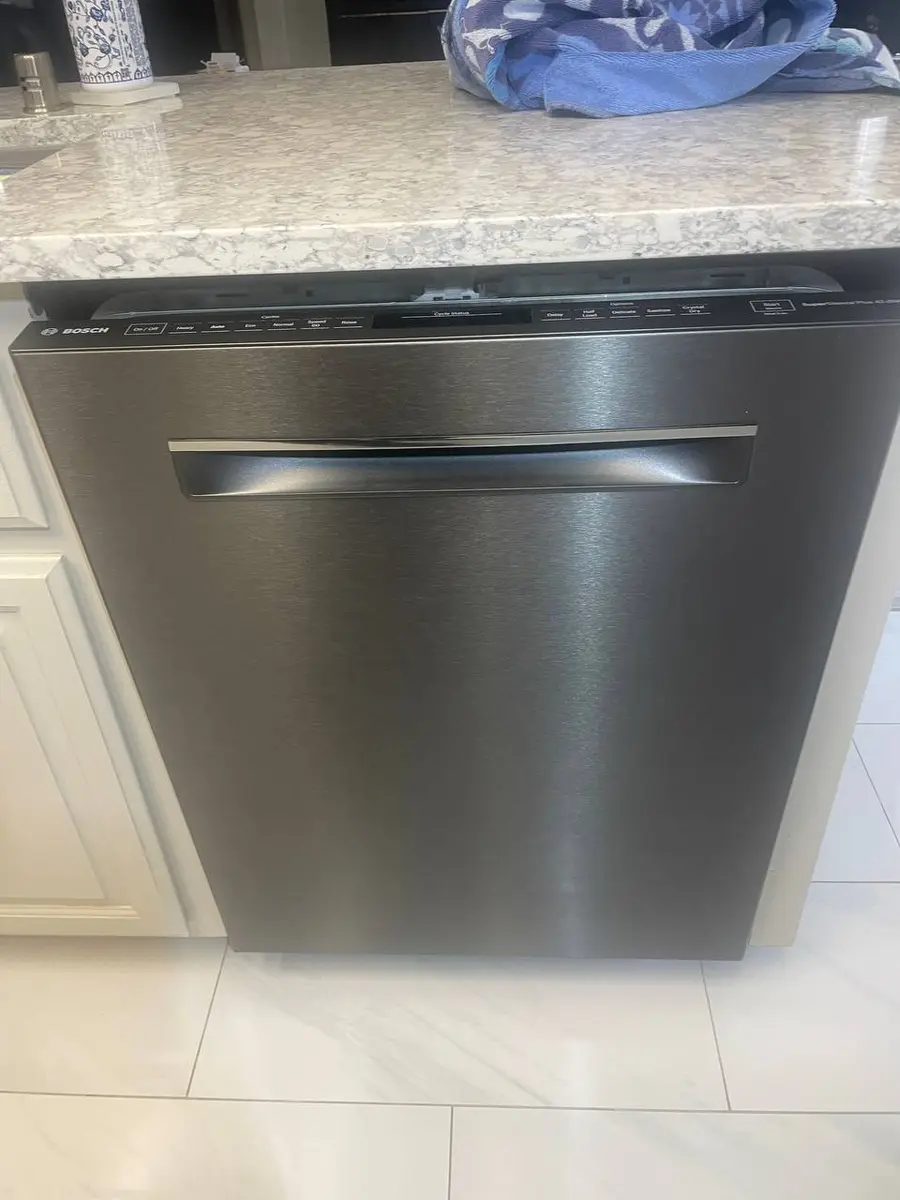
Unclog Bosch 800 Series Dishwasher Drain Filter
A Bosch 800 series dishwasher throwing E22, E24, or E25 usually has a clogged drain filter. Cancel the cycle, bail the water, pull and deep-clean the triple filter, clear the sump, and run a hot empty cycle. Difficulty: beginner; 25-40 minutes.
Even a premium Bosch filter clogs, and because 800 series owners often skip pre-rinsing, that filter tends to get neglected until an error appears. This covers the triple-filter clean plus the ActiveWater sensor wipe unique to these models.
Tools & supplies#
| Item | Detail |
|---|---|
| Soft-bristle brush (old toothbrush) | scrubbing filter mesh |
| Wooden toothpick or bamboo skewer | clearing spray-arm holes |
| Microfiber cloth, small bowl | sensor and soaking |
| Wet/dry vacuum, flashlight | bailing water, inspecting the sump |
Do You Have the Right Tools?
Water pressure gauge ($60), spray arm tester, float switch multimeter ($85), and drain inspection camera. Our technician arrives with $3,000+ in professional tools — your diagnostic is free.
Licensed & Insured · 90-Day Warranty · Same-Day Service
Safety first#
Disconnect power at the circuit breaker before reaching into the sump area. While this is a cleaning procedure, the sump area contains the heating element connection which may still be hot if the dishwasher recently ran. Wait 20 minutes after the last cycle before starting.
Step-by-step#
Step 1: Cancel the cycle and power down#
On E22 (filter blocked), E24 (drain timeout), or E25 (pump obstructed), hold Start 3-5 seconds to cancel, wait for the pump to stop (1-2 minutes), then switch off the breaker and open the door carefully — standing water may remain.
Step 2: Remove standing water#
Sponge, towel, or vacuum the tub floor clear so you can reach the filter. The stainless tub makes the recessed circular sump at the bottom center easy to see.
Step 3: Remove the racks and spray arm#
Slide the lower rack out, then the third rack from its elevated track, and lift the lower spray arm off its center hub — no tools needed.
Step 4: Remove the triple-filter assembly#
Grip the cylindrical mesh filter and turn it a quarter-turn counterclockwise (follow the molded arrow), lift it out, then lift the flat fine filter from its channel around the sump opening.
Step 5: Deep-clean the mesh filter#
Scrub the cylinder mesh from outside to inside under hot water, working the bottom rim and the seam where mesh meets plastic where grease collects. For heavy grease, soak it in hot water with a little dish soap for 15 minutes and scrub again.
Step 6: Deep-clean the fine filter#
Hold the flat fine filter to the light — even light through the mesh is good, dark patches are embedded grease. Brush it gently under water, or soak in a 50/50 water-vinegar mix for 20 minutes for stubborn buildup. Never use an abrasive pad on this delicate mesh.
Step 7: Clear the sump and pump area#
Flashlight the sump for fruit pits, glass, toothpicks, jar-label adhesive, and bone fragments, and lift them out with tweezers or pliers. If your model has a round pump cover in the sump, pop it off and spin the impeller with a finger — it should turn freely.
Step 8: Clean the ActiveWater turbidity sensor#
The clear dome in the sump reads water clarity by infrared to judge when dishes are clean; a greasy dome reads "always dirty" and stretches cycles long. Wipe it with a soft damp cloth only — no chemical cleaners, which can damage the lens coating.
Step 9: Clear the spray-arm holes#
With the spray arm off, clear each hole with a wooden toothpick or bamboo skewer — never metal, which enlarges the holes and drops pressure — then flush the arm under the tap.
Step 10: Reassemble and run hot#
Drop the fine filter into its channel, insert and lock the mesh cylinder (quarter-turn clockwise to the lock icon), press the spray arm back on, and replace the racks. Restore power and run the hottest empty cycle (Heavy Wash or Sanitize) to flush debris and confirm good drainage.
Safety First — Know the Risks
Live 120V wiring in a wet environment is one of the most dangerous DIY scenarios. Water + electricity = serious shock risk. Our techs are licensed and insured — let them handle the risk.
Licensed & Insured · 90-Day Warranty · Same-Day Service
800 series error codes#
| Code | Meaning | Filter link |
|---|---|---|
| E22 | filter clogged / drain restricted | clean the filter — fixes most E22 |
| E24 | drain timeout | clean the filter and drain hose |
| E25 | drain pump obstructed | clear debris from the pump impeller |
When to call a pro#
Call a technician if E24 or E25 persists after a thorough filter and sump clean (the drain pump BSH 00631200 may have failed), if the impeller will not turn by hand, or if water backs up from the sink connection (shared drain plumbing).
For a repair-versus-replace budget, see our dishwasher repair cost guide.
Appliance Repair Technician · 8 years experience
Experienced technician with 8 years specializing in dishwasher repairs and European appliance brands including Bosch and Thermador.