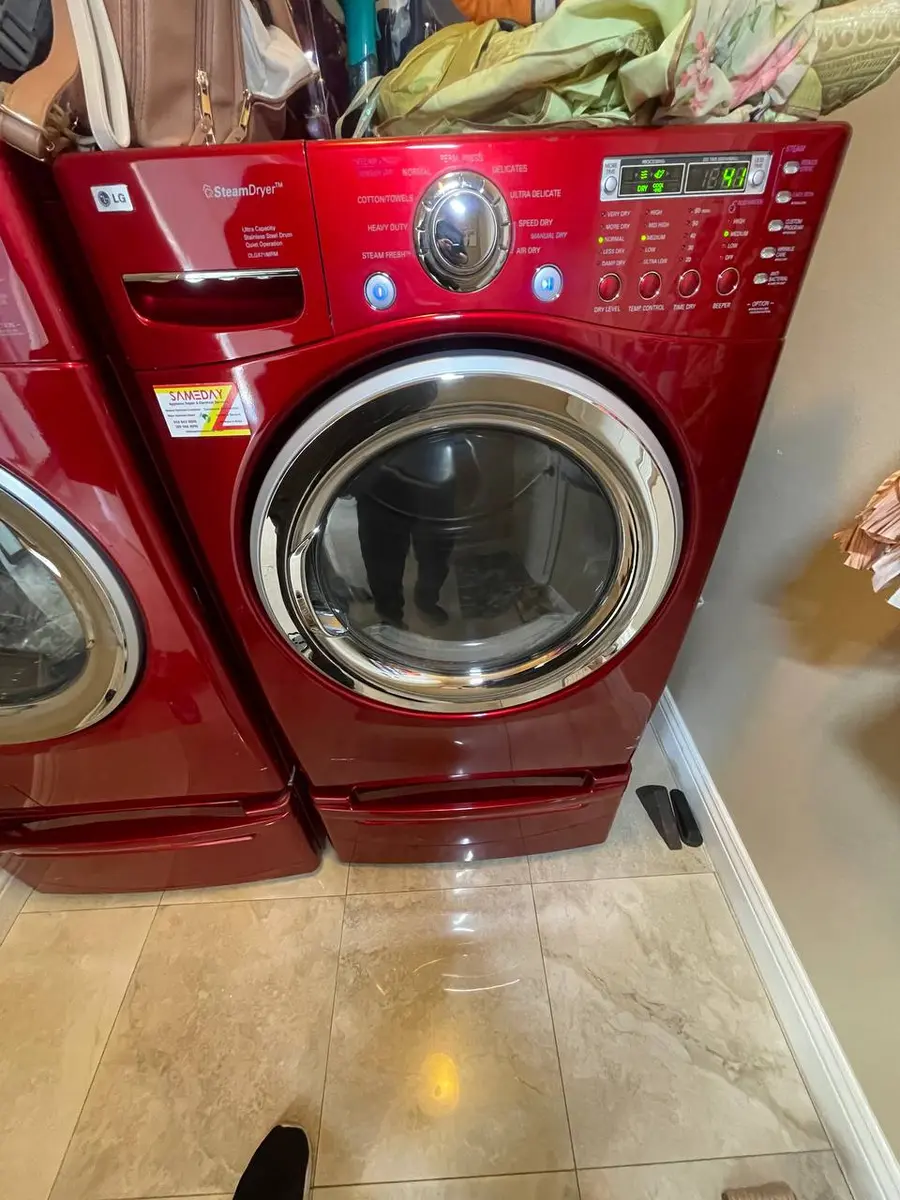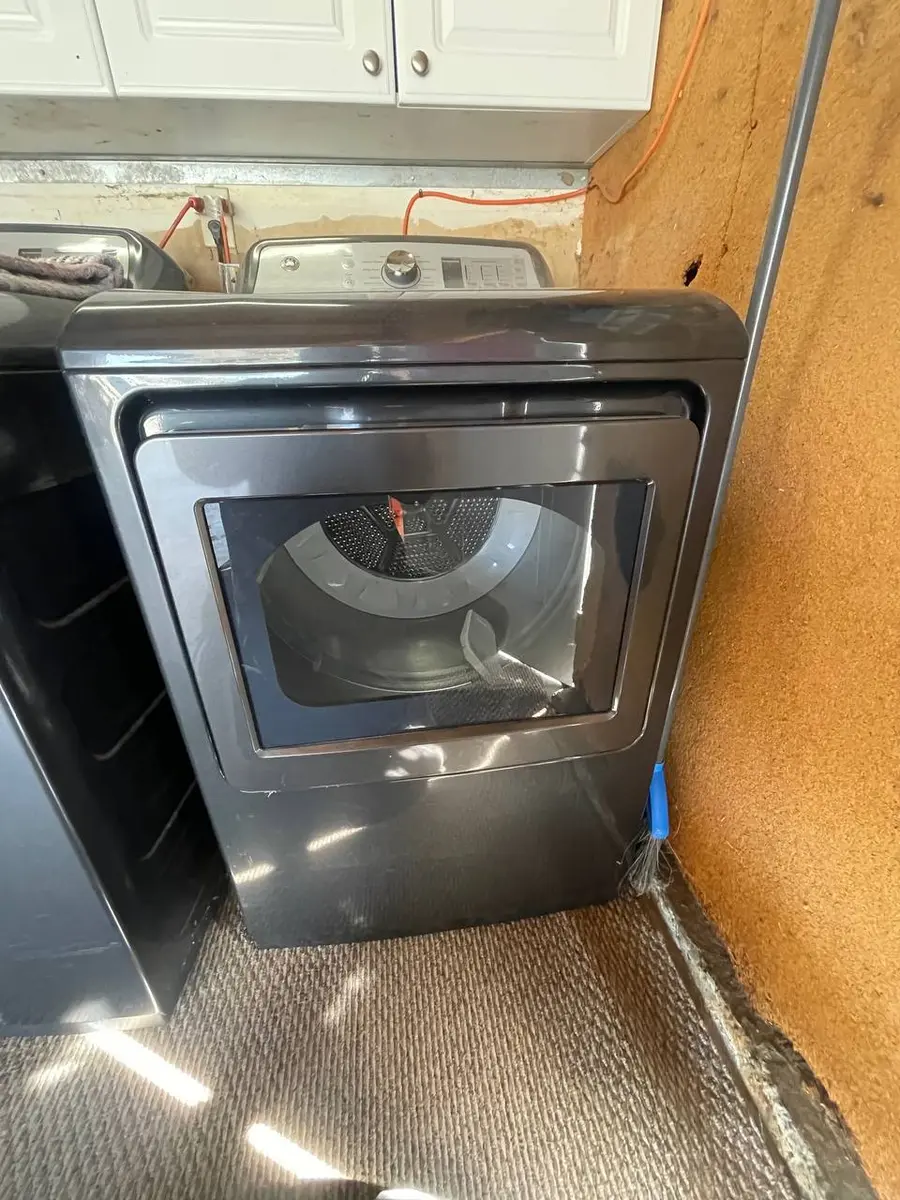
How to Troubleshoot an LG Dryer Motor
An LG dryer that stays silent, hums without turning, squeals, thumps or grinds is telling you which drive part failed — the motor, belt, idler or rollers. Matching the sound to the part first makes this an intermediate diagnosis of 20 to 45 minutes.
Start from the symptom#
The drive system is a motor, a belt around the drum, a spring-loaded idler and the drum supports, and each fails with its own signature. Reading that signature narrows the search before you open anything, so this guide works symptom-first, then confirms with a meter and a hand-spin.
Safety warning: Unplug the dryer. The motor has an internal thermal overload — if it stopped due to overheating, wait 30 minutes before testing.
What you need#
| Category | Detail |
|---|---|
| Tools | Multimeter, Phillips #2 screwdriver, work gloves |
| Time and level | 20 to 45 minutes to diagnose, Intermediate |
Do You Have the Right Tools?
Gas leak detector ($130), thermal fuse tester ($95), belt tension gauge, and vent inspection camera ($180). Our technician arrives with $3,000+ in professional tools — your diagnostic is free.
Licensed & Insured · 90-Day Warranty · Same-Day Service
Step by step#
1 - Read the symptom. No sound at all on start is a dead motor, a tripped door switch, a blown thermal fuse, or an open winding. A hum with no drum rotation is almost always a broken belt. A squeal is belt glazing or a worn idler bearing or roller. A thump is a flat-spotted roller or a worn belt section. A grind or scrape is worn drum glides or something caught by the drum.
2 - Spin the drum by hand. Very free spin with no resistance means the belt has snapped; a smooth spin with some drag is normal since the belt loads it; a rough or notchy spin points at worn rollers; a scrape means glides or a trapped object.
3 - Test the motor if it is silent. Reach the motor by pulling the front panel and drum or from below, unplug its wires, and read the run winding — about 2 to 6 ohms is healthy, and an open means a burned winding to replace. Also check the centrifugal switch on the motor shaft, which should show continuity at rest; an open one keeps the start winding from energizing.
4 - Check the thermal overload. If it ran fine then quit, the internal overload may have tripped on heat and resets after about thirty minutes of cooling. Repeated trips mean worn motor bearings making friction heat, or a jammed blower loading the motor.
5 - Inspect the belt and idler. With the motor humming but the drum still, pull the front panel to confirm the belt: a break shows as two pieces or a belt at the cabinet floor, and an intact-but-loose belt often means the idler spring has come off. Spin the idler by hand — any roughness, wobble or noise is a failed bearing.
6 - Assess the drum supports. With the drum out, check the rear rollers spin freely without wobble and the front glides are smooth and not grooved through.
If it still acts up#
- Motor starts then stops fast: the thermal overload is tripping — look for a lint-seized blower, a too-tight or wrong-length belt, or failing motor bearings.
- Motor cuts out at random: an intermittent centrifugal switch drops the start winding once up to speed and can lose power.
- Squeal only at startup: belt glazing that slips cold — a new belt cures it.
Safety First — Know the Risks
Gas dryers carry carbon monoxide and explosion risk. Even electric dryers involve 240V circuits that can deliver a fatal shock. Our techs are licensed and insured — let them handle the risk.
Licensed & Insured · 90-Day Warranty · Same-Day Service
When to call a professional#
Hand it over if a motor swap with its belt routing and wiring is more than you want to take on, if the motor shaft or centrifugal switch needs work, or if the blower wheel is seized on the shaft and needs a puller.
Need professional help?#
- dryer repair service
- LG appliance repair
- dryer repair cost guide## The silence that is not a fault, and the hand-spin that comes first
Two things are worth doing before any of the symptom branches on this page, because both can make a healthy drive system look dead.
Wait out a thermal overload. The motor carries its own protection, and once it opens the dryer is completely silent and unresponsive until it cools. That is not a failure — it is a motor telling you it ran hot, and it resets itself in about half an hour. A silent dryer tested five minutes after it stopped will read as a dead motor when it is nothing of the sort, so a machine that quit part way through a load gets its half hour before anything is metered.
Turn the drum by hand. It costs two seconds and it splits this whole page in half. A drum that coasts freely has lost its belt, whatever noises came before. A drum with normal resistance still has one, which moves the question to the motor, the idler or the supports. And a drum that will not move at all is neither: something is seized or jammed, and running the machine to hear what it does next is how a repair gets larger.
The order matters. Waiting is free, the hand-spin is free, and between them they retire more of this diagnosis than the meter will.
Lead Appliance Repair Technician · 12 years experience
Experienced technician with 12 years specializing in washing machine and dryer repairs across all major brands.