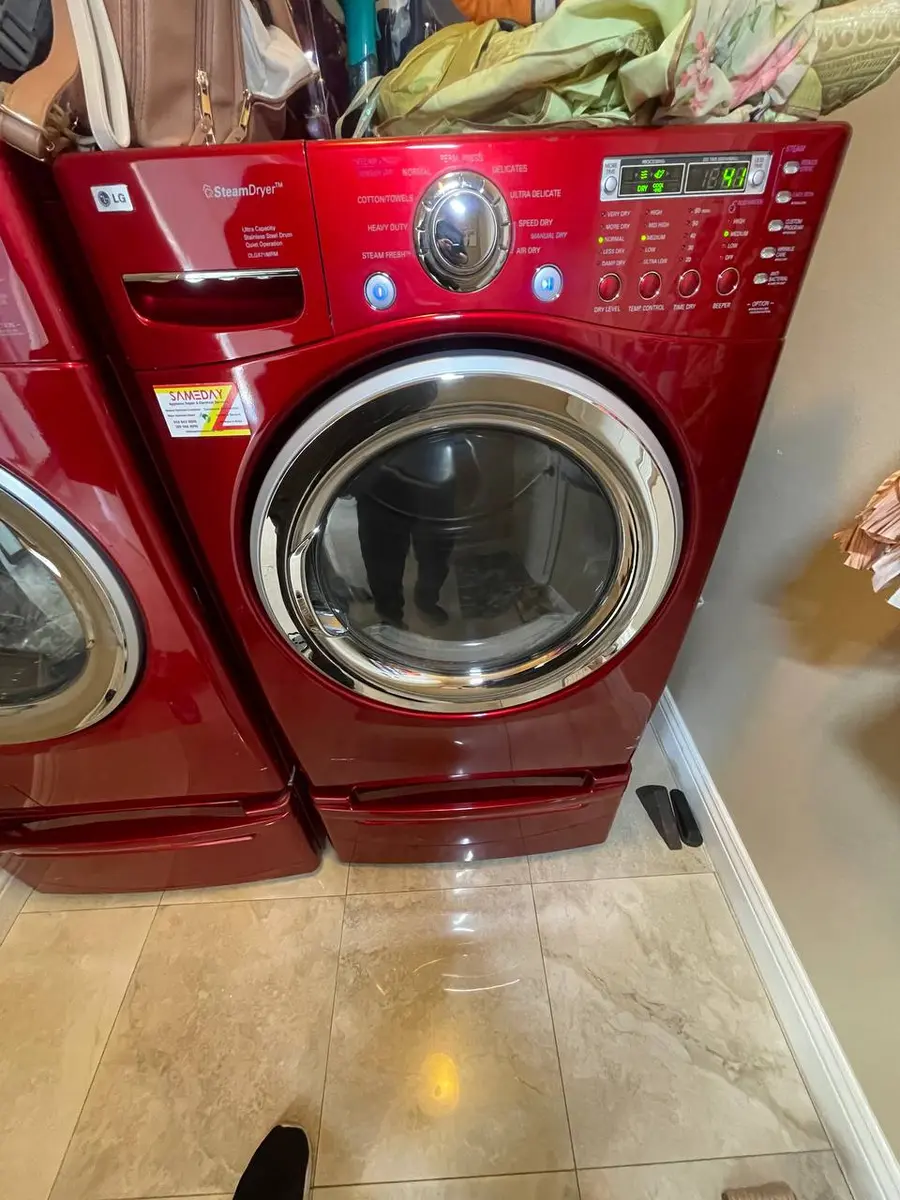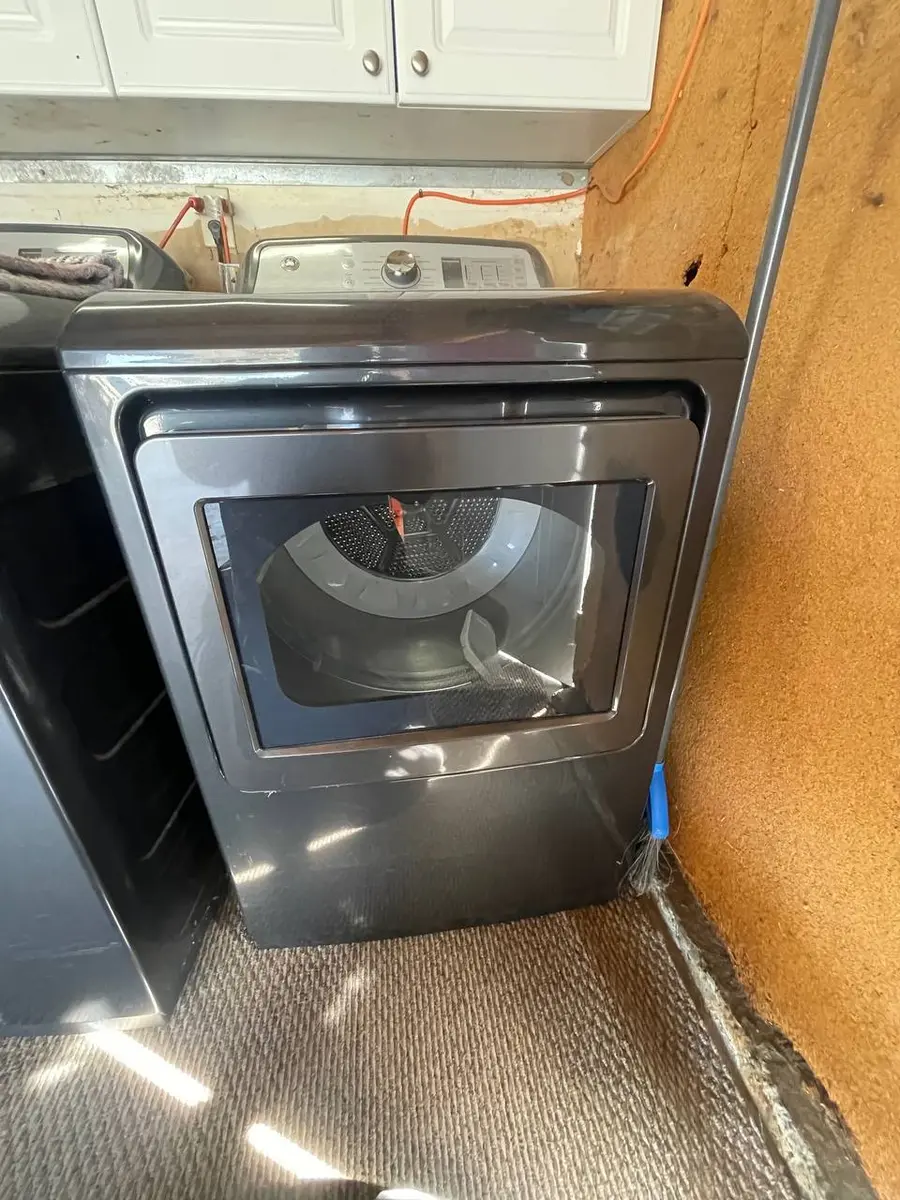
How to Troubleshoot Noises on a Frigidaire Dryer
Frigidaire dryers can produce several distinct noise types, each pointing to a specific component: rhythmic thumping = drum rollers (part 134715900), high-pitched squeal = idler pulley bearing (134793511) or belt slipping, grinding = seized roller or motor bearing, rattling = loose blower fan or foreign object in drum.
Before You Start
- Tools needed: Phillips #2 screwdriver, 1/4-inch nut driver, multimeter, flashlight, vacuum
- Parts needed: Varies by diagnosis — see component-specific sections below
- Time required: 20-45 minutes depending on component
- Difficulty: Intermediate
- Safety warning: Unplug the dryer completely. For gas models, also shut off the gas supply valve. Wait 5 minutes before touching element wiring.
Do You Have the Right Tools?
Gas leak detector ($130), thermal fuse tester ($95), belt tension gauge, and vent inspection camera ($180). Our technician arrives with $15K+ in professional tools — your diagnostic is free.
Licensed & Insured · 90-Day Warranty · Same-Day Service
Step-by-Step Instructions
Step 1: Safety and Access
Unplug the dryer. For gas models, close the gas shutoff valve (typically behind the dryer, a quarter-turn lever). Pull the dryer away from the wall for rear access. Remove the top panel (2 rear Phillips screws, slide back, lift up) to begin internal access.
Step 2: Identify the Failed Component
Observe the dryer's behavior carefully: Does the motor run? Does the drum turn? Is there heat? Are there unusual sounds? The specific combination of symptoms narrows diagnosis to one or two components. Refer to the service sheet (taped behind the toe plate on Frigidaire dryers) for your model's diagnostic flowchart.
Step 3: Test Components Systematically
Use your multimeter to test each suspect component in the diagnostic chain. For heat-related issues: thermal fuse first (continuity test — should read near-zero ohms), then element/igniter, then thermostats. For mechanical issues: visual inspection of belt, rollers, and idler pulley. For electrical/start issues: door switch, start circuit, and motor.
Step 4: Interpret Test Results
Continuity readings: Near 0 ohms through safety devices (fuses, switches) = good. Infinite/OL = open (device has failed/tripped). Element resistance: 10-50 ohms = good, infinite = broken coil. Motor: 2-6 ohms across windings = good. Gas igniter: 50-400 ohms = good.
Step 5: Address Root Cause
If the thermal fuse is blown, always clean the exhaust vent before replacing — the fuse blew because of overheating from restricted airflow. Simply replacing the fuse without fixing the restriction guarantees repeat failure. If rollers are worn, inspect the belt and idler too — they wear at similar rates.
Step 6: Verify Complete Operation
Run a full drying cycle with a small load. Monitor for the first 10 minutes: listen for any abnormal sounds, verify heat output at the exhaust vent, and confirm the drum maintains consistent speed. On Frigidaire models with DrySense, verify the automatic cycle ends at the correct dryness level (if moisture bars were cleaned/replaced).
Troubleshooting Common Issues
- Problem persists after repair: A secondary failure may exist. Dryer issues often cascade — restricted airflow blows the thermal fuse AND damages the element over time. Test all components in the heat chain.
- New noise appears after repair: A reassembly issue — panel not fully seated, belt misrouted, or a tool/screw left inside the cabinet. Open and inspect.
- Intermittent operation: A loose wire connection (spade connector not fully seated) or a component that fails under heat but passes cold testing.
- Dryer works but exhaust is weak: The exhaust vent path has a blockage. This is the root cause of most heat-related failures and must be addressed to prevent recurrence.
Safety First — Know the Risks
Gas dryers carry carbon monoxide and explosion risk. Even electric dryers involve 240V circuits that can deliver a fatal shock. Our techs are licensed and insured — let them handle the risk.
Licensed & Insured · 90-Day Warranty · Same-Day Service
When to Call a Professional
- Gas dryers: if you smell gas at any point, leave the area and call your gas company
- If multiple components have failed simultaneously — may indicate a wiring or control board issue
- If the dryer has tripped the house breaker — potential short circuit inside the dryer
- If you are uncomfortable working with 240V circuits (electric) or gas connections
Same-Day Appliance Repair
Fixed or It's Free
$89 → $0 Service Call & Diagnosis — offer ends May 25
Cost Comparison: DIY vs Professional
| DIY | Professional | |
|---|---|---|
| Parts | $10-$60 | $10-$60 |
| Labor | $0 | $120-$250 |
| Time | 0.5-1.0h | 0.3-0.5h |
| Risk | Low-Medium | Warranty + insurance |
The Real Cost of DIY
Average DIY attempt: $150-400 in tools you may use once, plus the risk of further damage. Our diagnostic visit costs $0 — we find the problem and give you an honest quote.
Licensed & Insured · 90-Day Warranty · Same-Day Service
Need Professional Help?
FAQ
Q: Are Frigidaire dryer parts interchangeable with Electrolux? A: Yes — Frigidaire is owned by Electrolux. Most dryer components (belt, element, thermal fuse, rollers, gas valve) are shared between brands. The gas valve assembly on Frigidaire gas dryers is the same Electrolux part used across their entire dryer lineup.
Q: Where do I find my Frigidaire dryer model number? A: Inside the door frame on a sticker, or on the rear panel. The model number is required for ordering correct replacement parts. Frigidaire dryer models typically start with EFME (electric front-load platform), FFRE (standard electric), or FFRG (standard gas).
Q: Does my Frigidaire dryer have IQ-Touch controls? A: Gallery and Professional series models have IQ-Touch capacitive controls. Base models use mechanical knobs and push-button start. IQ-Touch panels are sensitive to moisture — if buttons are unresponsive, try unplugging for 5 minutes before assuming failure.
Q: How long should a Frigidaire dryer last? A: With proper maintenance (regular vent cleaning, lint trap care), 12-15 years. The most common life-limiting failures are: heating element (8-12 years), belt (8-15 years), drum rollers (8-12 years), and motor (12-15 years). All are economically repairable.
Need a certified technician? Book same-day repair →