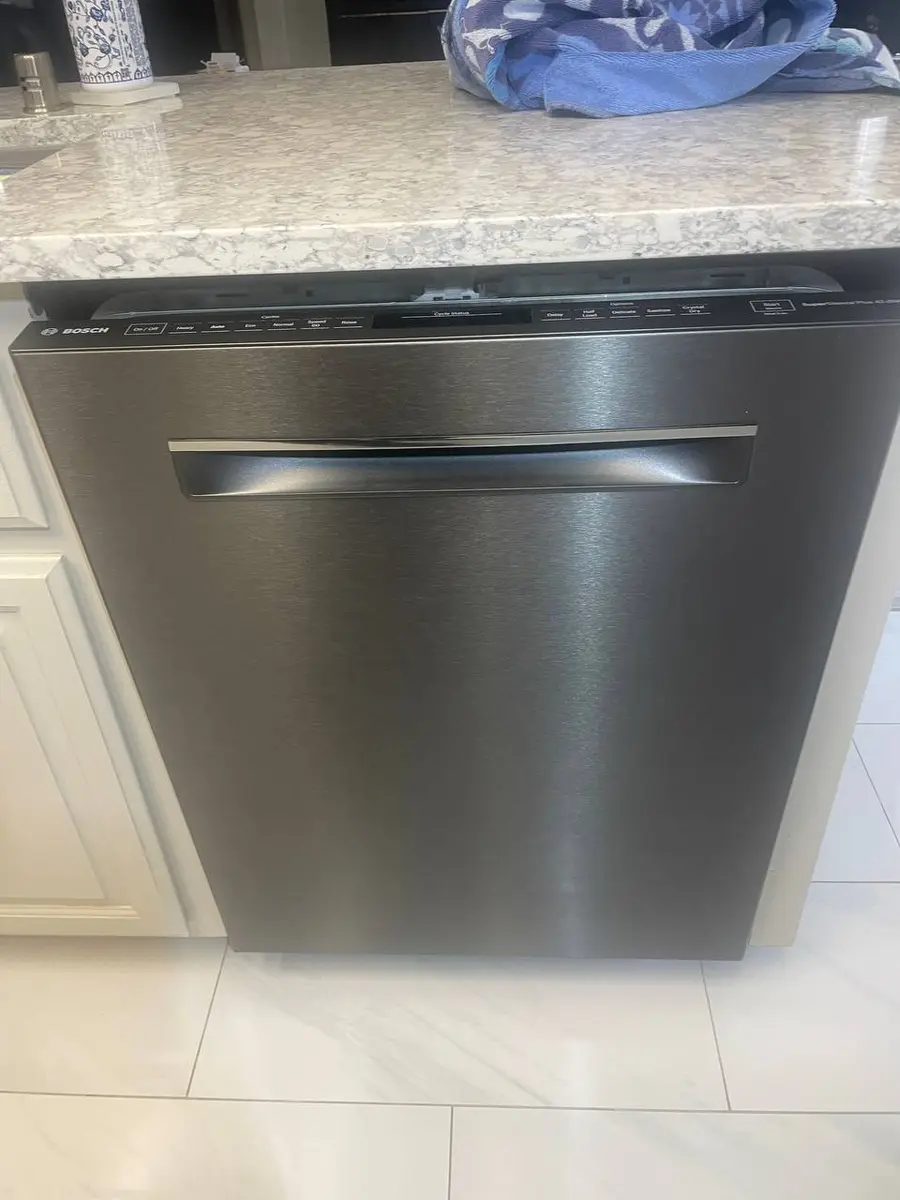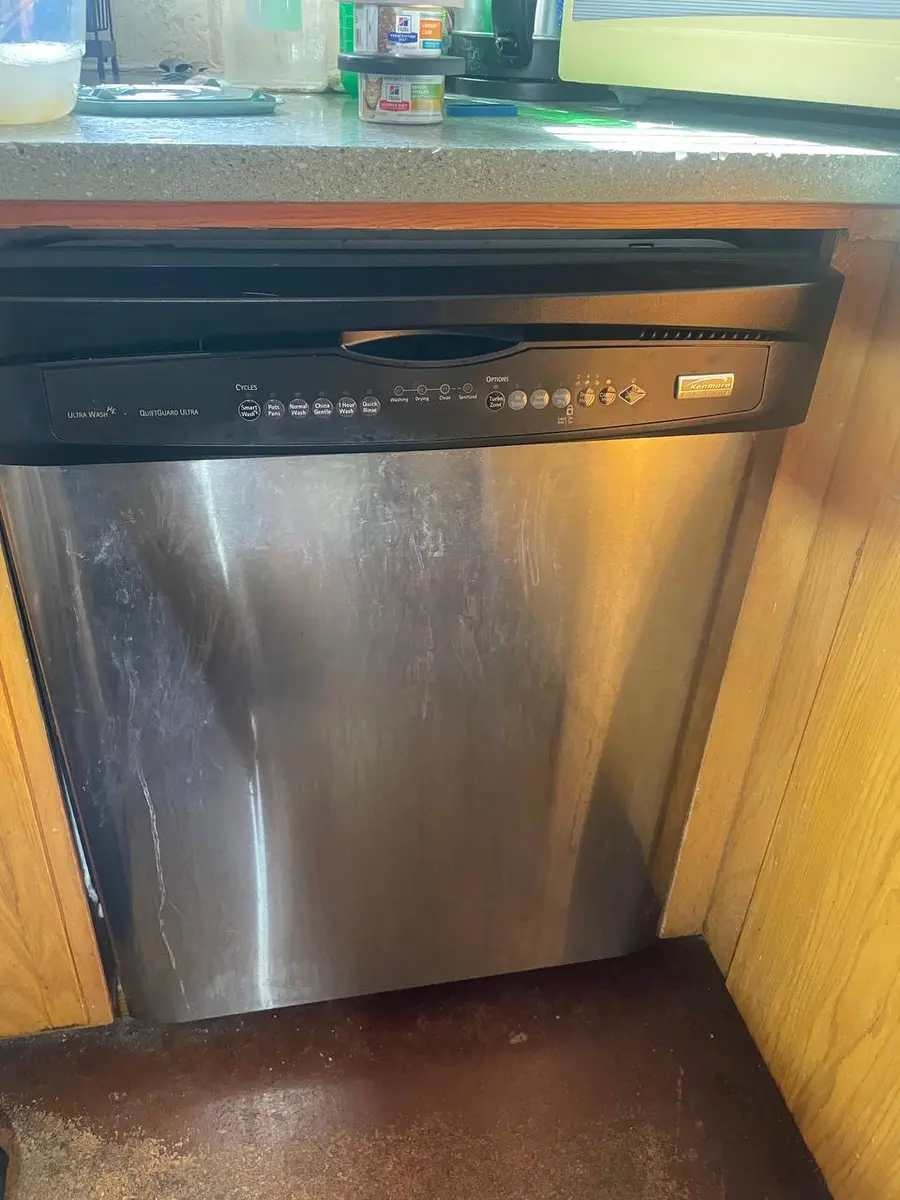
How to Replace the Motor Start Capacitor on a GE
To replace the motor start capacitor on a ge, follow the step-by-step guide below. Difficulty: intermediate.
Learning the right way to maintain your GE dishwasher prevents the most common failures seen in this product line. This small cylindrical component provides the initial electrical boost needed to get the motor spinning from a dead stop. Once the motor is running, it operates on its run winding alone, but without the start capacitor's phase-shifted voltage, it cannot overcome inertia.
This is an inexpensive fix (varies for the part) that can save you from replacing the entire circulation pump motor . It applies to older GE dishwasher models that use a capacitor-start motor. Many newer GE models use a different motor design that does not require a separate start capacitor.
Before You Start#
- Tools needed: Phillips #2 screwdriver, 1/4-inch hex driver, multimeter with capacitance testing mode (or a dedicated capacitor tester), needle-nose pliers, insulated screwdriver
- Parts needed: Motor start capacitor (match the microfarad rating on your old capacitor; typically 3-8 microfarad for GE dishwashers, 250V or higher rating). Cost: varies
- Time required: 20-30 minutes
- Difficulty: Intermediate
- Safety warning: Turn off the circuit breaker. Capacitors store electrical charge even when power is off. Before touching capacitor terminals, discharge it by shorting the terminals together using an insulated screwdriver (hold the insulated handle, touch the metal blade across both terminals simultaneously). You may see a small spark. This is the stored charge releasing safely.
Do You Have the Right Tools?
Water pressure gauge ($60), spray arm tester, float switch multimeter ($85), and drain inspection camera. Our technician arrives with $3,000+ in professional tools — your diagnostic is free.
Licensed & Insured · 90-Day Warranty · Same-Day Service
Step-by-Step Instructions#
Step 1: Confirm the Capacitor is the Problem#
First, rule out a jammed impeller (the most common cause of a humming motor):
- Open the dishwasher, remove the lower rack and spray arm
- Remove the filter assembly
- Look for the impeller and check for foreign objects
- Try to rotate the impeller by hand. If it spins freely, the capacitor is the next suspect
If the impeller is jammed, clear the obstruction and retest. If it spins freely but the motor still only hums, proceed with capacitor testing.
Step 2: Locate the Start Capacitor#
Turn off the breaker. Remove the kick plate. The start capacitor is located near the circulation pump motor (the large motor at the bottom center of the sump). Look for a small black or gray cylinder (about 1-2 inches long) with two wire terminals, often mounted to the motor housing or nearby frame with a clip or bracket.
On some GE models, the capacitor is mounted inside a cover on the motor itself. Remove the motor cover (usually 2 Phillips screws) to access it.
Not all GE dishwasher motors have a separate start capacitor. If you cannot find one after thorough inspection, your model likely uses a permanent-split-capacitor motor or a different starting mechanism. In that case, the humming indicates a seized motor bearing or failed motor winding.
Step 3: Discharge and Remove the Old Capacitor#
IMPORTANT: Before touching the capacitor terminals, discharge it. Place an insulated screwdriver blade across both terminals simultaneously. Hold only the insulated handle. A spark may occur. This is normal and safe.
Once discharged, disconnect the wires from the capacitor terminals. Note which wire goes to which terminal (or photograph). Some capacitors are not polarized (either wire can go to either terminal), but document it anyway.
Remove the capacitor from its mounting clip or bracket.
Step 4: Test the Old Capacitor#
Set your multimeter to capacitance mode (the symbol looks like -|(-). Touch the probes to the capacitor terminals. Compare the reading to the value printed on the capacitor body:
- Good capacitor: Reads within 10% of its rated value (e.g., a 6 microfarad capacitor should read 5.4-6.6 microfarads)
- Failed capacitor: Reads 0 (shorted), infinite/OL (open), or significantly below rated value (weak)
If your multimeter does not have capacitance mode, you can do a rough check with the resistance mode: set to the highest ohm range, touch probes to terminals. A good capacitor will briefly show low resistance then climb toward infinity as it charges from the meter's battery. A dead capacitor shows steady zero (shorted) or steady infinite (open).
Step 5: Select the Replacement Capacitor#
Match these specifications from the old capacitor's label:
- Microfarad rating (uF): Must match exactly (e.g., 6 uF). Using the wrong capacitance changes the motor's starting torque.
- Voltage rating: Must be equal to or higher than the original (e.g., if original is 250V, a 370V replacement is fine; a 150V replacement is NOT).
- Type: Motor start capacitors are typically non-polarized electrolytic or film type.
The physical size and shape do not need to match exactly as long as it fits in the available space.
Step 6: Install the New Capacitor#
Mount the new capacitor in the clip or bracket (it may need slight bending of the bracket if the new part is a different physical size). Connect the wires to the terminals in the same configuration as the original.
If the terminals are push-on spade type, push the connectors on firmly. If they are screw terminals, tighten securely.
Step 7: Reassemble and Test#
Replace the motor cover (if removed). Replace the kick plate. Restore power at the breaker.
Start a cycle. During the fill phase, listen for the water entering. After the fill completes, the wash motor should start. With the new capacitor, you should hear the motor engage positively (a brief click or whir as it starts, then steady running). The spray arms should begin rotating.
If the motor still only hums with the new capacitor installed, the motor itself has a failed run winding or seized bearings. Motor replacement is needed.
Step 8: Verify Spray Arm Operation#
After the motor starts successfully, let the cycle run for a few minutes. Pause and open the door. Verify both spray arms have moved from their starting positions (indicating the motor is generating adequate pressure). Check that water spray is strong and even.
If the motor runs but spray is weak, the impeller vanes may be damaged (broken tips from previous jams). Inspect the impeller and consider full pump replacement if damage is visible.
Troubleshooting After Capacitor Replacement#
- Motor starts but trips the breaker after a few minutes: The run winding may be partially shorted (draws too much current once warmed up). Motor replacement needed.
- Motor starts sometimes but not others: The new capacitor may be slightly out of spec, or a motor bearing is intermittently sticking. Monitor over several cycles.
- Motor starts but makes a continuous whining noise: Normal break-in for a new capacitor is possible for 1-2 cycles. If noise persists, the motor bearings are worn.
Safety First — Know the Risks
Live 120V wiring in a wet environment is one of the most dangerous DIY scenarios. Water + electricity = serious shock risk. Our techs are licensed and insured — let them handle the risk.
Licensed & Insured · 90-Day Warranty · Same-Day Service
When Should You Call a Professional?#
EasyBear technicians serving Sacramento and the Bay Area carry GE-specific diagnostic tools and replacement parts on every service call.
- You cannot locate the capacitor on your model (it may not have one, indicating a different motor type)
- The new capacitor does not fix the humming (motor failure; requires full motor replacement which is a complex job)
- You are not comfortable handling capacitors (they can deliver a painful shock if not properly discharged)
The Real Cost of DIY
Average DIY attempt: $150-400 in tools you may use once, plus the risk of further damage. Our diagnostic visit costs $0 — we find the problem and give you an honest quote.
Licensed & Insured · 90-Day Warranty · Same-Day Service
FAQ#
Q: How do I know if my GE dishwasher motor uses a start capacitor? A: Check behind the kick plate near the large circulation pump motor. If you see a separate cylinder (1-2 inches) with two wires, that is the capacitor. If your motor has only a multi-pin connector going directly to the board with no separate capacitor visible, your model uses a different motor design that does not have a replaceable capacitor.
Q: Can a bad capacitor damage the wash motor over time? A: Yes. When the capacitor fails, the motor attempts to start on its run winding alone, drawing 3-5 times normal starting current. This excessive current overheats the run winding. If you hear humming for more than 10-15 seconds per attempt, the thermal overload protector should trip and stop the motor. Repeated thermal cycling degrades the motor windings. Fix the capacitor promptly.
Q: Are GE dishwasher motor capacitors the same as AC unit capacitors? A: The principle is the same, but dishwasher capacitors are much smaller (3-8 microfarad vs 30-60 for AC). They are physically smaller and lower voltage. Do not substitute an AC capacitor even if the microfarad matches, as the physical size likely will not fit and the voltage may be wrong.
Q: How long do GE dishwasher start capacitors typically last? A: 8-12 years in typical conditions. Heat and voltage stress degrade capacitors over time. If your GE dishwasher is 8-10 years old and the motor starts humming, the capacitor is the first suspect before assuming motor failure.
This is one of the more common maintenance tasks our technicians walk customers through — the steps below reflect what works in practice.
Need help with this repair? Schedule a free diagnostic — our technicians handle GE dishwasher repairs same-day.
Appliance Repair Technician & Diagnostics Specialist · 10 years experience
Electronics and diagnostics specialist with 10 years of experience in modern smart appliance repair, specializing in LG and Samsung.