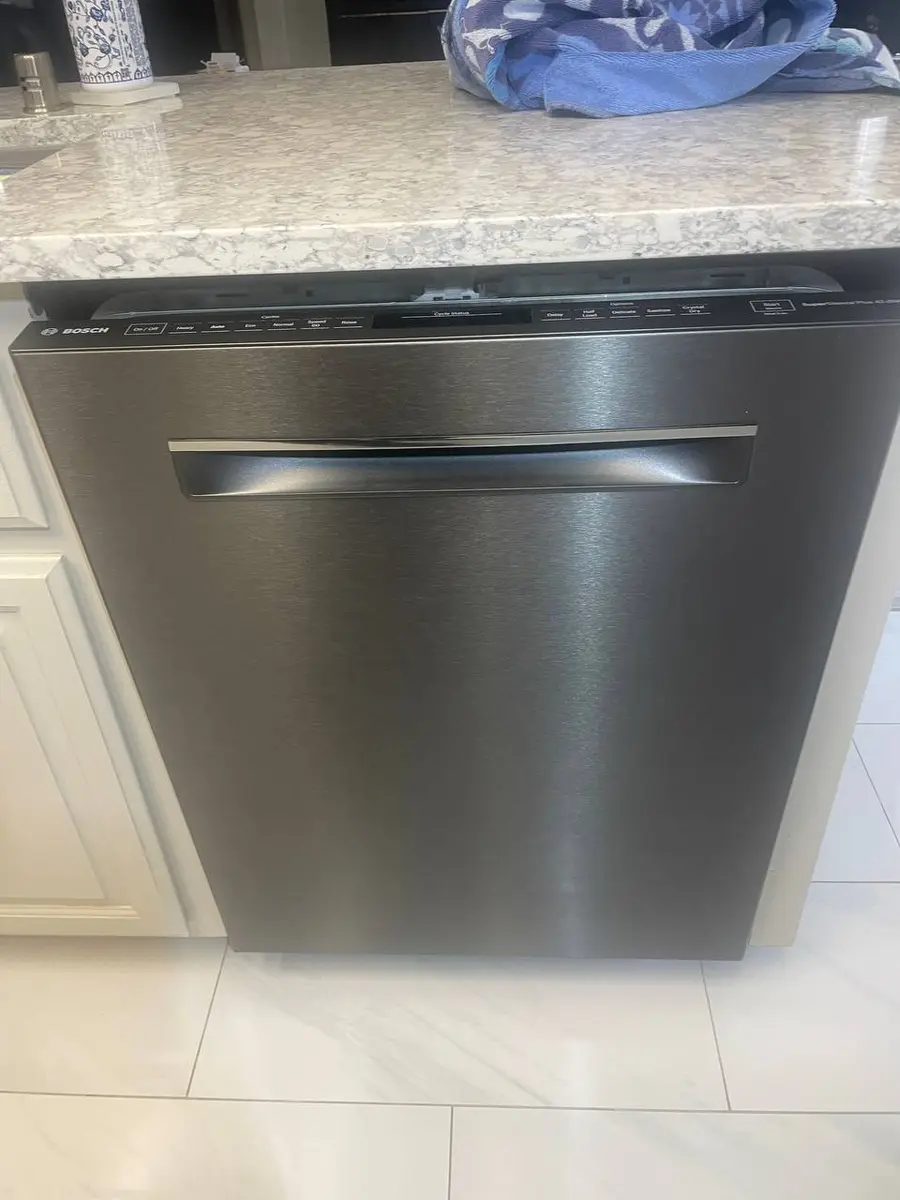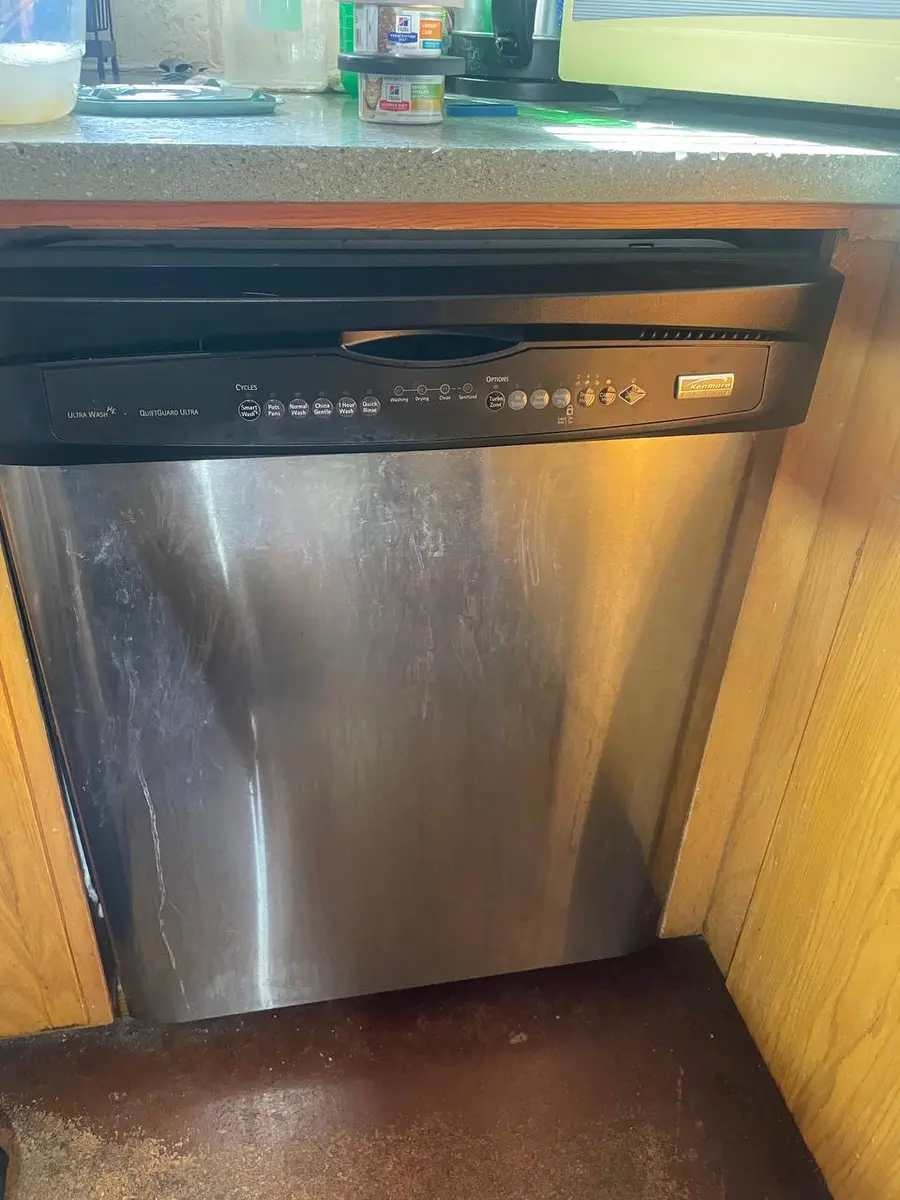
Replace Whirlpool Dishwasher With a New Unit
To replace a whirlpool dishwasher with a new unit, follow the step-by-step guide below. Difficulty: intermediate.
Keeping your Whirlpool dishwasher running at peak performance involves a few Whirlpool-specific steps that generic appliance guides overlook. Whirlpool's FIT system guarantees that any new Whirlpool dishwasher fits a standard 24" opening without modifications, making the swap straightforward. This guide covers disconnecting the old unit, preparing the space, installing the new dishwasher, and completing the first-run test.
If your old dishwasher was a Whirlpool, replacing it with another Whirlpool means the supply line, drain hose routing, and electrical connection will align in the same positions — minimizing adjustments.
Before You Start#
- Tools needed: Torx T20 driver, 1/4" hex nut driver, adjustable wrench, channel-lock pliers, wire nuts (if hardwired), electrical tape, level, adjustable wrench, towels, bucket
- Parts needed: New dishwasher, dishwasher installation kit (if not included — power cord, supply line, drain hose, fittings), thread tape
- Time required: 60-90 minutes
- Difficulty: Intermediate
- Safety warning: Disconnect power at the circuit breaker AND verify zero voltage at the junction box before touching any wiring. Turn off the water supply completely.
Do You Have the Right Tools?
Water pressure gauge ($60), spray arm tester, float switch multimeter ($85), and drain inspection camera. Our technician arrives with $3,000+ in professional tools — your diagnostic is free.
Licensed & Insured · 90-Day Warranty · Same-Day Service
Step-by-Step Instructions#
Step 1: Remove the Old Dishwasher#
Follow the complete removal procedure:
- Turn off circuit breaker and water supply
- Remove kick plate (two 1/4" hex screws)
- Disconnect electrical (wire nuts or unplug)
- Disconnect water supply line at inlet valve
- Disconnect drain hose at sink-side connection
- Remove Torx T20 countertop mounting screws (open door, top inner edge)
- Lower front leveling legs for clearance
- Slide unit out onto cardboard/blanket
Step 2: Inspect and Prepare the Installation Space#
With the old unit removed:
- Check floor for water damage — repair any soft spots before installing the new unit
- Verify the electrical connection: outlet (plug-in) or junction box (hardwire). If your new dishwasher comes with a power cord, it can plug in. If hardwire, you will connect wires at the junction box.
- Measure the opening: width (standard 24"), depth (at least 24"), height (approximately 34" under counter)
- Clear any debris from the supply line routing hole and drain hose routing hole in the adjacent cabinet
Step 3: Prepare the New Dishwasher (Before Sliding In)#
Do not slide the new dishwasher in yet. First, attach components that are easier to reach with the unit outside the cavity:
- Power cord (if plug-in): Remove the junction box cover on the new unit (bottom-right, behind kick plate area). Connect the power cord wires to the dishwasher wires using the included wire nuts (black to black, white to white, green to green/ground screw). Replace the cover.
- Supply line: Thread the supply line fitting onto the inlet valve hand-tight (located bottom-left). Do not fully tighten yet — you may need to adjust angle after sliding in.
- Drain hose: Attach the drain hose to the pump outlet if not pre-installed. Route it through the cabinet hole.
Step 4: Route Drain Hose and Supply Line Through Cabinet#
Feed the drain hose through the hole in the side cabinet wall that leads under the sink. Also route the supply line through its access point. Some installations run both through the same hole; others have separate holes. Ensure neither is kinked or pinched during routing.
Step 5: Slide the Dishwasher Into Position#
Tilt the unit back slightly and slide it into the opening. Feed excess drain hose and supply line through as you push. Go slowly — the supply line can get caught under the unit. Check clearance at the top (the leveling legs control height). If the unit is too tall for the opening, lower the front legs by turning them clockwise.
Step 6: Level the Dishwasher#
Place a level on the tub floor (open door, put level on the bottom interior surface):
- Adjust front legs until level side-to-side (turn clockwise to lower, counterclockwise to raise)
- Check front-to-back level — the unit should be perfectly level or tipped very slightly back (helps door close by gravity)
- On models with rear leveling legs, adjust those to control the back height
The unit must be level for proper water drainage and door alignment.
Step 7: Secure Countertop Mounting Screws#
Open the door. Drive the two Torx T20 screws at the top inner edge upward into the countertop underside. For granite/stone countertops, use the included side-mount brackets that attach to the adjacent cabinets instead. The mounting screws prevent the dishwasher from tipping forward when the door is open and loaded.
Step 8: Connect the Water Supply Line#
Under the kick plate area, tighten the supply line fitting onto the inlet valve (W10872255 on new Whirlpool models):
- Hand-tight plus 1/4 turn with an adjustable wrench
- For compression fittings: do not use thread tape (compression fittings seal via ferrule pressure, not thread sealant)
- For NPT threaded connections: use thread tape (2-3 wraps clockwise)
Step 9: Connect the Drain Hose Under the Sink#
Connect the drain hose to one of these options (in order of preference):
- Air gap: Connect to the air gap device on the countertop (required by code in most California jurisdictions). Use a hose clamp.
- High loop: Loop the drain hose up as high as possible under the counter and secure with a strap or zip tie. Connect to garbage disposal inlet with a hose clamp.
- Disposal connection: Push hose onto the disposal dishwasher nipple and secure with a hose clamp.
IMPORTANT: If connecting to a new garbage disposal, verify the disposal's dishwasher drain knockout has been removed (punch it out from inside the disposal). Forgetting this step is the #1 cause of new dishwasher drain failures.
Step 10: Connect Electrical#
- Plug-in: Route the power cord to the outlet under the sink or behind the dishwasher. Plug in.
- Hardwire: Open the junction box under the dishwasher (bottom-right). Connect house wires to dishwasher wires: black to black, white to white, ground (green or bare) to ground screw on the box. Secure with wire nuts and wrap each connection with electrical tape. Replace the junction box cover.
Step 11: Turn On Water and Check for Leaks#
Open the supply valve slowly. Watch the inlet valve connection, the supply line connection, and underneath for any dripping. Wait 2 full minutes. Check under the sink where the drain hose connects as well. Fix any leaks by tightening fittings (1/8 turn at a time) before restoring power.
Step 12: Restore Power and Run First Cycle#
Turn the breaker on. The control panel should illuminate. Run a Normal cycle:
- Listen for fill valve activation (hissing)
- Verify water enters the tub (open door briefly after 2 minutes — should see water at the bottom)
- Let the full cycle run
- After completion, check under and around the unit for any leaks that appear during operation
- Replace the kick plate (two 1/4" hex screws)
First-Run Checklist#
| Check | Expected | If Not |
|---|---|---|
| Panel lights up | All buttons respond | Breaker off or junction box connection |
| Fill valve activates | Hissing sound within 30 seconds | Supply valve closed or connection loose |
| Tub fills | Water visible in 2 minutes | Inlet valve connection or disposal knockout |
| Wash cycle runs | Motor humming, water spraying | Circulation pump connection |
| Drains at end | Drain pump hums, water exits | Drain hose kinked or disposal knockout |
| No leaks | Floor dry throughout cycle | Tighten connections |
Safety First — Know the Risks
Live 120V wiring in a wet environment is one of the most dangerous DIY scenarios. Water + electricity = serious shock risk. Our techs are licensed and insured — let them handle the risk.
Licensed & Insured · 90-Day Warranty · Same-Day Service
When Should You Call a Professional?#
EasyBear technicians serving Sacramento and the Bay Area carry Whirlpool-specific diagnostic tools and replacement parts on every service call.
- You have a hardwire electrical connection and are not comfortable making wire connections
- The installation space requires modifications (non-standard opening width, raised subfloor)
- You have a granite countertop with no pre-installed mounting brackets
- The supply valve or shut-off valve needs replacement as part of the installation
- The drain connection requires a new air gap installation (plumbing alteration)
The Real Cost of DIY
Average DIY attempt: $150-400 in tools you may use once, plus the risk of further damage. Our diagnostic visit costs $0 — we find the problem and give you an honest quote.
Licensed & Insured · 90-Day Warranty · Same-Day Service
FAQ#
Q: Will any new Whirlpool dishwasher fit my existing opening without modification? A: If your opening is standard 24" width, yes — Whirlpool's FIT system guarantees undercounter fit. Height varies from 33.5" to 34.5" depending on model, controlled by the leveling legs. Only non-standard openings (18" compact, 25"+ extended) require different sizing.
Q: Can I reuse my old supply line and drain hose? A: Supply lines should be replaced every 8-10 years (the rubber inside braided steel degrades). A new installation kit with fresh supply line costs varies by model and area and gives peace of mind. Drain hoses are model-specific in length and can be reused if in good condition, but new dishwashers include one.
Q: Do I need to replace the shut-off valve under the sink? A: If your existing valve shuts off completely (no drips when closed), keep it. If it drips or is hard to turn, replace it now while the supply line is disconnected anyway. This prevents a future emergency.
Q: How do I dispose of the old dishwasher? A: Options: retailer haul-away (usually varies by model and area when you buy from them), municipal bulk pickup (free in many Bay Area cities), scrap metal recycler (may pay you varies by model and area for it), or donation if it still works.
This is one of the more common maintenance tasks our technicians walk customers through — the steps below reflect what works in practice.
If this repair feels beyond your comfort zone, we get it. Schedule a same-day visit — no charge for the diagnostic.
Appliance Repair Technician & Diagnostics Specialist · 10 years experience
Electronics and diagnostics specialist with 10 years of experience in modern smart appliance repair, specializing in LG and Samsung.