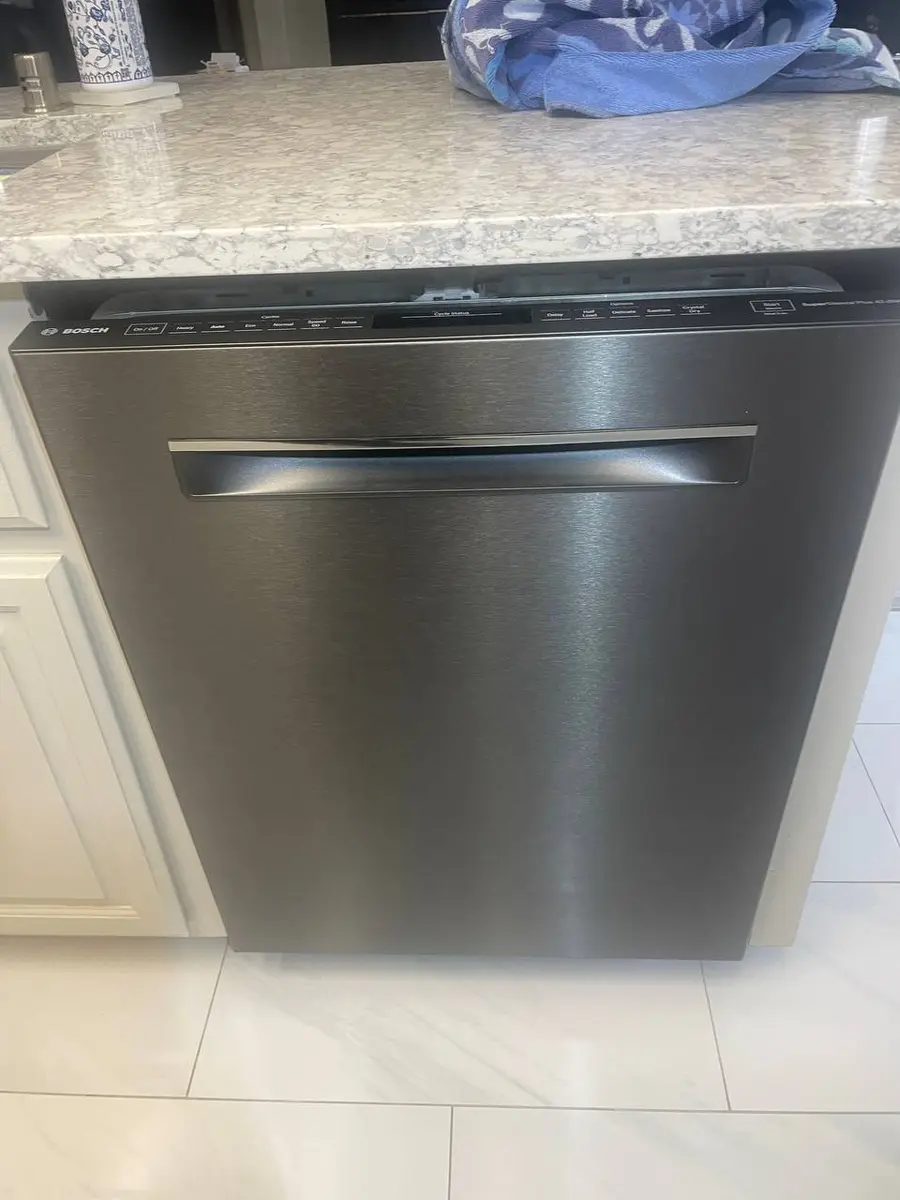
How to Fix a Samsung Dishwasher That Won't Drain
To fix a samsung dishwasher that won't drain, follow the step-by-step guide below. Difficulty: beginner.
Samsung builds their dishwasher with specific components that require brand-appropriate maintenance techniques. This is the single most common Samsung dishwasher error, and the good news is that approximately 70% of 3E occurrences are caused by simple blockages rather than failed components. This guide works through the causes from most common (and free to fix) to least common (requiring parts), so you can resolve the issue with minimum cost.
This guide applies to all Samsung DW80, DW60, and Bespoke series dishwashers with digital displays showing the 3E code, or non-digital models where the Heavy and Auto indicator lights flash simultaneously.
Before You Start#
- Tools needed: Phillips #2 screwdriver, flashlight, towels, bucket, needle-nose pliers, optional: multimeter for pump testing
- Parts needed: None initially (most causes are blockages). If pump replacement is needed: DD31-00005A (~varies by model and area)
- Time required: 15-45 minutes depending on cause
- Difficulty: Beginner (filter/hose) to Intermediate (pump replacement)
- Safety warning: Disconnect power at the circuit breaker before reaching into the sump or accessing components under the unit. Standing water in the tub may be hot if the error occurred mid-cycle.
Do You Have the Right Tools?
Water pressure gauge ($60), spray arm tester, float switch multimeter ($85), and drain inspection camera. Our technician arrives with $3,000+ in professional tools — your diagnostic is free.
Licensed & Insured · 90-Day Warranty · Same-Day Service
Step-by-Step Troubleshooting#
Step 1: Manual Water Removal#
If the tub has standing water, remove it first so you can access the filter and sump. Use a cup or ladle to scoop most of the water into a bucket. Soak up the remaining water with towels. You need a dry sump area to properly inspect and clean the drain path components.
Step 2: Clean the Filter Assembly (Most Common Cause)#
The Samsung two-part filter system (coarse mesh cylinder + fine mesh screen) sits at the center of the tub floor. This is the number one cause of 3E errors.
- Grip the filter handle and rotate counterclockwise until it releases.
- Lift the entire assembly out of the sump.
- Separate the coarse and fine mesh filters.
- Rinse both under running water. Use a soft brush to remove stuck food particles.
- Inspect the fine mesh for tears or holes. A damaged filter allows debris past the screen and into the drain pump.
- With the filter out, look down into the sump opening. Remove any visible debris (broken glass, food particles, toothpicks, labels from jars).
- Reinstall the filters (fine mesh first, then coarse), rotate clockwise to lock.
After cleaning, restore power and run a rinse cycle. If the 3E clears and water drains, you are done. If not, proceed to Step 3.
Step 3: Check the Drain Hose Under the Sink#
The drain hose runs from the dishwasher through the cabinet wall to connect under the kitchen sink (either to the garbage disposal or to a drain tailpiece with a dishwasher branch).
- Open the cabinet under the sink and locate where the dishwasher drain hose connects.
- Check for kinks in the hose. Straighten any kinks.
- If connected to a garbage disposal, ensure the disposal knockout plug was removed during installation. A surprisingly common issue, especially after disposal replacement. Run the disposal for 15 seconds to clear any blockage in the shared path.
- Disconnect the hose from the disposal/tailpiece (have a bucket ready). Blow through the hose toward the dishwasher. If air does not pass, the hose is blocked. Clear the blockage with a long bottle brush or replace the hose.
- Check the air gap (the chrome dome on the countertop near the sink, if present). Remove the cap and check for debris inside.
Step 4: Check the Drain Hose Routing#
The drain hose must make a high loop (rising to the underside of the countertop) before descending to the disposal connection. Without this high loop, dirty water from the sink can siphon back into the dishwasher during sink use, filling the tub and triggering 3E when the next cycle tries to drain more water than the pump can handle.
If the hose hangs straight from the dishwasher to the disposal without rising, secure it to the underside of the counter with a hose clamp or bracket.
Step 5: Inspect the Drain Pump Area#
If filter and hose checks did not resolve the issue, the problem is likely at the pump.
- Disconnect power at the breaker.
- Remove the kick plate (two Phillips screws + two plastic squeeze clips).
- Locate the drain pump at the lower-left of the unit.
- Listen carefully during a drain attempt (restore power briefly): Is the pump humming (running but not draining), grinding (impeller damaged), or silent (pump motor dead)?
| Pump Sound | Diagnosis | Fix |
|---|---|---|
| Humming steadily | Pump runs but path blocked downstream | Check solenoid valve or hose |
| Grinding/clicking | Impeller damaged or debris in pump | Remove pump, clear debris or replace |
| Silent | Pump motor burned out | Replace pump DD31-00005A |
| Buzzes then stops | Pump jammed, motor overheating | Clear impeller jam, may need replacement |
Step 6: Clear a Jammed Pump Impeller#
Before replacing the pump, check if the impeller is simply jammed:
- Disconnect power.
- Disconnect the pump inlet hose (squeeze spring clamp with needle-nose pliers, slide back, wiggle hose off).
- Look into the pump inlet with a flashlight. You may see debris (glass shard, bone, olive pit, label) jamming the impeller.
- Remove the debris with needle-nose pliers or tweezers.
- Try spinning the impeller with a finger through the inlet. It should rotate freely with minimal resistance.
- Reconnect the hose. Test.
Step 7: Test the Drain Pump Electrically (If Silent)#
If the pump makes no sound at all during drain:
- Disconnect power.
- Locate the pump's two-wire connector and disconnect it.
- Set multimeter to ohms. Measure across the two pump terminal pins.
- A working Samsung drain pump reads 15-30 ohms. Open (OL) means the motor winding is burned out.
- If the pump reads good ohms but still does not run, the control board is not sending voltage. This is a less common failure requiring board diagnosis.
Step 8: Replace the Drain Pump (If Failed)#
If the pump motor tests open or the impeller is cracked:
- Disconnect both hoses from the pump (spring clamps with needle-nose pliers).
- Disconnect the electrical connector.
- Rotate the pump counterclockwise ~30 degrees to release the bayonet mount.
- Pull the pump down and out.
- Install new DD31-00005A pump: push up into housing, rotate clockwise to lock.
- Reconnect hoses with spring clamps.
- Reconnect electrical connector.
- Test before reinstalling kick plate.
Step 9: Check the Leak Sensor (If 3E + LC Together)#
If both 3E and LC appear, water has leaked into the base tray. The base tray water may be preventing the drain pump from running (some Samsung models disable the pump when the leak sensor triggers to avoid pumping water into a flooded area).
- Remove kick plate.
- Soak up any water in the base tray.
- Dry the styrofoam float sensor.
- Power reset for 5 minutes.
- The 3E may clear once the LC condition is resolved.
Step 10: Final Verification#
After resolving the 3E cause, run a complete Normal cycle and verify:
- Water drains completely at each phase transition
- No error codes appear
- No water remains in the tub after the cycle completes
- No sounds of grinding or struggling during drain phases
When Should You Call a Professional?#
EasyBear technicians serving Sacramento and the Bay Area carry Samsung-specific diagnostic tools and replacement parts on every service call.
- 3E persists after all the above steps (control board not activating pump relay)
- Water is leaking from the sump housing itself (cracked sump)
- The garbage disposal or kitchen plumbing requires modification for proper drainage
- You are uncomfortable disconnecting drain hoses or testing electrical components
Safety First — Know the Risks
Live 120V wiring in a wet environment is one of the most dangerous DIY scenarios. Water + electricity = serious shock risk. Our techs are licensed and insured — let them handle the risk.
Licensed & Insured · 90-Day Warranty · Same-Day Service
FAQ#
Q: Can I manually drain my Samsung dishwasher when 3E is displayed? A: Yes. Remove the lower rack and filter assembly. Use towels or a wet-dry vacuum to remove standing water from the tub. For water trapped in the sump below tub level, tilt the dishwasher slightly forward onto towels to drain through the filter opening.
Q: Why does my Samsung dishwasher show 3E only on certain cycles? A: Some cycles use more water than others. The Heavy cycle fills more water and creates more food debris in the drain path. If the filter is partially clogged or the pump is weakening, it may handle normal-volume drains but fail when drain volume is higher.
Q: Is the Samsung dishwasher 3E error the same as 3C on other Samsung appliances? A: Similar concept but different implementation. 3E specifically refers to drain failure on Samsung dishwashers. Samsung washing machines use different error code formats (5E for drain on washers). Do not cross-reference Samsung error codes between appliance types.
Q: How do I prevent 3E errors on my Samsung dishwasher? A: Clean the filter assembly every 2-4 weeks. Run the garbage disposal before starting the dishwasher. Scrape large food debris from plates before loading (Samsung does not require pre-rinsing, but large chunks like bones, fruit pits, and labels should be removed). Run a monthly vinegar cleaning cycle to dissolve grease in the drain path.
Our service records show this procedure, done correctly, prevents the most common follow-up issues.
Rather have a pro diagnose this? Request a free same-day diagnostic — our technicians carry Samsung parts on every call.
Appliance Repair Technician & Diagnostics Specialist · 10 years experience
Electronics and diagnostics specialist with 10 years of experience in modern smart appliance repair, specializing in LG and Samsung.