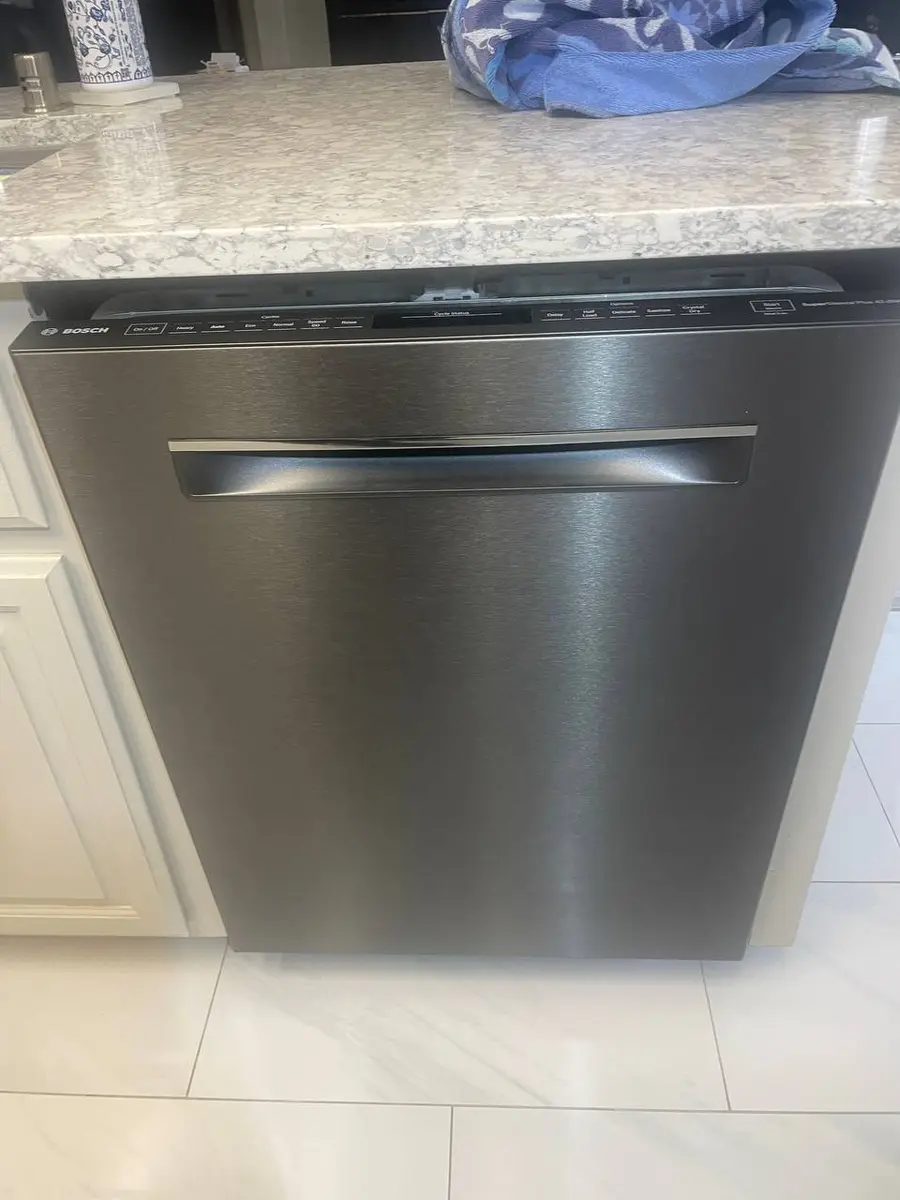
How to Fix a Maytag Dishwasher That Won't Fill With Water
A Maytag dishwasher that runs through its cycle motions but never fills with water will leave dishes dirty and may display the F2E1 error code (fill timeout). This is a distinct problem from a no-start condition because the control board is working and the cycle has initiated, but the tub remains empty. The most common causes in order of frequency are: closed supply valve, clogged inlet valve screen, failed inlet valve solenoid, and stuck float switch.
This guide covers systematic diagnosis from the simplest check (is the water on?) through component testing and replacement. Maytag dishwashers share the Whirlpool Corporation platform, so the inlet valve location, float switch design, and diagnostic codes are consistent with Whirlpool and KitchenAid models.
Before You Start
- Tools needed: 1/4-inch hex driver, adjustable wrench, multimeter, pliers, towels, bucket
- Parts needed: Depends on diagnosis. Inlet valve ($25-$60), float switch ($15-$30) if replacement needed
- Time required: 20-40 minutes for diagnosis and repair
- Difficulty: Beginner to Intermediate
- Safety warning: Disconnect power at the circuit breaker before testing electrical components. Turn off the water supply before disconnecting any water lines.
Do You Have the Right Tools?
Water pressure gauge ($60), spray arm tester, float switch multimeter ($85), and drain inspection camera. Our technician arrives with $15K+ in professional tools — your diagnostic is free.
Licensed & Insured · 90-Day Warranty · Same-Day Service
Step-by-Step Instructions
Step 1: Verify the water supply is on
This sounds obvious but is the most common cause of a no-fill complaint. Check the hot water supply valve under the kitchen sink. The valve should be fully open (handle parallel to the pipe for a ball valve, or turned fully counter-clockwise for a gate valve). If the valve was recently closed for another repair, it may have been forgotten. Turn it fully open and run a cycle to test.
Step 2: Check the float switch
The float switch is a safety device that prevents overfilling. It is a small plastic disc on the floor of the tub (usually front left or front right). When water rises to the correct level, the float rises and its switch tells the board to close the inlet valve. If the float is stuck in the raised position (jammed by food debris or a utensil that fell from the rack), the board thinks the tub is full and will not open the inlet valve. Remove the lower rack and locate the float. Press it down with your finger. It should move freely up and down. If stuck, clean around its base to free it. Remove any debris caught under the float mechanism.
Step 3: Inspect the inlet valve screen for mineral blockage
The most common mechanical cause of no-fill on Maytag dishwashers in hard-water areas is a clogged inlet valve screen. This fine mesh screen inside the valve inlet port traps sediment and mineral deposits, eventually blocking flow completely. Disconnect power and the water supply. Remove the lower access panel (two 1/4-inch hex screws). Locate the inlet valve on the left side. Disconnect the supply line from the valve inlet (use adjustable wrench on the compression fitting). Look into the valve inlet port. The screen is visible inside the threaded opening. Use needle-nose pliers to carefully remove the screen. Soak it in white vinegar for 15-30 minutes to dissolve mineral deposits. Scrub with a small brush. Reinstall the screen, reconnect the supply line, and test.
Step 4: Test the inlet valve solenoid
If the screen is clean and water supply is confirmed but the dishwasher still does not fill, the inlet valve solenoid may have failed. Disconnect power. Remove the wire harness from the valve (behind the lower access panel). Measure resistance across the valve solenoid coil terminals with your multimeter. A healthy valve reads 500-1500 ohms. Open circuit (OL) means the solenoid coil is burned out and the valve cannot open electrically. Replace the valve.
Step 5: Verify the control board sends fill signal
If the valve tests good electrically (correct resistance) but does not open during the cycle, the control board may not be sending voltage to the valve. This is an advanced test requiring the dishwasher to be powered on during measurement. If you are comfortable: remove the lower access panel, reconnect the valve harness, restore power, start a cycle, and carefully measure AC voltage at the valve connector during the fill phase. You should see approximately 120V AC. If no voltage is present, the control board relay for the fill valve has failed. This requires board replacement.
Step 6: Replace the inlet valve (if failed)
With the water supply off and power disconnected: remove the supply line from the valve inlet (wrench on compression nut). Remove the outlet hose from the valve (squeeze spring clamp, slide back, pull hose off). Disconnect the wire harness. Remove the valve mounting screws (1-2 Phillips screws) or unclip from the mounting bracket. Install the new valve in reverse order: mount, connect outlet hose with clamp, connect supply line (apply Teflon tape to threads), connect wire harness. Verify all connections are secure.
Step 7: Check for kinked supply line
Before closing up, verify the water supply line from the sink valve to the dishwasher inlet valve is not kinked or compressed. When a dishwasher is pushed back into the cabinet opening, the supply line can become pinched against the cabinet wall or floor. A kinked supply line restricts flow enough that the tub fills very slowly or not at all within the programmed fill timeout window (typically 120-180 seconds on Maytag models).
Step 8: Test the complete fill system
Restore water supply and power. Run a Normal cycle and monitor the fill phase. You should hear the inlet valve open (a clicking sound followed by the rush of water). Fill typically takes 90-120 seconds. After the fill, the circulation pump engages and you hear water spraying. If the fill completes but takes longer than expected, water pressure may be marginal. Check for partially closed valves or supply line restrictions upstream.
Understanding Maytag Fill System Behavior
Maytag dishwashers fill to a specific water level determined by the float switch, typically 2-3 gallons. The control board monitors fill time. If the board does not detect adequate water level within the programmed timeout (displayed as F2E1), it aborts the fill and may attempt a drain for safety. PowerBlast cycle may use slightly more water than Normal, so a marginal fill restriction may only trigger F2E1 on PowerBlast while Normal fills successfully within the timeout window.
The F2E1 code on Maytag follows the standard Whirlpool Corporation diagnostic format: F2 = fill/overflow system, E1 = long fill time. F2E2 would indicate overflow detected (float switch triggered during fill), which is a different condition requiring investigation of a stuck-open valve or float switch failure.
Safety First — Know the Risks
Live 120V wiring in a wet environment is one of the most dangerous DIY scenarios. Water + electricity = serious shock risk. Our techs are licensed and insured — let them handle the risk.
Licensed & Insured · 90-Day Warranty · Same-Day Service
Troubleshooting Persistent Fill Issues
If no-fill continues after all component checks:
- Verify household water pressure is adequate (minimum 20 PSI, ideal 40-80 PSI). Low-pressure homes may need a booster pump
- Check if the issue occurs only at specific times (morning, when irrigation is running) suggesting a shared pressure problem
- On models with a secondary water inlet (cold water line for specific cycles), verify both connections if applicable
- Run diagnostic mode to verify the control board activates the fill valve output during its test sequence
When to Call a Professional
Contact a professional if:
- The water supply valve under the sink is corroded, leaking, or will not turn (requires plumber)
- The F2E1 code persists after valve replacement with confirmed supply flow, suggesting board or wiring failure
- You measure inadequate household water pressure that requires plumbing work
- The dishwasher overfills (water rises above the door seal), indicating a stuck-open valve or failed float switch requiring immediate attention
Same-Day Appliance Repair
Fixed or It's Free
$89 → $0 Service Call & Diagnosis — offer ends May 25
The Real Cost of DIY
Average DIY attempt: $150-400 in tools you may use once, plus the risk of further damage. Our diagnostic visit costs $0 — we find the problem and give you an honest quote.
Licensed & Insured · 90-Day Warranty · Same-Day Service
Cost Comparison: DIY vs Professional
| DIY | Professional | |
|---|---|---|
| Parts | $0-$60 (screen clean or valve) | $25-$60 |
| Labor | $0 | $120-$200 |
| Time | 20-40 min | 25 min |
| Risk | Low (water mess possible) | Warranty on repair |
Need Professional Help?
Don't Void Your Warranty
Opening your appliance yourself may void the manufacturer warranty. Our repair comes with a 90-day guarantee, and we document everything for warranty compliance.
Licensed & Insured · 90-Day Warranty · Same-Day Service
FAQ
Q: My Maytag dishwasher fills but takes much longer than it used to. What is happening? A: Gradual fill slowdown is almost always a clogged inlet valve screen. Mineral deposits from hard water progressively block the fine mesh. Remove and clean the screen in vinegar. This is free to do and resolves the issue in the vast majority of cases. If the screen is clean, the supply valve under the sink may be partially closed or calcified internally.
Q: Can low water pressure cause the F2E1 code on my Maytag? A: Yes. The control board expects the tub to reach fill level within 120-180 seconds. If water pressure is low (below 20 PSI), the fill takes longer than the programmed timeout and the board triggers F2E1 even though the valve is working correctly. Check pressure at the kitchen sink faucet. If pressure seems normal there, the restriction is in the supply line between the sink valve and the dishwasher.
Q: Is there a filter on the water supply line I should clean? A: Yes. The inlet valve has a small mesh screen at its inlet port. This is the primary filter for the dishwasher water supply. Clean it annually in hard-water areas (remove, soak in vinegar, scrub, reinstall). Some supply hoses also have a screen at the valve-end fitting that can clog.
Q: Will my Maytag dishwasher run without water? A: The dishwasher will attempt to run the cycle. The circulation pump will engage even without water (running dry briefly will not damage it). However, the board typically detects the no-fill condition within the timeout window and displays F2E1 before proceeding far into the cycle. Running the pump dry for extended periods can damage the pump seal.
Need a certified technician? Book same-day repair →