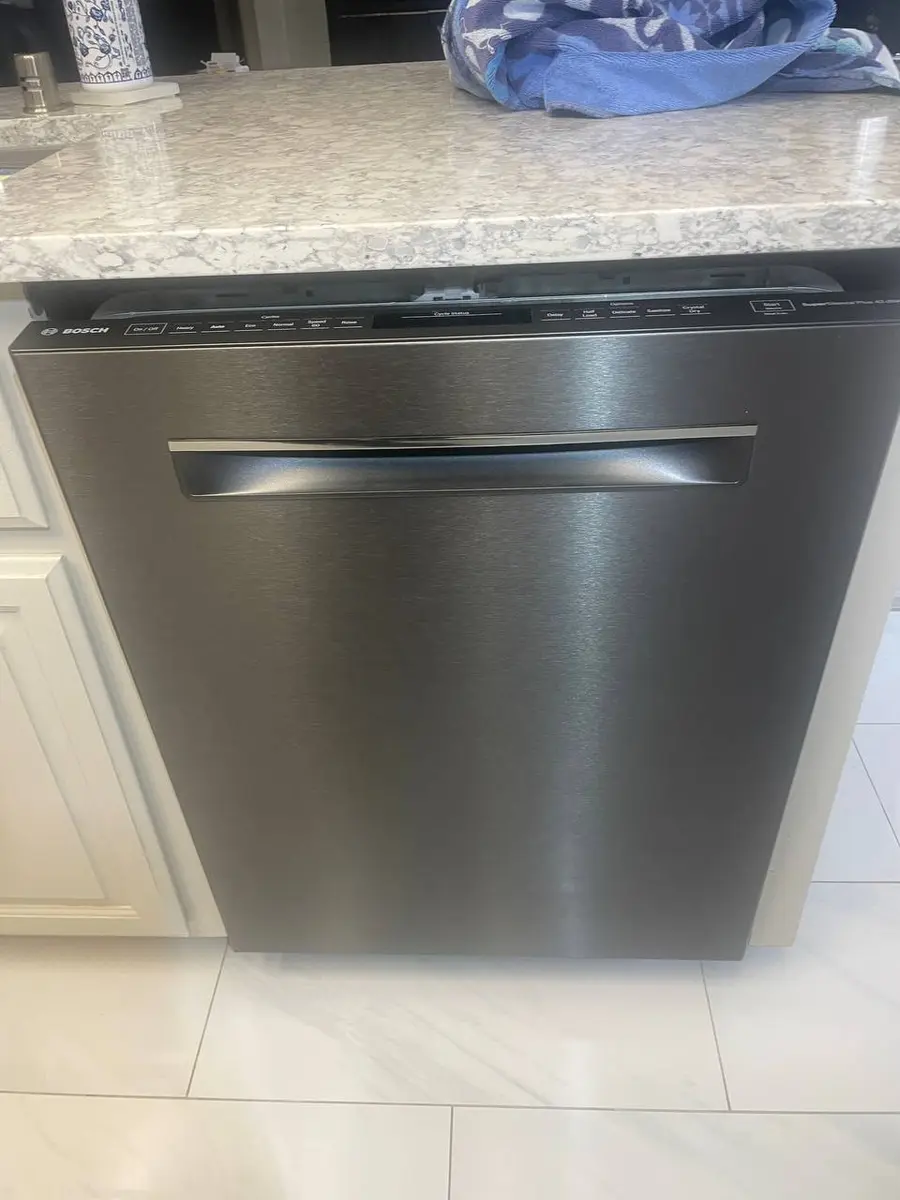
How to Diagnose and Replace a Maytag Dishwasher Heater That Won't Dry
When your Maytag dishwasher washes effectively but leaves dishes wet at the end of the cycle, the heating element or drying system requires attention. Maytag dishwashers use an exposed calrod heating element in the tub bottom for water heating and Heated Dry, with some models also including the ProDry fan system that circulates air to enhance evaporation. This guide focuses on diagnosing whether the issue is the heater, the fan, or the vent and then replacing the appropriate component.
Maytag's heavy-duty positioning means these heating elements handle more thermal cycles than standard dishwashers, especially in homes that use PowerBlast frequently (which demands maximum heater output). This higher duty cycle can accelerate element degradation in hard-water areas where mineral deposits accumulate on the element surface.
Before You Start
- Tools needed: 1/4-inch hex driver, 5/16-inch nut driver, Phillips #2 screwdriver, digital multimeter, pliers
- Parts needed: Heating element ($25-$60) and gasket kit ($8-$15) if element is failed; ProDry fan motor ($40-$80) if applicable
- Time required: 30-50 minutes
- Difficulty: Advanced
- Safety warning: Disconnect power at the circuit breaker before any testing or disassembly. The heating element carries 120V at up to 10 amps when energized. Verify power is off with a non-contact voltage tester.
Do You Have the Right Tools?
Water pressure gauge ($60), spray arm tester, float switch multimeter ($85), and drain inspection camera. Our technician arrives with $15K+ in professional tools — your diagnostic is free.
Licensed & Insured · 90-Day Warranty · Same-Day Service
Step-by-Step Instructions
Step 1: Determine the drying system your model uses
Maytag dishwashers use different drying methods depending on the model. Look up your model number to determine which system you have. Heated Dry only: uses the heating element after the final rinse to evaporate moisture. ProDry with heated element: uses both the heating element and a fan that circulates warm air. Condensation dry (some models): relies on the residual heat from the final hot rinse to evaporate moisture off dishes onto the cooler stainless steel tub walls where it condenses and drains. Your control panel buttons indicate which system you have. If there is a Heated Dry or ProDry button, your model uses active heating.
Step 2: Test the heating element for continuity
Disconnect power at the breaker. Remove the lower access panel (two 1/4-inch hex screws). Locate the heating element terminals at the bottom of the tub (right side). Disconnect the wire leads from both terminals using pliers to pull off the spade connectors. Set your multimeter to resistance and measure across the two terminals. Expected reading for a healthy element: 10-30 ohms. Open circuit (OL) means the element is burned out. Additionally, test each terminal to the metal tub housing for continuity. Any continuity between a terminal and the tub indicates a dangerous ground fault and the element must be replaced immediately.
Step 3: Check the ProDry fan motor (if equipped)
On models with the ProDry system, the drying fan is located in the upper area of the tub, typically in the ceiling or back wall. If the element tests good but dishes are still wet, the fan may not be running. Enter diagnostic mode (three buttons 1-2-3, 1-2-3, 1-2-3 within 8 seconds) and advance to the fan test. Listen for the fan motor engaging. If silent, the fan motor or its control relay on the board has failed. Access to the fan motor typically requires removing the dishwasher from under the counter and removing the outer tub cover, which is a more complex repair.
Step 4: Inspect the vent and vent fan
Maytag dishwashers have a vent in the inner door panel that opens during the dry phase to allow moist air to escape. On some models, a small vent fan assists airflow. Check that the vent flap moves freely by pressing it with your finger. If it is stuck closed by debris or a broken actuator, moisture cannot escape and dishes remain wet. Clean any residue around the vent opening. If the vent wax motor (actuator that opens the vent) is failed, it is accessible from behind the inner door panel (same Torx T20 door disassembly as a control board replacement).
Step 5: Replace the heating element (if failed)
With the element confirmed failed by your multimeter test, proceed to replacement. From inside the tub, remove the lower rack and filter assembly. Locate the horseshoe-shaped heating element at the tub bottom. Note how it routes through the tub. From underneath, remove the mounting nuts from both terminal posts using a 5/16-inch nut driver. These nuts compress the rubber grommets that seal the element to the tub. Push the terminal posts up through the tub floor. Lift the element out through the door opening. Clean the mounting holes. Install new grommets on the new element terminals, insert terminals through the tub holes, and secure with mounting nuts from below. Connect the wire leads.
Step 6: Verify water temperature is adequate for drying
The Heated Dry function works by raising water temperature during the final rinse to near-boiling, then using the element to maintain heat while moisture evaporates. If incoming water temperature is low (below 120F), the cycle may not reach the target temperature needed for effective drying. Check your water heater setting. Run hot water at the kitchen sink before starting the dishwasher to ensure hot water is immediately available. Also verify you are selecting Heated Dry on the control panel. It is not selected by default on all cycles.
Step 7: Test after installation
Restore power. Run a short cycle with Heated Dry selected and a few dishes inside. After the cycle completes, dishes should be hot and dry. If they are warm but not fully dry, the heater is working but drying efficiency may be limited by other factors (rinse aid level, plastic items that do not retain heat, overloading). If dishes are still cold and wet, verify wiring connections are tight and test voltage at the element terminals during the dry phase.
Step 8: Optimize drying performance
Beyond the heater itself, maximize drying effectiveness by: filling the rinse aid dispenser (rinse aid reduces water surface tension, allowing water to sheet off dishes rather than forming droplets), ensuring dishes are loaded at an angle so water drains down, placing plastics on the top rack only (plastic does not retain heat like ceramic or glass), and using the Heated Dry or ProDry option rather than Energy Save dry.
Understanding Maytag Drying System Limitations
Even with a properly functioning heater, some items will always be wetter than others in a Maytag dishwasher. Plastic items do not retain heat from the final rinse, so they cool quickly and moisture does not evaporate efficiently. Items with concave surfaces (mugs, bowls) trap water pools that the heater cannot evaporate because they are shielded from direct radiant heat. This is normal dishwasher behavior across all brands, not a defect. The ProDry fan system on higher-end Maytag models partially addresses this by circulating warm air more evenly, but it does not eliminate the physics of plastic drying.
Safety First — Know the Risks
Live 120V wiring in a wet environment is one of the most dangerous DIY scenarios. Water + electricity = serious shock risk. Our techs are licensed and insured — let them handle the risk.
Licensed & Insured · 90-Day Warranty · Same-Day Service
Troubleshooting Persistent Drying Issues
If drying performance is poor after confirming the heater works:
- Check rinse aid level. An empty rinse aid reservoir significantly reduces drying effectiveness
- Verify Heated Dry is being selected for each cycle (some cycles do not include it by default)
- Ensure the dishwasher is not overloaded. Dishes must have space between them for air circulation
- Inspect the vent for blockage. A blocked vent traps humid air inside the tub
- On ProDry models, verify the fan runs during the dry phase
When to Call a Professional
Contact a professional if:
- The element tests good but the control board relay does not send power during the dry phase (board repair or replacement)
- You find moisture or corrosion inside the junction box underneath, suggesting a water leak that must be fixed before electrical repair
- The ProDry fan motor needs replacement and you are not comfortable removing the dishwasher from under the counter
- The F6E4 code persists after element replacement, indicating a wiring issue between the board and element
Same-Day Appliance Repair
Fixed or It's Free
$89 → $0 Service Call & Diagnosis — offer ends May 25
The Real Cost of DIY
Average DIY attempt: $150-400 in tools you may use once, plus the risk of further damage. Our diagnostic visit costs $0 — we find the problem and give you an honest quote.
Licensed & Insured · 90-Day Warranty · Same-Day Service
Cost Comparison: DIY vs Professional
| DIY | Professional | |
|---|---|---|
| Parts | $35-$75 (element + gasket) | $35-$75 |
| Labor | $0 | $150-$280 |
| Time | 30-50 min | 30 min |
| Risk | Moderate (electrical work) | Warranty on repair |
Need Professional Help?
Don't Void Your Warranty
Opening your appliance yourself may void the manufacturer warranty. Our repair comes with a 90-day guarantee, and we document everything for warranty compliance.
Licensed & Insured · 90-Day Warranty · Same-Day Service
FAQ
Q: Why did my Maytag dishwasher stop drying after years of working fine? A: The most common cause is heating element burnout, which typically occurs between years 5-10 depending on usage and water hardness. The element is subjected to significant thermal stress each cycle, especially when PowerBlast and Heated Dry are used frequently. Test the element with a multimeter to confirm.
Q: Does Maytag's 10-year warranty cover the heating element? A: No. The 10-year limited warranty specifically covers the stainless steel tub, racks, and chopper blade. The heating element falls under the standard 1-year warranty. At $25-$60 for the part, element replacement is an economical repair that extends the dishwasher's service life significantly.
Q: Can I use my Maytag dishwasher without a working heating element? A: Yes, for washing only. The dishwasher will still fill, circulate water, and drain. However, water temperature may be lower (affecting cleaning with some detergents), and the Heated Dry function will not work. Some models will display the F6E4 error code but still allow cycles to run.
Q: Is there a difference between the Maytag and Whirlpool heating element? A: Functionally identical if the same part number. Both use Whirlpool Corporation part numbers (W10/WPW10 series). The element is the same physical component. However, always match by part number rather than brand name because different dishwasher models within the same brand may use different element lengths or wattages.
Need a certified technician? Book same-day repair →