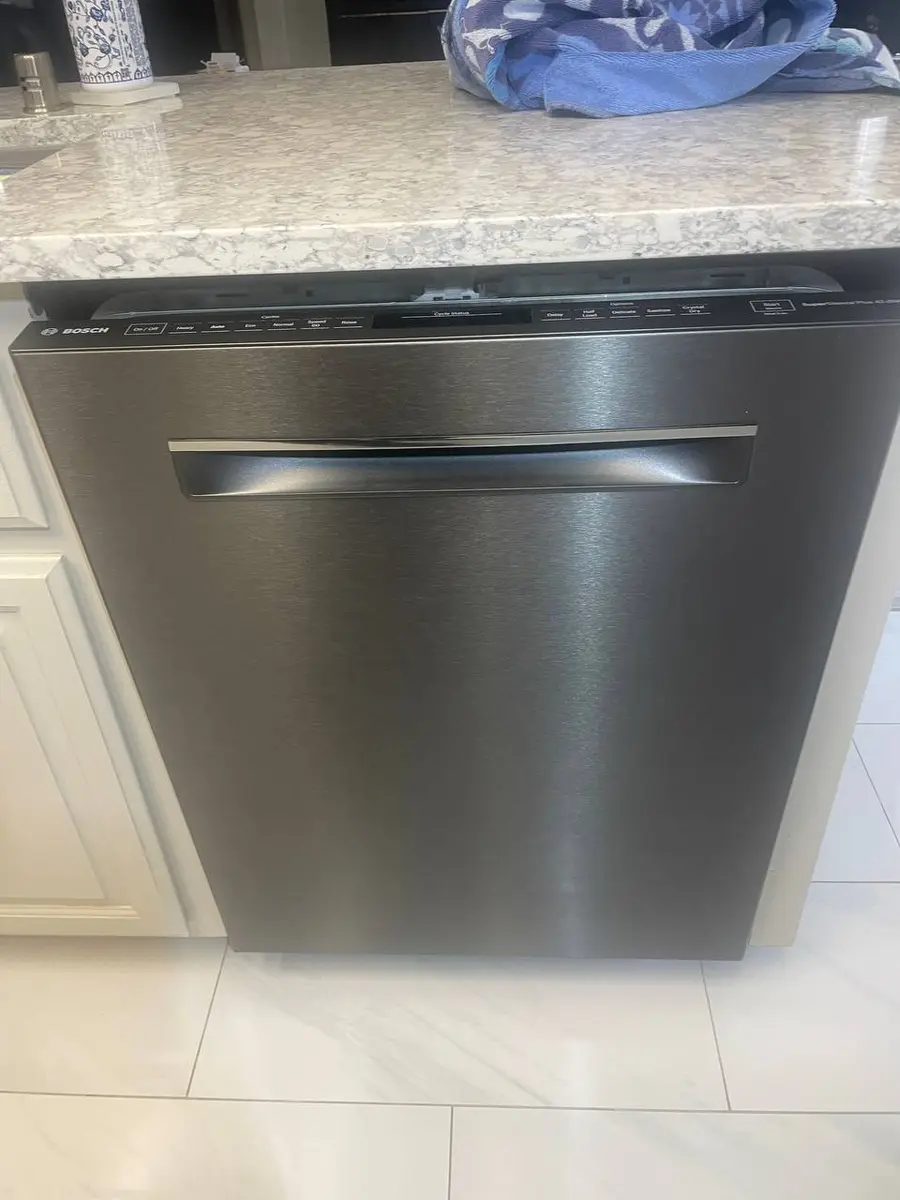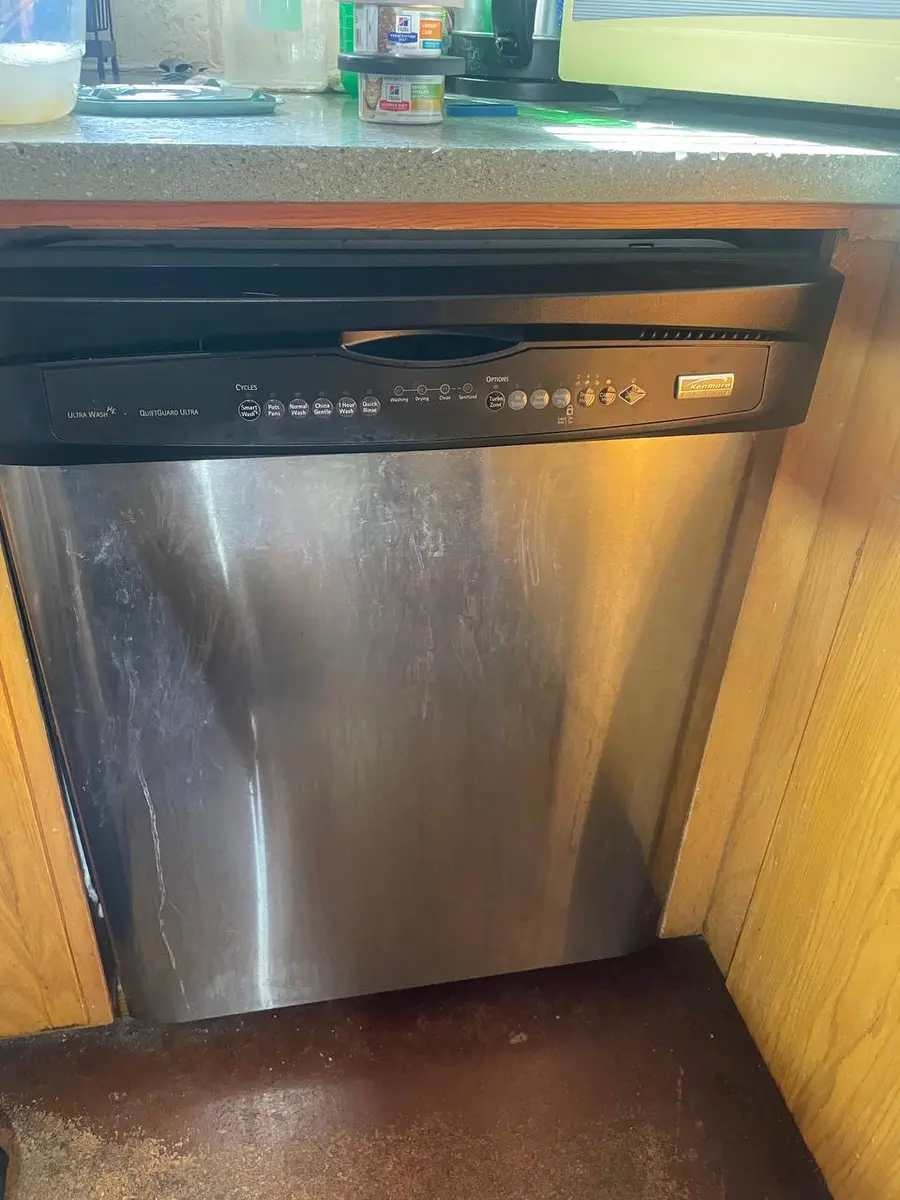
How to Replace a Maytag Dishwasher Heating Element
The heating element in a Maytag dishwasher serves two critical functions: boosting water temperature during the wash and rinse cycles, and providing heat for the Heated Dry option. When this element fails, you may notice dishes not getting clean (water not hot enough to activate detergent fully), dishes wet after the dry cycle, or the dishwasher displaying an F6E4 error code indicating a heater circuit fault.
Maytag dishwashers use an exposed calrod-style heating element mounted in the bottom of the tub. This is the same design used across the Whirlpool Corporation platform. The element is accessible from underneath the dishwasher without pulling the unit out from under the counter, though you may need to pull it forward slightly for working room.
Before You Start
- Tools needed: 1/4-inch hex driver, Phillips #2 screwdriver, 5/16-inch nut driver, multimeter, pliers, towels
- Parts needed: Heating element ($25-$60, model-specific), element gasket/grommet kit ($8-$15)
- Time required: 35-50 minutes
- Difficulty: Advanced
- Safety warning: Disconnect power at the circuit breaker AND verify with a non-contact voltage tester. The heating element operates on 120V at up to 10 amps. Even after disconnecting, capacitors on the board may retain charge for several minutes.
Do You Have the Right Tools?
Water pressure gauge ($60), spray arm tester, float switch multimeter ($85), and drain inspection camera. Our technician arrives with $15K+ in professional tools — your diagnostic is free.
Licensed & Insured · 90-Day Warranty · Same-Day Service
Step-by-Step Instructions
Step 1: Confirm the heating element has failed
Disconnect power at the breaker. Remove the lower access panel (two 1/4-inch hex screws along the bottom of the dishwasher front). Locate the heating element terminals protruding through the bottom of the tub. They are two metal posts on the right side of the tub bottom with wire connectors attached. Disconnect the wires from both terminals (pull off the spade connectors with pliers). Set your multimeter to resistance (ohms) and measure across the two element terminals. A healthy Maytag dishwasher heating element reads between 10 and 30 ohms. An open circuit (OL/infinite) means the element is burned out. Also test each terminal to the metal tub with the multimeter set to continuity. If either terminal shows continuity to the tub, the element has a ground fault and must be replaced even if resistance across terminals is normal.
Step 2: Remove standing water from the tub
Open the dishwasher door and remove any standing water from the tub bottom. Soak it up with towels. Remove the lower rack and the filter assembly (quarter-turn counter-clockwise on the cylindrical filter, lift the flat mesh). You need the tub bottom dry to prevent water pouring out when you remove the element.
Step 3: Disconnect the element wiring underneath
From underneath the dishwasher (access panel already removed), note which wire goes to which terminal. On most Maytag models, both wires are the same color and either terminal accepts either wire because the element is not polarity-sensitive. However, some models have a specific routing. Take a photo. Pull the spade connectors off both terminals using pliers. Do not pull by the wires. If the connectors are corroded or loose, plan to replace them with new spade terminals and heat-shrink (a common practice that prevents future failures from poor connection).
Step 4: Remove the element mounting hardware
The heating element is held in the tub by a mounting nut or bracket on each terminal underneath. Using a 5/16-inch nut driver (or the appropriate size for your model), remove the mounting nuts from both terminal posts. These nuts compress rubber grommets that seal the element to the tub. Once the nuts are removed, the element is free to push up into the tub from below, or pull down from above.
Step 5: Remove the old element from the tub
Reach into the tub from above and grasp the heating element (a horseshoe-shaped metal tube running along the tub bottom). Lift it straight up and maneuver it out through the door opening. It may require some wiggling if mineral deposits have formed around the mounting points. Inspect the mounting holes in the tub floor. Clean away any mineral buildup or old gasket material around the holes.
Step 6: Install new gaskets and element
Slide new rubber grommets (included in the gasket kit) onto the terminal posts of the new element. Position the element inside the tub with the terminals aligned over the mounting holes. Push the terminals down through the holes until the grommets seat firmly against the tub floor. From underneath, install the mounting nuts onto the threaded terminal posts. Tighten them firmly enough to compress the grommets and create a watertight seal, but do not overtighten. Overtightening can crack the ceramic insulator inside the terminal or deform the grommet. A quarter turn past hand-tight is generally sufficient.
Step 7: Reconnect wiring and test for leaks
Push the spade connectors onto the element terminals firmly. They should grip tightly. If they feel loose, crimp new connectors. Before restoring power, verify the element mounting is watertight. Pour a cup of water directly over each mounting grommet inside the tub and check underneath for any dripping. Any leak means the grommet is not seated properly or the nut needs more tightening. Once confirmed leak-free, reinstall the lower access panel.
Step 8: Restore power and verify operation
Restore power at the breaker. Run a Heated Dry cycle or enter diagnostic mode (three buttons 1-2-3, 1-2-3, 1-2-3 within 8 seconds) to activate the heater test. During the heater test, carefully feel the tub interior near the bottom after 3-4 minutes. It should be warm, confirming the element is energized. Do not touch the element directly as it reaches 160+ degrees F when operational. If the F6E4 error code was present, it should clear after a successful heating cycle. Power-cycle at the breaker if the code persists after confirmed heating.
Why Maytag Heating Elements Fail
The primary failure mode is the calrod element burning through at a thin spot created by mineral deposit buildup. In hard-water areas, calcium accumulates on the element surface, creating hot spots where the element cannot dissipate heat evenly. These hot spots eventually burn through the metal sheath, breaking the circuit. Maytag's PowerBlast cycle runs the element at higher duty cycles than Normal mode, which accelerates wear in hard-water conditions. Periodic descaling (running vinegar cycles monthly) extends element life significantly.
A secondary failure mode is ground fault, where the heating wire inside the calrod contacts the outer metal sheath through a crack in the ceramic insulator. This trips the house breaker or GFCI (if the dishwasher circuit is GFCI-protected) without necessarily burning out the element.
Safety First — Know the Risks
Live 120V wiring in a wet environment is one of the most dangerous DIY scenarios. Water + electricity = serious shock risk. Our techs are licensed and insured — let them handle the risk.
Licensed & Insured · 90-Day Warranty · Same-Day Service
Troubleshooting After Replacement
If the new element does not heat:
- Verify connections are firm and not corroded at the spade terminals
- Check for a tripped GFCI outlet upstream if the dishwasher circuit passes through one
- Measure voltage at the element terminals during the heat phase. You should see 120V AC when the control board commands heating
- If no voltage reaches the terminals, the relay on the control board that switches the heater may have failed. This requires board replacement
When to Call a Professional
Contact a professional if:
- The element failure caused a tripped GFCI or breaker, indicating a ground fault that may have additional causes
- You find water damage or corrosion in the junction box area beneath the dishwasher, suggesting a leak that needs addressing before electrical repair
- The heating element terminal holes in the tub are corroded or enlarged, preventing a proper seal
- Your dishwasher is installed with a hard-wired connection (no plug) and you are not comfortable working in the junction box
Same-Day Appliance Repair
Fixed or It's Free
$89 → $0 Service Call & Diagnosis — offer ends May 25
The Real Cost of DIY
Average DIY attempt: $150-400 in tools you may use once, plus the risk of further damage. Our diagnostic visit costs $0 — we find the problem and give you an honest quote.
Licensed & Insured · 90-Day Warranty · Same-Day Service
Cost Comparison: DIY vs Professional
| DIY | Professional | |
|---|---|---|
| Parts | $35-$75 (element + gasket kit) | $35-$75 |
| Labor | $0 | $150-$280 |
| Time | 35-50 min | 30 min |
| Risk | Moderate (electrical + water seal) | Warranty on repair |
Need Professional Help?
Don't Void Your Warranty
Opening your appliance yourself may void the manufacturer warranty. Our repair comes with a 90-day guarantee, and we document everything for warranty compliance.
Licensed & Insured · 90-Day Warranty · Same-Day Service
FAQ
Q: Can my Maytag dishwasher run without a working heating element? A: The dishwasher will still wash and rinse, but performance will be reduced because water temperature may not reach optimal levels. The Heated Dry option will not function. On some models, the control board detects the open heater circuit and displays F6E4 but still allows cycles to run. On other models, the error code prevents cycle start.
Q: How long do Maytag dishwasher heating elements typically last? A: In normal conditions, 8-12 years. In hard-water areas without regular descaling, 5-7 years. The element itself is a commodity part shared across the Whirlpool platform, making it readily available and relatively inexpensive. If your Maytag is less than 5 years old and the element failed, check for a ground fault condition that may indicate a broader electrical issue.
Q: Is the heating element covered by Maytag's 10-year warranty? A: No. The 10-year limited warranty covers the stainless steel tub, racks, and chopper blade. The heating element is covered under the standard 1-year warranty. However, at $25-$60 for the part, this is one of the more affordable repairs and well within DIY range for someone comfortable working with electrical connections.
Q: Why does my Maytag dishwasher trip the breaker when the heating element activates? A: This indicates a ground fault in the element where the internal heating wire has contacted the outer metal sheath. The element must be replaced even if it still heats during the brief time before tripping. A ground fault is a safety hazard. If the breaker is a standard (non-GFCI) type and does not trip, the ground fault can energize the dishwasher chassis, creating a shock risk.
Need a certified technician? Book same-day repair →