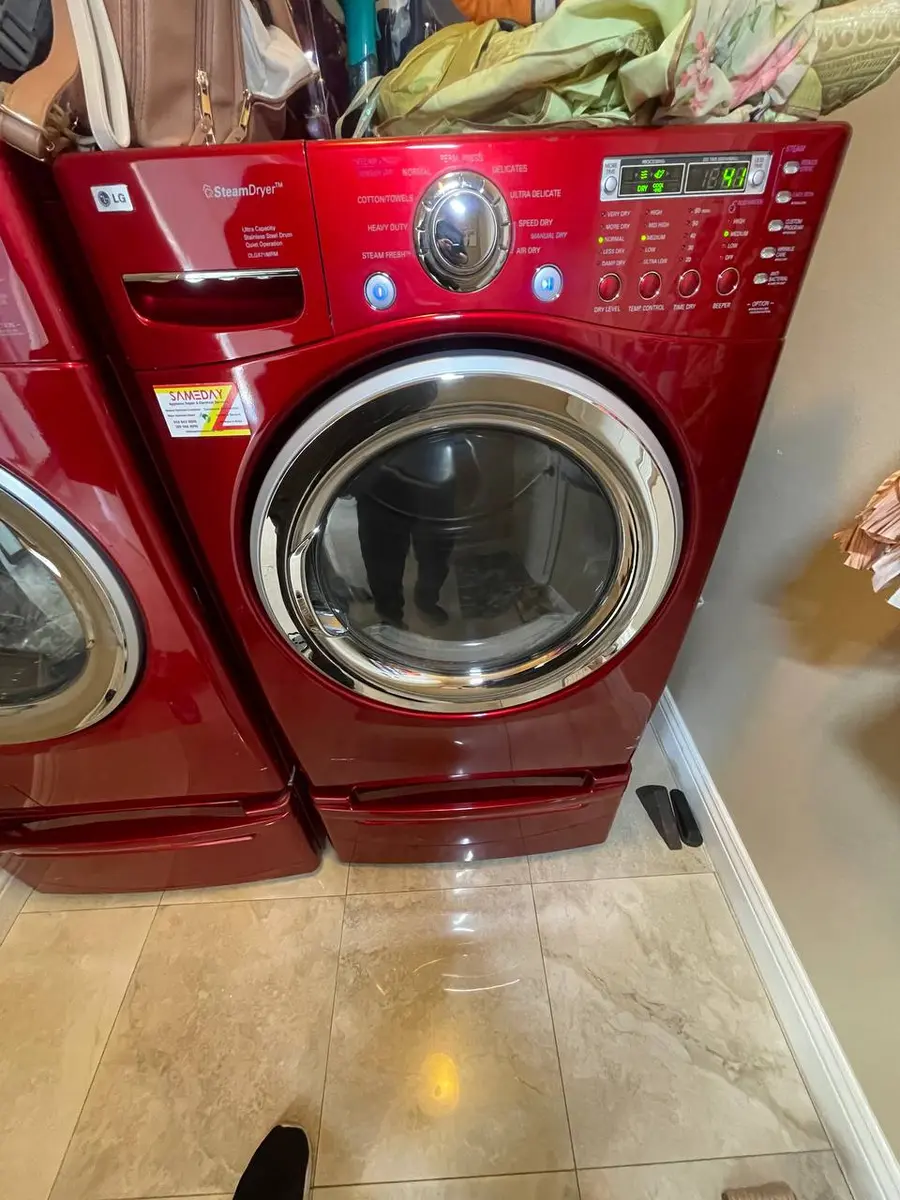
How to Replace LG Dryer Gas Valve Solenoid Coils
Gas valve solenoid coils are the most common failure on LG gas dryers (DLG series) after 5-7 years of use. These electromagnetic coils open the gas valve to allow gas flow to the burner. LG gas dryers have a dual-coil valve — one coil opens the main valve and a second holds it open. When coils weaken with age, they can no longer generate sufficient magnetic force to hold the valve open reliably.
The classic symptom of failed gas coils is a dryer that heats intermittently — typically requiring 2-3 start attempts before it begins heating, or losing heat mid-cycle then regaining it. The igniter glows normally each time (confirming the ignition circuit works), but gas does not flow because the coils cannot hold the valve open.
Before You Start
- Tools needed: Phillips #2 screwdriver, 5/16-inch nut driver, needle-nose pliers
- Parts needed: Gas valve solenoid coil kit ($15-30 — always replace both coils as a set)
- Time required: 25-35 minutes
- Difficulty: Intermediate
- Safety warning: Close the gas supply valve before any work. Unplug the dryer. After repair, check all gas connections with soap bubble test before restoring power. If you smell gas at any point, close the valve immediately and ventilate the area.
Do You Have the Right Tools?
Gas leak detector ($130), thermal fuse tester ($95), belt tension gauge, and vent inspection camera ($180). Our technician arrives with $15K+ in professional tools — your diagnostic is free.
Licensed & Insured · 90-Day Warranty · Same-Day Service
Step-by-Step Instructions
Step 1: Close Gas Supply and Access the Burner
Close the gas supply valve (quarter-turn valve on the gas line behind or beside the dryer). Unplug the dryer. Open the lower front access panel or remove the lower kick panel to reveal the gas burner assembly.
Step 2: Locate the Gas Valve and Coils
The gas valve is the central component of the burner assembly — a metal block with the gas line input and the burner output. The solenoid coils are the cylindrical electromagnetic components mounted on the valve body (usually 2 coils stacked or side by side). Each has a 2-wire connector.
Step 3: Remove the Old Coils
Disconnect the wire connectors from both coils. The coils are held to the valve body by a retaining bracket or by the valve stem itself. Remove the retaining hardware and slide the coils off the valve stems. Note the order and orientation — there may be a specific sequence (which coil goes first on the stem).
Step 4: Install the New Coils
Slide the new coils onto the valve stems in the correct order. Replace the retaining hardware. Connect the wire harnesses. The coils are typically interchangeable in terms of wire color, but verify against your model's wiring diagram.
Step 5: Test for Gas Leaks
Before plugging in, open the gas supply valve and check all connections with soapy water solution. Apply to every threaded gas connection and the valve body. Watch for bubbles — any bubble formation indicates a gas leak that must be resolved before operation. Tighten fittings as needed.
Step 6: Test Dryer Operation
Plug in and start a timed heat cycle. The igniter should glow orange-hot within 30 seconds. Once the igniter reaches temperature, the gas coils should energize (faint click) and gas should flow — visible as a blue flame through the inspection window. The flame should ignite within 3-5 seconds of igniter reaching temperature.
Repeat the test 3-4 times (stop and restart cycle) to confirm the coils open reliably on every attempt. The original symptom was intermittent failure — new coils should work every time.
Troubleshooting Common Issues
- Gas still does not ignite: if the igniter glows but no gas flows even with new coils, the gas valve itself (mechanical portion) may be stuck. Replace the entire gas valve assembly (more expensive)
- Igniter does not glow: this is a separate issue from the coils. The igniter, flame sensor, or control board ignition circuit has failed
- Flame ignites then goes out: the flame sensor is not detecting the flame. Clean the flame sensor with fine sandpaper or replace
Safety First — Know the Risks
Gas dryers carry carbon monoxide and explosion risk. Even electric dryers involve 240V circuits that can deliver a fatal shock. Our techs are licensed and insured — let them handle the risk.
Licensed & Insured · 90-Day Warranty · Same-Day Service
When to Call a Professional
- If you smell gas after repair (immediate professional response required)
- If the gas valve body is damaged or leaking
- If you are not comfortable working with gas connections
Same-Day Appliance Repair
Fixed or It's Free
$89 → $0 Service Call & Diagnosis — offer ends May 25
Cost Comparison: DIY vs Professional
| DIY | Professional | |
|---|---|---|
| Parts | $15-30 | $15-30 |
| Labor | $0 | $120-200 |
| Time | 25-35 min | 20-30 min |
| Risk | Medium — gas connections | Professional gas testing |
The Real Cost of DIY
Average DIY attempt: $150-400 in tools you may use once, plus the risk of further damage. Our diagnostic visit costs $0 — we find the problem and give you an honest quote.
Licensed & Insured · 90-Day Warranty · Same-Day Service
Need Professional Help?
FAQ
Q: Why does my LG gas dryer only heat on the second attempt? A: The gas valve solenoid coils have weakened. They need extra heating (from the igniter cycling twice) before generating enough magnetic force to open the valve. Replace the coil set.
Q: How long do gas valve coils last on LG dryers? A: Typically 5-10 years. This is the most common repair on LG gas dryers and is considered a normal wear item.
Q: Should I replace the entire gas valve or just the coils? A: Start with coils ($15-30) — they are the failure point 95% of the time. Only replace the entire valve ($60-100) if coil replacement does not resolve the issue.
Q: Is it safe to replace gas dryer coils myself? A: Yes, if you follow proper procedure: close gas supply, verify with soap bubble test after, and know the signs of a gas leak. If you are not confident, have a professional handle it — gas leaks are serious.
Need a certified technician? Book same-day repair →