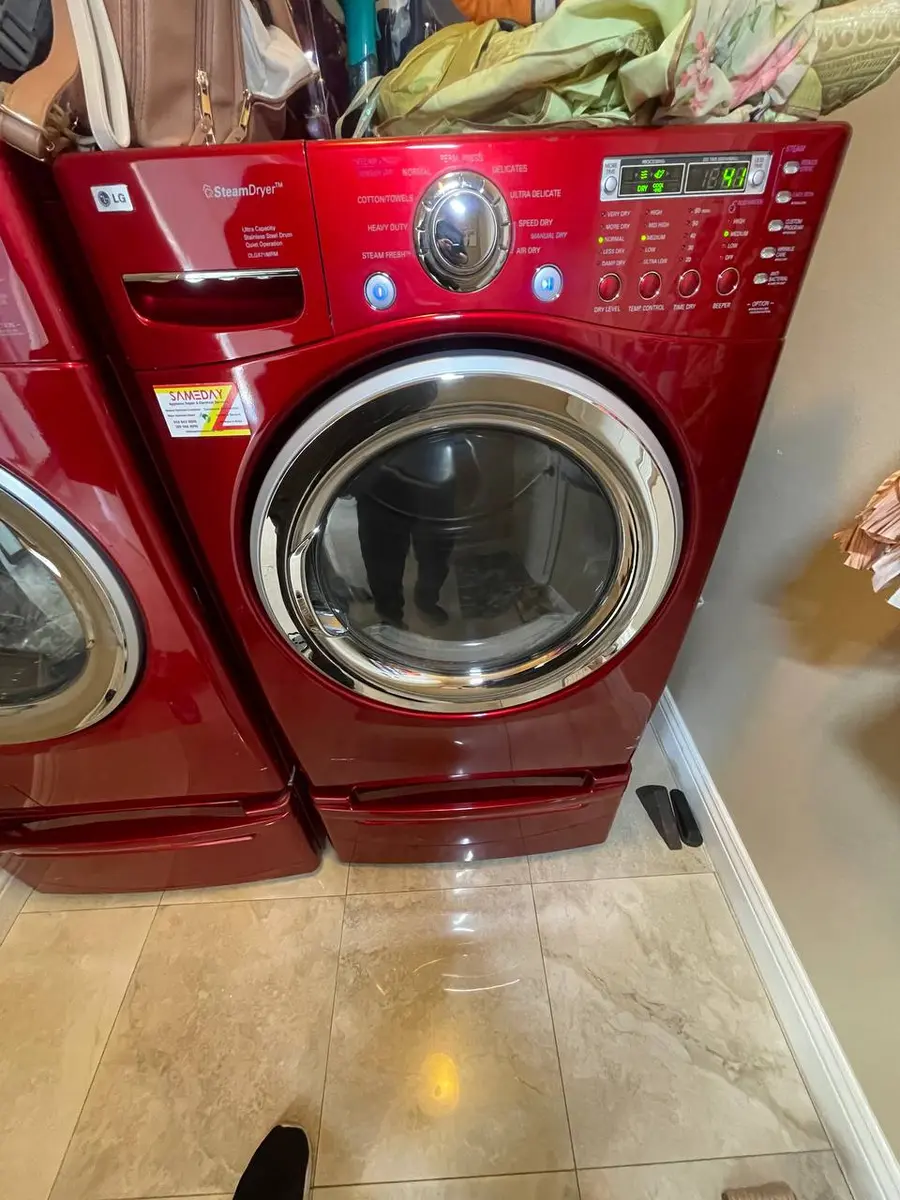
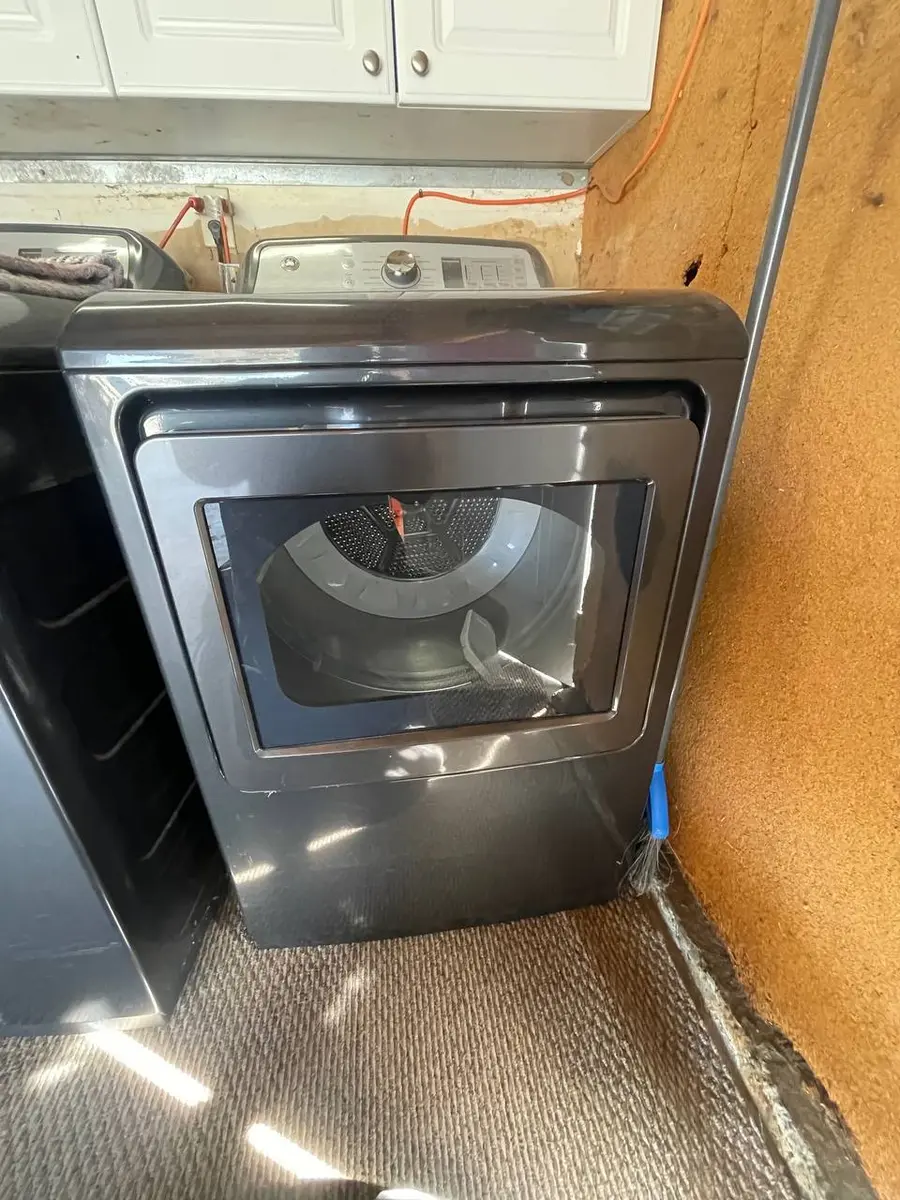
How to Replace an LG Electric Dryer Heating Element
The heating element in LG electric dryers (DLE series) is a coiled resistance wire inside a metal housing that heats air to approximately 300F as it passes through the drum. When the element burns out (coil breaks), the dryer tumbles but produces no heat and clothes remain wet. Element failure is commonly caused by restricted airflow (blocked vent system forces the element to overheat until the coil fatigues and breaks).
Important distinction: LG Dual Inverter Heat Pump dryers (DLHX series) have NO heating element — they use a refrigerant compressor. This guide applies only to LG DLE-series electric dryers. Check your model number before ordering parts.
Before You Start
- Tools needed: Phillips #2 screwdriver, multimeter, 1/4-inch nut driver, needle-nose pliers
- Parts needed: LG heating element assembly (model-specific, $40-90) — also inspect and potentially replace: thermal fuse ($5-15), high-limit thermostat ($10-20)
- Time required: 45-60 minutes
- Difficulty: Intermediate
- Safety warning: Unplug the dryer. The heating element operates at 240V. Verify power is disconnected with a multimeter before touching any element connections. Allow 30 minutes for the element to cool if the dryer was recently running.
Do You Have the Right Tools?
Gas leak detector ($130), thermal fuse tester ($95), belt tension gauge, and vent inspection camera ($180). Our technician arrives with $15K+ in professional tools — your diagnostic is free.
Licensed & Insured · 90-Day Warranty · Same-Day Service
Step-by-Step Instructions
Step 1: Confirm Element Failure
Before disassembling, confirm the element is burned out. Unplug the dryer and access the element housing (rear panel on most LG models). Disconnect one wire from the element terminals. Set multimeter to resistance and test across the two element terminals: should read 10-30 ohms. OL (infinity) means the element coil is broken — confirmed failure.
Also test the thermal fuse (should show continuity / 0 ohms) and high-limit thermostats (should show continuity). If the thermal fuse is blown, it indicates the vent was blocked and the element overheated. You MUST clean the vent system before installing a new element, or the new element will also overheat and trip the fuse again.
Step 2: Access the Heating Element Housing
On most LG DLE-series dryers, the element housing is behind the rear panel or at the lower rear of the machine. Remove the rear panel (Phillips screws around perimeter). The element housing is a rectangular metal canister with wires connected to it, mounted on the rear bulkhead or at the bottom.
Step 3: Disconnect Wires from Element Housing
Take a photo of all wire connections to the element, thermal fuse, and thermostats. Disconnect each wire by pulling the spade connectors off their terminals (use needle-nose pliers if tight, pulling on the connector, not the wire).
Step 4: Remove the Element Housing
Remove the screws mounting the element housing to the dryer frame (typically 2-3 screws). Slide the housing out. The element coil is visible inside — inspect for a visible break in the coil (the most common failure point is near the coil supports or at the terminal connections).
Step 5: Install the New Element
Slide the new element housing into position and secure with mounting screws. Reconnect all wires to the correct terminals (refer to your photo). Ensure each spade connector is firmly pushed onto its terminal — a loose connection creates arcing that damages the new element.
Also replace the thermal fuse if it was blown, and consider replacing the high-limit thermostat (cheap insurance at $10-20 to prevent future nuisance trips).
Step 6: Clean the Vent System (Mandatory)
Before restoring power, clean the entire exhaust vent from the dryer to the exterior vent hood. Element burnout almost always indicates restricted airflow that caused overheating. If you replace the element without clearing the vent restriction, the new element will fail quickly or the thermal fuse will blow again.
Use a dryer vent brush kit to clean the full duct run. Verify the exterior vent hood flap opens freely.
Step 7: Test
Reinstall the rear panel. Plug in and run a high-heat cycle (empty drum). The exhaust air should be hot within 2-3 minutes of starting. Check the FlowSense indicator — it should show no blockage. Monitor for the first full cycle to confirm consistent heating without error codes.
Step 8: Check for Proper Cycling
During a timed dry cycle, the element should cycle on and off (controlled by the cycling thermostat) to maintain target temperature. If the exhaust temperature feels constant (never cycling off), the cycling thermostat may be stuck closed — this causes overheating and premature element failure. Replace if not cycling normally.
Troubleshooting Common Issues
- New element blows the thermal fuse immediately: the vent is still restricted. Clean more thoroughly — there may be a blockage deep in the wall duct
- Element works initially then stops: the element may have an intermittent break that opens under heat. Also check that all wire connections are tight — a loose spade connector creates resistance heating at the connection point
- Heat but takes forever to dry: partial vent blockage. Element works but cannot move sufficient hot air to dry clothes efficiently. Clean vent and verify FlowSense reads clear
Safety First — Know the Risks
Gas dryers carry carbon monoxide and explosion risk. Even electric dryers involve 240V circuits that can deliver a fatal shock. Our techs are licensed and insured — let them handle the risk.
Licensed & Insured · 90-Day Warranty · Same-Day Service
When to Call a Professional
- If you are not comfortable working with 240V electrical connections
- If multiple components have failed simultaneously (suggests broader electrical issue)
- If the vent system is inaccessible (runs through walls/ceiling with no cleanout access)
Same-Day Appliance Repair
Fixed or It's Free
$89 → $0 Service Call & Diagnosis — offer ends May 25
Cost Comparison: DIY vs Professional
| DIY | Professional | |
|---|---|---|
| Parts | $40-90 (element) + $5-20 (fuse/stats) | $40-90 |
| Labor | $0 | $150-250 |
| Time | 45-60 min | 30-40 min |
| Risk | Medium — 240V electrical | Warranty included |
The Real Cost of DIY
Average DIY attempt: $150-400 in tools you may use once, plus the risk of further damage. Our diagnostic visit costs $0 — we find the problem and give you an honest quote.
Licensed & Insured · 90-Day Warranty · Same-Day Service
Need Professional Help?
FAQ
Q: Why does my LG dryer heating element keep burning out? A: Restricted airflow (blocked vent system) is the cause in 90% of cases. The element overheats when it cannot dissipate heat into flowing air. Always clean the vent system when replacing an element.
Q: Does my LG heat pump dryer have a heating element? A: No. DLHX-series Dual Inverter Heat Pump dryers use refrigerant compression instead of a resistance heating element. They heat air to approximately 140F (gentler on clothes). Element replacement does not apply.
Q: How long should an LG dryer heating element last? A: With proper vent maintenance, 10-15+ years. Without vent maintenance, elements can fail in 3-5 years from chronic overheating.
Q: Can I replace just the coil inside the element housing? A: On some models yes, but most LG elements are sold as a complete housing assembly. The complete assembly is recommended as it includes new insulation and terminal hardware.
Need a certified technician? Book same-day repair →