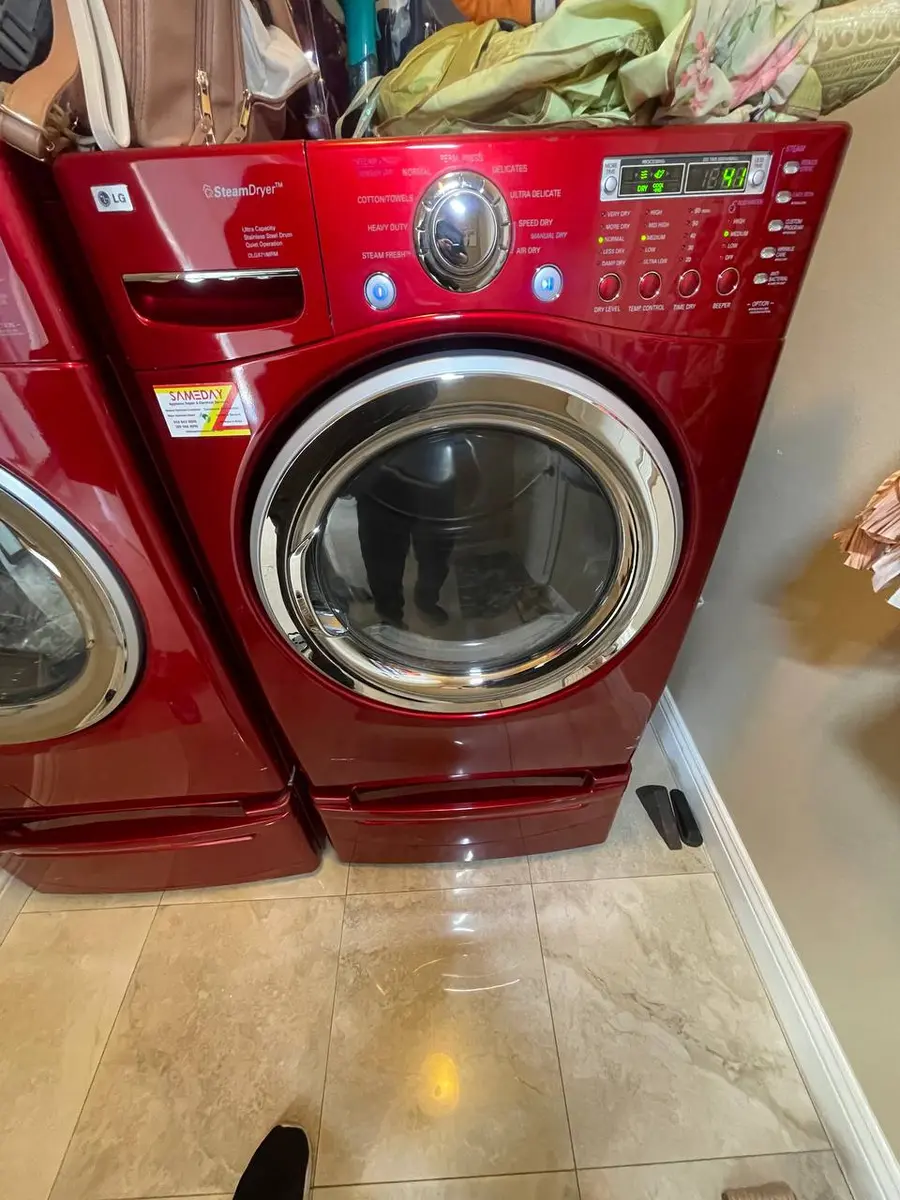
How to Replace an LG Dryer Door Handle and Latch
An LG dryer door handle replacement is a beginner job: split the door panel halves, swap the handle and latch, check the strike, and reassemble in 15 to 30 minutes with a screwdriver. If the door still will not start the dryer afterward, the separate door switch is the next suspect.
LG dryer doors use a pull-to-open handle that trips a spring-loaded latch. When the handle snaps, the door will not open; when the latch or strike wears, the door will not stay shut, the door switch never closes, and the dryer will not run. This guide covers the handle, the latch, and the door switch in one pass.
Tools & parts#
| Item | Detail |
|---|---|
| Phillips #2 screwdriver | perimeter and hinge screws |
| Torx T20 | some LG models |
| Flat-blade screwdriver | releasing a stuck latch |
| Parts | door handle/latch assembly (model-specific); door switch if also replacing |
Do You Have the Right Tools?
Gas leak detector ($130), thermal fuse tester ($95), belt tension gauge, and vent inspection camera ($180). Our technician arrives with $3,000+ in professional tools — your diagnostic is free.
Licensed & Insured · 90-Day Warranty · Same-Day Service
Safety first#
Unplug the dryer. The door is spring-loaded — control it when working on the hinge.
Step-by-step#
Step 1: Remove the door from the dryer#
LG doors hinge on the left. Open the door fully and back out the 2-3 Torx or Phillips hinge screws on the body-side hinge, supporting the door as you free the last one. Some LG models let you reach the handle from the back of the panel without removing the door.
Step 2: Separate the door panel halves#
The door is an outer decorative panel and an inner glass or metal panel held by perimeter screws or hidden clips. Remove every perimeter screw and gently part the halves — the handle and latch live in the outer panel.
Step 3: Remove the old handle#
The handle rides on pivot pins into the latch mechanism. Press or pry the pins to release them and lift the handle out. Inspect the latch: if its spring or cam is broken, replace the entire latch assembly rather than the handle alone.
Step 4: Install the new handle#
Seat the new handle and engage the pivot pins. Work it by hand — pressing the handle should retract the latch cleanly, and releasing it should snap the latch back out to the extended position.
Step 5: Check the door strike#
Before closing everything up, inspect the strike on the dryer body, the hook the latch grabs. A worn or bent strike keeps the door from latching securely, so adjust or replace it now while access is easy. The strike typically mounts on a single screw that lets you shift its position or depth, so a door that catches loosely can often be corrected by nudging the strike toward the latch rather than replacing a part.
Step 6: Reassemble and test#
Rejoin the panel halves, screw them together, and remount the door on the hinge. A good close latches with a positive click and the new handle releases smoothly. Start a cycle to confirm the door switch registers closure. If the door will not stay shut, recheck the strike alignment first; if it stays shut but the drum will not turn, the problem has moved to the door switch in Step 7.
Step 7: Replace the door switch if needed#
If the door closes solidly but the dryer still will not start, the door switch itself has likely failed. Reach it from inside the dryer — remove the top panel to expose the switch at the top of the door opening — unplug the two-wire connector, remove the mounting screw, and swap in the new switch.
Safety First — Know the Risks
Gas dryers carry carbon monoxide and explosion risk. Even electric dryers involve 240V circuits that can deliver a fatal shock. Our techs are licensed and insured — let them handle the risk.
Licensed & Insured · 90-Day Warranty · Same-Day Service
Quick troubleshooting#
| Symptom | Likely cause |
|---|---|
| Door will not latch | strike out of alignment — reposition it |
| Handle feels loose | pivot pins not fully seated — reseat until they click |
| Switch works intermittently | strike not pressing the switch far enough — adjust depth |
When to call a pro#
Get help if the hinge is damaged or sagging (it throws off alignment) or if the door glass is cracked and needs careful handling.
For a repair-versus-replace budget, see our dryer repair cost guide.
Appliance Repair Technician & Diagnostics Specialist · 10 years experience
Electronics and diagnostics specialist with 10 years of experience in modern smart appliance repair, specializing in LG and Samsung.