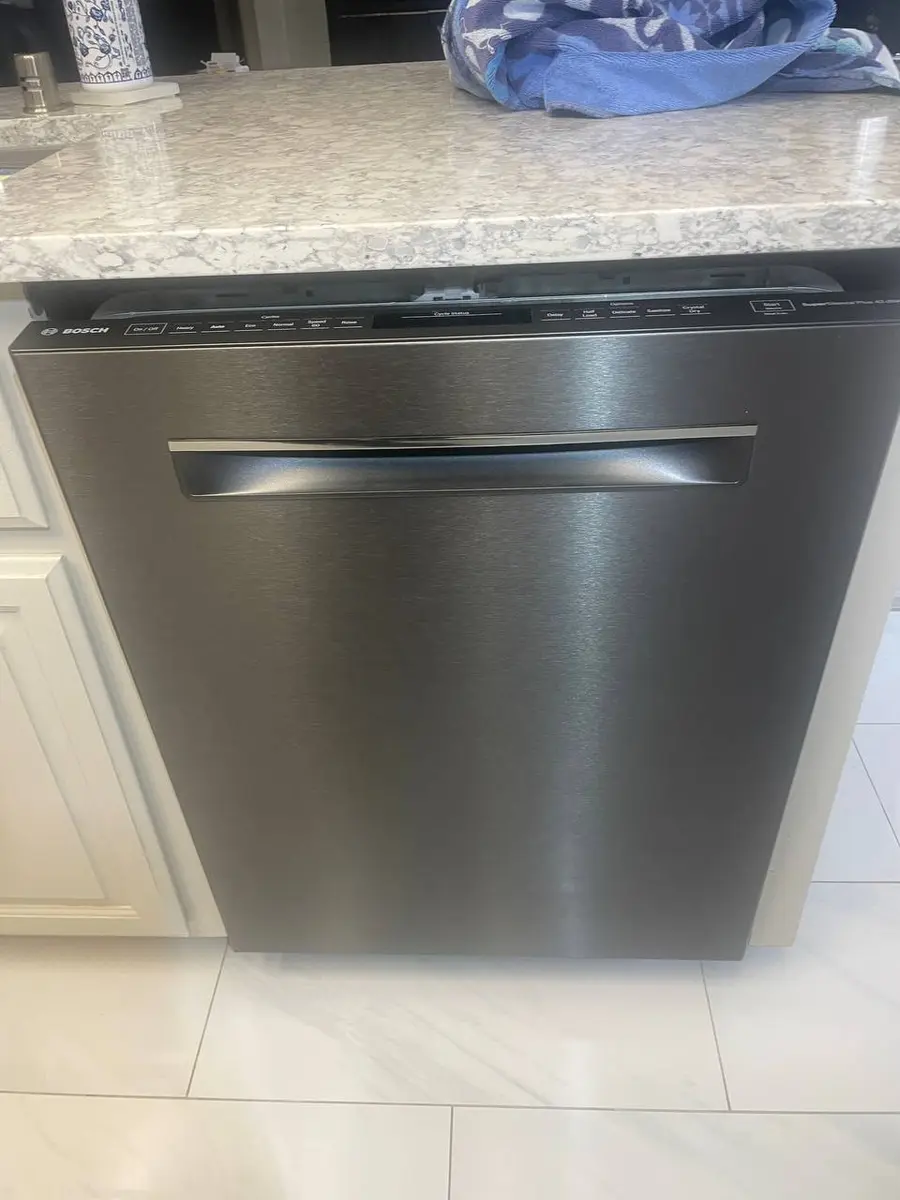
LG Dishwasher Not Filling with Water: Inlet Valve Diagnosis and Replacement Guide
When your LG dishwasher starts a cycle but you do not hear water flowing in, or the IE error code appears, the water inlet system needs attention. The fill process on LG dishwashers is controlled by a single-solenoid inlet valve (part 5220FR2006H on most models) that opens when the control board commands it and closes when the tub reaches proper water level. This guide covers the complete diagnosis process from simple free fixes through full valve replacement.
Before spending money on a new valve, understand that the IE error has a free fix rate of about 40% — that is the percentage caused by a clogged inlet screen rather than actual valve failure. The screen is a small mesh filter inside the valve inlet port that catches sediment from your water supply. Cleaning it takes 5 minutes and costs nothing.
Before You Start
- Tools needed: 10mm wrench, Phillips #2 screwdriver, channel-lock pliers, multimeter, towels, bucket
- Parts needed: May not need any (screen cleaning). If valve is failed: LG 5220FR2006H (~$30-60)
- Time required: 10 minutes (screen clean) to 30 minutes (valve replacement)
- Difficulty: Beginner (screen) to Intermediate (valve)
- Safety warning: Close the water supply valve under the sink FIRST, then disconnect power at the breaker. Opening the supply line with the valve still under pressure sends water spraying.
Do You Have the Right Tools?
Water pressure gauge ($60), spray arm tester, float switch multimeter ($85), and drain inspection camera. Our technician arrives with $15K+ in professional tools — your diagnostic is free.
Licensed & Insured · 90-Day Warranty · Same-Day Service
Step-by-Step Instructions
Step 1: Verify the Water Supply Is On
Before anything else, check the obvious: turn on the kitchen faucet. If water flows normally, your home supply is fine. Next, check the dishwasher supply valve specifically — it is usually under the sink, a small valve on a 3/8" copper or braided line leading to the dishwasher. Verify it is fully open (counterclockwise). If the valve handle is stuck or corroded, it may be partially closed even though it looks open.
Step 2: Clean the Inlet Valve Screen (Free Fix)
Close the supply valve. Place a towel under the connection point. Using a 10mm wrench, disconnect the water supply line from where it connects to the dishwasher inlet valve (accessible behind the lower kick plate, left side — remove the 4 Phillips screws from the kick plate first). With the line disconnected, look inside the inlet valve port. You will see a small circular mesh screen. If it is clogged with white calcium deposits, brown sediment, or debris, remove it carefully with needle-nose pliers. Clean under running water with a toothbrush. Reinstall the screen, reconnect the supply line (hand-tight plus quarter-turn), open the supply valve, and test. If the dishwasher fills normally, you are done.
Step 3: Test the Inlet Valve Solenoid
If the screen was clean, the valve solenoid itself may have failed. With the lower access panel removed, locate the inlet valve on the left side (gray or black cylindrical body with one inlet port from supply, one outlet barb to fill hose, and a 2-pin electrical connector). Disconnect the 2-pin connector. Measure coil resistance with your multimeter set to ohms. Expected: 500-1500 ohms. OL (infinity) = burned-out coil — replace the valve. Normal resistance but valve still does not open — mechanical plunger stuck from mineral deposits — replace the valve.
Step 4: Check Control Board Voltage (If Coil Tests Good)
If the coil resistance is normal and the plunger moves freely, the valve hardware is fine — the issue may be that the control board is not sending voltage. Reconnect the valve connector. Restore power (be careful — live voltage test). Start a cycle and immediately measure AC voltage at the valve connector (use probes on the back side of the connector). You should read 120V AC during the fill phase (first 30-60 seconds of a cycle). If no voltage — the control board or wiring is the issue, not the valve.
Step 5: Remove the Failed Inlet Valve
With power and water supply both off: disconnect the supply line compression fitting (10mm wrench). Disconnect the 2-pin electrical connector. Squeeze the spring clamp on the outlet fill hose and pull the hose off the valve outlet barb. Remove the 1-2 mounting bracket screws (Phillips). Extract the old valve.
Step 6: Install the New Valve (5220FR2006H)
Mount the new valve in the bracket with ports correctly oriented. Secure with bracket screws. Push the fill hose onto the outlet barb and release the spring clamp into the groove. Thread the supply line compression fitting onto the inlet port (hand-tight plus quarter-turn — do not overtighten brass on brass). Reconnect the 2-pin electrical connector.
Step 7: Check for Leaks
Open the supply valve slowly. Watch the supply line fitting for drips. Check the fill hose clamp connection. Tighten connections as needed. Let it sit for 2 minutes under pressure before reinstalling the access panel.
Step 8: Test the Fill Cycle
Reinstall the lower access panel. Restore power. Start a Quick Wash or Normal cycle. Within 30-60 seconds, you should hear water flowing into the tub. Open the door after 2 minutes — you should see water accumulating in the tub bottom. The IE error should not appear. Let the cycle run to completion to verify all phases work correctly.
Troubleshooting After Repair
- IE error persists after valve replacement: Check that the fill hose is not kinked between the valve and the tub. Also verify the water level sensor (pressure switch) is working — if it cannot detect the water level, it will report IE even though the tub is filling. Check the air tube from the tub to the pressure switch for cracks or disconnection.
- Slow fill / long fill time: Measure water pressure at the supply valve. LG requires minimum 20 PSI. Low pressure areas may need a booster or larger supply line. Also verify the new valve's inlet screen is not blocked (some new valves ship with protective covers that must be removed).
- Valve clicks but no water: The supply valve is closed, or the supply line is blocked. Disconnect the supply line at the inlet valve and open the supply valve briefly into a bucket — water should flow freely.
- FE error (overfill) after installation: The new valve may be sticking open due to a manufacturing defect (rare) or debris preventing full closure. Test by starting a cycle and canceling after fill — if water continues flowing after cancel, the valve is stuck open and needs warranty replacement.
Safety First — Know the Risks
Live 120V wiring in a wet environment is one of the most dangerous DIY scenarios. Water + electricity = serious shock risk. Our techs are licensed and insured — let them handle the risk.
Licensed & Insured · 90-Day Warranty · Same-Day Service
Water Pressure Requirements for LG Dishwashers
| Condition | Requirement |
|---|---|
| Minimum supply pressure | 20 PSI |
| Maximum supply pressure | 120 PSI |
| Recommended | 40-80 PSI |
| Supply line size | 3/8" minimum |
| Supply temperature | Hot (120-140F recommended) |
When to Call a Professional
- No voltage at the valve connector during fill phase — control board issue
- Supply valve under the sink is seized and cannot be turned
- Water pressure at the supply is below 20 PSI — plumbing problem
- Compression fitting threads are stripped or corroded beyond sealing
Same-Day Appliance Repair
Fixed or It's Free
$89 → $0 Service Call & Diagnosis — offer ends May 25
The Real Cost of DIY
Average DIY attempt: $150-400 in tools you may use once, plus the risk of further damage. Our diagnostic visit costs $0 — we find the problem and give you an honest quote.
Licensed & Insured · 90-Day Warranty · Same-Day Service
Cost Comparison: DIY vs Professional
| DIY | Professional | |
|---|---|---|
| Parts | $0 (screen clean) to $30-60 | Same |
| Labor | $0 | $120-$220 |
| Time | 10-30 min | 15-25 min |
| Risk | Low | Warranty included |
Need Professional Help?
Don't Void Your Warranty
Opening your appliance yourself may void the manufacturer warranty. Our repair comes with a 90-day guarantee, and we document everything for warranty compliance.
Licensed & Insured · 90-Day Warranty · Same-Day Service
FAQ
Q: Why does my LG dishwasher take a long time to fill? A: Three common causes: (1) partially clogged inlet screen restricting flow, (2) low household water pressure (below 40 PSI), (3) partially closed supply valve under the sink. Clean the inlet screen first — it takes 5 minutes and is the most likely cause.
Q: How do I check my water pressure for the dishwasher? A: Attach a pressure gauge ($10 at hardware stores) to the supply valve outlet under the sink. Open the valve and read the gauge. LG requires minimum 20 PSI. Below that, a plumber may need to address home pressure issues.
Q: My LG dishwasher fills fine but the IE error still shows — why? A: The water level sensor (pressure switch) may be faulty. It uses an air tube from the tub to detect water level. If this tube is cracked, disconnected, or clogged, the sensor cannot detect that the tub has filled, so it reports IE even with water present.
Q: Can a faulty inlet valve cause my LG dishwasher to leak? A: Yes. If the valve solenoid plunger sticks open (fails to close after fill), water continues flowing into the tub and eventually overflows, triggering the AE (leak) error. This is the FE (fill error/overflow) scenario and requires immediate valve replacement.
Need a certified technician? Book same-day repair →