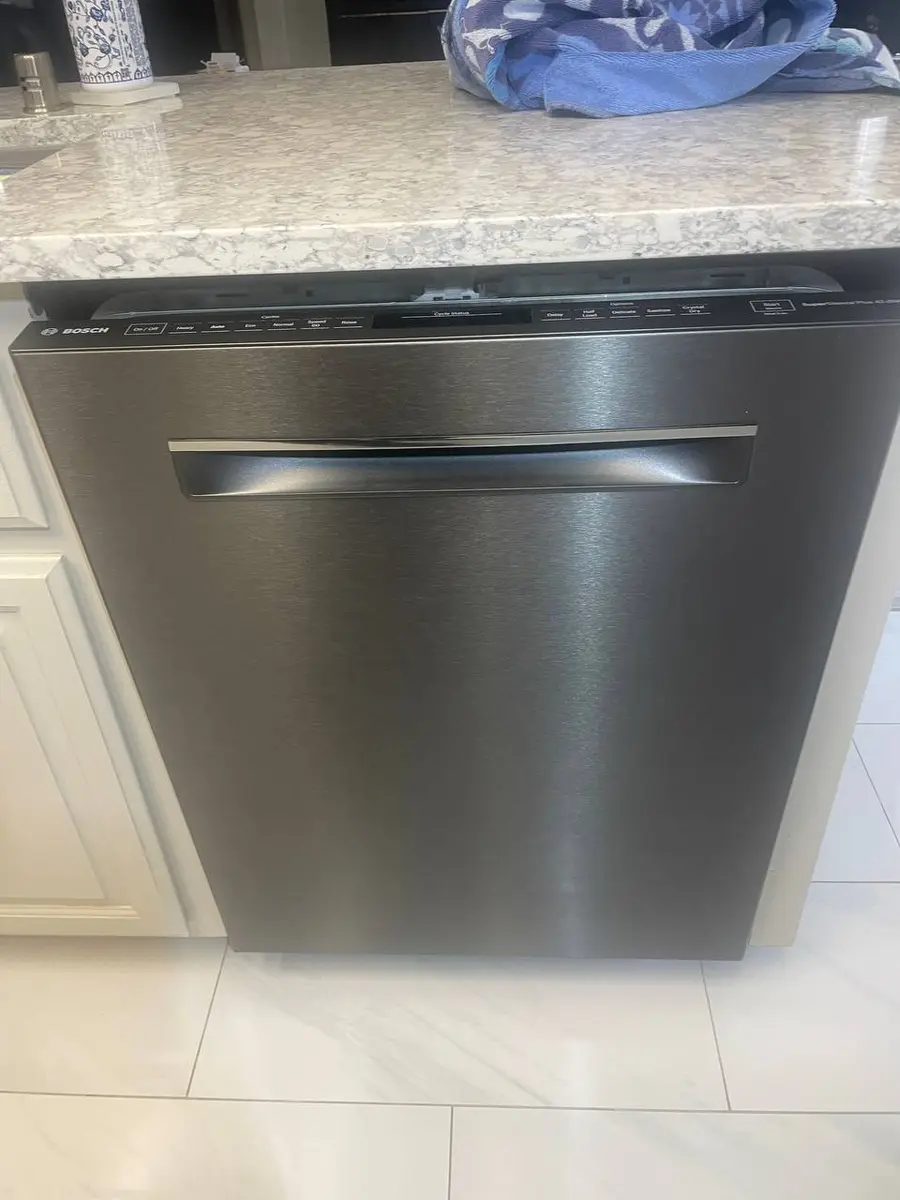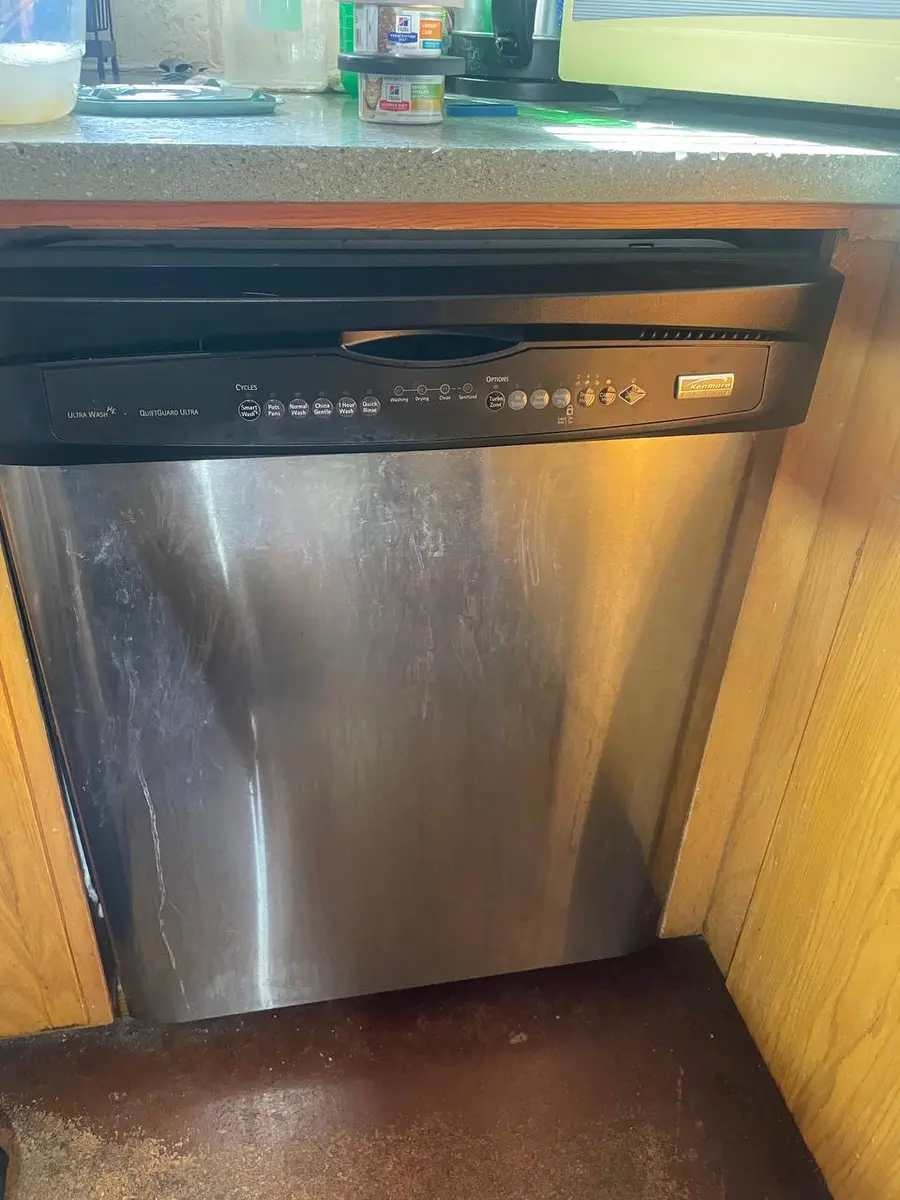
How to Replace an LG Dishwasher Drain Valve
When an LG dishwasher throws an OE error and leaves standing water while the pump hums, the drain valve solenoid is likely stuck closed. Replacing it is an intermediate 25-40 minute job — but first confirm your model even has a separate valve.
Many LG dishwashers skip a separate drain valve and use only the drain pump (4681EA2001T), which handles both pushing water out and blocking backflow. Check your parts diagram before ordering, and if the pump is dead silent during drain, it is the pump that failed, not a valve.
Tools and parts#
- Tools: Phillips #2 screwdriver, multimeter, channel-lock pliers, towels, a shallow pan
- Part: LG drain valve solenoid (model-specific)
- Time: 25-40 minutes
- Difficulty: Intermediate
- Safety warning: Disconnect power at the circuit breaker and unplug the unit. Standing water in the tub will spill when you access the drain components — have towels and a pan ready.
Do You Have the Right Tools?
Water pressure gauge ($60), spray arm tester, float switch multimeter ($85), and drain inspection camera. Our technician arrives with $3,000+ in professional tools — your diagnostic is free.
Licensed & Insured · 90-Day Warranty · Same-Day Service
Valve or pump? Diagnose first#
Match your symptom. A pump that hums during drain but moves no water points at a stuck-closed valve or a fully clogged drain path (check the hose first); dead silence during drain means the pump motor itself has failed; and intermittent draining suggests a solenoid that opens cold but sticks when hot. To meter it, reach the valve behind the lower panel, unplug its 2-pin connector, and read the coil — 500-1500 ohms is electrically good, while OL is a dead coil. If the coil reads fine but the valve will not open under voltage, its plunger is stuck. LG's ThinQ Smart Diagnosis will also report whether the drain command went out and whether draining completed.
Step 1 — Bail the standing water#
The OE error usually means a tub full of water, so scoop out what you can with a cup or turkey baster, pull the filter, and sponge the sump dry. That keeps the floor dry when you open the drain path underneath.
Safety First — Know the Risks
Live 120V wiring in a wet environment is one of the most dangerous DIY scenarios. Water + electricity = serious shock risk. Our techs are licensed and insured — let them handle the risk.
Licensed & Insured · 90-Day Warranty · Same-Day Service
Step 2 — Drop the lower access panel#
Remove the 4 Phillips screws along the bottom front kick plate and pull the panel down and off, laying towels under the front to catch drips.
Step 3 — Find the drain valve#
The valve is a cylindrical solenoid body plumbed inline in the drain path — between the sump outlet and the pump inlet, or between the pump outlet and the main drain hose. It has a 2-pin coil connector and two hose barbs. If you find only the pump bolted straight to the sump and no separate valve, your model uses the integrated design and the pump is the valve.
The Real Cost of DIY
Average DIY attempt: $150-400 in tools you may use once, plus the risk of further damage. Our diagnostic visit costs $0 — we find the problem and give you an honest quote.
Licensed & Insured · 90-Day Warranty · Same-Day Service
Step 4 — Unplug it#
Press the tab on the 2-pin connector and pull it off the terminals, snapping a photo of the orientation. With it disconnected, meter the coil (500-1500 ohms expected).
Step 5 — Free the hoses#
Squeeze each spring clamp with the channel-lock pliers and slide it back, then pull the hose off the inlet barb with the pan positioned for the water that follows. Repeat on the outlet, noting which hose is which.
Don't Void Your Warranty
Opening your appliance yourself may void the manufacturer warranty. Our repair comes with a 90-day guarantee, and we document everything for warranty compliance.
Licensed & Insured · 90-Day Warranty · Same-Day Service
Step 6 — Remove the valve#
Depending on the model, the valve sits in a bracket (1-2 Phillips screws) or is held only by its hoses. Pull any hardware and lift it out.
Step 7 — Fit the new valve#
Set the new valve with its inlet and outlet matching the original, secure any bracket, push each hose onto its barb, and seat the spring clamps in their grooves. Reconnect the 2-pin coil connector until it clicks.
Is It Worth Your Time?
Dishwasher issues overlap between drain pump, wash motor, inlet valve, and control board. DIY diagnosis averages 3-5 hours. Our technician diagnoses the issue in about 30 minutes — same-day appointments available.
Licensed & Insured · 90-Day Warranty · Same-Day Service
Step 8 — Test#
Refit the lower panel, restore power, and run a Rinse Only cycle, which ends in a drain phase. Listen for the pump, confirm the tub empties fully, check both hose joints for leaks, and verify the OE error stays gone.
Common follow-ups#
- OE returns: check the drain hose from the valve to the sink for a kink or clog, and confirm the new connector is fully seated.
- Coil buzzes but will not open: you may be low on voltage at the connector (it should see 120V during drain); a failing board relay can buzz the coil without opening the plunger.
- Leak at a hose joint: reseat the spring clamp in the barb groove, and if the hose end is stretched, trim 1/4 inch off for a fresh sealing surface.
- Drains slowly: check the hose's high loop — it must rise to countertop level before dropping to the drain.
The Risk of Getting It Wrong
A wrong diagnosis often turns a simple fix into a costly replacement. Without proper diagnostic tools, you might replace the wrong part — or cause additional damage. Our free diagnostic eliminates the guesswork.
Licensed & Insured · 90-Day Warranty · Same-Day Service
When to call a professional#
Get help if you cannot find a separate valve (yours is integrated), if OE survives replacing both the valve and pump (a board or wiring fault), if the drain line runs into the wall out of reach, or if other codes show up alongside OE. EasyBear technicians serving Sacramento and the Bay Area carry LG parts and diagnostic tools on every call.
Water still won't drain? Book a same-day LG dishwasher repair.
Appliance Repair Technician · 8 years experience
Experienced technician with 8 years specializing in dishwasher repairs and European appliance brands including Bosch and Thermador.