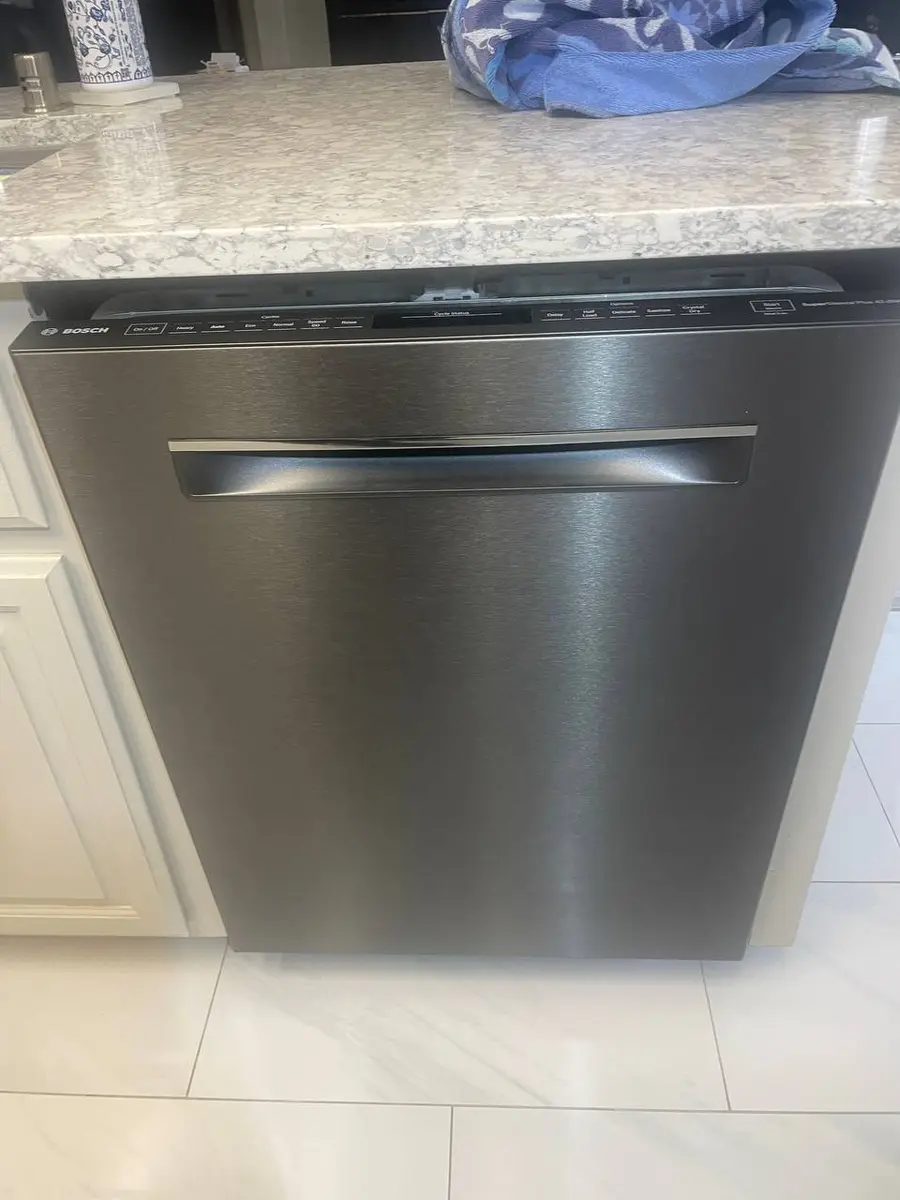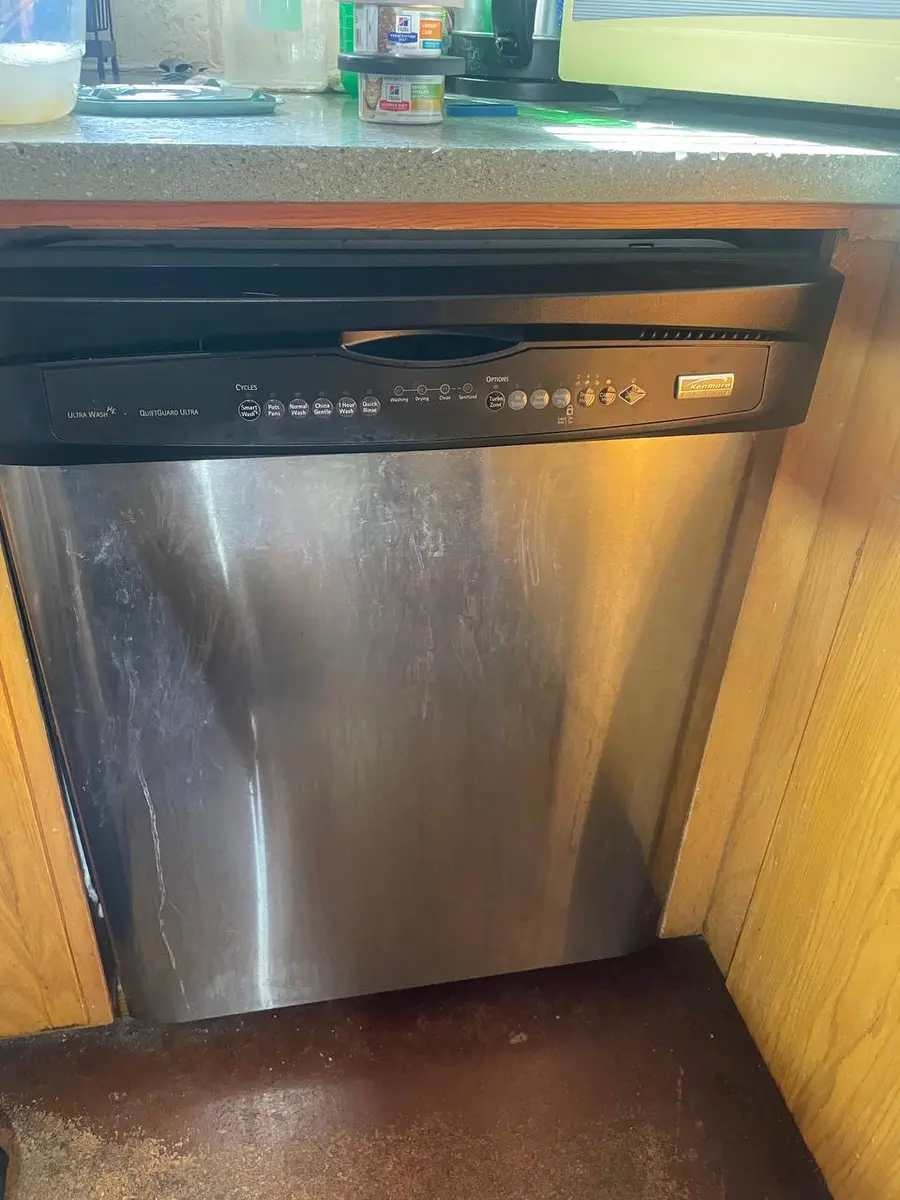
How to Replace LG Dishwasher Door Perimeter Seal
An LG dishwasher leaking from the door — often with an AE error — usually needs the tub perimeter gasket, the bottom door seal, or both. Cut power, pull the old friction-fit perimeter gasket straight out of its U-channel, clean and dry the channel, warm a stiff new gasket (4036ER2004A) for flexibility, and press it in…
Swapping a part on an LG dishwasher runs a predictable path — disassemble, disconnect, replace, verify. The AE error specifically means the float switch in the base pan detected standing water under the tub, which can come from a failed door seal, a leaking hose connection, or a cracked tub. If water shows up only at the front door area, the door seal is your culprit.
Tools, Parts, and Safety First#
- Tools needed: Flat-blade screwdriver (for gasket channel), Phillips #2 screwdriver, clean cloth, mild soap solution, hair dryer (optional for new gasket flexibility)
- Parts needed: LG tub gasket 4036ER2004A (~varies by model and area) and/or bottom door seal (~varies by model and area)
- Time required: 20-35 minutes
- Difficulty: Beginner to Intermediate
- Safety warning: Disconnect power at the circuit breaker. While gasket replacement does not involve electrical work directly, the AE error may have left water in the base pan near electrical components.
Do You Have the Right Tools?
Water pressure gauge ($60), spray arm tester, float switch multimeter ($85), and drain inspection camera. Our technician arrives with $3,000+ in professional tools — your diagnostic is free.
Licensed & Insured · 90-Day Warranty · Same-Day Service
Diagnosing Which Seal Has Failed#
Trace where the leak starts. Water at the bottom of the door front means the bottom door seal — the rubber strip hanging from the door's bottom edge — is worn or displaced. Water from the door sides or top means the tub perimeter gasket, which sits in a channel around the tub opening and seals when the door closes, has failed — inspect for tears, flattening, hardness, or sections pulled out of the channel. Water only on heavier cycles (Turbo, Heavy) means a marginal seal that holds during gentle cycles but fails under the more aggressive spray. And a musty smell from the gasket folds means mold is growing inside and the material is degrading, so replacement is advisable even without an active leak.
Step-by-Step Instructions#
Step 1 — Remove the old perimeter gasket#
Open the door fully. The tub perimeter gasket sits in a U-shaped channel around the tub opening — top and both sides, not the bottom, which has its own seal. Starting at a top corner, pull the gasket lip out of the channel with your fingers and work around the whole perimeter. On LG dishwashers this gasket is friction-fit, with no adhesive, clips, or screws, so it pulls straight out.
Step 2 — Clean the channel#
With the old gasket out, clean the U-channel thoroughly with a cloth dampened in warm soapy water to remove mold, debris, and residue; a flat-blade screwdriver wrapped in cloth reaches deep sections. Dry the channel completely, because leftover moisture keeps the new gasket from seating.
Step 3 — Prepare the new gasket#
Take the new gasket (4036ER2004A) out of its packaging and straighten it on a flat surface — new gaskets ship folded or coiled, which leaves memory bends that fight installation. If it is stiff (common in cold weather), warm it gently with a hair dryer on low to make it pliable, which makes pressing it into the channel far easier.
Step 4 — Install the new perimeter gasket#
Start at the top center of the tub opening and press the gasket lip firmly into the channel — you should feel it seat with a subtle click as the lip engages the groove. Work outward from center toward each corner, pressing it in every inch or so, and continue down both sides. The corners are the hardest part, so go slowly and make sure the lip seats fully into the channel curve without bunching or pulling out behind you. A useful trick is to seat both top corners early and then feed the slack down each side toward the bottom, rather than working one full side at a time — that keeps the gasket from stretching short and popping loose at the far corner. If a section keeps lifting back out as you move past it, the channel is either still slightly damp or has debris you missed, so stop and recheck it rather than fighting the same spot.
Step 5 — Verify even seating#
Run a finger along the whole installed gasket — it should sit evenly with no sections popping out, bulging, or standing higher than the rest. Close the door and check that the gasket compresses uniformly against the door face with no gaps, then open and inspect for any spot that shifted during closure and reseat it.
Step 6 — Replace the bottom door seal (if needed)#
The bottom door seal is a separate rubber strip on the bottom edge of the door, either sliding into a channel or held by small clips. Slide the old one out from one end, or release the clips and pull it free, then install the new one in reverse — sliding it into the channel from one end so it sits evenly across the full door width.
Step 7 — Test for leaks#
Restore power, lay a dry paper towel on the floor directly in front of and beneath the door, and run a Normal cycle for at least 15 minutes to cover the fill and first wash-spray phase where leaks are most likely. If the towel stays dry, the repair worked; if it is wet, open the door, find the section not sealing, and reseat it.
Step 8 — Clear the AE error#
If AE showed before the repair, it may persist until the base pan is dry. With power disconnected, remove the lower access panel (4 Phillips screws) and towel up any standing water from the base pan so the float switch drops back to normal. Restore power, and AE should clear after the next successful cycle with no water reaching the base pan.
Safety First — Know the Risks
Live 120V wiring in a wet environment is one of the most dangerous DIY scenarios. Water + electricity = serious shock risk. Our techs are licensed and insured — let them handle the risk.
Licensed & Insured · 90-Day Warranty · Same-Day Service
Common Gasket Installation Mistakes#
- Starting at a corner: corners are the hardest, so start at the top center where you have room and the gasket hangs in place.
- Not warming a stiff gasket: a cold gasket pops out of the channel repeatedly, and two minutes with a hair dryer makes a huge difference.
- Skipping the channel cleaning: debris in the channel prevents full seating and creates invisible gaps that leak.
- Forcing the door over a bunched gasket: this creases the gasket permanently, so if the door does not close smoothly, recheck the seating.
When Should You Call a Professional?#
EasyBear technicians serving Sacramento and the Bay Area carry LG-specific diagnostic tools and replacement parts on every service call. Call one if water leaks from the door AND from underneath the unit at once (possibly a cracked tub), if the AE error persists after gasket replacement and base-pan drying (an internal hose or tub crack), if the gasket channel itself is bent or corroded (structural tub repair), or if the door hinges sag and prevent the door sealing evenly against the new gasket.
The Real Cost of DIY
Average DIY attempt: $150-400 in tools you may use once, plus the risk of further damage. Our diagnostic visit costs $0 — we find the problem and give you an honest quote.
Licensed & Insured · 90-Day Warranty · Same-Day Service
Need Professional Help?#
Need help with this repair? Schedule a free diagnostic — same-day LG dishwasher service across the Bay Area.
Lead Appliance Repair Technician · 12 years experience
Experienced technician with 12 years specializing in washing machine and dryer repairs across all major brands.