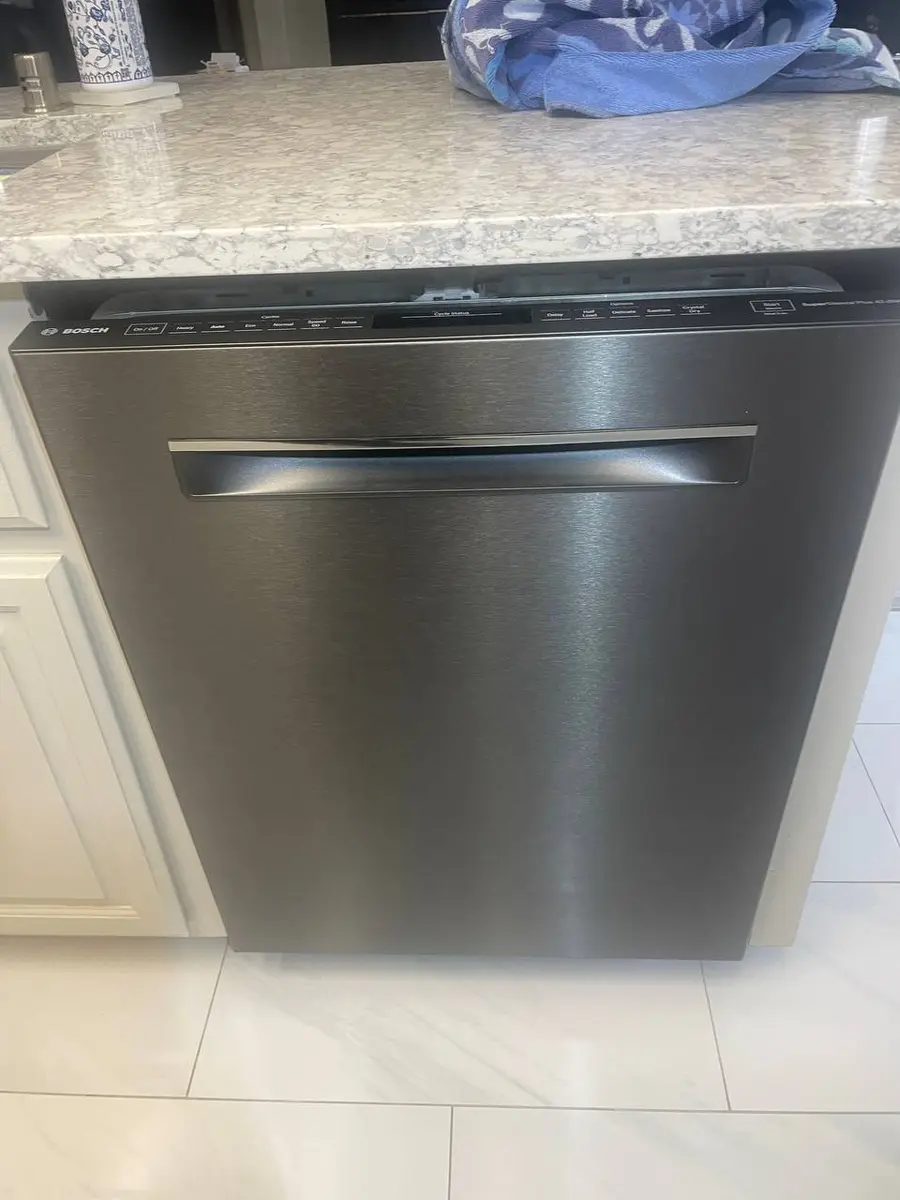
How to Replace a KitchenAid Dishwasher Drain Pump (WPW10348269)
When your KitchenAid dishwasher leaves standing water in the tub after a cycle completes, or you hear a humming sound during the drain phase without water movement, the drain pump has likely failed. KitchenAid dishwashers use part number WPW10348269 for the drain pump assembly, which is identical to the Whirlpool equivalent since both brands share the same internal platform. This guide covers the complete replacement procedure for KDTE, KDTM, and KDFE series models.
The drain pump on KitchenAid dishwashers sits underneath the unit, accessible from below after removing the kick plate. Unlike some European brands that require pulling the entire unit out, KitchenAid's shared Whirlpool design allows pump access with the dishwasher installed. The pump uses a direct-drive impeller motor that either works or does not. There is no repair for internal failures.
Before You Start
- Tools needed: Torx T20 driver, 1/4" hex nut driver, needle-nose pliers, channel-lock pliers, towels, shallow pan
- Parts needed: Drain pump assembly WPW10348269 (~$35-$75)
- Time required: 35-45 minutes
- Difficulty: Intermediate
- Safety warning: Disconnect power at the circuit breaker before beginning. Place towels and a shallow pan under the work area as residual water will drain when disconnecting hoses. The dishwasher does not need to be pulled out from the counter for this repair.
Do You Have the Right Tools?
Water pressure gauge ($60), spray arm tester, float switch multimeter ($85), and drain inspection camera. Our technician arrives with $15K+ in professional tools — your diagnostic is free.
Licensed & Insured · 90-Day Warranty · Same-Day Service
Confirming the Drain Pump is the Problem
Before ordering the pump, verify the diagnosis:
- Start a cycle and cancel it mid-fill to trigger a drain. Listen underneath the unit. A working pump makes a steady whirring sound. A failed pump either makes no sound, hums without draining, or makes grinding/clicking noises
- Check the drain hose where it connects to the sink drain or garbage disposal. A clog here mimics pump failure. Disconnect the hose end and blow through it. If clear, the pump is the issue
- Check for error code F8E1 (long drain) on the display. This code triggers after 4 minutes of drain attempt without the float switch detecting the tub is empty
- Look at the filter and sump area inside the tub. A blocked filter or debris in the sump prevents water from reaching the pump inlet and can stall the impeller
Step-by-Step Instructions
Step 1: Prepare the Work Area
Turn off the circuit breaker for the dishwasher. Place towels on the floor in front of the unit. Open the door and remove any dishes. Run the kitchen sink until hot water appears, then lay a shallow baking pan under the kick plate area to catch residual water.
Step 2: Remove the Kick Plate
The lower kick plate on KitchenAid dishwashers is held by two 1/4" hex screws, one on each end. These are the same fasteners used on equivalent Whirlpool models. Remove both screws and pull the panel forward and down. Set it aside. You now have access to the underside of the unit including the drain pump, water inlet valve, and junction box.
Step 3: Locate the Drain Pump
The drain pump sits on the left side of the sump housing (as you face the front of the unit). It is a compact cylindrical motor with a rubber boot connecting it to the sump outlet. Two wires connect to spade terminals on the pump motor. The drain hose connects to the pump outlet barb.
Step 4: Disconnect the Drain Hose
Use channel-lock pliers to squeeze the spring clamp on the drain hose where it connects to the pump outlet. Slide the clamp back along the hose, then twist and pull the hose off the pump barb. Have your pan ready as 1-2 cups of water will drain out. If the hose is stiff and cracked, plan to replace it during this repair.
Step 5: Disconnect the Electrical Connector
The pump motor has a two-wire connector with spade terminals. Note which wire goes to which terminal (photograph with your phone). Pull each spade connector straight off the terminal using needle-nose pliers. Grip the metal connector, not the wire. If terminals show corrosion (green or white buildup), clean them with electrical contact cleaner before connecting to the new pump.
Step 6: Remove the Pump from the Sump
The drain pump attaches to the sump housing with a quarter-turn bayonet lock on most KitchenAid models. Rotate the pump body counterclockwise about 30 degrees until it releases, then pull straight out. Some models use a mounting bracket with one Torx T20 screw instead. If your pump has a bracket, remove the screw first, then slide the pump assembly out of the rubber grommet.
Step 7: Inspect the Sump Opening
With the pump removed, look into the sump opening. Check for glass shards, fruit pit fragments, or broken impeller pieces that could damage the new pump. Clean the rubber grommet or boot. If the rubber is cracked, torn, or deformed, replace it. A compromised seal causes leaks that drip during cycles.
Step 8: Install the New Drain Pump
Insert the new pump into the sump opening. Align the bayonet tabs and rotate clockwise until it locks (you should feel a positive stop). Or if bracket-mounted, slide into the grommet and secure with the Torx T20 screw. The new pump should sit flush and feel firmly seated. Reconnect the two electrical wires to the matching terminals.
Step 9: Reconnect the Drain Hose
Push the drain hose fully onto the pump outlet barb. Slide the spring clamp back into position over the barb area. Verify the hose is pushed on far enough that the clamp sits on the barb, not on the hose past it. A loose connection here is the number one cause of post-repair leaks.
Step 10: Test for Leaks
Restore power at the breaker. Start a short rinse cycle and immediately get underneath with a flashlight. Watch the pump connections during the fill and drain phases. Any dripping at the hose connection means the clamp needs repositioning. After confirming no leaks through one complete drain cycle, reinstall the kick plate with the two 1/4" hex screws.
Safety First — Know the Risks
Live 120V wiring in a wet environment is one of the most dangerous DIY scenarios. Water + electricity = serious shock risk. Our techs are licensed and insured — let them handle the risk.
Licensed & Insured · 90-Day Warranty · Same-Day Service
Troubleshooting After Replacement
- If the new pump runs but water drains slowly, check the drain hose for kinks where it routes up to the countertop high loop. Also verify the garbage disposal knockout plug was removed if the dishwasher drains through the disposal
- If error F8E1 returns with the new pump, the control board may not be sending voltage to the pump. Use a multimeter at the pump connector to verify 120V AC during the drain phase. No voltage means a control board issue
- If the pump leaks at the sump connection, remove it and check the rubber grommet for proper seating. Apply a thin film of petroleum jelly to help the new pump slide in without displacing the seal
- Grinding noise from the new pump usually means debris entered during installation. Remove the pump, flush with water, and reinstall
When to Call a Professional
- The drain pump itself costs $35-$75 in parts. If you are uncomfortable working underneath the dishwasher or handling electrical connections, professional installation adds $100-$180 in labor
- If the pump failure was caused by a power surge (multiple components failed simultaneously), the control board (W11413276) may also need replacement. A professional can diagnose the full scope
- If your KitchenAid dishwasher is a panel-ready model with a custom cabinet front, additional disassembly may be required that risks damaging custom cabinetry
Same-Day Appliance Repair
Fixed or It's Free
$89 → $0 Service Call & Diagnosis — offer ends May 25
The Real Cost of DIY
Average DIY attempt: $150-400 in tools you may use once, plus the risk of further damage. Our diagnostic visit costs $0 — we find the problem and give you an honest quote.
Licensed & Insured · 90-Day Warranty · Same-Day Service
Cost Comparison: DIY vs Professional
| DIY | Professional | |
|---|---|---|
| Parts | $35-$75 | $35-$75 |
| Labor | $0 | $100-$180 |
| Time | 35-45 min | 30 min |
| Risk | Low with proper prep | Warranty included |
Need Professional Help?
Don't Void Your Warranty
Opening your appliance yourself may void the manufacturer warranty. Our repair comes with a 90-day guarantee, and we document everything for warranty compliance.
Licensed & Insured · 90-Day Warranty · Same-Day Service
FAQ
Q: Is the KitchenAid drain pump the same as Whirlpool? A: Yes. Part WPW10348269 is identical across KitchenAid and Whirlpool dishwashers built on the same platform. You can order either brand's part number. The pump motor, impeller, and mounting are physically identical.
Q: How do I know if my drain pump is failing versus a clogged drain? A: Listen during the drain phase. A working pump with a clogged line makes a steady whirring sound but water does not move. A failed pump either makes no sound at all, hums without the impeller spinning, or makes grinding noises. Also check the drain hose and disposal connection first since clogs are more common than pump failure.
Q: Can I run the dishwasher with a slow-draining pump? A: Technically yes, but the control board will throw F8E1 errors and eventually abort cycles. A partially-failed pump strains the motor and can cause overheating. Replace it promptly rather than running cycles that end with standing water.
Q: What causes KitchenAid drain pumps to fail? A: Most failures come from debris reaching the impeller: glass shards, broken dish fragments, or fruit pits that pass the filter. Keeping the lower filter clean significantly extends pump life. Electrical failures from age or power surges account for the rest.
Need a certified technician? Book same-day repair →