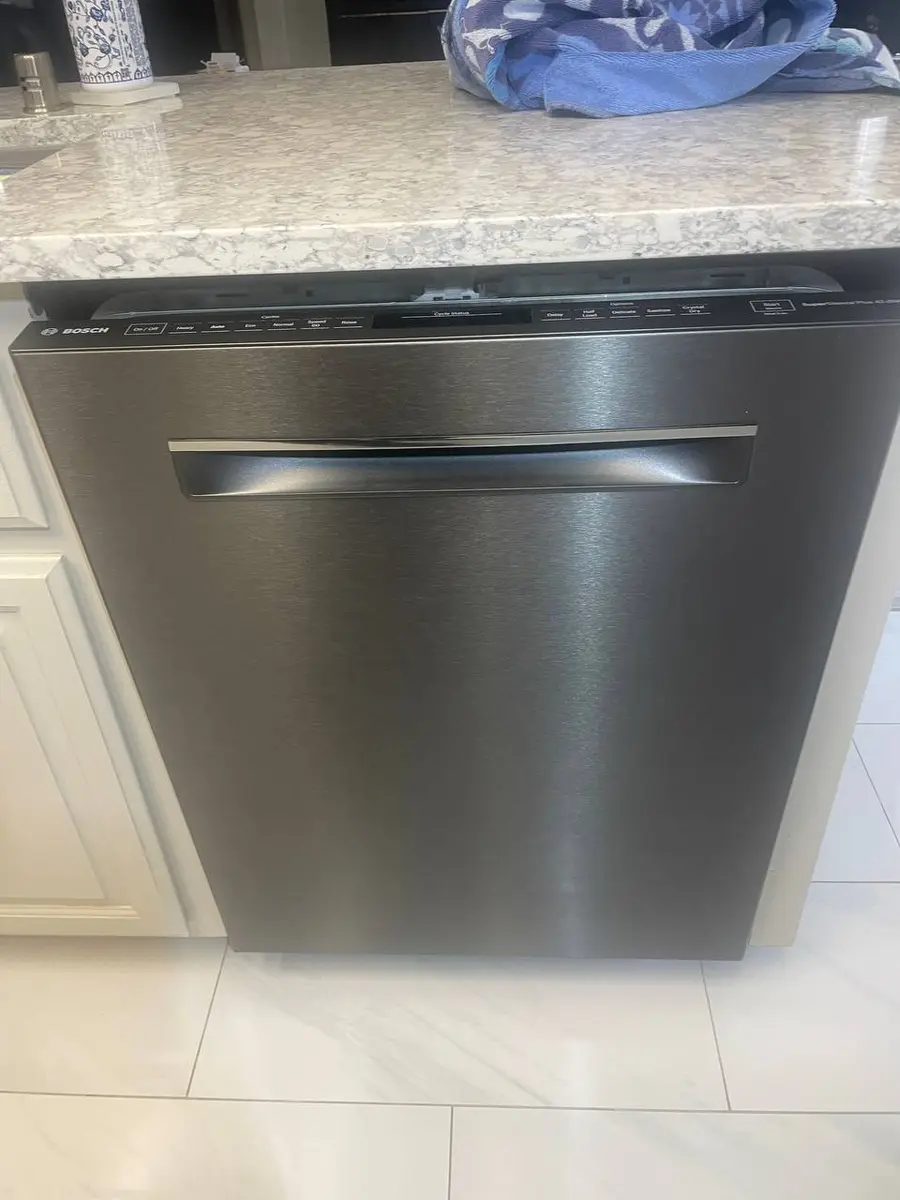
How to Replace KitchenAid Dishwasher Door Gasket
Replacing the door seals on a KitchenAid dishwasher (KDTE and KDTM models) is a beginner, 20-35 minute job — and there are two seals to know. The perimeter gasket presses into a channel with no tools, while the bottom door seal needs only a Phillips screwdriver. Identify which one leaks first, because they fail…
When either seal degrades, water escapes during the wash and reaches the floor, the cabinet, and eventually the framing. This guide covers both, starting with figuring out which one is at fault.
Which seal has failed?#
A perimeter-gasket leak shows as water from the sides or top of the door, with the rubber around the tub opening cracked, flattened, or pulled out of its channel. A bottom-seal leak shows specifically at the bottom of the door onto the floor, with the strip cracked, curled, or missing chunks. The perimeter gasket makes the primary seal when the door closes; the bottom seal deflects splash at the lower door gap. Because both are the same age and see the same conditions, inspect the other whenever one fails.
Do You Have the Right Tools?
Water pressure gauge ($60), spray arm tester, float switch multimeter ($85), and drain inspection camera. Our technician arrives with $3,000+ in professional tools — your diagnostic is free.
Licensed & Insured · 90-Day Warranty · Same-Day Service
Before you start#
| Item | Use |
|---|---|
| Phillips screwdriver | Bottom seal only |
| Glycerin or dish soap | Lubricating a stiff gasket |
| White vinegar, toothbrush | Cleaning the channel |
Safety warning: No power disconnection required for gasket replacement alone. The gasket is accessible with the door open and involves no electrical or plumbing work. However, if you plan to also clean the gasket channel area thoroughly, disconnecting power prevents accidental cycle start while the door is open.
Perimeter door gasket#
1. Locate it#
Open the door fully. The perimeter gasket is the rubber strip in the channel around the tub opening — the surface the door presses against — not on the door itself.
2. Pull the old gasket#
Start at the top center and pull it out of its channel, working down both sides to the bottom. It is not glued, just held by a barbed or T-shaped profile, so pull firmly and evenly; free any scale-bonded sections with a flat plastic tool, never metal.
3. Clean the channel#
Wipe the whole channel with white vinegar on a cloth to clear scale, mould, and debris, using a toothbrush in the corners. It must be clean and dry for the new gasket to seat.
4. Press in the new gasket#
Begin at the top center and press the barbed edge into the channel, working outward every few inches around both sides and across the bottom. Soften a storage-stiff gasket in warm water for five minutes, and wipe a little glycerin or dish soap on the barb to help it slide. Do not seat long runs at once, or it pulls out behind you, and keep it free of twists at the corners.
5. Verify seating#
Run a finger around the whole gasket — every section should sit fully in the channel with no gaps or raised spots. Close and reopen the door; it should compress evenly with no bulges.
Safety First — Know the Risks
Live 120V wiring in a wet environment is one of the most dangerous DIY scenarios. Water + electricity = serious shock risk. Our techs are licensed and insured — let them handle the risk.
Licensed & Insured · 90-Day Warranty · Same-Day Service
Bottom door seal#
6. Remove the old seal#
The bottom seal attaches to the lower edge of the inner door, not the tub. Screw-mounted seals come off after their two or three Phillips screws; track-mounted seals slide out from one end.
7. Fit the new seal#
Align the new seal with the holes or track. For screws, position it and drive them without over-tightening so the heads do not tear the flexible material; for a track, slide the seal in from one end to the other and trim to length if needed.
8. Leak-test#
Close the door and run a Rinse Only or Quick Wash, then check the floor in front, the bottom of the door, and the door sides. Nothing should appear at any point.
Troubleshooting#
- Still leaking at the bottom: the door may be misaligned — confirm the unit is level so water does not pool against the seal on the low side.
- Perimeter gasket keeps popping out: it may be the wrong profile, since KitchenAid has used several; verify the part against your model number.
- Leaks only on ProWash or heavy cycles: higher spray pressure overwhelms a marginally-seated gasket — reseat any loose sections.
The Real Cost of DIY
Average DIY attempt: $150-400 in tools you may use once, plus the risk of further damage. Our diagnostic visit costs $0 — we find the problem and give you an honest quote.
Licensed & Insured · 90-Day Warranty · Same-Day Service
When to call a professional#
EasyBear technicians serving Sacramento and the Bay Area carry KitchenAid-specific diagnostic tools and replacement parts on every service call. Call one if the tub flange the gasket presses against is bent or corroded, if worn hinges leave the door closing off-square, or if water comes from inside the door panel itself, which means the internal tub-to-door seal has failed and needs inner-panel removal (Torx T20).
Need Professional Help?#
Want a professional to handle it? Our KitchenAid-certified technicians are available today. Book a free diagnostic.
Appliance Repair Technician & Diagnostics Specialist · 10 years experience
Electronics and diagnostics specialist with 10 years of experience in modern smart appliance repair, specializing in LG and Samsung.