How to Replace GE Dryer Components: Belt, Rollers
Most GE dryer repairs follow the same path: match the symptom to the part, then choose rear access (thermal fuse, heating element) or front access (belt, rollers, idler, door switch). Unplug the dryer (shut the gas on gas models), and for parts on the exhaust housing pull the rear panel; for drum-area parts, pop the…
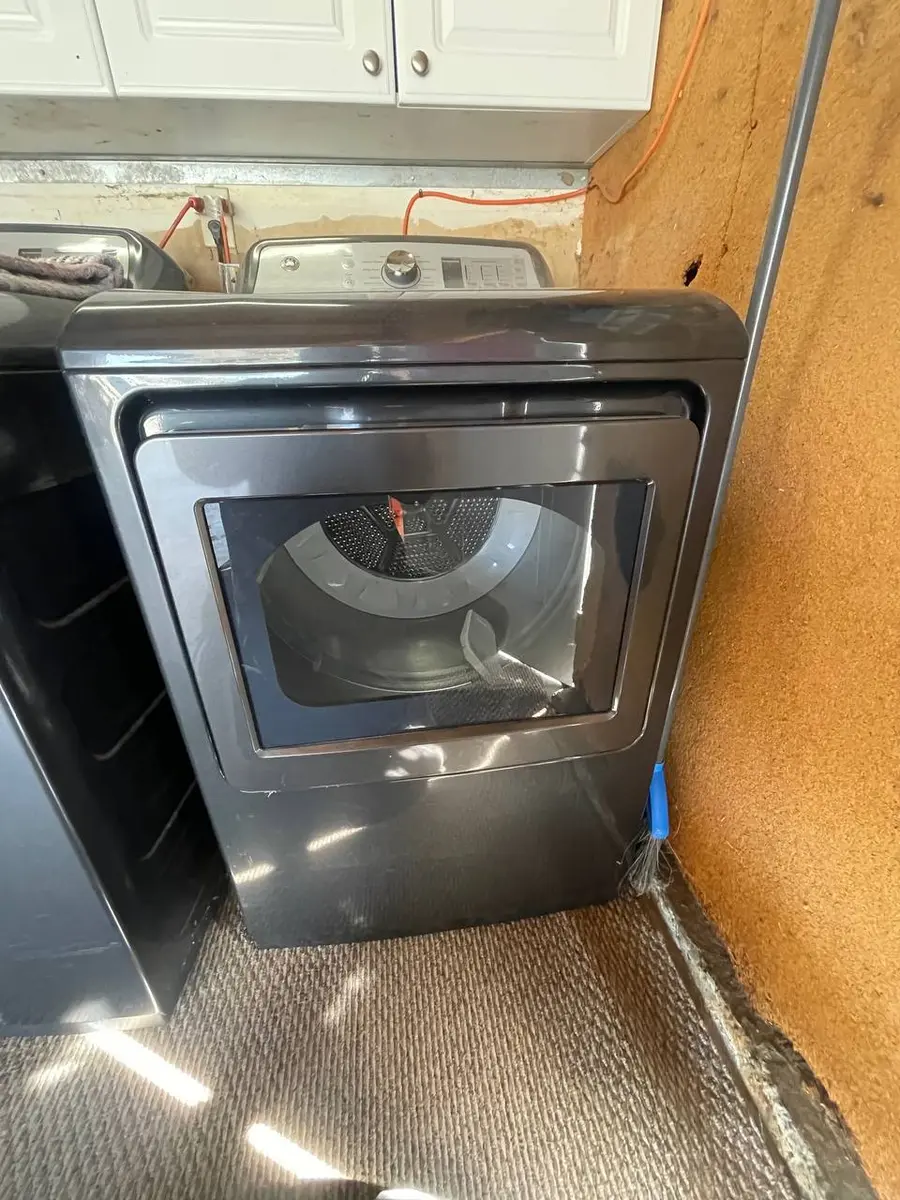
This covers the general replacement workflow for GE dryers (GTD standard and GFD Profile series). Whether you are replacing the thermal fuse, drive belt, heating element, drum rollers, or door switch, the disassembly follows the same logical sequence. In order of failure frequency, the most-replaced parts are the thermal fuse (on the exhaust housing), the flat narrow drive belt, the drum support rollers, the heating element (electric models), the idler pulley, and the door switch — and knowing each part's access pattern lets you plan the job efficiently.
Tools, Parts, and Safety First#
- Tools needed: Putty knife (flexible 1.25 inch), Phillips #2 screwdriver, 5/16-inch nut driver, multimeter, needle-nose pliers, work gloves
- Parts needed: Specific to your repair (verify part numbers using model plate inside door frame)
- Time required: 30-90 minutes depending on component
- Difficulty: Intermediate
- Safety warning: Unplug the dryer. Gas models: shut off gas supply valve.
Do You Have the Right Tools?
Gas leak detector ($130), thermal fuse tester ($95), belt tension gauge, and vent inspection camera ($180). Our technician arrives with $3,000+ in professional tools — your diagnostic is free.
Licensed & Insured · 90-Day Warranty · Same-Day Service
Step-by-Step Instructions#
Step 1 — Identify the failed component#
Diagnose before disassembling. On WiFi-enabled models the GE SmartHQ app gives error codes; without WiFi, match the symptom:
| Symptom | Likely Component | Access Required |
|---|---|---|
| No heat, drum turns | Thermal fuse or element | Rear panel only |
| Drum not turning, no sound | Belt or belt switch | Front access |
| Motor hums, drum stuck | Seized roller or object | Front access + drum out |
| Loud thumping | Drum rollers | Front access + drum out |
| Squealing | Idler pulley | Front access + drum out |
| Door won't latch | Door switch or latch | Top panel only |
| Won't start at all | Thermal fuse, door switch, or start switch | Varies |
Step 2 — Access from the rear (thermal fuse, element)#
For components on the exhaust housing, you only need rear access. Remove the 6-8 Phillips screws around the rear-panel perimeter. The thermal fuse is on the exhaust duct housing (a small oval component, two terminals), the heating element is in a separate metal housing nearby, and the high-limit thermostat is a disc-shaped component on or near the exhaust housing.
Step 3 — Access from the front (belt, rollers, idler)#
For internal parts, use front access: release the top-panel spring clips with a putty knife (press into the front seam and push rearward), disconnect the door-switch connector, remove the two screws at the upper corners of the front panel, and lift and tilt the panel away.
Step 4 — Remove the drum (when required)#
With the front panel off, reach under the drum to the idler, push the idler arm toward the motor to release belt tension, and slip the belt off. Lift the drum forward and out, setting it on a padded surface.
Step 5 — Replace the target component#
Each part swaps out cleanly once you have access. Thermal fuse: two spade terminals (pull off with pliers) and one mounting screw — match the exact part number. Drive belt: loop the new belt around the drum (ribbed side to the drum), reinstall the drum, and route the belt around the idler then the motor pulley with the idler pushed toward the motor for slack. Drum rollers: remove the retaining clip or screw from the roller shaft on the rear bulkhead, pull the old roller off, install the new one (replace in pairs for even wear), and add one drop of light machine oil to the shaft. Heating element: disconnect the terminals, remove the mounting screw(s), and slide the housing out, transferring the thermostats if they are not included. Idler pulley: remove the mounting bolt, swap the assembly, and verify the spring engagement direction. Door switch: with the top panel raised, press the release tab, pull the switch from its hole, disconnect the wires, and snap the new one in.
Step 6 — Reassemble in reverse order#
Reinstall the drum (if removed), route the belt, attach the front panel, reconnect the door switch, and lower the top panel. For rear-access repairs, simply replace the rear-panel screws.
Step 7 — Verify the repair#
Plug in and run a test cycle appropriate to the repair: for a thermal fuse or element, verify heat within 3-5 minutes; for a belt or rollers, listen for smooth, quiet operation; for a door switch, verify start and stop as the door opens and closes; for an idler, listen for the absence of squealing.
GE-Specific Design Notes#
- Spring clips on the top panel: GE uses putty-knife-released spring clips rather than hidden screws, giving faster top-panel access than screw-based designs.
- Flat narrow belt: GE dryers use a thinner belt than most competitors — do not substitute a wider belt meant for another make.
- Thermal fuse location: always on the exhaust housing, not inside the drum area or near the control board.
- Reversible door: all GE dryers allow door reversal, so the door-switch position may be on either side depending on the current configuration.
- SmartHQ WiFi: GE Profile and 2017+ standard models connect to WiFi for remote diagnostics and error-code retrieval.
Safety First — Know the Risks
Gas dryers carry carbon monoxide and explosion risk. Even electric dryers involve 240V circuits that can deliver a fatal shock. Our techs are licensed and insured — let them handle the risk.
Licensed & Insured · 90-Day Warranty · Same-Day Service
Part Number Quick Reference#
| Component | Common Part Number | Price Range |
|---|---|---|
| Thermal fuse | WE04X10123 / WE4M137 | varies by model |
| Drive belt | WE12M29 | varies by model |
| Drum roller (each) | WE3M26 | varies by model |
| Heating element | WE11M23 / WE11M10001 | varies by model |
| Idler pulley | WE12X21885 | varies by model |
| Door switch | WE4M415 | varies by model |
Always verify by model number — GE parts vary between model generations.
Troubleshooting After Any Replacement#
- Dryer will not start after reassembly: confirm the door-switch connector is seated and the top-panel spring clips fully engaged, since incomplete closure can leave the safety circuit open on some models.
- Different noise after drum removal and reinstall: verify the drum is seated on the rear rollers and the belt is in the correct drum track.
- Inconsistent heat: verify the exhaust duct connection is tight and the vent path is clear.
The Real Cost of DIY
Average DIY attempt: $150-400 in tools you may use once, plus the risk of further damage. Our diagnostic visit costs $0 — we find the problem and give you an honest quote.
Licensed & Insured · 90-Day Warranty · Same-Day Service
When Should You Call a Professional?#
EasyBear technicians serving Sacramento and the Bay Area carry GE-specific diagnostic tools and replacement parts on every service call. Call one if multiple components failed at once (a control-board issue or electrical event), for gas valve or igniter replacement on gas models (which needs leak testing), if you strip a screw or break a mounting tab during disassembly, if the motor needs replacing (a heavy component in a confined space), or if you are not comfortable with 240V electrical testing for element diagnosis.
Need Professional Help?#
Need help with this repair? Schedule a free diagnostic — same-day GE dryer service across the Bay Area.
Appliance Repair Technician · 11 years experience
Experienced technician with 11 years specializing in Frigidaire and Electrolux refrigerator and dryer repair with a focus on safety.