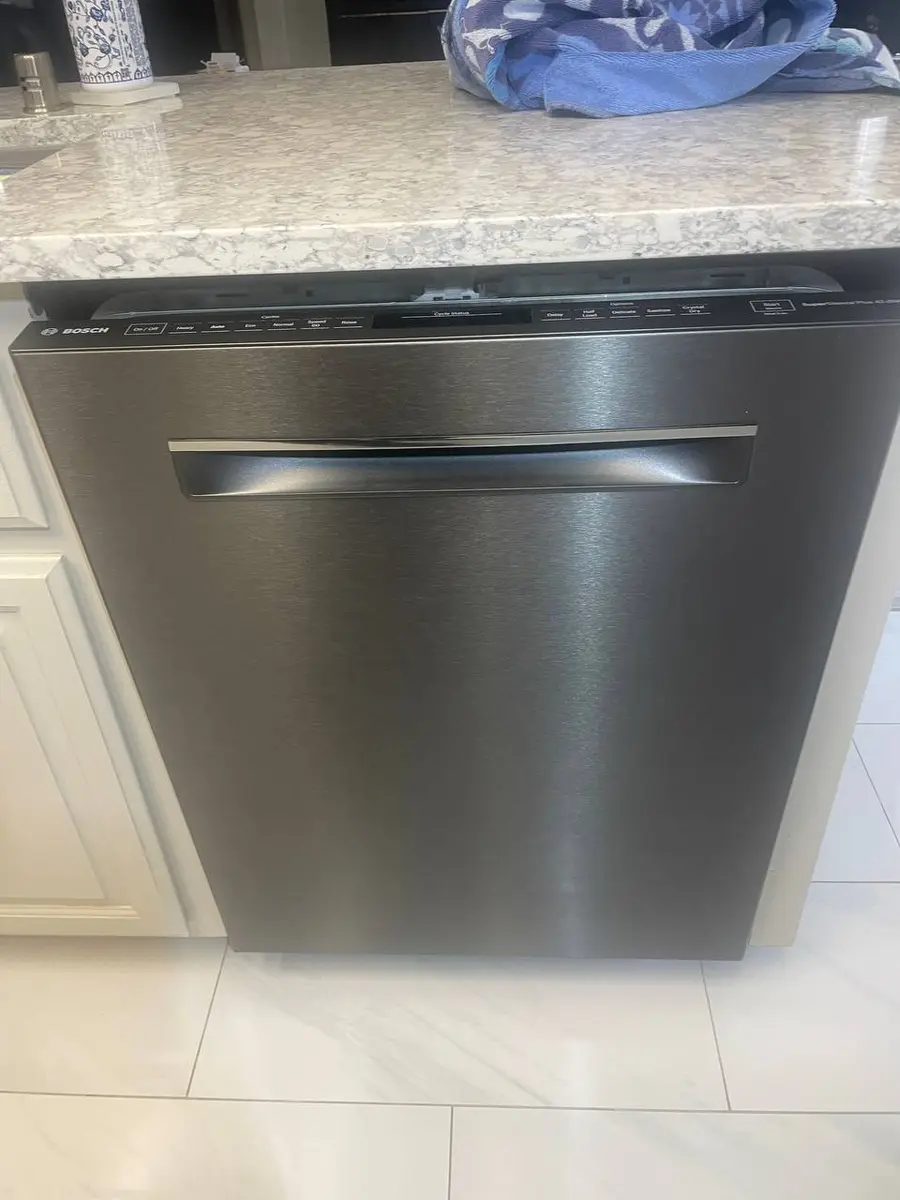
How to Replace the Temperature Sensor (Thermistor) on a GE Dishwasher
GE dishwashers use a thermistor (temperature sensor) mounted in the sump area to monitor water temperature throughout the cycle. The control board relies on this sensor to determine when water has reached the target temperature, when to activate the heater, and when the Sanitize cycle has achieved 150F. When this sensor fails, you may experience cycles that run excessively long (the board keeps heating because it cannot confirm temperature), water that does not heat at all (board shuts down heater as a safety precaution), or error code C3.
Some GE Profile and Cafe models also have a separate turbidity sensor (AutoSense) that measures water clarity. This guide covers both the thermistor and the turbidity sensor replacement.
Before You Start
- Tools needed: Phillips #2 screwdriver, 1/4-inch hex driver, multimeter, flashlight
- Parts needed: Thermistor/temperature sensor (model-specific part; check tech sheet). Cost: $15-$40
- Time required: 20-30 minutes
- Difficulty: Intermediate
- Safety warning: Turn off the circuit breaker. The sensor itself is low-voltage but is accessed near the 120V heater and pump connections.
Do You Have the Right Tools?
Water pressure gauge ($60), spray arm tester, float switch multimeter ($85), and drain inspection camera. Our technician arrives with $15K+ in professional tools — your diagnostic is free.
Licensed & Insured · 90-Day Warranty · Same-Day Service
Step-by-Step Instructions
Step 1: Confirm the Sensor Has Failed
The thermistor is a resistance-based sensor. Its resistance changes with temperature. To test:
- Turn off the breaker
- Access the sensor by removing the kick plate (1/4-inch hex screws) and locating the sensor wires on the sump
- Disconnect the sensor connector
- Set your multimeter to resistance (ohms)
- Measure across the sensor terminals
Expected readings at room temperature (70F): Most GE thermistors read 10K-50K ohms at room temperature (exact value varies by model; check your tech sheet). If you read infinite (open) or zero/near-zero (shorted), the sensor has failed. Replace it.
If the sensor reads within normal range at room temperature but you still suspect it, test it with warm water. Disconnect the sensor from the dishwasher and immerse just the sensor tip in warm water. The resistance should decrease as temperature increases. If it stays constant regardless of temperature, the sensor element has failed internally.
Step 2: Locate the Temperature Sensor
GE dishwashers mount the thermistor in one of two locations depending on model year:
Sump-mounted (most common): The sensor is a small probe inserted through the sump wall, accessible from underneath the dishwasher (behind the kick plate). Its wire runs up to a connector that plugs into the main wire harness.
Tub-mounted (some models): The sensor is located inside the tub near the filter area. You can see a small cylindrical probe protruding into the tub from the bottom wall. The wire exits through the tub base to connect underneath.
The turbidity sensor (AutoSense, on Profile/Cafe models) is always inside the tub, near the filter housing. It looks like a small window or optical lens.
Step 3: Access the Sensor from the Appropriate Side
For sump-mounted sensors: Remove the kick plate. Look at the bottom of the sump housing for a small probe with two wires. The sensor is held in place by a clip, retaining ring, or press-fit grommet.
For tub-mounted sensors: Remove the lower rack and spray arm. Remove the filter assembly. Look in the sump area (where the filter sits) for the sensor probe. It usually has a small retaining clip or screw.
Step 4: Disconnect and Remove the Old Sensor
Disconnect the sensor's wire connector. Note which position it occupies in the harness (photograph if multiple similar connectors are nearby).
Release the retaining mechanism:
- Clip-held: Squeeze or pry the clip to release the sensor from the sump wall
- Screw-held: Remove the single Phillips screw securing the sensor bracket
- Press-fit: Gently pull the sensor straight out of its grommet
Pull the sensor free. On tub-mounted sensors, you pull it out from inside the tub. On sump-mounted sensors, you pull it out from underneath.
Step 5: Install the New Sensor
Insert the new sensor into the same opening in the same orientation. Make sure any rubber grommet or seal is properly seated to prevent leaks. If the original grommet is damaged, use the one included with the new sensor or replace it separately.
Secure with the retaining clip, screw, or press-fit until the sensor is firmly held in place. The sensing end (metal or glass tip) must be fully inside the sump/tub to contact the water.
Route the wire and reconnect to the harness connector.
Step 6: Test the Installation
Reassemble the filter, spray arm, and rack (if tub-mounted). Replace the kick plate (if sump-mounted). Restore power at the breaker.
Run a Normal cycle. Verify:
- The cycle completes in a normal time frame (60-90 minutes for Normal)
- No error codes appear
- Water feels hot if you open the door mid-cycle (carefully)
- The Heated Dry phase activates
If error code C3 persists after sensor replacement, the problem may be the heater element itself or the control board not reading the new sensor correctly. Double-check the connector is fully seated.
Replacing the Turbidity Sensor (AutoSense) on GE Profile/Cafe
The turbidity sensor is an optical device that measures water clarity. It is located in the sump area visible from inside the tub (near the filter housing). It has a separate connector from the thermistor.
Removal: disconnect its wire connector (accessible from underneath or from inside the tub depending on model). Release the retaining clip and pull the sensor out of its housing.
Before replacing, try cleaning the optical window with a soft cloth and warm soapy water. Grease film on the lens is the most common cause of AutoSense malfunctions and does not require sensor replacement.
If cleaning does not resolve the issue, install the new sensor in the same position and reconnect.
Safety First — Know the Risks
Live 120V wiring in a wet environment is one of the most dangerous DIY scenarios. Water + electricity = serious shock risk. Our techs are licensed and insured — let them handle the risk.
Licensed & Insured · 90-Day Warranty · Same-Day Service
Cost Comparison: DIY vs Professional
| DIY | Professional | |
|---|---|---|
| Parts | $15-$40 | $15-$40 |
| Labor | $0 | $100-$200 |
| Time | 0.4h | 0.3h |
| Risk | Low (simple swap) | Warranty included |
Same-Day Appliance Repair
Fixed or It's Free
$89 → $0 Service Call & Diagnosis — offer ends May 25
When to Call a Professional
- The sensor reads normal but the dishwasher still does not heat (likely control board or heater issue)
- You cannot locate the sensor on your model (check the tech sheet first)
- The sensor mounting area is damaged or leaking
The Real Cost of DIY
Average DIY attempt: $150-400 in tools you may use once, plus the risk of further damage. Our diagnostic visit costs $0 — we find the problem and give you an honest quote.
Licensed & Insured · 90-Day Warranty · Same-Day Service
Need Professional Help?
FAQ
Q: What is the difference between the thermistor and the turbidity sensor on a GE dishwasher? A: The thermistor measures water temperature (used for heating control and Sanitize verification). The turbidity sensor measures water clarity/dirtiness (used by AutoSense to determine how long to wash). They are separate components with separate connectors, both located in the sump area.
Q: Can a failed thermistor cause my GE dishwasher cycle to run 3+ hours? A: Yes. If the thermistor reads incorrectly (reporting low temperature when water is actually hot), the control board keeps running the heater and extending the cycle because it never detects the target temperature. A 3+ hour cycle is a classic symptom of a failed temperature sensor.
Q: Why does my GE Profile's AutoSense cycle seem to get shorter over time? A: The turbidity sensor's optical window is accumulating a grease film. As it gets coated, it reads the water as cleaner than it actually is, shortening the cycle. Clean the sensor window with warm soapy water. This should be done every 3-6 months on AutoSense models.
Q: Is error code C3 always the temperature sensor? A: Not always. C3 means the water did not reach the target temperature. This can be caused by: a failed thermistor (most common), a burned-out heater element, a control board not sending power to the heater, or incoming water temperature too low (below 90F from a failed water heater). Test the thermistor and heater element first.
Need a certified technician? Book same-day repair →