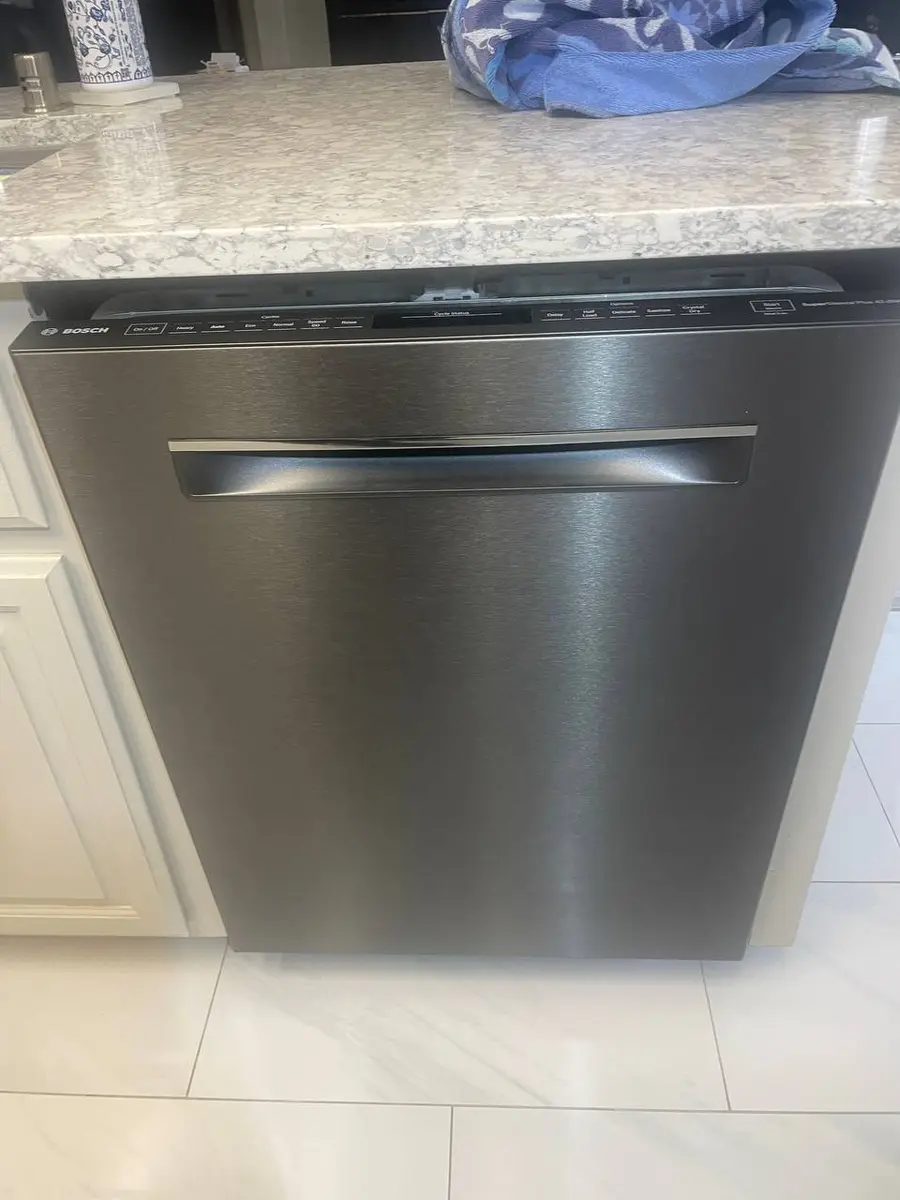
How to Fix a GE Dishwasher Rinse Aid Dispenser
US GE dishwashers do not have a dishwasher-salt container; spotting and poor drying come from the rinse aid dispenser instead. Refilling and adjusting it takes 5 minutes, and swapping the assembly is a 20 to 30-minute intermediate job.
Why there is no salt, only rinse aid#
Unlike many European machines, GE dishwashers sold in the US have no salt reservoir or built-in softener; they manage hard water through detergent and a rinse aid that is released during the final rinse to sheet water off the dishes. When that dispenser fails you get water spots, dishes that will not dry, and often a rinse-aid indicator that stays lit.
Before you start#
| Category | What you need |
|---|---|
| Tools | Phillips #2 screwdriver, small flathead (for the dosage dial), a clean cloth |
| Supplies/parts | Rinse aid; a replacement cap or the full dispenser assembly only if the mechanism has failed |
| Time and level | 5 minutes to refill, 20 to 30 minutes to replace the assembly, Beginner to Intermediate |
Safety warning: No need to cut power for refilling. Turn off the breaker only if replacing the full assembly.
Do You Have the Right Tools?
Water pressure gauge ($60), spray arm tester, float switch multimeter ($85), and drain inspection camera. Our technician arrives with $3,000+ in professional tools — your diagnostic is free.
Licensed & Insured · 90-Day Warranty · Same-Day Service
Step-by-step#
1 - Fill the reservoir. On the inner door, next to the detergent cup, find the small round rinse-aid cap marked with a raindrop. Open it, fill to the line without overfilling (excess causes sudsing), and close it until it clicks. On GE Profile models the indicator light goes out once the level is above minimum.
2 - Set the dosage. GE dispensers have a dial, often visible under the cap, running from 1 to 6. Hard-water homes do best around 4 to 6; start at 4 and raise it if spots remain, but back off if you see a bluish film on the glasses.
3 - Diagnose a no-dispense. If the reservoir is full but dishes still spot, run a cycle and check the level: if it has not dropped, the mechanism is not releasing. Inspect the cap's rubber seal for cracks that let rinse aid leak out during the wash, and clean any crystallized rinse aid blocking the outlet.
4 - Replace the cap and seal. The cap's seal hardens and cracks over time and is the cheap first fix. Pull or unscrew the old cap, match a replacement by model number, and press or thread the new one in.
5 - Replace the full assembly (if needed). If the cap and seal are fine but nothing dispenses at the rinse, the mechanism has failed, usually as part of the door-mounted detergent-and-rinse-aid assembly. Kill the breaker, remove the inner-door panel screws (6 to 8 along the top edge), separate the panel, disconnect any dosing-valve wiring, and swap the assembly before reassembling.
6 - Test. Run a Normal cycle with dishes and confirm water sheets off the glasses and stainless rather than beading. Check that the reservoir level dropped, proving a dose was released, and raise the dosage if spots persist.
Alternatives and upkeep#
White vinegar in the reservoir helps with spots but dries less effectively and can harden the seals over time, and basket tablets miss the precisely timed final-rinse release the built-in dispenser gives; in hard water, commercial rinse aid at the right dosage still wins. Refill when the light comes on or every 4 to 6 weeks, clean the cap seal and outlet every 3 months, and replace a stiff or discolored seal yearly.
Safety First — Know the Risks
Live 120V wiring in a wet environment is one of the most dangerous DIY scenarios. Water + electricity = serious shock risk. Our techs are licensed and insured — let them handle the risk.
Licensed & Insured · 90-Day Warranty · Same-Day Service
When to call it#
A rinse-aid dispenser is a low-stakes repair, but two situations are worth a technician. The first is rinse aid leaking down inside the door cavity, with water dripping from the bottom of the door, which points to a cracked reservoir behind the panel. The second is a dispenser so integrated with the detergent assembly that the inner door panel is hard to split on your model without risking the latch or the wiring behind it.
Lead Appliance Repair Technician · 12 years experience
Experienced technician with 12 years specializing in washing machine and dryer repairs across all major brands.