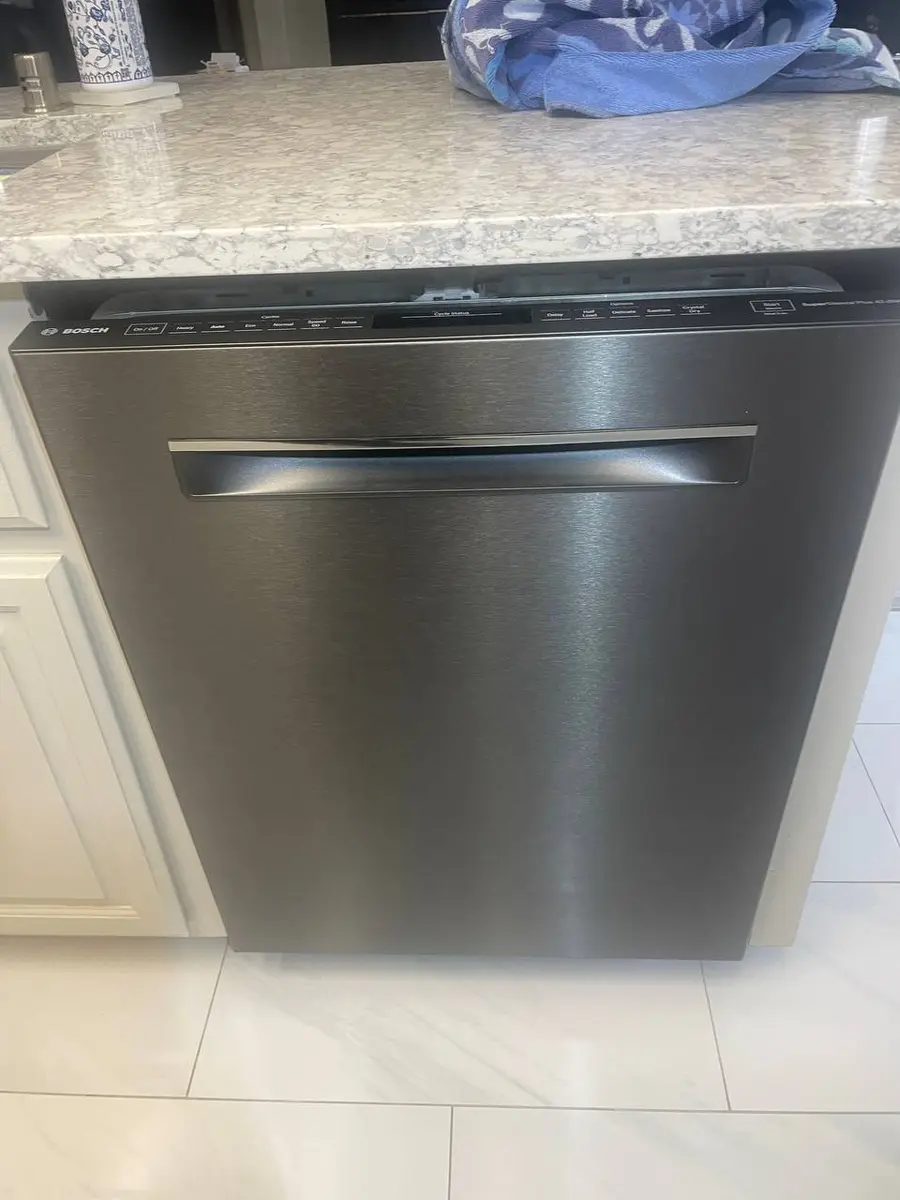
How to Replace the Water Inlet Valve on a GE Dishwasher (WD15X10003)
The water inlet valve controls all water entry into your GE dishwasher. When it fails, the dishwasher either does not fill at all (no water enters the tub), fills extremely slowly, makes a loud buzzing or water hammer noise during fill, or leaks water onto the floor from behind the kick plate. The GE inlet valve (part WD15X10003 for most GDT/GDP models) is an electromechanical solenoid valve that opens when the control board energizes it and closes when power is removed.
This is one of the most straightforward repairs on a GE dishwasher. The valve is easily accessible behind the kick plate and requires basic tools to replace.
Before You Start
- Tools needed: Adjustable wrench (or 3/8-inch wrench for supply line), Phillips #2 screwdriver, 1/4-inch hex driver, channel-lock pliers, towels, small bucket
- Parts needed: Water inlet valve GE WD15X10003 (verify by model). Cost: $20-$45
- Time required: 20-30 minutes
- Difficulty: Intermediate
- Safety warning: Turn off the circuit breaker AND close the water supply valve under the sink. Water will be present in the supply line and internal hose. Have towels ready.
Do You Have the Right Tools?
Water pressure gauge ($60), spray arm tester, float switch multimeter ($85), and drain inspection camera. Our technician arrives with $15K+ in professional tools — your diagnostic is free.
Licensed & Insured · 90-Day Warranty · Same-Day Service
Step-by-Step Instructions
Step 1: Confirm the Inlet Valve is the Problem
Before replacing the valve, rule out other fill issues:
- Supply valve closed or partially open: Check the valve under the sink. Open it fully counterclockwise.
- Kinked supply line: Trace the braided supply line from the shut-off valve to the dishwasher. Look for kinks.
- Clogged inlet screen: The valve has a small mesh screen where the supply line connects. Mineral deposits can block this screen. Turn off water, disconnect the supply line, and inspect the screen. You can clean it with a toothbrush and vinegar without replacing the whole valve.
If the supply is good and the screen is clear, test the valve electrically: disconnect the breaker, remove the kick plate, disconnect the valve connector, and measure resistance across the solenoid coil terminals. Should read 500-1500 ohms. Infinite = open coil (valve dead). Very low = shorted coil (will trip breaker).
Step 2: Turn Off Water and Power
Close the hot water supply valve under the sink (turn clockwise until it stops). Turn off the circuit breaker for the dishwasher. Verify no power at the dishwasher by starting a cycle (nothing should happen).
Step 3: Remove the Kick Plate
Remove the two 1/4-inch hex screws holding the lower kick plate (one at each end). Pull the plate forward and set aside.
Step 4: Locate the Inlet Valve
The inlet valve is on the left side (viewed from the front) behind the kick plate. You will see the braided stainless supply line from the wall connecting to the back of the valve, and a rubber hose from the valve outlet going up into the tub. An electrical connector sits on top of the valve solenoid.
Step 5: Disconnect the Supply Line
Place a towel under the valve. Using an adjustable wrench, loosen the compression fitting that connects the supply line to the valve inlet (turn counterclockwise). Once loose, unthread by hand and pull the supply line away. Some water will drip out of the line. Check the valve inlet screen now if you have not already. Inspect it for mineral deposits and clean or note its condition.
Step 6: Disconnect the Internal Hose
The valve outlet connects to a rubber hose going to the tub. This hose is held on by a spring clamp. Use channel-lock pliers to squeeze the spring clamp tabs together and slide the clamp back on the hose. Then twist and pull the hose off the valve outlet nozzle. Some water will flow out.
Step 7: Disconnect the Wire Harness and Remove the Valve
Squeeze the locking tab on the electrical connector and pull it off the valve solenoid. The valve is held to the dishwasher frame by a single Phillips screw through a mounting bracket. Remove this screw and the valve drops free.
Step 8: Install the New Valve
Attach the new valve to the frame with the mounting screw. Reconnect the wire harness (push until it clicks). Push the internal rubber hose onto the new valve's outlet nozzle and slide the spring clamp back into position over the connection.
Reconnect the supply line to the new valve's inlet. Hand-tighten the compression fitting, then snug with the wrench (quarter turn past hand-tight). Do not overtighten as this can crack the valve's brass inlet fitting.
Step 9: Check for Leaks and Test
Open the supply valve under the sink slowly. Check immediately for leaks at the supply line connection. Check the internal hose connection (may not show leaks until the valve opens).
Restore power at the breaker. Run a cycle and listen for the fill phase. You should hear water rushing into the tub for 60-90 seconds. Open the door mid-fill and verify water is entering (about 1 inch of water should be visible in the tub after the fill). Check under the kick plate area for any drips during the fill.
Replace the kick plate after confirming no leaks through one complete cycle.
Troubleshooting After Valve Replacement
- New valve does not open (no fill): Verify the wire connector is fully seated. Check that the control board is sending 120V to the valve during the fill phase (multimeter at connector with power on).
- Water hammer (banging) during fill: The new valve may be opening too abruptly. This is sometimes a water pressure issue. Install a water hammer arrestor on the supply line under the sink.
- Slow fill: Check that the supply valve is fully open and the new valve's inlet screen is not blocked (should come clean from factory, but verify).
- Leak at supply connection: Tighten the compression fitting slightly. If it still leaks, the ferrule (compression ring) in the fitting may be damaged. Replace the ferrule or use a new braided supply line with a fresh ferrule.
Safety First — Know the Risks
Live 120V wiring in a wet environment is one of the most dangerous DIY scenarios. Water + electricity = serious shock risk. Our techs are licensed and insured — let them handle the risk.
Licensed & Insured · 90-Day Warranty · Same-Day Service
Cost Comparison: DIY vs Professional
| DIY | Professional | |
|---|---|---|
| Parts | $20-$45 | $20-$45 |
| Labor | $0 | $100-$220 |
| Time | 0.4h | 0.4h |
| Risk | Low (standard plumbing connection) | Warranty included |
Same-Day Appliance Repair
Fixed or It's Free
$89 → $0 Service Call & Diagnosis — offer ends May 25
When to Call a Professional
- The supply valve under the sink is seized and cannot be turned off (call a plumber)
- Water is leaking inside the wall where the supply line enters (plumbing issue, not appliance)
- The dishwasher fills but immediately drains without washing (control board or flood switch issue, not the inlet valve)
The Real Cost of DIY
Average DIY attempt: $150-400 in tools you may use once, plus the risk of further damage. Our diagnostic visit costs $0 — we find the problem and give you an honest quote.
Licensed & Insured · 90-Day Warranty · Same-Day Service
Need Professional Help?
FAQ
Q: Can I just clean the inlet valve screen instead of replacing the whole valve? A: If the screen is clogged with mineral deposits but the valve itself tests good electrically (500-1500 ohms), cleaning the screen may solve a slow-fill problem. Remove the supply line, pull the screen out with needle-nose pliers, soak in vinegar for 30 minutes, scrub, and reinstall. If the valve is electrically dead, the whole valve must be replaced.
Q: Why does my GE dishwasher show H2O error code? A: H2O means the dishwasher did not detect water entering the tub within the expected time. Causes: closed supply valve, failed inlet valve, clogged inlet screen, or a failed flow meter (some models). Start diagnosis with the supply valve and screen before replacing the valve.
Q: Is the GE inlet valve WD15X10003 compatible with all GE dishwasher models? A: WD15X10003 fits many GDT-series models but not all. Newer Haier-manufactured GE models may use a different valve. Always verify by entering your model number on GE's parts website. Using the wrong valve can have incorrect flow rates or mounting dimensions.
Q: Can a failing inlet valve cause my GE dishwasher to leak when it is not running? A: Yes. If the valve's internal seal degrades, water can slowly seep through even when the valve is not energized. This causes a slow leak onto the floor when the dishwasher is off. A properly working valve creates a complete seal when de-energized. Replace the valve if it leaks at rest.
Need a certified technician? Book same-day repair →