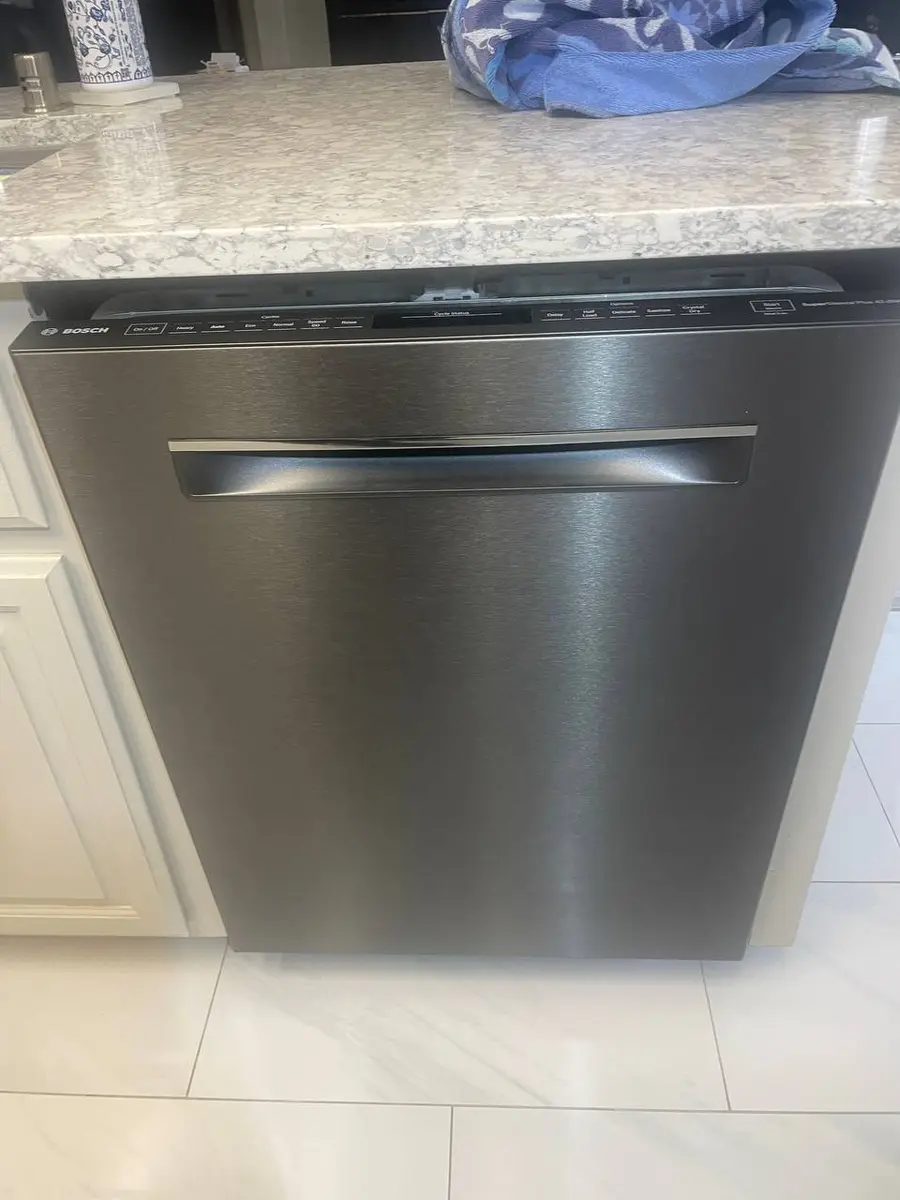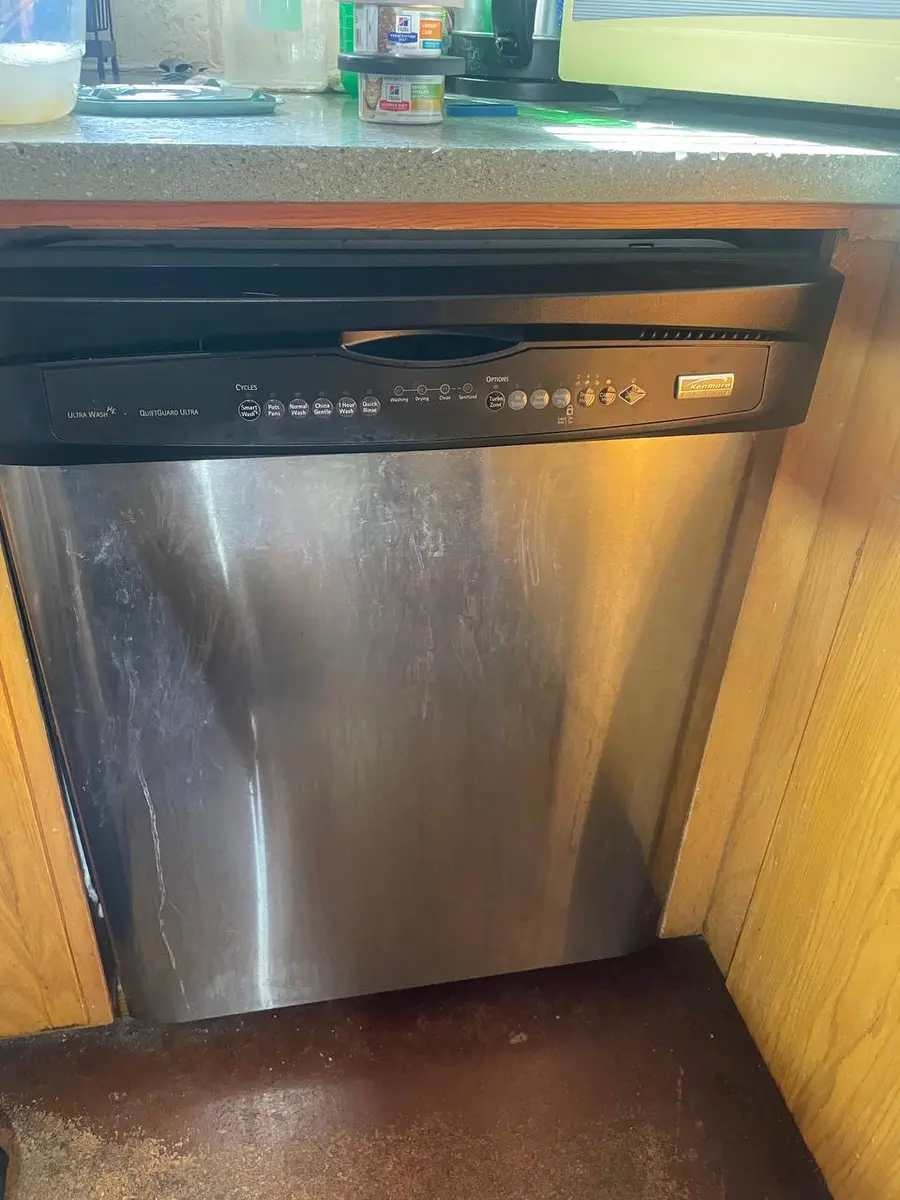
How to Replace GE Dishwasher Door Perimeter Seal
A GE dishwasher dripping along the lower door edge usually needs the tub perimeter gasket. Cut the breaker, pull the old press-fit gasket out of its channel starting at the bottom center, clean and dry the channel, relax the coiled new gasket, and press it in starting at 12 o'clock and working out to each side and…
This GE repair swaps one part following a tested sequence. GE dishwashers (GDT/GDP models) use a press-fit gasket that sits in a channel around the tub opening — no adhesive or screws on most models — which makes it a straightforward replacement.
Tools, Parts, and Safety First#
- Tools needed: Flathead screwdriver (small, for prying if needed), warm water, mild dish soap, clean cloth, scissors (to trim if needed)
- Parts needed: Door gasket / perimeter seal (GE part number varies by model; measure your tub opening and match the gasket profile). Cost: varies by model and area
- Time required: 20-30 minutes
- Difficulty: Beginner
- Safety warning: Turn off the circuit breaker. While this repair does not involve electrical components directly, a running cycle starting unexpectedly during installation would spray water from the open tub.
Do You Have the Right Tools?
Water pressure gauge ($60), spray arm tester, float switch multimeter ($85), and drain inspection camera. Our technician arrives with $3,000+ in professional tools — your diagnostic is free.
Licensed & Insured · 90-Day Warranty · Same-Day Service
Step-by-Step Instructions#
Step 1 — Identify the leak source#
Confirm the gasket is actually the leak before replacing it. Water leaking from the bottom of the door is most likely the gasket, especially if it drips along the lower door edge. Water pooling on the floor in front could be the gasket OR the door vent (on models with a top-of-door vent that releases drying steam) — check both. Water from underneath the unit is NOT the door gasket, but a pump seal, hose connection, or tub crack (remove the kick plate to identify). Then inspect the existing gasket around the whole perimeter for tears or holes, sections pulled out of the channel, areas that feel stiff or crumbly (aged rubber), and flat sections that no longer spring back.
Step 2 — Order the correct gasket#
GE dishwashers use different gasket profiles by model year. The channel-fit gasket is a rubber strip with a T-shaped or arrow-shaped cross-section that presses into a groove around the tub opening (most common); the magnetic gasket has a magnetic strip inside the rubber (like a refrigerator door seal, found on some GE Profile models). Order by your model number for the correct length and profile — the gasket usually comes as a single continuous strip that wraps the entire perimeter.
Step 3 — Remove the old gasket#
Open the door fully, and starting at the bottom center of the tub opening, grip the old gasket and pull it out of its channel, working around both sides and across the top — on most GE models it pulls free without tools. If sections are stuck from age or detergent deposits, gently pry the lip out with a small flathead, being careful not to gouge the plastic tub frame. Remove the gasket entirely, then clean the channel with warm soapy water and a cloth to remove all residue, mineral deposits, and mold, and dry it completely before installing the new one.
Step 4 — Prepare the new gasket#
New gaskets often arrive tightly coiled with a curve memory from packaging. Unroll it and let it relax at room temperature for 15-30 minutes, and if it stays curled, soak it in warm (not hot) water for 5 minutes to soften the rubber for easier installation. Dry it with a clean cloth before installing.
Step 5 — Install the new gasket from the top center#
Begin at the top center of the tub opening (12 o'clock) and press the gasket's base (the narrow part of the T or arrow) firmly into the channel, working outward from center toward each side and pressing it in every few inches. Continue down both sides and across the bottom, keeping the gasket seated evenly without stretching it — stretching it to fit makes it shrink back over time and pull out of the channel. At the bottom, the two ends should meet at the center; most GE gaskets are cut to the exact perimeter and butt together, and if there is excess, trim it with scissors so the ends meet flush with no gap or overlap.
Step 6 — Verify the gasket is seated#
Run a finger along the entire gasket, pressing firmly into the channel at every point, with extra attention at the corners where it transitions from vertical to horizontal. It should be uniformly seated with no sections bulging out or pulled away, and the sealing surface (the flat face that meets the inner door panel) should point inward and be smooth and flat.
Step 7 — Close the door and check compression#
Close the door — the gasket should compress evenly against the inner door panel. Open it and look for an impression line (a slight compression mark) that should be continuous and uniform around the whole perimeter. If one section shows no compression mark, the gasket is not seated deep enough there, so re-press it.
Step 8 — Run a test cycle and watch for leaks#
Restore power and run a Normal or Heavy cycle. Place dry paper towels on the floor around the base and against the front of the kick plate, and after 10 minutes of the wash phase (peak internal water pressure) check for wet spots. Also check the door edges above the kick plate — if water seeps at the very bottom of the door below the gasket, it may need pressing deeper into the channel there, or the dishwasher may not be level (letting water pool at one corner).
Troubleshooting: Still Leaking After Gasket Replacement#
- Leak only at the bottom corners: the dishwasher is not level — adjust the front legs (clockwise to raise, counterclockwise to lower) until a bubble level shows it level side-to-side and tilted slightly back.
- Leak at the top of the door: not the perimeter gasket — this is the door vent or the splash guard (a separate deflector inside the tub at the top), so check those.
- Leak from the very bottom center: the lower spray arm may be deflecting water directly at the door seal with excessive force (a warped spray arm or very high water pressure) — check the spray-arm condition.
Safety First — Know the Risks
Live 120V wiring in a wet environment is one of the most dangerous DIY scenarios. Water + electricity = serious shock risk. Our techs are licensed and insured — let them handle the risk.
Licensed & Insured · 90-Day Warranty · Same-Day Service
When Should You Call a Professional?#
EasyBear technicians serving Sacramento and the Bay Area carry GE-specific diagnostic tools and replacement parts on every service call. Call one if the tub channel is damaged (cracked or warped) and will not hold the gasket, if water is leaking from the tub itself rather than the door seal (a cracked tub or failed pump seal), or if you cannot identify the leak source after gasket replacement.
Need Professional Help?#
Need help with this repair? Schedule a free diagnostic — same-day GE dishwasher service across the Bay Area.
Appliance Repair Technician · 8 years experience
Experienced technician with 8 years specializing in dishwasher repairs and European appliance brands including Bosch and Thermador.