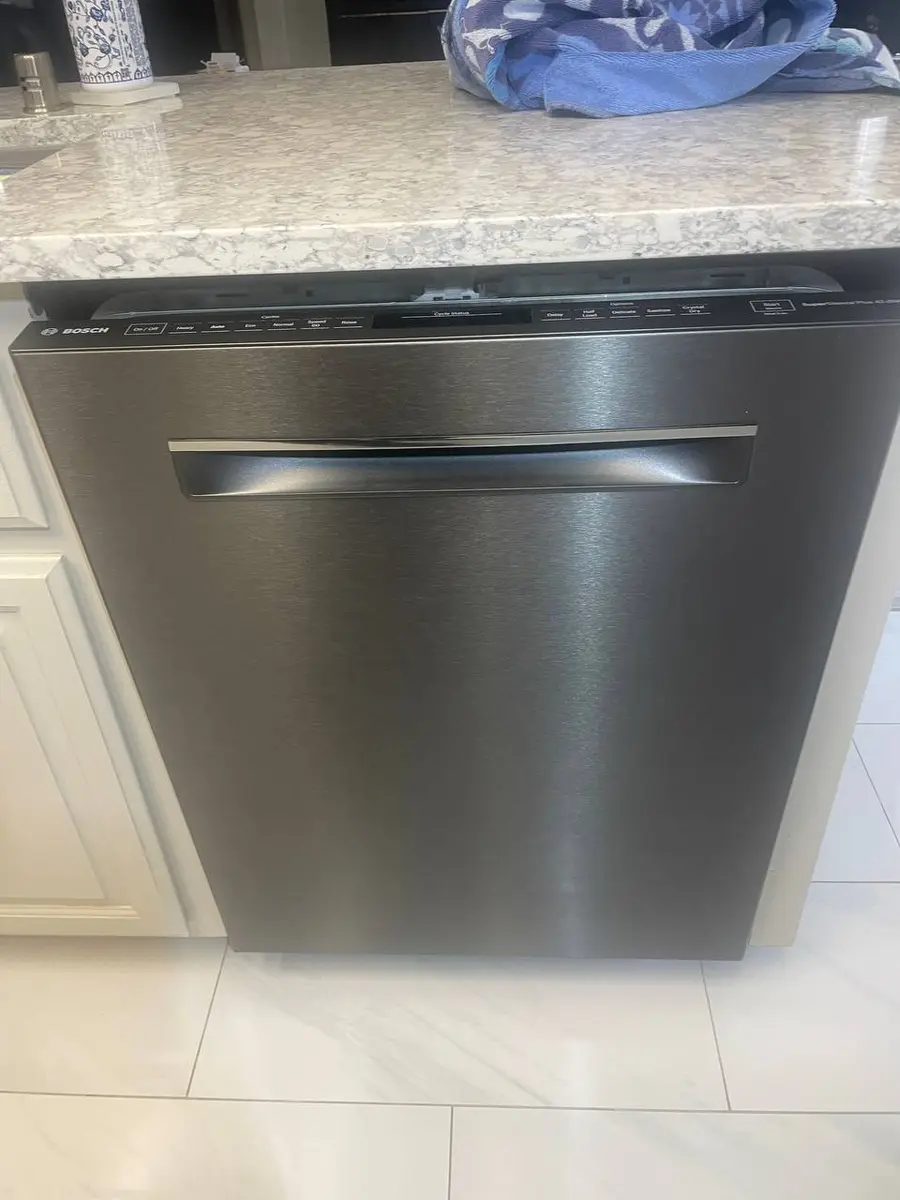
How to Replace a GE Dishwasher Heating Element
Replacing the heating element on a modern GE dishwasher is an advanced, 40-60 minute job because the heater is built into the sump under the tub, not exposed on the floor. When dishes stop drying, water never gets hot, sanitize fails, or a C3 code shows, you meter the element, break its sump seal, and fit the…
This covers the sump-mounted design on GE, GE Profile, and GE Cafe dishwashers (most models from 2012 on, the GDT and GDP series); older units with a visible horseshoe calrod on the tub floor follow a shorter procedure noted at the end.
Before you start#
| Item | Use |
|---|---|
| Phillips #2, 1/4-inch hex driver | Kick plate and brackets |
| Channel-lock pliers, multimeter | Retaining nut and testing |
| Towels and a bucket | Sump water |
Safety warning: Turn off the circuit breaker AND close the water supply valve. The heater connects to 120V. Residual water in the sump will leak when disconnecting the heater. Place towels and a bucket under the work area.
Do You Have the Right Tools?
Water pressure gauge ($60), spray arm tester, float switch multimeter ($85), and drain inspection camera. Our technician arrives with $3,000+ in professional tools — your diagnostic is free.
Licensed & Insured · 90-Day Warranty · Same-Day Service
Step-by-step#
1. Confirm the heater has failed#
With the breaker off, drop the kick plate (two 1/4-inch hex screws) and find the heater's two terminals under the sump. Disconnect both wires and meter across them — a healthy GE element reads 10-20 ohms, while OL means it is burned open. Then meter each terminal to the metal chassis: any reading other than infinite means the element is shorting to ground and tripping the breaker during the heat phase.
2. Prepare for disassembly#
Close the under-sink supply, open the door, and remove the lower rack, the lower spray arm (clip nut counterclockwise), and the filter (quarter-turn counterclockwise). Lay towels at the kick-plate opening for the sump water that will drain.
3. Disconnect the heater#
Working behind the kick plate, find the tubular element passing through the sump wall with a rubber gasket at each end. Pull the two spade terminals straight off, noting which wire goes where — position matters for the board's monitoring circuit even when the wires match colour.
4. Remove the element#
On bracket-mounted models, take out the two Phillips screws and slide the heater from the sump. On retaining-nut models, turn the large external nut counterclockwise with channel-locks and draw the element out from inside the tub or from below. Keep the bucket ready — water flows once the seal breaks.
5. Prep the mounting area#
Inspect the gasket seats in the sump wall and clean off scale or debris. If the old gaskets are cracked or flattened, use the new ones supplied with the replacement — a poor seal here leaks slowly under the unit.
6. Install the new element#
Feed the new heater through the sump wall in the original orientation with a gasket seated on each side of the wall. Bracket-mounted: slide it in and tighten the bracket screws evenly. Retaining-nut: thread the nut from outside and tighten snug plus a quarter turn, no more, so you do not crack the sump.
7. Reconnect and reassemble#
Push the spade connectors onto the correct terminals per your photo and tug to confirm they lock, then refit the filter (mesh first, cylinder clockwise), the lower spray arm, the rack, and the kick plate.
8. Test for leaks and heat#
Open the water, restore power, and run a Rinse Only cycle while watching underneath for any drip at the heater connections. If it stays dry, run a full Normal or Heavy cycle, feel that the wash water gets hot mid-cycle, and confirm dishes dry with no error code.
Older calrod element#
Pre-2012 GE units have a visible horseshoe element on the tub floor: pull the rack and spray arm, reach the terminal posts from behind the kick plate, remove the retaining nut from each post, push the element up and out from inside the tub, insert the new one with terminals protruding below, secure the nuts, and reconnect the wires.
Safety First — Know the Risks
Live 120V wiring in a wet environment is one of the most dangerous DIY scenarios. Water + electricity = serious shock risk. Our techs are licensed and insured — let them handle the risk.
Licensed & Insured · 90-Day Warranty · Same-Day Service
When to call a professional#
EasyBear technicians serving Sacramento and the Bay Area carry GE-specific diagnostic tools and replacement parts on every service call. Call one if the sump housing is cracked, if you cannot match the heater part number, if the element tests good but the dishwasher still will not heat (a control-board relay), or if water leaks from the sump and you cannot find the source.
Need Professional Help?#
This fix requires some technical skill. If you'd rather have a pro handle it, book a same-day repair.
Appliance Repair Technician & Diagnostics Specialist · 10 years experience
Electronics and diagnostics specialist with 10 years of experience in modern smart appliance repair, specializing in LG and Samsung.