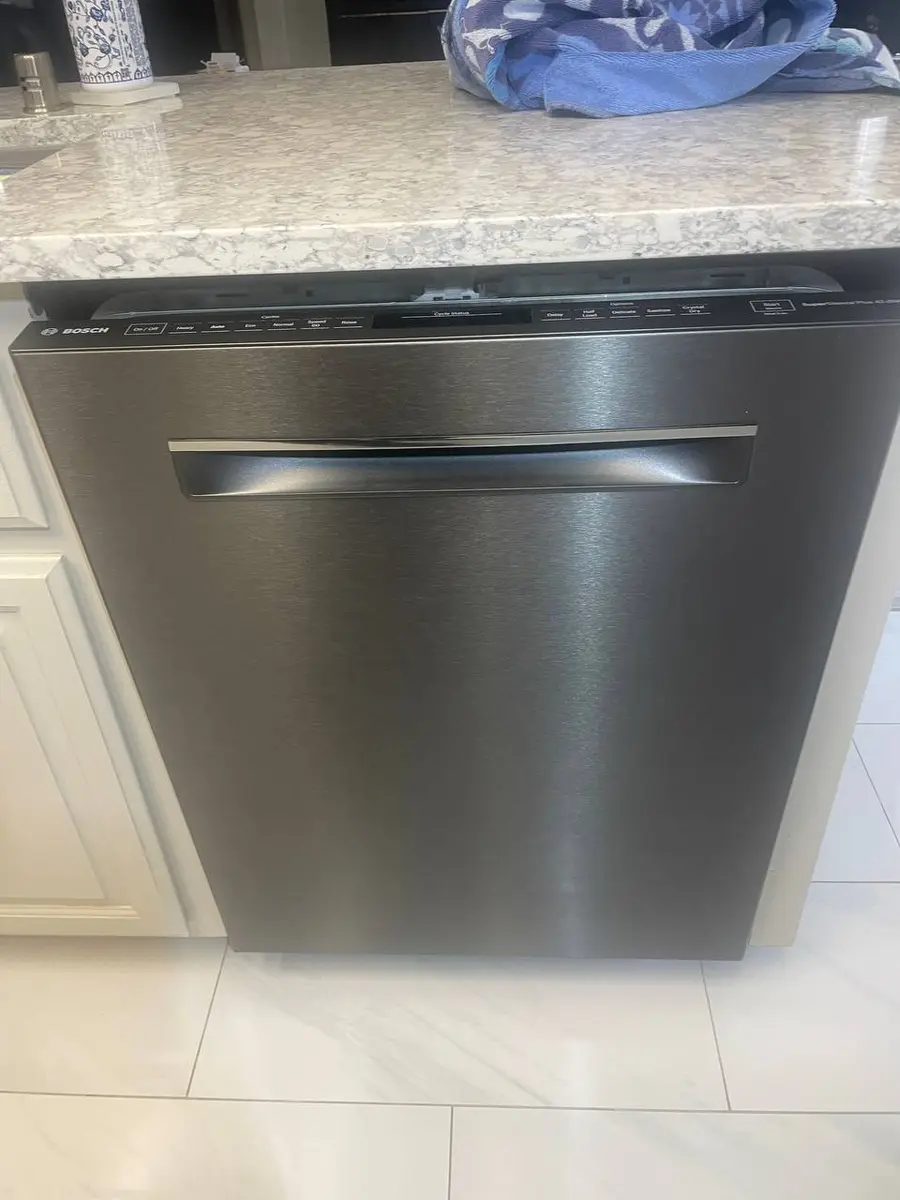
How to Install or Replace a GE Dishwasher: Complete Step-by-Step Guide
Replacing a dishwasher is one of the most accessible appliance installations for a handy homeowner. GE dishwashers follow standard US sizing (24 inches wide, 34 inches tall) and connect to standard plumbing and electrical. If you are replacing an existing dishwasher in the same cutout, the connections are already in place. This guide covers removal of the old unit and installation of a new GE dishwasher from unboxing to first wash cycle.
This applies to all GE, GE Profile, GE Cafe, and Hotpoint dishwashers. The installation process is identical across the product line.
Before You Start
- Tools needed: Adjustable wrench, Phillips #2 screwdriver, 1/4-inch hex driver, 5/16-inch nut driver, level, pliers, wire nuts, electrical tape, Teflon tape, towels, flashlight
- Parts needed: New dishwasher supply line (6ft braided stainless recommended), discharge hose if not included, wire nuts for electrical connection, hose clamps
- Time required: 60-90 minutes
- Difficulty: Intermediate
- Safety warning: Turn off the circuit breaker for the dishwasher circuit AND close the hot water supply valve under the sink before starting.
Do You Have the Right Tools?
Water pressure gauge ($60), spray arm tester, float switch multimeter ($85), and drain inspection camera. Our technician arrives with $15K+ in professional tools — your diagnostic is free.
Licensed & Insured · 90-Day Warranty · Same-Day Service
Step-by-Step Instructions
Step 1: Remove the Old Dishwasher
Turn off the breaker and close the supply valve. Open the old dishwasher door and remove the two mounting screws at the top that secure it to the countertop underside. Close the door.
Remove the kick plate. Disconnect the water supply line from the old inlet valve (wrench, counterclockwise). Have a towel ready for residual water. Disconnect the drain hose from under the sink (at the air gap, disposal, or drain tailpiece). Inside the junction box (right side behind kick plate), remove wire nuts and separate the house wires from the dishwasher wires.
Lower the front leveling legs by turning them clockwise (makes the unit shorter) until the dishwasher clears the countertop. Carefully slide the old unit straight out, guiding the supply line, drain hose, and power cord through the cabinet opening.
Step 2: Prepare the Cabinet Opening
With the old unit removed, inspect the cabinet opening. Verify:
- Floor is level side-to-side (use a level)
- No water damage on the subfloor (repair if soft/rotted)
- The supply valve turns off and on freely
- The electrical wire (or receptacle) reaches the new unit's connection point
- The drain connection (air gap, high-loop bracket) is in place
Clean any debris from the opening. If installing on a bare subfloor, you may want to place a section of sheet metal or a dishwasher floor protector to guard against leaks damaging the subfloor.
Step 3: Prepare the New GE Dishwasher
Lay the new GE dishwasher on its back on a blanket (protects the door finish). This gives access to the underside for connections before sliding into the cabinet.
Attach the new supply line to the inlet valve. Wrap 2-3 turns of Teflon tape on the valve's threaded inlet (clockwise when viewed from the thread end). Thread the supply line fitting on by hand, then snug with a wrench (quarter turn past hand-tight).
Attach the drain hose to the drain pump outlet if not pre-installed. Secure with the provided spring clamp.
Make the electrical connection in the junction box (right side): match black to black, white to white, green/bare to green (ground). Secure each connection with a wire nut. Tug each connection to verify it holds. Fold the wires into the junction box and replace the cover plate.
Step 4: Slide the Dishwasher Into the Cabinet
Stand the dishwasher upright. Feed the supply line, drain hose, and power cord through the appropriate openings in the cabinet wall (usually a hole drilled in the side of the sink cabinet).
Slide the dishwasher slowly into the opening, guiding hoses and lines to avoid pinching. Check underneath periodically to ensure nothing catches. Push the unit all the way back until the tub flange sits flush with the cabinet face.
Step 5: Level the Dishwasher
GE dishwashers have adjustable front legs and rear rollers. Using a level placed on the door sill (inside, across the bottom of the tub opening):
- Turn the front legs counterclockwise to raise, clockwise to lower
- Adjust until level side-to-side
- The unit should be perfectly level or SLIGHTLY tilted back (prevents water from running toward the door)
The unit must be level for proper draining and to prevent door leaks. Check that the door opens and closes freely without rubbing the adjacent cabinet.
Step 6: Connect the Water Supply
Under the sink, connect the supply line to the hot water supply valve. Apply Teflon tape to the valve threads. Thread the fitting by hand, then tighten with a wrench.
Open the supply valve slowly. Check for leaks at both ends of the supply line (under sink and at the inlet valve behind the kick plate). Tighten if any drips appear.
Step 7: Connect the Drain Hose
Route the drain hose under the sink. If you have an air gap, connect the hose to the air gap inlet. If using a high-loop installation, secure the hose at the highest point under the countertop with a bracket or tie, then bring it down to the garbage disposal inlet.
Connect to the disposal with a hose clamp. If connecting to a new disposal, remember to knock out the dishwasher inlet plug inside the disposal first (insert a screwdriver and tap with a hammer, then fish the plug out from inside).
Step 8: Secure the Dishwasher and Install Kick Plate
Open the door. Drive the two mounting screws through the top mounting brackets into the underside of the countertop (prevents the dishwasher from tipping when the door is loaded with dishes). On stone countertops, use the side-mounting brackets (included with most GE models) that attach to the adjacent cabinet walls instead.
Snap or screw the kick plate into position.
Step 9: First Run and Leak Check
Restore power at the circuit breaker. Open the dishwasher door and verify the unit powers on (display illuminates or status lights activate). Close the door and run a Normal cycle.
During the first few minutes (fill phase), check under the sink for leaks at the supply line and drain connections. Check behind the kick plate for leaks at the inlet valve. Check the floor in front for door gasket leaks.
Let the full cycle complete. Check again for any evidence of water after the cycle ends. The first cycle may be slightly noisier than subsequent cycles as components seat and lubricate.
Step 10: Configure SmartHQ (WiFi Models)
For GE dishwashers with WiFi connectivity: after the first successful cycle, hold the WiFi button on the control panel for 3 seconds until the indicator blinks. Open the GE SmartHQ app on your phone and follow the pairing instructions. The dishwasher connects on 2.4GHz WiFi only (not 5GHz). SmartHQ provides cycle notifications, diagnostics, and maintenance reminders.
Cost Comparison: DIY vs Professional Installation
| DIY | Professional | |
|---|---|---|
| Parts/supplies | $15-$40 (hoses, fittings) | Included |
| Labor | $0 | $150-$300 |
| Time | 1-1.5h | 1h |
| Risk | Moderate (plumbing leaks if fittings not tight) | Warranty on install |
Safety First — Know the Risks
Live 120V wiring in a wet environment is one of the most dangerous DIY scenarios. Water + electricity = serious shock risk. Our techs are licensed and insured — let them handle the risk.
Licensed & Insured · 90-Day Warranty · Same-Day Service
When to Call a Professional
- You need to run a new electrical circuit (no existing dishwasher connection)
- The water supply valve is seized or leaking and needs replacement
- The cabinet opening needs modification (non-standard width)
- You are not comfortable making hardwired electrical connections
- The floor under the old dishwasher is water-damaged and needs subfloor repair
Same-Day Appliance Repair
Fixed or It's Free
$89 → $0 Service Call & Diagnosis — offer ends May 25
Need Professional Help?
The Real Cost of DIY
Average DIY attempt: $150-400 in tools you may use once, plus the risk of further damage. Our diagnostic visit costs $0 — we find the problem and give you an honest quote.
Licensed & Insured · 90-Day Warranty · Same-Day Service
FAQ
Q: Will a new GE dishwasher fit in my existing opening without modifications? A: If your current opening fits a standard 24-inch dishwasher, any new GE dishwasher will fit. GE guarantees their built-in models match standard US cutout dimensions. The adjustable legs accommodate countertop heights from 34 to 35 inches. Measure your opening width and height to confirm.
Q: Do I need to use the GE-supplied drain hose or can I reuse my old one? A: GE recommends using the new drain hose included with the dishwasher. Old drain hoses develop internal buildup and may not seal properly on the new pump outlet. They are also sized specifically for the new model's drain pump connection diameter.
Q: Can I connect my GE dishwasher to a cold water line instead of hot? A: GE strongly recommends hot water (120F) connection. Cold water connection forces the internal heater to work much harder and longer to reach wash temperature, extending cycle times significantly and increasing energy use. Always connect to the hot water supply.
Q: How do I dispose of my old dishwasher? A: Many new GE dishwasher delivery services offer haul-away for an additional fee. Alternatively, check your local waste management for bulk appliance pickup days. The old unit can also be taken to a metal recycling facility. Remove any standing water before moving.
Need a certified technician? Book same-day repair →