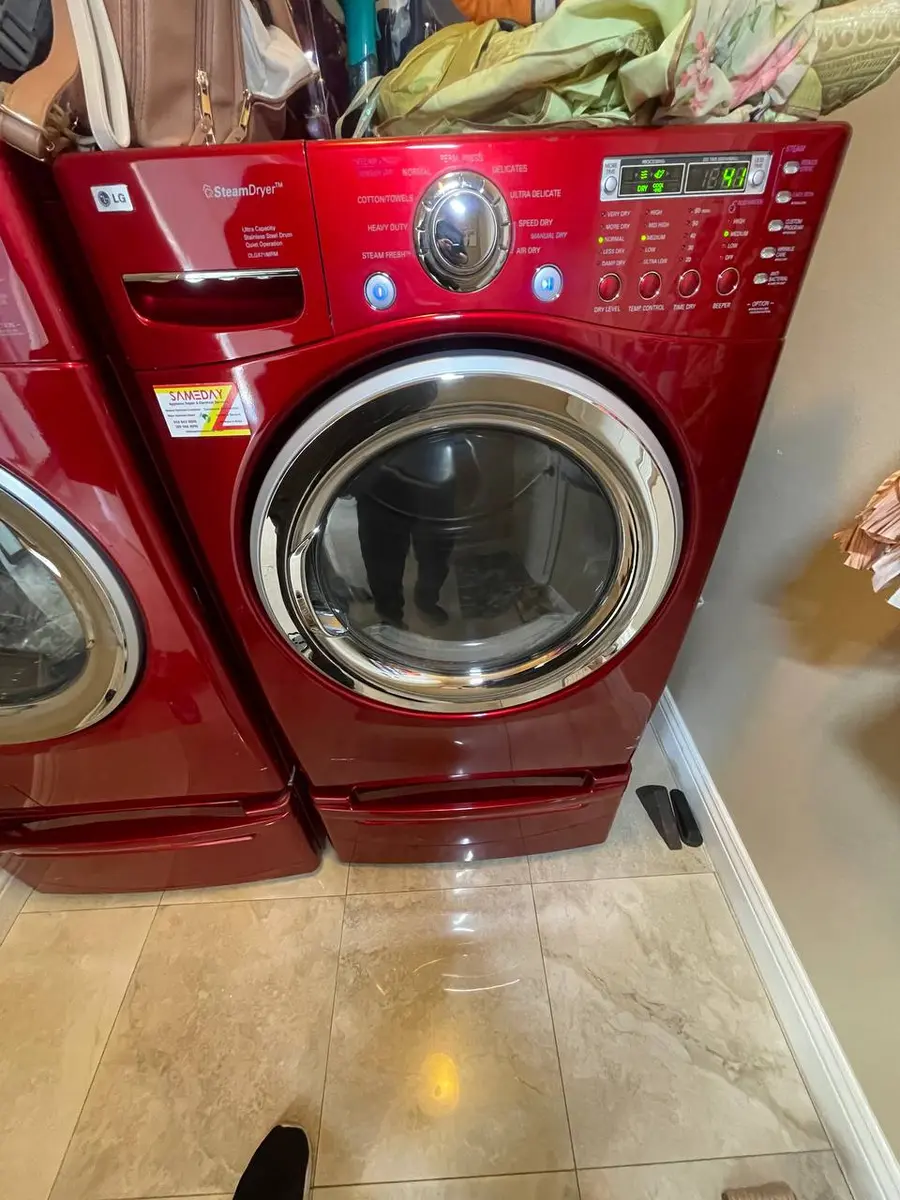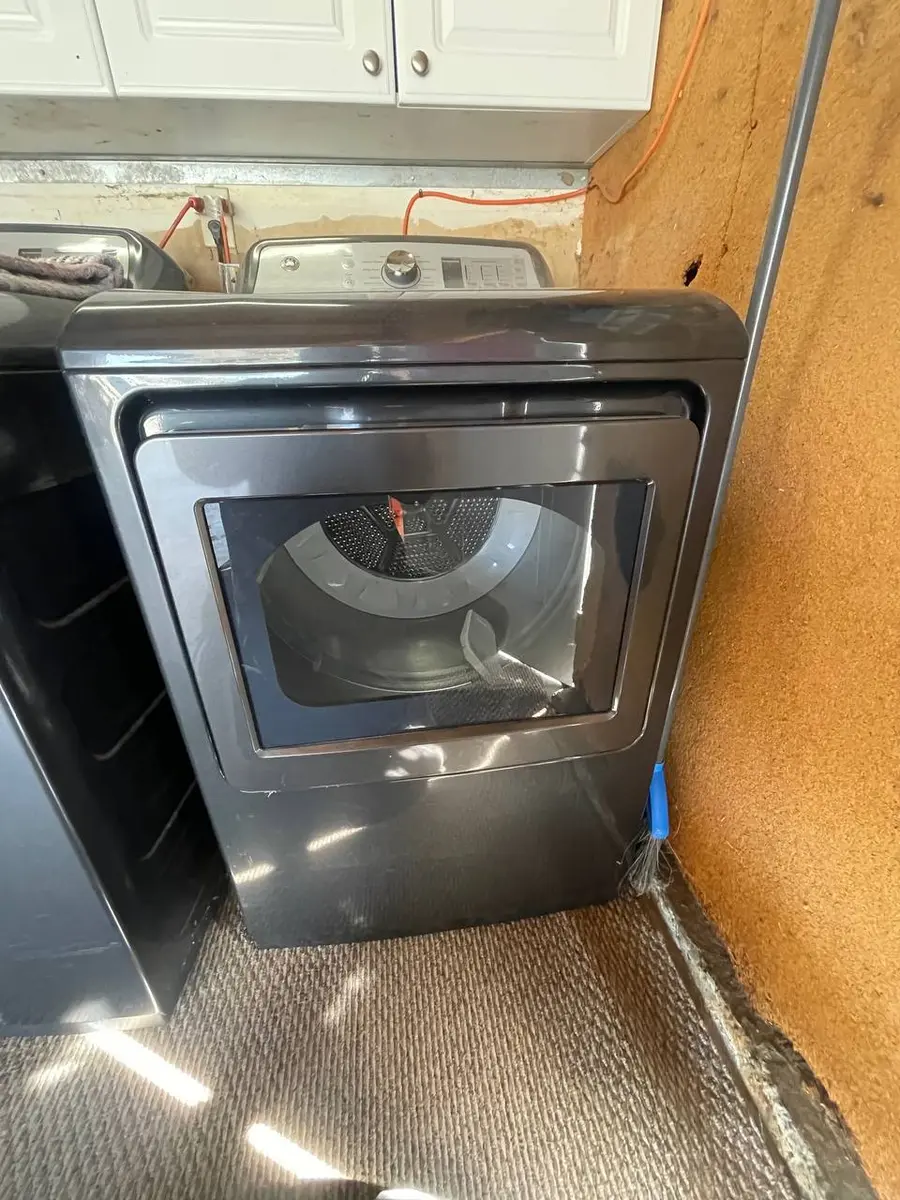
Frigidaire Electric Dryer: Replace Power Cord
Swapping a Frigidaire electric dryer's power cord to match a 3-prong or 4-prong outlet is a 15 to 20 minute beginner job at the rear terminal block — but the neutral-to-ground bonding strap must be set correctly for the cord type, or the frame becomes a shock hazard.
Which cord, and why the strap matters#
Electrical code changed in 1996, so older homes have 3-prong outlets (NEMA 10-30) and newer ones have 4-prong (NEMA 14-30) with a separate ground. Frigidaire's terminal block takes either, but the bonding strap that ties neutral to the frame has to be present on a 3-prong cord and removed on a 4-prong cord — get that backward and the cabinet can go live.
Safety warning: Ensure the dryer is unplugged and the breaker is OFF before any work. Working on the terminal block with power present is immediately lethal — 240V at 30 amps.
What you need#
| Category | Detail |
|---|---|
| Tools | Phillips #2 screwdriver, quarter-inch nut driver or wrench, flat-blade screwdriver |
| Part | Dryer cord to match your outlet — 3-prong NEMA 10-30 or 4-prong NEMA 14-30, 30-amp, 10-gauge |
| Time and level | 15 to 20 minutes, Beginner |
Do You Have the Right Tools?
Gas leak detector ($130), thermal fuse tester ($95), belt tension gauge, and vent inspection camera ($180). Our technician arrives with $3,000+ in professional tools — your diagnostic is free.
Licensed & Insured · 90-Day Warranty · Same-Day Service
Step by step#
1 - Open the terminal block. With the dryer unplugged and the breaker off, remove the terminal-block cover on the lower rear, two to four Phillips screws. Inside are three terminals in a row, often with a fourth ground screw nearby.
2 - Disconnect the old cord. Loosen the terminal screws and free each wire, noting the layout — left is L1, center is neutral, right is L2, and a 4-prong cord's green wire lands on the ground screw. Release the strain-relief clamp.
3 - Set the bonding strap. For a 4-prong cord, remove the strap entirely, since the separate green ground now grounds the frame. For a 3-prong cord, install the strap so it ties the center neutral terminal to the frame ground, which is code-compliant on existing 3-prong outlets.
4 - Connect the new cord. Fit the strain-relief clamp, feed the cord in, and land the wires: both hots to L1 and L2, the white neutral to the center terminal, and, on a 4-prong cord, the green ground to the frame screw. Route the wires so none crosses a sharp cabinet edge, and keep the hot legs clear of the neutral terminal. Tighten each terminal so no wire pulls free.
5 - Secure and test. Snug the strain relief so the cord is held but the jacket is not crushed, refit the cover, restore the breaker, plug in, and run a brief timed-dry, watching for any burning smell or a tripped breaker. Give each wire a firm tug at the block before refitting the cover, since a terminal that loosens later will arc and overheat.
If something is wrong#
- Breaker trips at once: a hot wire is touching the cabinet or a terminal is loose and arcing — kill power and inspect.
- Runs but no heat: losing one leg lets the motor run on 120V while the element, needing the full 240V, stays cold; confirm both breaker poles are on.
- A tingle on the frame: the bonding strap is set wrong for the cord — 4-prong must have it out, 3-prong must have it in.
- Cord jacket pinched at the clamp: back off the strain relief and reseat the cord so the clamp grips the outer jacket, not the bare conductors.
Safety First — Know the Risks
Gas dryers carry carbon monoxide and explosion risk. Even electric dryers involve 240V circuits that can deliver a fatal shock. Our techs are licensed and insured — let them handle the risk.
Licensed & Insured · 90-Day Warranty · Same-Day Service
When to call a professional#
Get an electrician if the outlet type itself needs changing, and a technician if the terminal screws are stripped or the internal wiring from the block to the element shows heat damage.
Appliance Repair Technician & Diagnostics Specialist · 10 years experience
Electronics and diagnostics specialist with 10 years of experience in modern smart appliance repair, specializing in LG and Samsung.