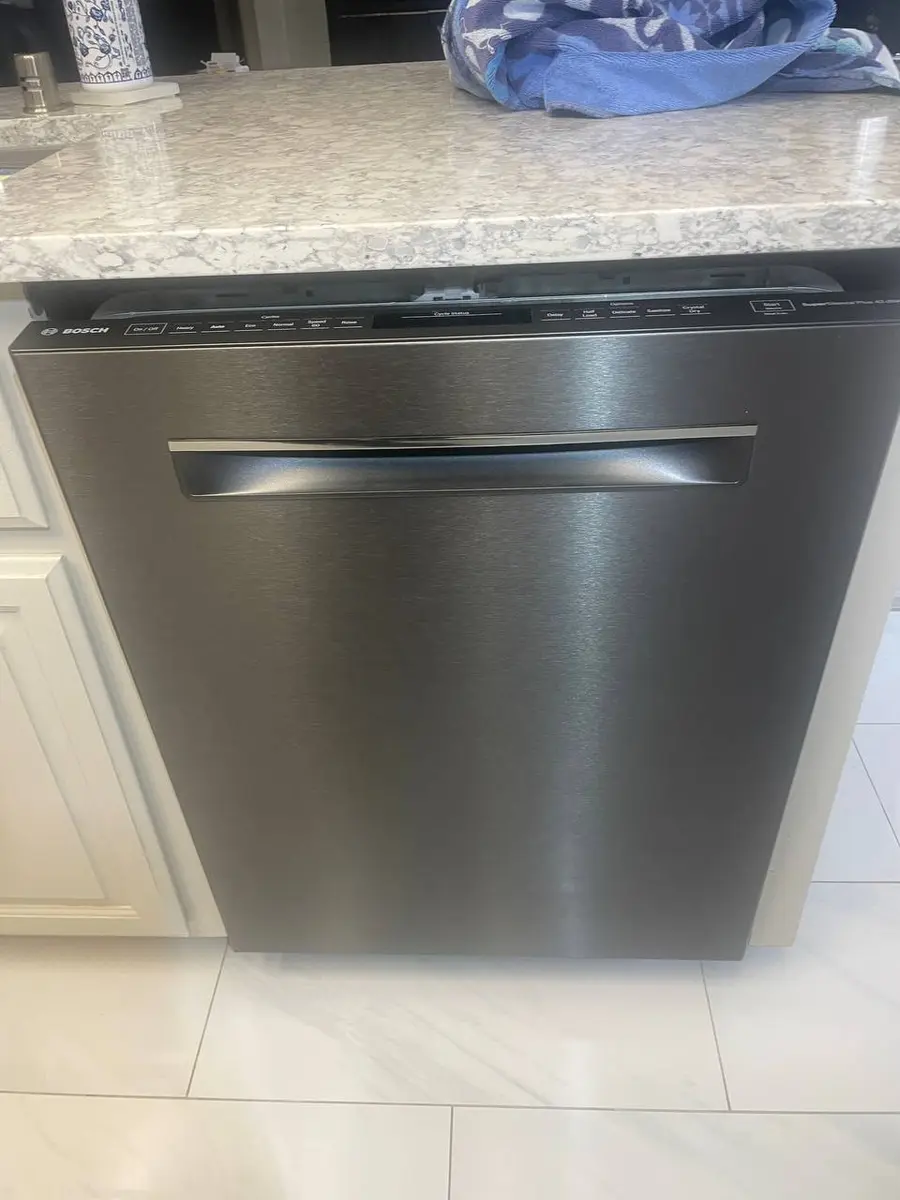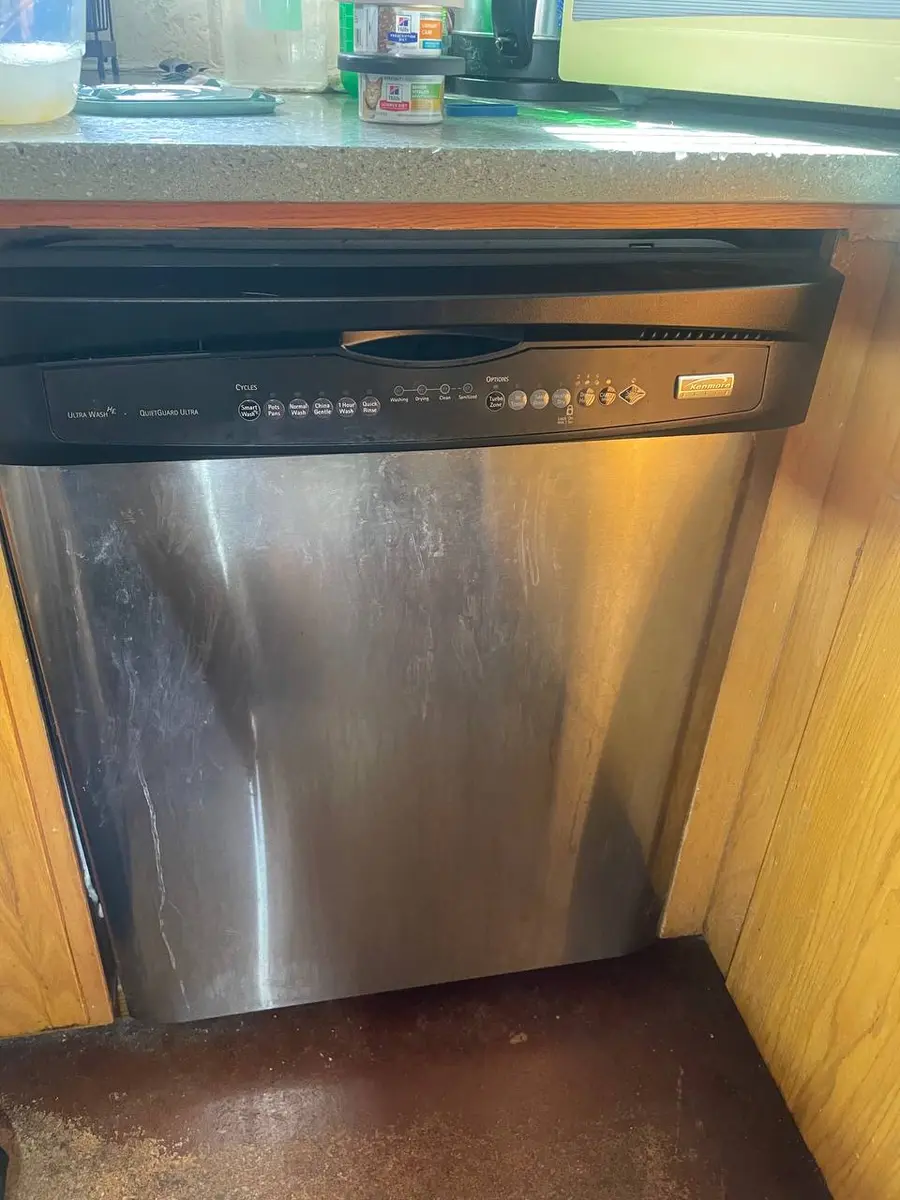
How to Repair a Whirlpool Dishwasher That Won't Start
A Whirlpool dishwasher that does nothing when you press Start is one of the most common service calls. The cause is almost always one of four components: the door latch (W10862259), the thermal fuse, the control board (W11305310), or a simple power supply problem. This guide walks you through systematic diagnosis from simplest to most complex, so you can identify the failure without replacing parts unnecessarily.
This applies to Whirlpool WDT and WDF series dishwashers with electronic touch controls. Older models with mechanical timers have a different troubleshooting path.
Before You Start
- Tools needed: Torx T20 driver, multimeter, non-contact voltage tester, needle-nose pliers
- Parts needed: Determined by diagnosis (see individual sections)
- Time required: 15-20 minutes for diagnosis, 20-40 minutes for repair
- Difficulty: Intermediate
- Safety warning: Some diagnostic steps require checking for voltage with power on. Use a non-contact voltage tester first. For any component replacement, disconnect power at the circuit breaker before touching wiring.
Do You Have the Right Tools?
Water pressure gauge ($60), spray arm tester, float switch multimeter ($85), and drain inspection camera. Our technician arrives with $15K+ in professional tools — your diagnostic is free.
Licensed & Insured · 90-Day Warranty · Same-Day Service
Step-by-Step Instructions
Step 1: Verify Power Supply to the Dishwasher
Before assuming a component failure, confirm the dishwasher is receiving power:
- Check the circuit breaker — is it tripped? Whirlpool dishwashers draw 10-12 amps; a worn breaker can trip intermittently
- If plug-in: check the outlet under the sink with a voltage tester or plug in a lamp
- If hardwired: use a non-contact voltage tester on the junction box wires (kick plate must be removed — two 1/4" hex screws)
- Check for a GFCI outlet or GFCI breaker that may have tripped independently
If there is no power reaching the unit, the problem is upstream (breaker, outlet, or wiring) and not the dishwasher itself.
Step 2: Check the Door Latch Engagement
Whirlpool dishwashers will not start unless the control board detects a locked door signal from the door latch micro-switch. Close the door firmly and listen for a click. If you do not hear or feel the latch engage:
- Check if anything is obstructing the latch striker plate (food debris, a utensil poking out)
- Look at the latch mechanism through the door opening — is the latch arm moving into position?
- The error code for this failure is F5E1 — if your display shows this code, the latch micro-switch is your target
Step 3: Test the Door Latch Micro-Switch
To confirm the door latch (W10862259) is the failure point:
- Disconnect power at the breaker
- Open the door and remove the ~8 Torx T20 screws around the inner door panel
- Separate the inner panel from the outer door
- Locate the latch assembly at the top center of the door
- Disconnect the wire connector from the latch
- Set your multimeter to continuity mode
- Press the latch arm to simulate door closure — the switch should show continuity
- Release — should show open circuit
- If the switch does not change state when actuated, the latch assembly needs replacement
Replacement: 2 mounting screws, swap connector to new latch. Parts: $25-$40. Time: 20 minutes.
Step 4: Locate and Test the Thermal Fuse
The thermal fuse is a safety device that blows if the dishwasher overheats. It cuts all power to the control board — no lights, no response to buttons, completely dead appearance. Location varies by model but is typically:
- On the control board housing bracket
- On or near the heating element terminal block
- Accessible from the kick plate area (bottom) or inside the door
- Disconnect power at the breaker
- Remove the kick plate or inner door panel (depending on your model's fuse location)
- The thermal fuse is a small cylindrical or rectangular component with two wires
- Disconnect one wire and test continuity across the fuse — should read near zero ohms
- Open circuit (OL on multimeter) = blown fuse
Important: A blown thermal fuse means something caused overheating. Simply replacing the fuse without finding the root cause (failed thermistor, shorted heater element, blocked vent) will result in the new fuse blowing again. Check the heating element resistance (should be 10-30 ohms between its two terminals) before replacing the fuse.
Fuse replacement: $8-$15. Time: 15 minutes. But root cause diagnosis may add 30 minutes.
Step 5: Inspect the Control Board for Visible Damage
If power is reaching the unit and the door latch and thermal fuse are good, the control board is suspect:
- Disconnect power
- Access the control board (inside door at top — inner door panel removal required)
- Visually inspect the board for: burnt components (darkened areas on the PCB), swollen capacitors (tops should be flat, not bulging), corroded or arced relay contacts, water damage (white residue or green corrosion)
- Smell the board — a burnt electronics smell confirms component failure even if not visible
If the board shows visible damage, it needs replacement. The part number is model-specific — W11305310 is common on newer WDT models, but always verify your exact model number on the door-frame label.
Board replacement: $150-$300. Time: 30-45 minutes.
Step 6: Test the Control Board Relay (Advanced)
If the board looks physically fine, the pump relay may have burned open (common if the drain pump W10876537 seized). With power disconnected:
- Locate the relay on the board (small rectangular component with solder connections)
- These are not easily field-replaceable — if you suspect a relay failure, the board needs professional-level soldering or full replacement
- As a shortcut diagnostic: apply power and listen for relay clicks when pressing Start. No click = relay or board driver failure
Step 7: Check the Control Panel Ribbon Cable
On Whirlpool dishwashers, the user interface (buttons/display) connects to the main control board via a ribbon cable that runs through the top of the door. If this cable is loose, partially seated, or damaged:
- The buttons may not respond at all
- Some buttons may work while others do not
- The display may be blank even though the board has power
Reseating the ribbon cable (both ends) resolves intermittent no-start conditions. Access requires opening the top console area of the door.
Step 8: Verify and Fix — Run a Test Cycle
After any repair, restore power and verify:
- Panel lights should illuminate when you open and close the door
- Buttons should respond to presses (beep or display acknowledgment)
- Press Start — the door should lock (audible click), followed by the fill valve activating (hissing sound)
- If the dishwasher starts and runs for at least 5 minutes without error codes, your repair is successful
- Monitor the first full cycle to completion
Decision Flowchart
| Symptom | Most Likely Cause | Part Number | Cost |
|---|---|---|---|
| Completely dead — no lights, no sounds | Thermal fuse, breaker, or power wiring | Fuse varies by model | $8-$15 |
| Lights on but Start does nothing | Door latch micro-switch | W10862259 | $25-$40 |
| F5E1 displayed | Door latch | W10862259 | $25-$40 |
| Lights flicker or partial display | Ribbon cable or UI board | Cable or W11305310 | $5-$300 |
| All lights on, buttons beep, but no cycle starts | Control board relay failure | W11305310 | $150-$300 |
| Intermittent — works sometimes | Loose ribbon cable or failing door switch | — | $0-$40 |
Safety First — Know the Risks
Live 120V wiring in a wet environment is one of the most dangerous DIY scenarios. Water + electricity = serious shock risk. Our techs are licensed and insured — let them handle the risk.
Licensed & Insured · 90-Day Warranty · Same-Day Service
When to Call a Professional
- The control board needs replacement and you cannot confirm the correct part number for your model
- You suspect a power wiring issue (burning smell from junction box, tripping breaker repeatedly)
- The thermal fuse has blown more than once — there is a root cause (shorted heater, failed thermistor) that requires testing under power
- You are not comfortable using a multimeter on live circuits
Same-Day Appliance Repair
Fixed or It's Free
$89 → $0 Service Call & Diagnosis — offer ends May 25
Cost Comparison: DIY vs Professional
| DIY | Professional | |
|---|---|---|
| Parts | $8-$300 depending on failure | Same |
| Labor | $0 | $120-$250 |
| Diagnosis | Free (this guide) | Included in service call |
| Risk | Low for latch/fuse; moderate for board work | Warranty included |
The Real Cost of DIY
Average DIY attempt: $150-400 in tools you may use once, plus the risk of further damage. Our diagnostic visit costs $0 — we find the problem and give you an honest quote.
Licensed & Insured · 90-Day Warranty · Same-Day Service
Need Professional Help?
FAQ
Q: My Whirlpool dishwasher is completely dead — no lights at all. Is the control board dead? A: Not necessarily. Completely dead (no lights, no response) most often indicates no power reaching the unit. Check the circuit breaker, GFCI outlet, and thermal fuse before suspecting the control board. A failed board usually still shows some sign of life (partial display, buttons respond but cycle won't start).
Q: The Start button blinks but the cycle never begins. What does this mean? A: A blinking Start button on Whirlpool dishwashers usually means the door latch is not engaging. The control board is waiting for the door lock signal before proceeding. Press the door firmly closed and listen for the latch click. If it clicks but the light still blinks, the latch micro-switch has failed internally.
Q: Can I replace just the thermal fuse without finding the root cause? A: You can, but the new fuse will likely blow again within days or weeks if the underlying cause (shorted heating element, failed thermistor, or blocked drying vent) is not addressed. Thermal fuses blow for a reason — they are protecting the dishwasher from fire. Always test the heating element resistance before closing up.
Q: How do I know if it is the main control board or the user interface board? A: On Whirlpool dishwashers, these are often the same board — the main board handles both control logic and button input. On some premium models, there is a separate UI board in the front panel connected via ribbon cable. If buttons do not respond at all, try reseating the ribbon cable first (free fix). If that does not help and you have power at the main board, the board itself has failed.
Need a certified technician? Book same-day repair →