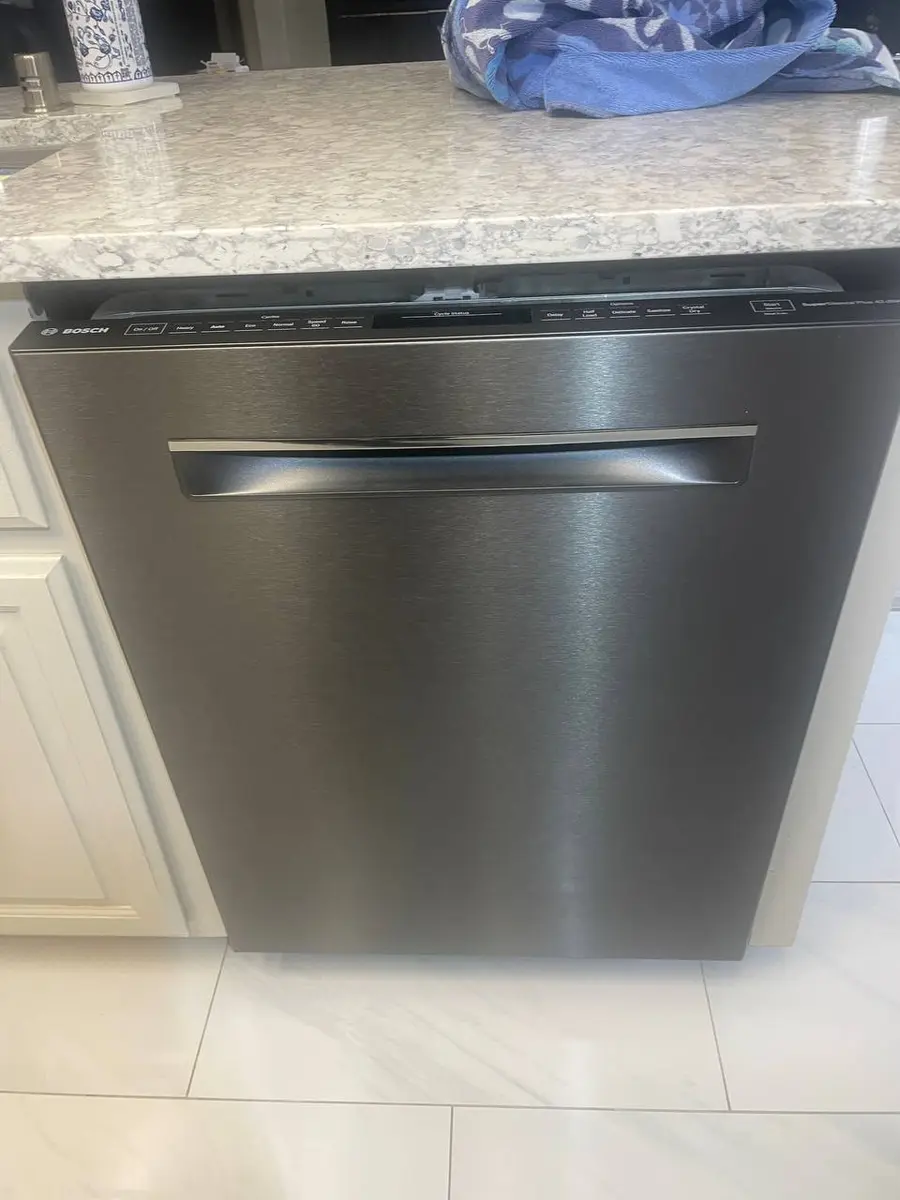
How to Fix a Maytag Dishwasher Not Cleaning Dishes Properly
When your Maytag dishwasher leaves food residue, cloudy glasses, or gritty deposits on dishes, the problem is almost always related to water delivery, temperature, or filtration rather than a major component failure. Maytag dishwashers are designed around the PowerBlast cycle and Dual Power Filtration system to deliver superior cleaning performance. When that performance degrades, the root cause typically traces back to maintenance items you can address without replacing parts.
This guide covers systematic diagnosis of poor cleaning performance on Maytag MDB-series dishwashers. The approach works for all current models regardless of whether they have the PowerBlast option, though PowerBlast-equipped units have additional diagnostic considerations covered in the relevant steps.
Before You Start
- Tools needed: Torx T20 driver, wooden toothpick or bamboo skewer, soft brush, thermometer (candy/meat type works)
- Parts needed: Usually none (maintenance procedure). Possibly spray arm ($20-$40) or inlet valve ($25-$60) if damaged
- Time required: 30-45 minutes for diagnosis and correction
- Difficulty: Beginner to Intermediate
- Safety warning: No electrical disconnection needed for most cleaning performance diagnosis. If you need to access the inlet valve, disconnect power at the breaker first.
Do You Have the Right Tools?
Water pressure gauge ($60), spray arm tester, float switch multimeter ($85), and drain inspection camera. Our technician arrives with $15K+ in professional tools — your diagnostic is free.
Licensed & Insured · 90-Day Warranty · Same-Day Service
Step-by-Step Instructions
Step 1: Verify water temperature reaching the dishwasher
Maytag dishwashers require incoming water at 120 degrees F (49 degrees C) for optimal detergent activation and grease removal. The PowerBlast cycle boosts temperature further during its intensive phase, but it relies on sufficiently hot incoming water. Test by running the hot water at the kitchen sink faucet until it reaches maximum temperature, then hold a thermometer under the stream. If temperature is below 115 degrees F, adjust your water heater. A dishwasher receiving lukewarm water cannot clean effectively regardless of cycle selection or detergent amount. Run the hot water at the sink for 30-60 seconds before starting the dishwasher to ensure hot water is immediately available at the inlet.
Step 2: Inspect and clear all spray arm nozzles
Remove both spray arms and the top spray nozzle (if present on your model). The lower spray arm lifts off its center post. The upper spray arm unclips from the underside of the top rack. Examine every hole under bright light. Maytag spray arms have precisely sized nozzles that create specific spray patterns for maximum coverage. Even one or two blocked holes reduce cleaning pressure in that zone. Use a wooden toothpick to clear each hole, pushing debris inward where it will flush out during the next cycle. For heavy mineral buildup in hard-water areas, soak the spray arms in undiluted white vinegar for 30 minutes. Spin each arm on its post after reinstalling to confirm free rotation. A spray arm that does not spin freely due to food debris on its post will not distribute water properly.
Step 3: Clean the Dual Power Filtration system
Remove and thoroughly clean all filter components. Twist the cylindrical upper filter counter-clockwise and lift out. Remove the flat fine-mesh lower filter beneath it. If your model has the secondary ring filter around the chopper housing, remove that as well. Rinse all components under running water and scrub with a soft brush and dish soap. A clogged filter restricts water recirculation. The circulation pump draws water through the filter and pushes it through the spray arms. If the filter is blocked, spray pressure drops dramatically even though the pump is running at full speed. Reinstall filters after cleaning: flat mesh first, secondary ring, then cylindrical filter twisted clockwise until locked.
Step 4: Check the chopper blade and sump area
With filters removed, inspect the stainless steel chopper blade visible in the sump. Verify it spins freely by pushing it gently with a wooden utensil (never your fingers). If the chopper is jammed by a foreign object, it cannot grind food waste, leading to debris recirculating onto clean dishes. Remove any obstructions. Also check the sump floor and walls for grease buildup. Heavy grease accumulation reduces the effective volume of wash water available to the pump. Wipe the sump area with a cloth dampened with vinegar.
Step 5: Evaluate detergent and loading patterns
Poor cleaning often relates to detergent rather than machine failure. Check these factors: Are you using fresh detergent (pods and powder lose effectiveness after 3-4 months once opened)? Is the dispenser opening fully during the cycle (test by running a cycle with the dispenser loaded and checking if the door opened after completion)? Are dishes blocking the spray arm rotation? On Maytag dishwashers, the lower spray arm has a wide sweep. Tall items in the lower rack or large cutting boards can block its rotation entirely. Load with the dirty side facing the center spray and ensure no item extends below the rack to interfere with the spray arm path.
Step 6: Test the water inlet valve flow rate
If water temperature and spray arms are fine but cleaning is still poor, the dishwasher may not be filling with enough water. The inlet valve controls water flow into the tub. Over time, the inlet valve screen accumulates mineral deposits that restrict flow. To test: start a cycle and listen for the fill. It should run for approximately 90-120 seconds. If fill time is shorter, or if you hear the valve clicking rapidly, flow is restricted. To clean the screen: disconnect power at the breaker, turn off the water supply under the sink, remove the lower access panel (two 1/4-inch hex screws), disconnect the water supply line from the inlet valve (left side behind the panel), and clean the inlet screen with a brush and vinegar. Reassemble, restore water and power, and test.
Step 7: Run PowerBlast diagnostic cycle
If your model has the PowerBlast cycle, run it empty to evaluate spray performance. Place a coffee mug upside down on the top rack. After the cycle, check whether the inside of the mug has water (indicating proper spray reach to the top rack). Check the tub floor for any remaining grit or debris after the cycle. PowerBlast operates at higher pressure and temperature than Normal, so if cleaning is poor even on PowerBlast, the root cause is upstream: low water temperature, insufficient fill volume, or blocked spray arms. If Normal cycle is poor but PowerBlast cleans well, your issue is marginal and the Normal cycle simply cannot compensate. This often means partially blocked spray arms or slightly low water temperature that PowerBlast overcomes with its boosted performance.
Step 8: Verify drain between cycles
A dishwasher that does not drain completely between wash and rinse phases will redeposit food particles on clean dishes. Listen during the cycle for the drain pump engaging between phases (a distinct low hum). If you find food residue specifically during the rinse phase, the mid-cycle drain may be failing. Enter diagnostic mode (press three buttons in sequence 1-2-3, 1-2-3, 1-2-3 within 8 seconds) to run each component individually. The diagnostic will cycle the drain pump during its sequence. If the pump does not engage or sounds labored, inspect it per the drain pump repair guide.
Common Cleaning Problems and Specific Causes
| Symptom | Most Likely Cause |
|---|---|
| White film on glasses | Hard water deposits. Use rinse aid, or increase rinse aid dispenser setting |
| Gritty residue on flatware | Clogged filter allowing debris recirculation |
| Food stuck in same position | Spray arm blocked or not spinning (check for obstruction) |
| Top rack items dirty, bottom clean | Upper spray arm clogged or not receiving water |
| Everything clean except plastics | Normal. Plastic does not retain heat for drying, and water sheets off differently |
| Detergent pod not dissolving | Dispenser door blocked by a dish, or water temperature too low |
Safety First — Know the Risks
Live 120V wiring in a wet environment is one of the most dangerous DIY scenarios. Water + electricity = serious shock risk. Our techs are licensed and insured — let them handle the risk.
Licensed & Insured · 90-Day Warranty · Same-Day Service
When to Call a Professional
Contact a professional if:
- The circulation pump makes a loud grinding or squealing noise, indicating bearing failure
- Diagnostic mode shows F2E1 or F2E2 codes (sensor failures affecting water fill)
- The chopper blade is damaged or missing pieces (covered under Maytag's 10-year limited warranty)
- You have verified all maintenance items but cleaning performance continues to degrade, suggesting an internal pump impeller wear issue
Same-Day Appliance Repair
Fixed or It's Free
$89 → $0 Service Call & Diagnosis — offer ends May 25
Cost Comparison: DIY vs Professional
| DIY | Professional | |
|---|---|---|
| Parts | $0 (usually maintenance) | $0-$60 |
| Labor | $0 | $89-$200 |
| Time | 30-45 min | 30 min |
| Risk | None for maintenance tasks | Warranty on diagnosis |
The Real Cost of DIY
Average DIY attempt: $150-400 in tools you may use once, plus the risk of further damage. Our diagnostic visit costs $0 — we find the problem and give you an honest quote.
Licensed & Insured · 90-Day Warranty · Same-Day Service
Need Professional Help?
FAQ
Q: Why does my Maytag dishwasher clean well on PowerBlast but poorly on Normal cycle? A: PowerBlast uses higher water pressure and elevated temperature that compensates for marginal conditions. If Normal struggles but PowerBlast succeeds, you likely have a partially blocked spray arm, slightly low incoming water temperature (below 120F), or a filter that needs cleaning. Address these maintenance items and Normal cycle performance should return to expected levels.
Q: Should I pre-rinse dishes before loading my Maytag dishwasher? A: No. Maytag dishwashers with the Dual Power Filtration system and stainless steel chopper are designed to handle food soil. Pre-rinsing removes the soil that the dishwasher's sensors use to calibrate water usage and cycle intensity. Scrape large pieces into the trash but do not rinse. The chopper grinds remaining food waste so it drains away rather than redepositing.
Q: How often should I clean the spray arms and filters for best performance? A: Clean the Dual Power Filtration system (all filter components) every 2-4 weeks depending on usage. Inspect spray arm nozzles monthly and clear any visible blockages. In hard-water areas, soak spray arms in vinegar quarterly. Maytag's heavy-duty filtration system handles more debris than standard dishwashers, but regular maintenance prevents gradual buildup that reduces pressure over time.
Q: Is the chopper blade supposed to be loud? A: The stainless steel chopper makes a brief grinding sound when processing hard food particles like seeds or small bones. This is normal operation. However, a continuous loud grinding noise, metallic scraping, or rattling indicates a foreign object (glass, metal, or a hard plastic cap) is caught in the chopper and should be removed immediately to prevent blade damage. A damaged chopper blade is covered by Maytag's 10-year limited warranty.
Need a certified technician? Book same-day repair →